Look up at your roofline where the chimney meets your roof. That small strip of metal flashing might seem insignificant, but it’s actually your home’s primary defense against water damage, structural decay, and costly repairs. When chimney masonry begins to crumble or roof flashing fails, water finds its way into the smallest cracks, creating a domino effect of problems that can compromise your entire roofing system, damage interior walls, and even threaten your home’s structural integrity.
Most homeowners don’t realize these two systems work as a team. Your chimney’s masonry naturally deteriorates from exposure to freeze-thaw cycles and weather extremes, while the flashing that seals the gap between chimney and roof faces constant thermal expansion and contraction. When one fails, it accelerates damage to the other. You might notice water stains on your ceiling near the chimney, loose bricks, white residue on masonry surfaces, or missing pieces of flashing after storms. These warning signs shouldn’t be ignored because minor issues quickly escalate into major renovations.
Whether you’re dealing with active leaks or planning preventive maintenance, understanding how chimney restoration and flashing repair work together helps you make smart decisions about protecting your investment. Consulting with local chimney repair experts ensures you address both systems comprehensively rather than patching one problem while leaving vulnerabilities elsewhere. Let’s explore how to identify damage, evaluate repair options, and maintain these critical components for years to come.
Why Your Chimney and Roof Flashing Work as a Team
Think of your chimney and roof flashing as dance partners – they need to move together in perfect harmony to keep your home protected. Your chimney is the sturdy partner standing tall, while the flashing is the flexible one that adapts to every movement, temperature change, and weather shift your roof experiences throughout the seasons.
Flashing is essentially a custom-fitted metal collar that wraps around the base of your chimney where it meets your roof. Its job is deceptively simple yet absolutely critical: create a waterproof barrier that prevents rain, snow, and ice from sneaking into your home. This metal guardian redirects water away from the vulnerable junction between chimney and roof, sending it safely down to your gutters instead of into your attic.
When this partnership breaks down, the consequences can escalate quickly. A small gap in the flashing might start as a minor drip during heavy rains, but water is incredibly persistent. Over time, that moisture infiltrates the wooden roof deck, soaks insulation, encourages mold growth, and can even damage the chimney’s masonry from the outside in. Meanwhile, freeze-thaw cycles expand those tiny cracks into serious structural concerns.
Here’s why addressing both elements together makes practical sense: if your chimney masonry has deteriorated, installing new flashing around a crumbling structure is like putting a bandage on a broken bone. Similarly, restoring your chimney while ignoring worn flashing means you’re leaving the door open for water damage to continue. Just as roof ventilation systems work best when properly integrated with your overall roofing strategy, chimney restoration achieves lasting results only when paired with proper flashing repair.
Professional contractors understand this relationship and evaluate both components together, ensuring your investment protects your home for years to come rather than just temporarily patching visible problems.

Warning Signs Your Chimney and Flashing Need Attention
Inside Your Home: What to Look For
Before you climb onto your roof for an inspection, take a detective’s tour through your home’s interior—your living spaces often reveal chimney and flashing problems before exterior damage becomes obvious.
Start with your ceiling, particularly around the chimney chase. Water stains appearing as yellowish-brown rings or streaks are telltale signs that water is sneaking past your flashing. These stains might seem small at first, but they indicate ongoing moisture intrusion that’s compromising your home’s structure.
Next, examine the area immediately surrounding your fireplace. Run your hand along the walls—do they feel unusually damp or cool? Look for peeling paint, bubbling wallpaper, or discoloration on walls adjacent to the chimney. These symptoms suggest water is traveling down through compromised flashing or deteriorated masonry.
Don’t ignore your nose during this inspection. A persistent musty or moldy smell near your fireplace, even when it hasn’t been used recently, signals trapped moisture within your chimney system. This dampness creates the perfect environment for mold growth, which poses health risks beyond the structural concerns.
Finally, check your attic space where the chimney passes through. Moisture stains on rafters or insulation near the chimney penetration confirm that your flashing needs immediate attention.
Outside Inspection Red Flags
Taking a walk around your home’s exterior can reveal a lot about your chimney’s health—think of it as giving your house a wellness check. Start by standing back and looking at your chimney from ground level. Does the brickwork appear weathered or crumbling? Spalling bricks, where the surface flakes or chips away, signal moisture damage that’s been working its way through your masonry. This is especially common after harsh winters when water freezes and expands within the brick.
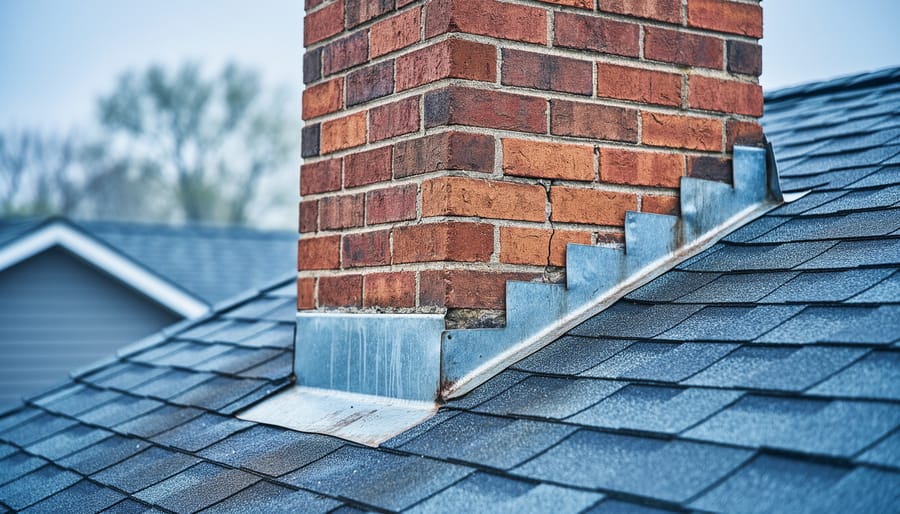
Next, examine where your chimney meets the roof. The flashing—those metal pieces creating a watertight seal—should lie flat and continuous. If you spot gaps, lifted edges, or sections pulling away from either the chimney or roofing material, water is likely finding its way inside during rainstorms. Missing or deteriorating mortar joints between bricks create another entry point for moisture, appearing as dark gaps or recessed areas.
Keep an eye out for rust stains running down your chimney’s exterior or visible corrosion on metal components like the chimney cap or flashing itself. These orange-brown streaks tell you that water has already breached your defenses. White staining, called efflorescence, happens when water draws salts to the surface—another moisture red flag.
Don’t forget to check for leaning or tilting, which suggests serious structural issues. Even slight changes in your chimney’s vertical alignment warrant immediate professional attention. Catching these warning signs early transforms a manageable repair into a straightforward project rather than a costly emergency restoration.

Understanding Roof Flashing: The First Line of Defense
Types of Chimney Flashing and What Works Best
Understanding the different types of chimney flashing helps you communicate better with contractors and spot potential problems before they become expensive repairs. Let’s break down the three main types you’ll encounter.
Step flashing is the foundation of most chimney waterproofing systems. These L-shaped metal pieces weave between your shingles and run up the sides of your chimney in a stepped pattern, like stairs climbing the roofline. Each piece overlaps the one below it, creating a continuous barrier that channels water away. You’ll find step flashing wherever your chimney meets the sloped sections of your roof.
Counter flashing works as step flashing’s partner, embedded directly into your chimney’s mortar joints. It overlaps the step flashing below, creating a double-layer defense system. Think of it as an umbrella protecting the step flashing beneath. When counter flashing pulls away from deteriorating mortar, water can sneak behind your step flashing and cause serious damage.
Cricket flashing, sometimes called saddle flashing, tackles a specific challenge on the uphill side of your chimney. This small peaked structure diverts water around your chimney rather than letting it pool behind it. If your chimney is wider than 30 inches, building codes typically require a cricket because water accumulation becomes a significant concern. Without one, you’re essentially creating a dam that traps debris and moisture, accelerating deterioration of both your chimney and roof.
Common Flashing Failures That Lead to Expensive Repairs
Let’s talk about the sneaky ways flashing can fail and turn into a homeowner’s nightmare. The most common culprit? Improper installation from day one. I’ve heard countless stories from friends who discovered their flashing was never properly integrated with the chimney masonry—installers sometimes take shortcuts, using too few fasteners or skipping the crucial step of creating a proper overlap pattern. When water finds these weak spots, it’s like giving it a roadmap straight into your home’s structure.
Material degradation is another silent troublemaker. That shiny metal flashing you see isn’t invincible. Over time, aluminum can corrode, galvanized steel rusts, and even copper develops problems if not maintained. Picture this: a homeowner in my neighborhood ignored small rust spots for three years, assuming they were just cosmetic. By the time she called a professional, water had been seeping behind her walls, causing $8,000 in structural damage that could’ve been prevented with a $600 repair.
Then there’s seal deterioration, which happens more quickly than most people realize. The caulk and sealant around flashing breaks down from UV exposure, temperature swings, and weathering. Those flexible seals become brittle and crack, creating gaps where moisture sneaks through. What starts as a tiny opening becomes a major leak during heavy rainstorms, potentially damaging insulation, drywall, and even your home’s framing. Regular inspections—ideally twice yearly—help catch these issues before they escalate into wallet-draining emergencies.
Chimney Restoration: What the Process Really Involves
Masonry and Mortar Repair Essentials
Your chimney’s masonry tells a story of weather, time, and temperature changes. When mortar begins crumbling or bricks show cracks, addressing these issues quickly prevents small problems from becoming major structural concerns.
Tuckpointing is your first line of defense against deteriorating mortar joints. This process involves carefully removing damaged mortar to a specific depth, usually about three-quarters of an inch, then filling those joints with fresh mortar that matches the original color and composition. Think of it as giving your chimney a facelift that also strengthens its bones. While it sounds straightforward, tuckpointing requires a steady hand and attention to detail. Rushing through this job or using incorrect mortar mix can trap moisture and cause more damage than it prevents.
When individual bricks have cracked, spalled, or become severely damaged, replacement becomes necessary. This selective approach works beautifully when damage is isolated to specific areas. You’ll want to source matching bricks that complement your existing masonry, maintaining both structural integrity and visual appeal.
The million-dollar question: partial or full restoration? If damage affects less than 25 percent of your chimney’s visible surface, targeted repairs usually suffice. However, widespread deterioration, multiple failing areas, or structural instability signal the need for comprehensive restoration. This decision impacts both your budget and your home’s safety, so honest assessment matters. Remember to maintain proper ventilation during restoration work, especially when working with mortar and masonry sealers. When in doubt, consult a mason who can evaluate your chimney’s condition and recommend the most effective approach.

Crown and Cap Restoration
Think of your chimney crown as the protective hat your chimney wears to keep weather at bay. This concrete or mortar slab sits right at the top, extending beyond the bricks to direct water away from the structure. When it’s doing its job well, you probably don’t even notice it. But when damage sets in, you’re looking at potential water infiltration that can cause serious headaches down the road.
Crowns typically develop hairline cracks from freeze-thaw cycles, especially if they weren’t properly mixed or installed initially. Over time, these small fissures expand into larger gaps, allowing moisture to seep into your chimney’s interior. You might notice pieces of concrete in your fireplace or visible deterioration from ground level.
For minor cracks, waterproof sealants designed specifically for masonry can extend your crown’s life. However, if you’re seeing large chunks missing or widespread crumbling, a full crown replacement becomes necessary. The good news? A properly rebuilt crown using quality materials and correct slope specifications can protect your chimney for decades. While this isn’t typically a DIY project due to the rooftop work involved, understanding what needs fixing helps you communicate effectively with contractors and ensures you’re getting appropriate solutions.
When to Consider Complete Chimney Rebuilding
Sometimes patchwork repairs just don’t make financial sense. If your chimney has extensive deterioration affecting more than 25% of the structure, a complete rebuild often becomes the smarter investment. Look for telltale signs like widespread mortar crumbling, multiple missing bricks, severe leaning or tilting, or significant interior water damage that’s compromised the flue liner. When your chimney displays these red flags, continuing with repairs becomes like putting bandages on a broken bone. A complete rebuild gives you peace of mind with modern materials, updated safety features, and proper flashing integration from the ground up. Yes, the upfront cost is higher, but you’ll avoid the frustration and expense of repeated repair calls. Think of it as choosing between constantly patching an old roof or investing in a new one that protects your home for decades to come.
Should You DIY or Call the Professionals?
Let’s be real for a moment—there’s something incredibly satisfying about fixing things around your home yourself. That said, chimney restoration and roof flashing repair fall into a category where enthusiasm needs to be balanced with caution and honesty about your skill level.
For the DIY-inclined homeowner, some tasks are absolutely within reach. Basic chimney maintenance like cleaning out the firebox, inspecting for obvious damage from ground level, and applying waterproof sealant to minor cracks in the crown can be manageable weekend projects. Similarly, if you’re comfortable on a ladder and have a solid understanding of roofing basics, you might handle small flashing touch-ups or resealing around a vent pipe with the right materials and good weather conditions.
However—and this is important—many aspects of chimney and flashing work require professional roofing services for good reason. Working on roofs is inherently dangerous, especially around chimneys where angles get tricky and footing becomes precarious. One slip could mean serious injury or worse. Beyond safety concerns, improperly installed flashing creates pathways for water infiltration that won’t show up immediately but will cause thousands in damage down the road.
Structural chimney repairs, tuckpointing deteriorated mortar joints, addressing flue liner issues, or installing new step flashing all require specialized knowledge and tools. Professionals understand building codes, proper materials for your specific situation, and techniques that ensure lasting results. They also carry insurance that protects you if something goes wrong.
Think of it this way: you can absolutely be hands-on with research, choosing materials, and handling preliminary inspections. But when it comes to climbing on your roof or making repairs that affect your home’s weather envelope, bringing in experienced contractors isn’t admitting defeat—it’s making a smart investment in your home’s longevity and your family’s safety.
Preventing Future Problems: Maintenance Tips That Actually Work
Think of chimney and flashing maintenance like getting your car serviced—a little preventive care goes a long way in avoiding expensive repairs down the road. The good news? Most maintenance tasks are surprisingly straightforward once you know what to look for.
Start with a seasonal inspection routine. Each spring and fall, grab your binoculars and do a ground-level check of your chimney and roof. Look for cracked mortar, missing pieces of flashing, or water stains on interior ceilings near the chimney. These twice-yearly lookups take just ten minutes but can catch small issues before they become wallet-draining emergencies.
Your chimney needs an annual professional inspection, especially if you use your fireplace regularly. Creosote buildup and hidden cracks don’t always show obvious symptoms until serious damage occurs. Schedule this inspection in late summer before heating season begins—you’ll beat the fall rush and ensure everything’s ready when temperatures drop.
Keep your gutters clean and flowing freely. Clogged gutters force water to pool around your chimney base and flashing connections, accelerating deterioration. Clean them at least twice yearly, particularly after autumn leaves fall and spring pollen season ends.
Apply a quality waterproofing sealant to your masonry chimney every few years. This breathable protective coating lets moisture escape from inside while preventing rain from penetrating the porous brick and mortar. It’s like sunscreen for your chimney—simple protection that prevents major damage.
Document everything with photos during each inspection. This visual timeline helps you spot gradual changes that might otherwise go unnoticed, like slowly widening cracks or deteriorating flashing seals. Plus, these records prove invaluable when discussing concerns with contractors.
Finally, commit to regular roof maintenance that includes checking flashing around all roof penetrations, not just your chimney. Consistency transforms these simple tasks from chores into habits that genuinely protect your home investment.
Your chimney and roof flashing aren’t just functional elements of your home—they’re hardworking guardians that protect everything beneath them. The good news? You don’t need to be a professional contractor to spot the early warning signs that something needs attention. By taking just a few minutes to grab your binoculars and do a visual inspection from ground level, or safely checking your attic for water stains, you’re already taking meaningful steps toward preventing problems before they spiral out of control.
Think of chimney restoration and flashing repair as investments rather than expenses. That small rust spot you address today won’t become the thousand-dollar interior ceiling repair you face next year. Those minor mortar gaps you seal now won’t evolve into structural instability that requires scaffolding and extensive masonry work down the road. Early intervention is genuinely your superpower as a homeowner.
Remember, there’s no shame in calling professionals when something feels beyond your skillset—in fact, that’s smart decision-making. But you’re now equipped with the knowledge to understand what they’re talking about, ask the right questions, and make informed choices about your home’s care.
Your chimney system deserves the same attention you give to your kitchen updates or landscaping projects. By staying proactive and observant, you’re not just maintaining a structure—you’re protecting your family’s comfort, safety, and one of your most significant financial investments. That’s something worth feeling proud about.