When your dryer takes twice as long to dry a load of towels or your laundry room feels unusually warm, you’re likely dealing with a clogged dryer vent. This isn’t just an inconvenience that adds minutes to your chore list—it’s a genuine fire hazard responsible for nearly 15,000 home fires annually. That lint trap you clean after every load? It only catches about 60% of the lint your dryer produces. The rest travels through your venting system, building up over months and years into a highly flammable blockage that restricts airflow and causes your dryer to overheat.
The good news is that dryer vent cleaning and inspection is one of those essential home maintenance tasks you can absolutely tackle yourself with minimal tools and an afternoon of focused effort. Most homeowners never think about what’s happening behind their dryer until something goes wrong, but making this a regular part of your seasonal maintenance routine protects your family, saves energy, and extends your dryer’s lifespan considerably.
Whether you’ve noticed warning signs like a burning smell, excessive lint around the outside vent opening, or you simply can’t remember the last time this task was done, you’re in the right place. We’ll walk you through exactly how to inspect your venting system for problems, the step-by-step process to clean it thoroughly, and when it makes sense to call in professional help.
Why Your Dryer Vent Demands Your Attention (More Than You Think)
Let’s be honest—when was the last time you gave your dryer vent a second thought? If you’re like most homeowners, it probably ranks somewhere below cleaning the gutters and reorganizing the garage on your priority list. But here’s the wake-up call: that innocent-looking vent deserves way more attention than it’s getting, and the reasons go far beyond making your laundry dry faster.
First and foremost, we’re talking about fire safety. The U.S. Fire Administration reports that dryer fires account for thousands of residential fires annually, causing injuries, deaths, and millions in property damage. The culprit? Lint buildup that creates the perfect tinder for ignition when combined with your dryer’s heat. It’s a sobering reality that transforms this mundane maintenance task into a genuine safety priority for your family.
Then there’s your wallet to consider. A clogged vent forces your dryer to work overtime, running longer cycles and guzzling energy like there’s no tomorrow. You’re essentially paying more each month for worse performance—not exactly a winning combination. Some homeowners report energy cost reductions of 30% or more after proper cleaning, which adds up to real savings over time.
Your dryer itself will thank you too. Just like regular appliance maintenance extends the life of your kitchen equipment, keeping vents clear prevents your dryer from overheating and wearing out prematurely. That expensive appliance you invested in could last years longer with this simple care.
Finally, let’s talk about the hidden health concern: moisture and mold. When hot, humid air can’t escape properly, it creates a breeding ground for mold spores and mildew that can affect your indoor air quality. That musty smell on supposedly clean clothes? That’s your clue that something’s not right.
The bottom line? Dryer vent maintenance isn’t just good housekeeping—it’s protecting your home, your budget, and your family’s wellbeing all at once.
Warning Signs Your Dryer Vent Is Crying for Help
The Obvious Red Flags
Your dryer is usually pretty good at giving you hints when something’s not quite right. The trick is knowing what to watch for and actually paying attention to those warning signs before they turn into bigger headaches.
First up, let’s talk about drying time. If your loads are taking noticeably longer than usual—we’re talking 45 minutes turning into an hour and a half—that’s your dryer waving a red flag. This happens because blocked vents trap moisture inside, making your poor dryer work overtime.
Next, touch your clothes right when the cycle ends. Do they feel scorching hot instead of just warm and cozy? That’s not normal. When air can’t properly escape through the vent, heat builds up inside the drum, and your favorite hoodie basically becomes a hot pocket.
Here’s the one that should really get your attention: any burning smell. Even a faint whiff of something scorching means stop using your dryer immediately. This often happens when lint ignites from excessive heat.
Finally, take a peek around your laundry area. Notice lint buildup around dryers or on the floor? That fuzzy accumulation isn’t just messy—it’s telling you that lint is escaping somewhere it shouldn’t be, which means your venting system needs attention now.

The Sneaky Indicators Most People Miss
Sometimes your dryer sends you whisper-quiet signals that something’s wrong, and they’re easy to miss if you’re not paying attention. Here’s what to watch for beyond the obvious longer drying times.
Ever walked into your laundry room and felt like you stepped into a sauna? That unexpected humidity is a telltale sign your dryer vent isn’t expelling moisture properly. Your clothes dryer should vent all that hot, damp air outside, so if your laundry room feels muggy or you notice condensation on windows, your vent is likely struggling.
Another sneaky indicator is when your dryer suddenly shuts off mid-cycle. This isn’t your machine being temperamental—it’s a built-in safety feature kicking in when the internal temperature gets too high due to restricted airflow.
Take a quick walk outside to check your exterior vent opening. See lint buildup around the opening or clinging to the vent flap? That’s your dryer literally showing you the problem. The vent flap should open freely when the dryer runs and close completely when it’s off. If it stays partially open or barely moves, lint accumulation is restricting the flow.
These subtle signs often appear before the more dramatic warnings, giving you a valuable head start on addressing ventilation issues before they become serious safety concerns.
How to Inspect Your Dryer Vent Like a Pro (No Special Skills Required)
What You’ll Need for Your Inspection
Good news—you won’t need anything fancy for your dryer vent inspection! Start with a basic flashlight or headlamp to see deep into those dark corners. Keep a screwdriver handy (usually Phillips head) to remove your dryer’s lint trap housing and exterior vent cover. Your smartphone is your secret weapon here—use the camera with flash to snap photos inside the vent, which helps you spot buildup you might miss with your eyes alone. A simple ruler or tape measure lets you assess how much lint has accumulated. If you’re planning to clean during your inspection, grab a vacuum with a hose attachment and a dryer vent brush kit. That’s really all there is to it! This isn’t a project that requires a toolbox overhaul or special equipment.
The Inside Check
Before you can tackle the vent itself, you’ll want to get acquainted with what’s happening inside. This is detective work at its finest, and you don’t need any special tools to get started.
First things first: unplug your dryer. Safety always comes first, right? Now pull the dryer away from the wall just enough to peek behind it. You’ll see where the vent hose connects to both the dryer and the wall duct. Give this connection a gentle wiggle. It should feel secure, not loose or damaged. Look for any obvious gaps, tears, or that telltale gray duct tape that’s probably been there since installation.
Next, remove your lint trap and really examine the housing where it sits. Use your phone’s flashlight to peer down into that cavity. You might be surprised by the fuzzy buildup clinging to the walls. If you can see lint accumulation, gently vacuum it out with a narrow attachment.
While you’re at it, check the visible ductwork behind your dryer. Is it crushed, kinked, or sagging? These problems restrict airflow just like a kinked garden hose limits water flow. Flexible ducts should maintain their shape, and rigid metal ducts shouldn’t show dents or disconnections. This quick inspection often reveals the culprit behind your dryer’s sluggish performance.
The Outside Assessment
Now let’s head outside and check where all that hot air should be escaping. Grab a flashlight and head to your home’s exterior to find that vent opening, usually located on an outside wall near your dryer.
First, take a close look at the vent cover itself. It should have a flap or hood that opens when your dryer runs and closes when it’s off. Check for any visible damage like cracks, rust, or bent louvers. Gently move the flap to ensure it opens and closes freely. If it’s stuck or damaged, debris can easily accumulate, and small critters might decide to make it their new home.
Here’s a simple airflow test: while someone runs the dryer inside, stand at the exterior vent and hold your hand near the opening. You should feel a strong, steady stream of warm, moist air. If the airflow feels weak or inconsistent, that’s your first clue something’s blocking the system.
Look around the vent opening for lint buildup, bird nests, or leaves that might be restricting airflow. Sometimes you’ll spot a fluffy white buildup right at the exit point. Also check the surrounding area for scorching or discoloration on your siding, which could indicate serious heat buildup and ventilation problems requiring immediate attention.
The Complete DIY Dryer Vent Cleaning Process
Gathering Your Cleaning Arsenal
Good news: you don’t need to break the bank to tackle this important maintenance task! Start with a dryer vent brush kit, which typically includes long, flexible rods and rotating brushes designed to navigate those twisty turns in your ductwork. You’ll find quality kits for around $20-30 at most home improvement stores.
Next, grab your vacuum cleaner and consider a crevice tool attachment to capture all that lint you’ll be dislodging. A shop vac works wonderfully if you have one, but your regular household vacuum will do the job just fine.
Don’t forget the safety essentials: work gloves to protect your hands from sharp metal edges, safety glasses to keep debris out of your eyes, and a dust mask if you’re sensitive to particles. You might also want a screwdriver set to remove the vent cover and a flashlight or headlamp for inspecting those dark corners.
For budget-conscious homeowners, you can even fashion a makeshift cleaning rod using a wire coat hanger, though proper brush kits make the job significantly easier and more thorough.

Step-by-Step Cleaning Method
Ready to tackle this essential maintenance task? Here’s your complete guide to getting that dryer vent spotless and safe. Trust me, once you’ve done this once, you’ll feel like a home maintenance pro.
Start by unplugging your dryer from the electrical outlet. If you have a gas dryer, turn off the gas supply valve too. Safety first, always! Now, gently pull the dryer away from the wall, giving yourself enough room to work comfortably. You’ll see the vent duct attached to the back of your dryer, usually held in place with a metal clamp or foil tape.
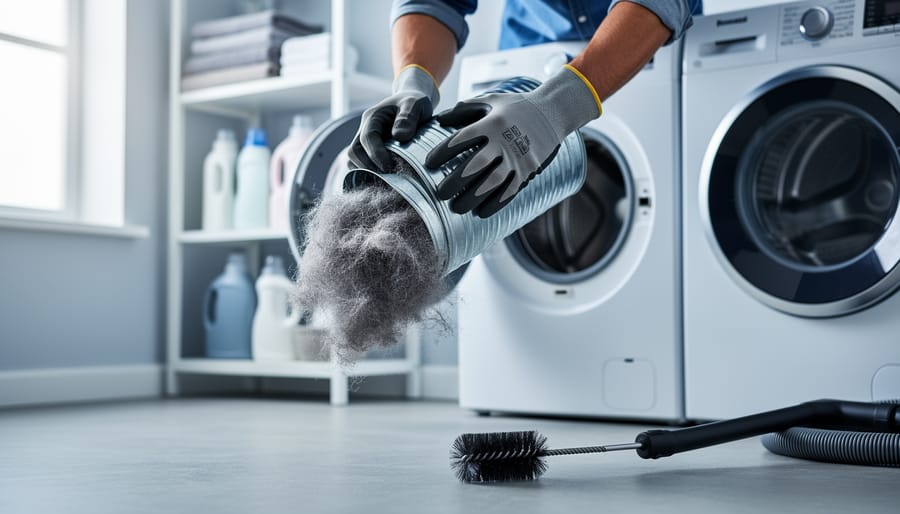
Loosen the clamp with a screwdriver or carefully peel away the tape, then disconnect the duct from the dryer. Take a peek inside the dryer’s exhaust opening. You’ll likely find a surprising amount of lint packed in there. Use your vacuum’s hose attachment to remove all this debris. While you’re at it, check that the opening isn’t damaged or blocked.
Now comes the satisfying part. Grab your dryer vent brush kit, which typically features flexible rods that connect together and a brush head designed to navigate those twists and turns. Insert the brush into the ductwork and work it through the entire length, rotating as you go. The brush dislodges all that hidden lint clinging to the duct walls. You might need to work from both the dryer side and the exterior vent opening to reach everything, especially if you have a longer vent run.
After brushing, vacuum out all the loosened debris. Move outside to the exterior vent opening and remove the vent cover. Clean away any lint buildup, leaves, or yes, even bird nests that might have taken up residence. Vacuum this area thoroughly too.
Before reconnecting everything, inspect your ductwork for damage, kinks, or sections that might need replacing. Reattach the vent to your dryer, secure it properly, and push the dryer back into position. Plug it back in, and you’re done!
The Final Touches That Make a Difference
Once you’ve finished the hard work of cleaning, it’s time to put everything back together properly. Start by reconnecting your vent sections, ensuring each joint fits snugly. Seal any connections with metal foil tape rather than duct tape, which can deteriorate over time and become a fire hazard.
Before you declare victory, slide your dryer back into position and run it on high heat for about 15 minutes without any clothes inside. Step outside and check the exterior vent opening. You should feel strong, consistent airflow pushing out warm air. If the airflow feels weak or intermittent, you may have a kink in the vent line or a remaining blockage that needs attention.
Finally, inspect around the dryer’s back panel where the vent connects. Make sure there are no gaps where lint could escape into your laundry room, and verify that the outdoor vent flap opens freely when the dryer runs and closes completely when it’s off. These finishing touches ensure your dryer operates safely and efficiently for months to come.
When DIY Won’t Cut It: Repair Issues You Need to Know About

Ductwork Damage and Disconnections
Your dryer vent system works hard, but it’s not indestructible. Over time, ductwork can suffer damage that seriously compromises both efficiency and safety. During your inspection, you’ll want to check for three common culprits that often go unnoticed until they cause real problems.
Crushed or kinked ducts are surprisingly common, especially in tight spaces behind or beside your dryer. If someone accidentally pushed the dryer too close to the wall during a cleaning session or furniture rearrangement, the flexible ductwork can easily compress. This creates a bottleneck that traps lint and restricts airflow, making your dryer work overtime and increasing fire risk.
Separated joints are another sneaky issue. Where duct sections connect, the seams can loosen over time due to vibration, temperature changes, or simply aging connections. These gaps allow moisture and lint to escape into your walls or crawl spaces, which can lead to mold growth and structural damage you definitely don’t want to deal with.
Finally, check for holes or tears in the ductwork itself. Rodents, accidental punctures during renovations, or deteriorated materials can create openings that leak hot, moist air where it doesn’t belong. Even small holes significantly reduce your system’s efficiency.
If you discover any of these issues during your inspection, addressing them promptly will restore proper ventilation and protect your home from potential hazards.
When to Call in the Experts
While DIY dryer vent maintenance is totally doable for many homeowners, there are definitely times when professional help is needed. If your vent run is longer than 15 feet or involves multiple sharp turns, reaching a professional for dryer vent cleaning in Clearwater FL or your area makes smart sense. Those complex configurations can hide serious buildup that standard DIY tools simply can’t reach effectively.
You should also call in the experts if you discover crushed or disconnected ductwork during your inspection, spot signs of animal nesting, or notice that your dryer still underperforms after a thorough cleaning. Professional technicians have specialized cameras and high-powered equipment that can tackle severe blockages and inspect the entire vent system from inside out.
Trust your gut here. If the task feels overwhelming or you’re dealing with a roof-mounted vent that requires ladder work you’re uncomfortable with, it’s absolutely worth the investment. Professionals can typically clean and inspect your system in under an hour, giving you peace of mind that everything’s safe and efficient. Think of it as protecting both your home and your family while saving yourself the hassle.
Creating Your Dryer Vent Maintenance Schedule
Think of dryer vent maintenance like brushing your teeth—consistent small efforts beat infrequent deep cleanings every time. The good news? Creating a solid maintenance schedule is simpler than you might imagine.
For most households, a thorough dryer vent cleaning should happen at least once a year. However, if you have a large family, dry multiple loads daily, or own fluffy pets whose fur loves hitching rides on laundry, bump that up to twice annually. Consider adding dryer vent maintenance to your seasonal checklist alongside other home maintenance tasks—spring and fall are perfect timing points.
Between professional or deep cleanings, develop monthly mini-check habits. Spend five minutes clearing your lint trap after every load (not just before, which many people do). Once a month, peek behind your dryer and check the exterior vent hood outside. Is lint accumulating there? Does the flapper move freely? These quick observations catch problems early.
Here’s a game-changing habit: set a phone reminder to check your dryer’s performance quarterly. Run a load and notice if your dryer is working harder than usual, if clothes take longer to dry, or if the laundry room feels unusually warm. These signals tell you it’s time for an unscheduled cleaning.
Create a simple log—even just notes on your phone—tracking when you cleaned the vent, what you found, and when the next cleaning is due. This record becomes invaluable, especially if you’re establishing a regular maintenance routine for the first time.
Remember, consistency trumps perfection. Even imperfect maintenance dramatically reduces fire risk and saves energy costs, making your dryer work efficiently for years to come.
Taking care of your dryer vent doesn’t require professional expertise or expensive equipment. You’ve got everything you need to tackle this essential home maintenance task and protect what matters most. By spending just an hour or two inspecting and cleaning your dryer vent every six months, you’re dramatically reducing fire risk while helping your dryer work more efficiently. You’ll save money on energy bills, extend the life of your appliance, and gain peace of mind knowing your home is safer.
Think of this as preventive maintenance that pays dividends far beyond the minimal effort required. You’ve already learned the warning signs, mastered the inspection techniques, and discovered straightforward cleaning methods that anyone can handle. Now it’s time to put that knowledge into action. Grab your vacuum, mark your calendar for regular checkups, and make dryer vent maintenance part of your home care routine.
Don’t wait until you smell burning lint or notice your clothes taking forever to dry. Schedule your first inspection today and join countless homeowners who’ve discovered that maintaining a safe, efficient home is completely within reach.