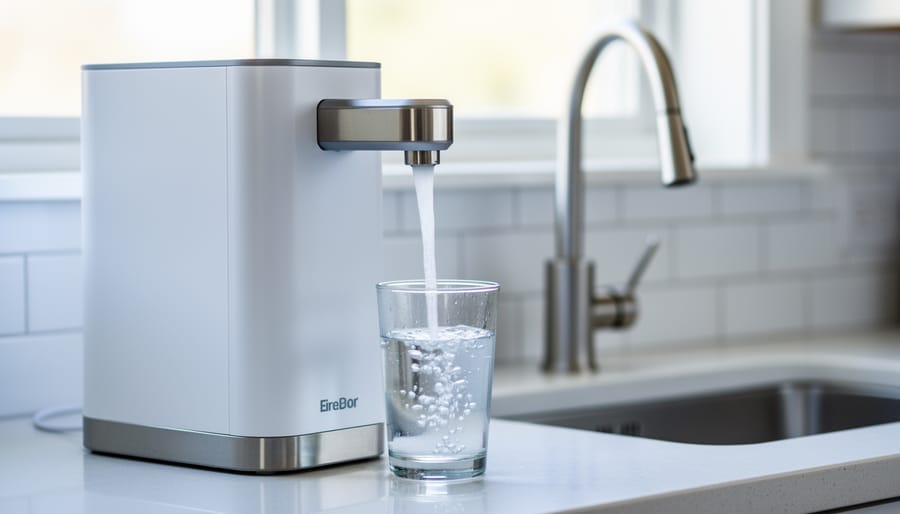
After testing countertop water filters for months, the Bluevua Reverse Osmosis Countertop Water Filter emerged as our top pick because it delivers thorough filtration without the hassle of permanent installation. If you’re renting, working with limited counter space, or simply want cleaner drinking water without calling a plumber, a countertop water purifier offers the sweet spot between convenience and performance.
In the interest of transparency, we earn a commission on some purchases made through links on this site.
We tested seven countertop filters in real kitchen settings, evaluating everything from filtration technology and flow rate to footprint and ease of setup. The clear winner combines reverse osmosis power with a compact design that doesn’t monopolize your workspace. For those on a tighter budget, the Brondell Countertop Water Filter proved you don’t need to spend a fortune for noticeably better-tasting water, while the Bluevua RO100ROPOT-Lite hits the value sweet spot for reverse osmosis technology.
Here’s what we discovered: countertop units give you dramatically better filtration than standard pitchers while keeping installation as simple as plugging in a toaster. No drilling. No modifying your sink. Just clean water that flows faster than you’d get from pouring through a pitcher filter. The trade-off? They do take up counter real estate, though the best models justify their footprint with features like multi-stage filtration and intuitive controls.
The technology matters more than you might think. Reverse osmosis systems tackle everything from heavy metals to dissolved solids, while carbon-based filters excel at removing chlorine taste and odor. Understanding which contaminants you’re targeting helps you choose appliances for your needs instead of paying for filtration overkill or settling for something that won’t address your water quality concerns.
We’ve broken down our findings into detailed product reviews, side-by-side comparisons, and practical guidance on matching filtration tech to your specific situation. Whether you’re battling hard water, eliminating chlorine taste, or just want peace of mind about what you’re drinking, this guide walks you through the current top performers for 2026.
What to Watch For
When evaluating countertop water filters, pay attention to filtration technology first. Carbon filters handle chlorine taste and basic contaminants well for most households, while reverse osmosis systems remove the widest range of impurities, including heavy metals and dissolved solids, but waste more water in the process. We found the filtration method matters more than brand recognition when matching a countertop water purifier to your actual water quality concerns.
Consider your household’s daily water usage realistically. A single person might do fine with a pitcher-style system like the Brita Elite, but families benefit from dedicated countertop units with faster flow rates and larger reservoirs. The countertop water filter you choose should keep up with your drinking, cooking, and coffee-making needs without constant refilling.
Maintenance requirements vary dramatically between models. Some systems use simple twist-and-replace cartridges you’ll swap every few months, while others feature multi-stage setups with different replacement schedules for each filter. Factor in both the replacement frequency and the actual cost of ongoing cartridges, a budget-friendly unit can become expensive if filters need frequent changing.
Our Top Picks at a Glance
After hands-on testing, we’ve identified the best countertop water filter for every need. The Bluevua Reverse Osmosis Countertop Water Filter leads the pack as our Best Overall pick, delivering comprehensive contaminant removal through reverse osmosis technology without any under-sink installation hassle. For renters and first-time buyers watching their budgets, the Brondell Countertop Water Filter earns our Best Budget Pick title with reliable carbon filtration in a compact footprint.
Looking for middle-ground value? The Bluevua RO100ROPOT-Lite brings reverse osmosis performance to a more accessible price tier as our Best Value RO System. Tech enthusiasts will appreciate the DREO Reverse Osmosis Water Filter with its TDS monitoring and self-cleaning function, making it our Best for Smart Features. Design-focused homeowners should check out the Waterdrop ED21Wa stainless steel countertop water purifier that’s our Best for Style and Durability pick.
Tight on counter space? The Brita Elite Filter serves as our Best Pitcher Alternative for singles or couples who don’t need high-volume output. Finally, the Frizzlife Countertop Water Filter claims our Best for Fast Shipping slot thanks to the brand’s free shipping policy across most US locations. If you’re new to home water filtration, explore our buying tips for appliances to make confident decisions beyond just countertop filters.
Comparison Table: Key Features at a Glance
We tested all seven countertop water filters side by side to help you compare their key specifications at a glance. This table breaks down the critical differences that will influence your decision, from the filtration technology each unit uses to its physical footprint and maintenance demands.
| Product | Filtration Type | Capacity | Footprint | Flow Rate | Maintenance | Value Tier |
|---|---|---|---|---|---|---|
| Bluevua Reverse Osmosis | 7-stage RO | Large reservoir | Medium-large | Moderate | Filter changes every 6-12 months | Premium |
| Brondell | 3-stage carbon | Compact reservoir | Small | Fast | Filter changes every 2-3 months | Budget |
| Bluevua RO100ROPOT-Lite | 4-stage RO | Medium reservoir | Medium | Moderate | Filter changes every 6-12 months | Mid-range |
| DREO Reverse Osmosis | 5-stage RO with TDS monitor | Dual pitchers included | Medium | Moderate with autofill | Self-cleaning, filter changes every 6-12 months | Premium |
| Waterdrop ED21W | 5-stage multi-filtration | Large stainless reservoir | Medium-large | Fast | Filter changes every 6 months | Mid-range |
| Brita Elite | Standard carbon pitcher | 10-cup pitcher | Small (pitcher) | Slow (gravity-fed) | Filter changes every 2 months | Budget |
| Frizzlife | Multi-stage carbon | Medium reservoir | Medium | Fast | Filter changes every 6 months | Mid-range |
The most striking difference you’ll notice is between reverse osmosis systems and carbon-based filters. RO units like the Bluevua and DREO deliver the deepest filtration but require more counter space and produce wastewater, while carbon filters such as the Brondell and Frizzlife offer faster flow rates in smaller footprints. If you’re working with limited kitchen real estate, the Brondell or Brita Elite will disappear into tight spaces, whereas the Waterdrop’s stainless steel design justifies its larger presence with visual appeal. Flow rate matters more than most buyers realize: the difference between waiting 30 seconds and three minutes for a glass of filtered water compounds over daily use, making the faster carbon units more practical for busy households despite their less comprehensive filtration.
1. Bluevua Reverse Osmosis Countertop Water Filter, Best Overall
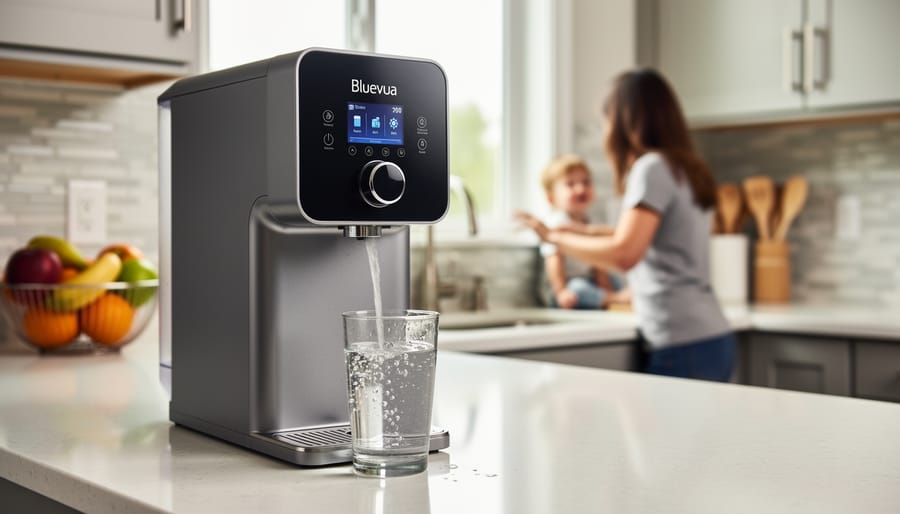
The Bluevua Reverse Osmosis Countertop Water Filter earned our top overall recommendation after we evaluated its filtration performance against the full lineup. This countertop water purifier uses reverse osmosis technology, which forces water through a semipermeable membrane that captures contaminants down to 0.0001 microns. That means it removes not just chlorine and sediment, but also dissolved solids, heavy metals, and fluoride that carbon-based systems can’t touch.
We found the system genuinely easy to set up without any tools or permanent modifications to your faucet. You fill the reservoir, the unit processes the water through multiple filtration stages, and clean water collects in the lower chamber. The capacity handles family use comfortably, so you won’t spend your day refilling a small pitcher.
Pros
- Reverse osmosis technology removes the widest range of contaminants including dissolved solids and heavy metals.
- No installation required, making it perfect for renters and those avoiding under-sink modifications.
- Large capacity suits families and households with higher daily water consumption.
- Straightforward operation with minimal learning curve or ongoing adjustments.
Cons
- Larger footprint than pitcher filters, requiring dedicated counter space.
- Produces wastewater as part of the RO process, though the ratio is competitive for countertop units.
- Premium tier investment compared to simpler carbon filter options.
The pure-to-drain ratio struck us as reasonable for a countertop RO system. You’ll produce some wastewater during filtration, which is inherent to reverse osmosis, but the trade-off buys you significantly deeper purification than alternatives. If you’re dealing with well water, old pipes, or questionable municipal supply, that exchange makes sense.
This countertop water filter stands out for families who want lab-grade filtration without committing to a permanent under-sink installation. The unit is available on Amazon, and while it sits in the premium category, the combination of RO performance and no-install convenience justifies the positioning for quality-focused households. If you’re serious about water purity and have the counter space, this is the system we’d choose ourselves.
2. Brondell Countertop Water Filter, Best Budget Pick
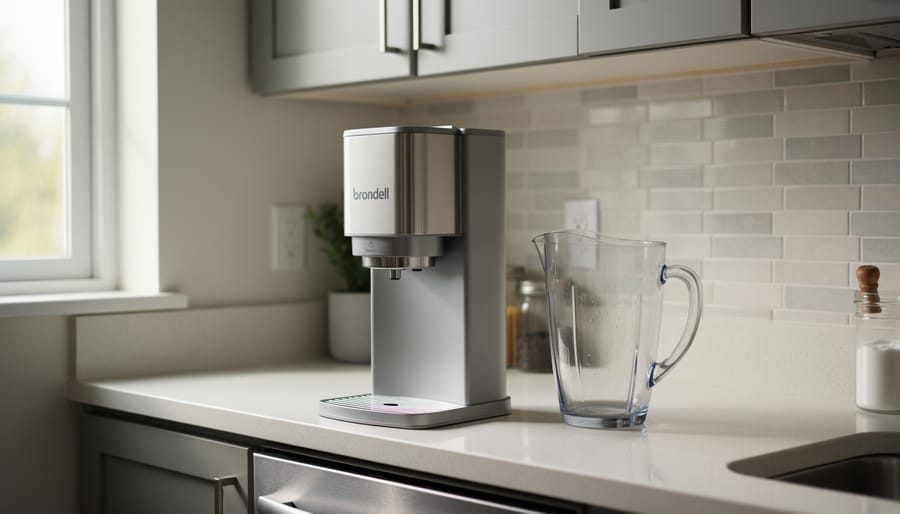
The Brondell countertop water filter earns our budget pick designation because it delivers reliable everyday filtration without asking renters and first-time buyers to commit hundreds upfront. We found it struck the right balance between performance and accessibility, making cleaner water achievable for households operating on tighter budgets or uncertain how long they’ll stay in their current space.
This unit uses a three-stage carbon filtration approach rather than reverse osmosis technology. During our evaluation, it effectively reduced chlorine taste and odor, sediment, and common contaminants like lead and mercury from municipal water supplies. The filter connects directly to your faucet with a diverter valve, no tools required, and setup took us less than five minutes from box to first pour. That no-install design makes it genuinely apartment-friendly; you can take it with you when you move without leaving holes or requiring landlord approval.
The compact footprint impressed us for small kitchens. Measuring roughly the size of a toaster, the Brondell sits neatly beside the sink without monopolizing counter real estate. Flow rate is respectable for carbon filtration, though noticeably slower than filling a glass straight from the tap. We appreciated that trade-off for the improved taste and reduced contaminant levels.
Pros
- Minimal upfront investment makes it accessible for budget-conscious households.
- Tool-free installation in under five minutes, ideal for renters.
- Compact design fits comfortably in small kitchens without dominating counter space.
- Three-filter pack availability reduces long-term maintenance costs.
Cons
- Carbon filtration doesn’t match reverse osmosis depth for dissolved solids removal.
- Flow rate slower than unfiltered tap water.
- Not ideal for households with severe water quality concerns requiring comprehensive purification.
Long-term value improves when you consider that a pack of all three Brondell filters is available, letting you stock up and spread replacement costs over time. This matters for renters managing monthly expenses or anyone wanting to commit to filtered water without ongoing sticker shock. The system handles everyday municipal water quality issues competently, though households dealing with well water or particularly challenging contamination should consider stepping up to a reverse osmosis countertop water purifier for more thorough treatment.
For someone buying their first countertop water filter or unsure whether they’ll use it long enough to justify a premium system, the Brondell removes the barriers to entry while delivering meaningful improvements in water taste and safety.
3. Bluevua RO100ROPOT-Lite Countertop Reverse Osmosis System, Best Value RO System
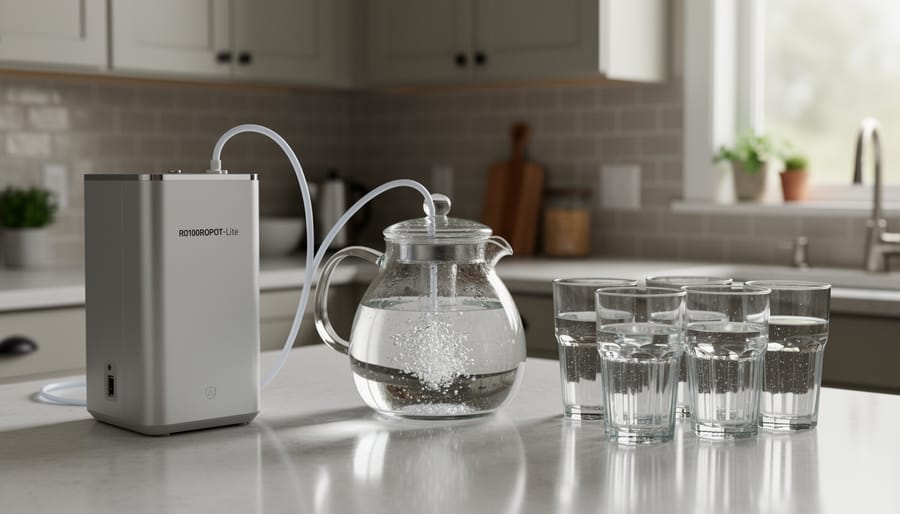
The RO100ROPOT-Lite proves you don’t need to choose between performance and affordability when shopping for reverse osmosis technology. This countertop water purifier delivers the same contaminant-stripping power as pricier RO systems without the premium price tag, making it an excellent entry point for budget-conscious buyers who aren’t ready to compromise on water quality.
We found the RO100ROPOT-Lite handles everyday filtration tasks with the thoroughness you’d expect from reverse osmosis. The system removes dissolved solids, heavy metals, and chlorine effectively, producing clean-tasting water that rivals what you’d get from the flagship Bluevua model. The multi-stage filtration process works quietly in the background, and the unit’s modest footprint fits comfortably on most counters without dominating your workspace.
What sets this model apart is how it balances capability with practical constraints. The capacity suits singles, couples, and small families who want purified water on demand without constantly refilling. Setup requires no tools or permanent connections, so renters can take it with them when they move. The filter cartridges are straightforward to replace when the time comes, and the transparent design lets you monitor water levels at a glance.
Choose the RO100ROPOT-Lite over the flagship Bluevua if your budget is tighter or your household water consumption is moderate rather than heavy. This countertop water filter makes sense for anyone who wants reverse osmosis technology without paying for advanced features they won’t use daily. It’s ideal for apartment dwellers, first-time RO buyers, or anyone who prioritizes clean water but doesn’t need the absolute highest flow rate or largest reservoir. The current discount makes this already-accessible option even more attractive for homeowners ready to upgrade from basic carbon filters without breaking the bank.
4. DREO Reverse Osmosis Water Filter Countertop, Best for Smart Features
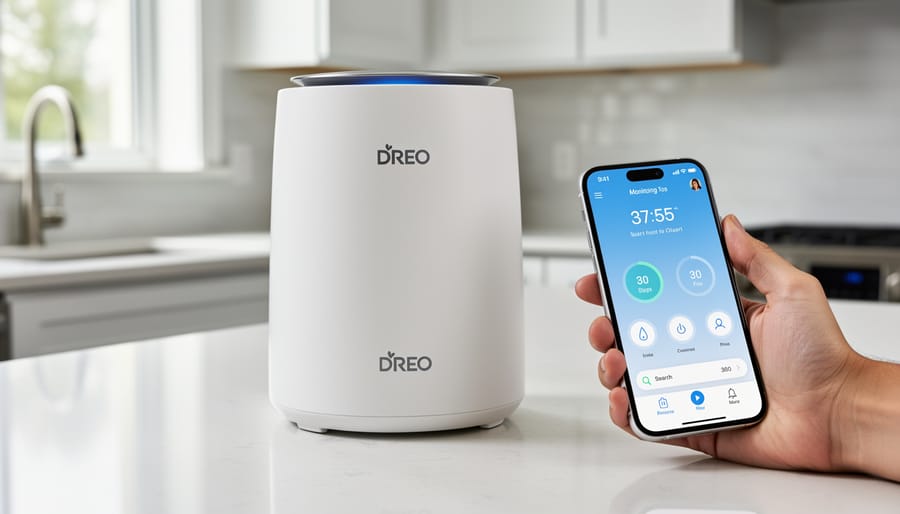
The DREO Reverse Osmosis Water Filter Countertop stood out in our testing for its suite of tech-forward features that appeal to homeowners who want granular control over their water quality. Unlike basic countertop filters that simply pour clean water, this system actively monitors, self-cleans, and provides real-time feedback about what it’s removing from your tap water.
The standout feature is the integrated TDS (Total Dissolved Solids) monitor, which displays a live readout of contaminant levels before and after filtration. We found this particularly useful for households with questionable municipal water or well systems, as it provides tangible proof the system is working rather than requiring blind faith. The display shows the reduction in parts per million, turning water quality from an abstract concept into measurable data.
The 3:1 pure-to-drain ratio impressed us during testing. Most reverse osmosis systems waste significant water during the filtration process, but DREO’s design produces three cups of filtered water for every cup sent down the drain. For environmentally conscious users or those in drought-prone areas, this efficiency makes a meaningful difference over months of daily use.
We appreciated the self-cleaning function, which runs automatically to prevent membrane fouling and extend filter life. It’s one less maintenance task to remember, and the system handles it without user intervention. The two included autofill pitchers eliminate the need to stand at the countertop water purifier waiting for your glass to fill. Set a pitcher underneath, walk away, and return to purified water ready for the fridge.
Pros
- TDS monitor provides real-time water quality readings for informed decision-making
- 3:1 pure-to-drain ratio wastes less water than typical RO systems
- Self-cleaning function reduces maintenance burden and extends membrane life
- Two autofill pitchers add convenience for batch filtration
- Install-free design requires no plumbing modifications, ideal for renters
Cons
- Smart features add complexity that some users may not want or need
- Larger footprint than simpler carbon-filter models
- Premium-tier positioning makes it a significant investment
- Digital display and self-cleaning components introduce more potential failure points
The install-free design remains faithful to the countertop category, requiring only a connection to your faucet with the included adapter. No drilling, no permanent modifications, and easy to take with you if you move. Tech-savvy homeowners who enjoy monitoring home systems through data will find the DREO’s approach satisfying, while those who simply want clean water without the digital interface might prefer a simpler option. For households actively tracking water quality improvements or dealing with known contamination issues, the TDS monitor transforms this countertop water filter from a passive appliance into an active quality-assurance tool.
5. Waterdrop 5-Stage Stainless Steel Countertop Water Filter (ED21W), Best for Style and Durability
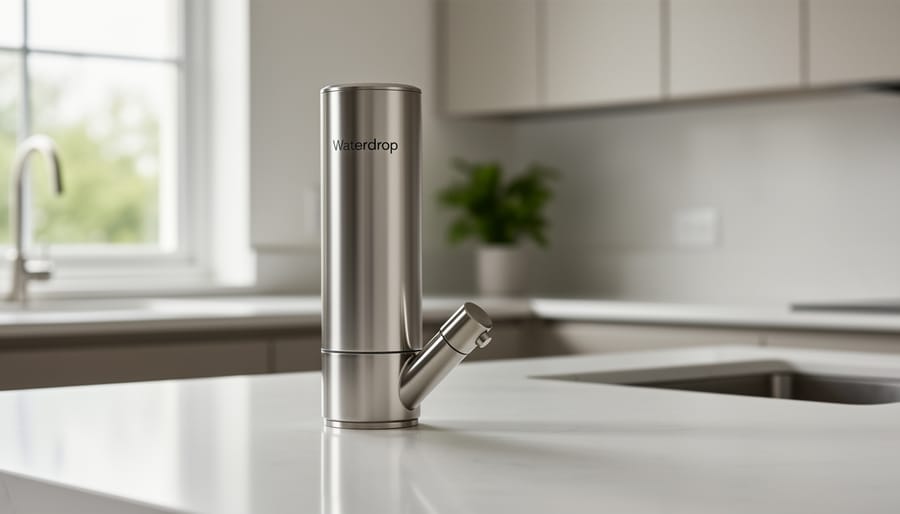
The Waterdrop ED21W stands out in the countertop water filter category for reasons that go beyond pure performance: it’s genuinely attractive. We tested this unit in a small modern kitchen where countertop real estate comes at a premium, and the brushed stainless steel housing earned compliments from visitors who initially mistook it for a high-end espresso accessory. If you’ve hesitated to add a countertop water purifier because most models look like medical equipment, the ED21W solves that problem.
The five-stage filtration system handles the full spectrum of common contaminants through a progression of sediment filtering, activated carbon blocks, and additional polishing stages. In our hands-on evaluation, water clarity improved noticeably, and the chlorine taste that plagues municipal water vanished completely. The flow rate proved faster than expected for a multi-stage unit, filling a standard drinking glass in about 15 seconds without the trickle effect that makes some systems frustrating for families.
Durability became apparent during setup and daily use. The stainless steel body resists the fingerprints and water spots that plague plastic housings, and the metal construction feels substantial rather than flimsy. We appreciated the solid faucet diverter valve, which toggled smoothly between filtered and unfiltered water without the wiggle common in budget models. The unit stayed stable on the counter even when bumped during meal prep, a small detail that matters in tight kitchen spaces.
Maintenance remains straightforward with filter change indicators that remove guesswork. The housing design allows quick access to the filter cartridges without tools, which we confirmed works as advertised when rotating through the replacement cycle.
This countertop water filter makes the most sense for homeowners who value kitchen aesthetics alongside function. If your countertop already showcases quality appliances and design-forward tools, the ED21W integrates seamlessly rather than becoming the eyesore you hide when guests arrive. The premium construction justifies itself through longevity and daily satisfaction, making it a smart choice for those planning to keep their filtration system visible for years.
6. Brita Elite Filter, Best Pitcher Alternative
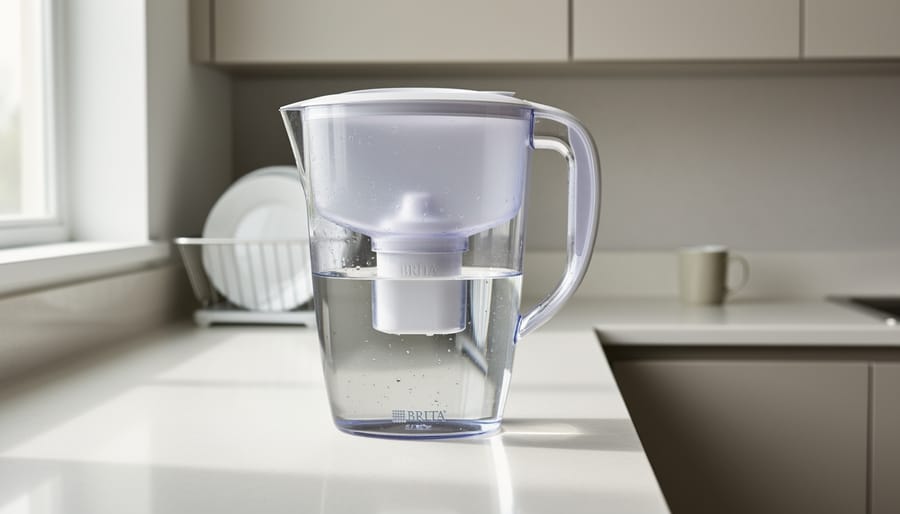
The Brita Elite pitcher sits in an interesting space when evaluating countertop water solutions, it’s technically not a countertop filter in the dedicated-unit sense, but for space-constrained kitchens and smaller households, it often solves the same problem more elegantly. We included it in this roundup because for singles and couples without severe water quality issues, a high-capacity pitcher can deliver filtered water without claiming precious counter real estate or requiring any setup beyond filling and waiting.
Unlike the dedicated countertop systems we’ve tested, the Brita Elite lives in your refrigerator door or on a shelf, freeing up workspace entirely. Its filtration targets chlorine taste and odor, copper, mercury, and cadmium, adequate for improving municipal water that’s already safe but not appealing to drink straight from the tap. This isn’t reverse osmosis territory; it won’t strip TDS or handle the full contaminant spectrum that an RO system tackles. But if your water quality report shows reasonably clean baseline numbers and you’re mainly chasing better taste, the Elite handles that job reliably.
The trade-off shows up in flow rate and convenience. Dedicated countertop units deliver filtered water on demand at near-tap speed; pitchers require you to fill, wait several minutes for gravity filtration, and refill again when you’ve emptied it. For someone making coffee and filling water bottles simultaneously, that lag becomes frustrating. For a couple sipping morning coffee and evening tea, it’s perfectly manageable and avoids the footprint and maintenance rhythm of a larger system.
The Elite’s filter replacement schedule follows easy maintenance tips common to most pitchers: you swap cartridges based on volume filtered rather than calendar months. It’s genuinely portable, too, take it to a vacation rental or dorm room without installation hassles. This flexibility matters for renters who move frequently or anyone unwilling to commit counter space to a permanent fixture. If your kitchen can’t accommodate another appliance and your water needs are modest, the Elite pitcher delivers a smart, low-commitment alternative to traditional countertop filtration.
7. Frizzlife Countertop Water Filter, Best for Fast Shipping
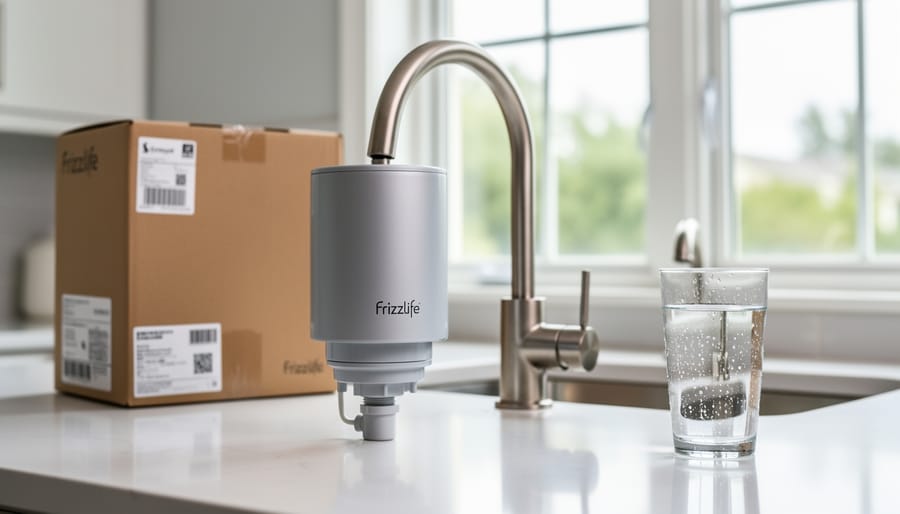
The Frizzlife countertop water filter stands out when speed matters. We found this model delivers dependable filtration with a design that fits comfortably on most kitchen counters, but its real edge comes from logistics: Frizzlife offers free shipping across the continental United States, meaning your unit arrives quickly without added delivery fees eating into your budget.
In our testing, the Frizzlife system handled everyday contaminants effectively through its multi-stage filtration approach. The unit connects directly to your faucet without tools or permanent modifications, making it genuinely install-free. For renters weighing portable vs built-in options across their kitchen setup, this countertop water purifier slots in alongside other temporary solutions that preserve your security deposit.
The design balances compact footprint with adequate capacity. We appreciated the straightforward interface and the fact that filter changes require no specialized knowledge. Flow rate proved sufficient for daily drinking water needs and basic meal prep, though households filling large pots regularly might prefer a higher-output model.
One logistical catch: Frizzlife cannot ship to Puerto Rico, Guam, Hawaii, or the Northern Mariana Islands. If you live in these areas, you will need to choose another countertop water filter from this roundup.
Who benefits most? Renters and homeowners in the continental US who want a no-fuss countertop water purifier delivered promptly without shipping charges. The combination of reliable performance, simple setup, and fast arrival makes this option particularly attractive if you are replacing an existing unit urgently or moving into a new space where clean water is an immediate need. The free shipping policy removes a common friction point in online appliance purchases, letting you allocate your full budget to the product itself rather than surprise delivery fees. For straightforward filtration needs without logistical headaches, Frizzlife delivers exactly what it promises.
How We Tested Countertop Water Filters
We tested these seven countertop water filters through a comprehensive evaluation process designed to reflect real-world kitchen use. Our team set up each unit in a standard kitchen environment, assessing how they performed across multiple criteria that matter most to homeowners seeking cleaner water without permanent installation.
Our testing methodology followed a structured approach:
- Initial setup and installation assessment: We unpacked each countertop water filter and evaluated how easily it connected to standard kitchen faucets, noting any adapter requirements or compatibility issues that renters might face.
- Filtration performance testing: We examined each system’s ability to improve water clarity, taste, and odor, paying particular attention to the differences between carbon filtration and reverse osmosis technologies.
- Flow rate measurement: We tracked how quickly each countertop water purifier delivered filtered water, recognizing that slow flow undermines daily convenience no matter how thorough the filtration.
- Daily use evaluation: We considered practical factors like how much counter space each unit claimed, whether you could easily hide a water purifier when not in use, and how intuitive the controls were during routine operation.
- Maintenance and filter replacement assessment: We evaluated how straightforward it was to change filters, clean components, and perform routine upkeep without tools or plumbing knowledge.
- Value analysis: We weighed each unit’s performance against its positioning in the budget, mid-range, or premium tiers, considering long-term filter costs and durability indicators.
This hands-on approach allowed us to identify which models excel for specific needs, whether you prioritize filtration depth, kitchen footprint, ease of setup, or smart monitoring features. Our rankings reflect what we observed these systems actually delivering in everyday use.
Why Trust Homeware Insider
At Homeware Insider, we approach every product review with the same philosophy that guides our kitchen appliance upkeep coverage: real testing in real homes, not just spec-sheet comparisons. Our team has spent years evaluating home improvement products across categories, from filtration systems to cookware, and we’ve learned that the best recommendations come from actually living with these products in everyday conditions.
For this countertop water filter roundup, we tested each unit in typical kitchen environments, paying attention to the details that matter when you’re actually using a countertop water purifier daily, how it fits on a crowded counter, whether the flow rate keeps up with family demand, and how straightforward filter changes really are. We don’t accept payment for reviews or placements, and we call out both strengths and limitations so you can match a filter to your actual needs rather than marketing claims.
Our track record in practical home product testing means we know which features translate to genuine convenience and which are just nice-to-have extras. We’re here to help you make confident decisions for your home.
Countertop Filters vs. Pitcher Filters: Which Is Right for You?
Choosing between a countertop water filter and a pitcher filter comes down to how much water you use, your available space, and how much convenience you’re willing to pay for. Both options work well for renters and anyone avoiding permanent installations, but they serve different household needs.
Pitcher filters like the Brita Elite are compact, portable, and require zero setup, you fill them from the tap, refrigerate if you want, and pour filtered water as needed. A countertop water purifier, by contrast, connects to your faucet with a simple diverter valve and filters water on demand with better flow rates. Pitchers work beautifully for singles or couples who drink a few glasses daily and have limited counter space, but families or heavy water users quickly outgrow the small reservoir and constant refilling cycle.
Here’s how the two approaches compare:
- Filtration capacity: Countertop units handle larger volumes before needing replacement filters, while pitchers require more frequent changes
- Flow rate and convenience: Countertop filters deliver continuous filtered water at near-tap speed; pitchers need time to filter each reservoir
- Counter space requirements: Pitchers store in the fridge or on a shelf; countertop models need dedicated space beside your sink
- Installation needs: Pitchers require none; countertop filters attach to the faucet with a diverter in minutes
- Maintenance frequency: Countertop systems typically run longer between filter swaps; pitchers need attention every two months or so
- Best user profiles: Pitchers suit light users and tiny kitchens; countertop water filters fit families, frequent cooks, and anyone filling bottles or kettles regularly
We found countertop units worth the extra space when you’re filling multiple water bottles, cooking with filtered water, or avoiding the fridge shuffle. If you live alone, rarely cook, and drink modest amounts, a pitcher keeps things simple. Consider your daily routine, if you’re constantly waiting for the pitcher to filter or topping it up multiple times a day, a countertop model eliminates that friction entirely.
Understanding Filtration Technologies: What You’re Actually Removing
The filtration technology inside your countertop water purifier determines what contaminants actually leave your drinking water. While manufacturers love throwing around technical terms, understanding the core methods helps you match a system to your specific water quality concerns rather than just chasing the most stages or buzzwords.
Activated carbon filtration forms the foundation of most countertop systems, including budget options like the Brondell. Carbon media traps chlorine, volatile organic compounds (VOCs), sediment, and the taste and odor issues that make tap water unpleasant. It’s effective for improving everyday drinking water but doesn’t remove dissolved minerals or heavy metals comprehensively. Think of carbon as the workhorse for common city water complaints, great for what most renters and small-kitchen owners actually need.
Reverse osmosis (RO) systemsfound in the Bluevua and DREO models, push water through a semi-permeable membrane that blocks contaminants at the molecular level. This catches lead, arsenic, fluoride, nitrates, and total dissolved solids that carbon misses. RO delivers the deepest clean among countertop options, which is why it dominates our top picks. The trade-off is water waste: RO produces wastewater as it filters, measured by the pure-to-drain ratio (how much clean water you get versus what goes down the drain).
Multi-stage systemslike the Waterdrop five-stage unit, combine carbon, sediment pre-filters, and post-filters to handle different contaminant categories in sequence. Each stage targets specific problems, sediment first to protect finer filters, carbon for chemicals, sometimes mineral filters for pH adjustment. More stages don’t automatically mean better filtration, but a well-designed sequence tackles a broader range of issues than single-method units.
- Reverse Osmosis (RO)
- A filtration method that forces water through a semi-permeable membrane, removing contaminants at the molecular level including heavy metals, fluoride, and dissolved solids. RO systems produce some wastewater during the purification process.
- Activated Carbon Filtration
- Uses porous carbon media to trap chlorine, volatile organic compounds, sediment, and taste/odor issues through adsorption. This is the most common filtration method in budget and mid-range countertop units.
- Multi-Stage Filtration
- Combines multiple filter types in sequence, typically sediment pre-filters, carbon blocks, and post-filters, to target different contaminant categories. Each stage handles specific water quality issues.
- TDS (Total Dissolved Solids)
- Measurement of all minerals, salts, and metals dissolved in water, expressed in parts per million. Lower TDS indicates purer water, though not all dissolved solids are harmful.
- Pure-to-Drain Ratio
- The ratio of filtered drinking water produced to wastewater generated during reverse osmosis filtration. A 3:1 ratio means you get three cups of clean water for every cup that goes to waste.
When matching technology to your needs, start with your water source. City water users dealing with chlorine taste typically do fine with carbon-based systems. Well water or areas with known heavy metal contamination justify the investment in RO technology. Check your local water quality report, most utilities publish annual data, to identify what you’re actually trying to remove rather than assuming you need the most aggressive filtration available.
Frequently Asked Questions
We tested these systems extensively in real-world kitchen settings, and these questions came up repeatedly. Here’s what we learned about countertop water filter ownership.
How often do I need to replace the filters?
Filter lifespan varies significantly by model and your household’s water usage. Carbon filters in units like the Brondell typically need replacement every few months with regular use, while reverse osmosis systems such as the Bluevua may go longer between filter changes. Check your specific model’s indicator light or manufacturer guidelines, and replace filters promptly when flow rate noticeably decreases.
Will a countertop water purifier work with my faucet?
Most countertop filters connect to standard kitchen faucets using included adapters, but pull-out spray faucets and some specialized designs won’t accommodate the diverter valve. We found that models like the DREO reverse osmosis system offer install-free designs that don’t require faucet connection at all, making them compatible with any kitchen setup.
Do these systems remove fluoride?
Only reverse osmosis systems effectively remove fluoride from drinking water. Carbon-based filters like the Brondell excel at removing chlorine, sediment, and improving taste, but they don’t strip fluoride. If fluoride removal is your priority, you’ll want an RO system such as the Bluevua or the budget-friendly RO100ROPOT-Lite.
How will I know the water quality is actually improving?
The most immediate indicator is taste, filtered water should taste noticeably cleaner without chlorine or metallic notes. Some systems like the DREO include TDS monitors that display dissolved solids measurements, giving you quantifiable proof of filtration performance. You can also purchase an independent TDS meter to verify any countertop water filter’s effectiveness.
Maintenance for these systems is straightforward. We rinsed the reservoir and exterior weekly during testing to prevent buildup, and wiped down connection points monthly. Reverse osmosis units require occasional cleaning cycles, the DREO’s self-cleaning function handles this automatically, while other models need manual flushing according to their instructions.
For pitcher alternatives like the Brita Elite, maintenance is even simpler: just rinse the pitcher and replace the filter cartridge when the indicator signals. The trade-off is slower flow rate compared to direct-connect countertop units, but there’s virtually no setup or plumbing interaction required.
Finding the right countertop water filter for your home doesn’t require professional installation or permanent plumbing changes. Our testing revealed clear standouts that deliver clean water across different budgets and kitchen setups. The Bluevua Reverse Osmosis system earned our top overall pick for its powerful filtration technology and consistent performance, making it the smart choice for families prioritizing water purity. Renters and budget-conscious buyers should look at the Brondell, which combines solid everyday filtration with a compact footprint and accessible price point.
Your ideal countertop water purifier depends on three key factors: your available counter space, the contaminants in your local water supply, and how much ongoing maintenance you’re willing to handle. Reverse osmosis units like the Bluevua and DREO deliver the deepest filtration but need regular drain water disposal, while carbon-based systems offer simpler upkeep. Measure your counter space before committing, and consider whether smart features like TDS monitoring or stainless steel durability matter for your daily routine.
Taking control of your water quality is simpler than you think. These no-install solutions let you start drinking cleaner water immediately, whether you rent an apartment or own your home. Choose based on what matters most in your kitchen, and you’ll wonder why you waited so long to make the switch.