Imagine pushing your mower across an uneven lawn and feeling it glide smoothly over bumps, dips, and slopes that would normally send your traditional four-wheeler bouncing around like a bucking bronco. That’s the real-world difference six wheels make, and it’s transforming how homeowners tackle challenging terrain.
Six-wheel lawn mowers aren’t just about adding extra wheels for the sake of innovation. They’re engineered to distribute weight more evenly, which means better traction on hills, reduced turf damage on soft ground, and surprising maneuverability despite their larger footprint. If you’ve ever struggled with scalping on slopes or noticed your current mower leaving ruts after rain, this design addresses those exact frustrations.
The technology works through simple physics: more contact points mean more stability and control. The front and rear wheel sets pivot independently, allowing you to navigate around garden beds and trees with precision while maintaining consistent cutting height. This matters especially if your property features rolling terrain, shaded areas that stay damp, or a mix of grass types that require careful handling.
Before investing, you’ll want solid lawn mower purchasing guidance that considers your specific yard conditions. Not every homeowner needs six wheels, but for those dealing with slopes steeper than 10 degrees, properties over half an acre with varied topography, or soil that gets waterlogged, the advantages quickly become obvious. Understanding whether this specialized equipment matches your lawn’s personality makes all the difference between a worthwhile upgrade and an unnecessary expense.
What Makes a Six-Wheel Mower Different
At first glance, a six-wheel mower might look like someone just added extra wheels to a regular lawn mower, but there’s actually some clever engineering at work here. Think of it like the difference between a tricycle and a bicycle with training wheels—those extra points of contact completely change how the machine handles.
Traditional four-wheel mowers distribute their weight across just four contact points with the ground. This works fine on flat, even terrain, but here’s where things get interesting. When you add two more wheels, you’re essentially creating a more stable platform that spreads the mower’s weight more evenly. Picture setting a heavy bookshelf on your floor—it’s much less likely to leave dents or marks if the weight is distributed across six legs instead of four.
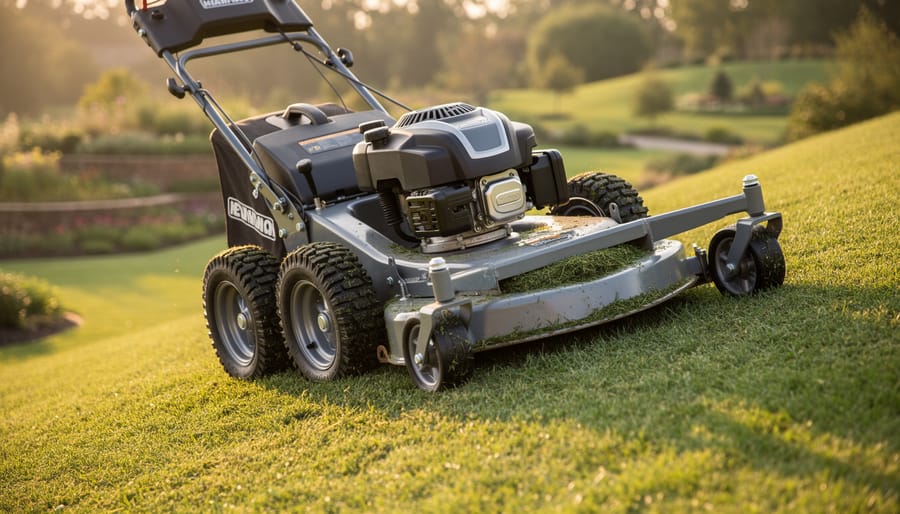
The typical six-wheel configuration places four wheels in the rear and two in the front, though some models reverse this setup. This arrangement creates what engineers call a “longer wheelbase,” which is a fancy way of saying the wheels are positioned to give you better balance. It’s similar to why longer kayaks track straighter through water than shorter ones.
When you’re mowing across a slope or navigating around garden beds, those extra wheels work together to keep the mower level and prevent tipping. Each wheel also leaves a smaller footprint, which means less soil compaction—great news for your grass roots that need air and water to penetrate the soil.
The real magic happens when you encounter uneven ground. While a four-wheel mower might rock back and forth like a wobbly table, the six-wheel design keeps more consistent contact with the surface. This translates to a smoother, more controlled mowing experience, especially if your yard has those annoying bumps and dips that seem to multiply every spring.

The Real-World Benefits You’ll Actually Notice
Superior Traction on Hills and Wet Grass
If you’ve ever felt your mower lose its footing on a dewy morning or watched nervously as it slipped sideways on a slope, you’ll appreciate what six wheels bring to the table. Think of it this way: more wheels mean more rubber meeting the ground at any given moment, and that translates directly to superior grip when conditions get tricky.
The magic happens because those extra contact points distribute the mower’s weight more evenly across the terrain. On wet grass—when traditional four-wheel mowers tend to spin their wheels and leave those frustrating ruts—six-wheel models maintain their composure. The additional wheels help prevent that heart-stopping sideways slide that happens when you’re tackling a slope after rain.
For homeowners with yards that feature hills or drainage grades, this design genuinely transforms the mowing experience from nerve-wracking to manageable. You’ll notice improved control when turning on inclines, less slipping when backing up on damp turf, and generally more confidence throughout the job. It’s not just about getting the task done—it’s about doing it safely without constantly second-guessing your footing. The result is cleaner cuts in fewer passes, even when Mother Nature hasn’t cooperated with perfect mowing weather.
More Even Cutting on Bumpy Lawns
If you’ve ever mowed over bumps, dips, or mounds and ended up with those embarrassing bald patches in your lawn, you know the struggle is real. This is called scalping, and it happens when your mower deck dips too low on uneven terrain, cutting grass way too short or even hitting soil.
Here’s where six-wheel mowers really shine. Think of it like this: a four-wheel car hits a pothole, and you feel that jarring bump. But add more wheels, and the ride smooths out considerably. The same principle applies to your lawn mower. Those extra wheels create additional contact points with the ground, helping the deck float more consistently over bumps and valleys rather than diving into them.
The result? A beautifully even cut that looks like a professional lawn service came through, even on lawns that are less than perfectly flat. You’ll notice fewer scalped spots, more uniform grass height, and that polished, manicured appearance that makes your neighbors wonder what your secret is. It’s particularly game-changing if you’re working with naturally rolling terrain or areas where tree roots create subtle surface variations.

Easier Turning and Maneuverability
Here’s a pleasant surprise: that extra set of wheels doesn’t make these mowers clumsy giants. In fact, many six-wheel models turn with impressive agility that might actually outperform their four-wheeled cousins around your garden obstacles.
The secret lies in how the wheels are positioned. Most six-wheel mowers feature a tight center wheel arrangement that creates a surprisingly compact pivot point. Think of it like having a shorter wheelbase vehicle that can navigate tight spaces more easily. When you’re weaving around that beloved oak tree or navigating the curve of your flower bed, those middle wheels act as a natural turning center, letting you make sharper, more controlled turns without damaging your grass or plants.
The extra traction also means you won’t experience those frustrating moments where your mower spins its wheels while trying to turn on slightly damp grass or uneven terrain. You get smooth, predictable steering that responds exactly how you expect it to, making your mowing pattern more efficient and reducing the number of passes needed around obstacles. For homeowners with landscape features like garden beds, pathways, or decorative elements, this enhanced maneuverability transforms what could be a frustrating obstacle course into a straightforward mowing experience that actually feels easier than pushing a standard four-wheeler.
Who Should Actually Buy a Six-Wheel Mower
Let’s be honest—a six-wheel mower isn’t for everyone, and that’s perfectly okay. Think of it like buying a four-wheel-drive truck when you live in sunny Florida with perfectly paved roads. Sure, it’s nice to have, but do you really need it?
If your yard features significant slopes, hills, or uneven terrain, a six-wheel mower could genuinely transform your mowing experience. That extra set of wheels provides stability that’ll make you wonder how you ever managed with a standard four-wheel model. Homeowners with properties that have rolling landscapes, drainage swales, or areas that remain soft after rain will appreciate how these mowers maintain consistent traction without tearing up the turf or leaving you struggling for control.
Large properties spanning an acre or more also benefit from the six-wheel design. When you’re spending considerable time on your mower, the improved weight distribution means less operator fatigue and a smoother ride over the long haul. If you’ve got multiple terrain types across your property—maybe some flat areas, a few hills, and that annoying bumpy section near the old tree roots—the versatility of six wheels really shines.
Professional landscapers or homeowners maintaining multiple properties should seriously consider this investment. The durability and performance advantages pay dividends when you’re logging serious hours behind the handlebars.
Now, here’s the reality check: if you’re working with a small, relatively flat suburban lawn—say, under half an acre with minimal elevation changes—a six-wheel mower is probably overkill. You’d be paying extra for capabilities you’ll rarely use. Standard mowers handle flat terrain beautifully, and you might find better value investing that price difference into other yard improvements or tools.
The sweet spot for six-wheel mowers? Properties with challenging conditions where conventional mowers make you work harder than necessary. If you’re constantly fighting for traction, dealing with scalping on slopes, or watching your mower sink into soft spots, that’s your signal these extra wheels might be worth every penny.
What to Look for When Shopping
Wheel Size and Configuration
When you’re evaluating a 6-wheel mower, think of the wheel setup as the foundation of your mowing experience. The configuration really matters for how smoothly your mower handles your lawn’s unique personality.
Look for models where the rear wheels measure larger than the front and middle wheels, typically around 8 to 10 inches in diameter compared to 6 to 7 inches up front. This staggered sizing creates better weight distribution and makes turning surprisingly easy, even though you’re working with more wheels. It’s similar to how a shopping cart steers more smoothly when the wheels are properly sized and positioned.
Wheel spacing is equally important. You want even distribution across the deck width to prevent those frustrating skipped strips or uneven cutting patterns. The six wheels should create three distinct contact points that spread the mower’s weight effectively, reducing soil compaction and turf damage, especially if you’re mowing when conditions are slightly damp.
Pay attention to wheel tread design too. Deeper treads provide better traction on slopes and wet grass, while wider wheels offer improved stability on uneven terrain. Many homeowners find that semi-pneumatic or foam-filled tires strike the perfect balance between cushioning and durability, eliminating the hassle of flat tires while maintaining smooth operation.

Deck Size and Cutting Width
Choosing the right deck size for your 6-wheel mower is like finding the perfect-sized couch for your living room—it needs to fit your space and lifestyle. For smaller yards under half an acre, a compact 30 to 42-inch cutting width works beautifully, giving you maneuverability around flower beds and tight corners. Medium-sized properties between half an acre and two acres benefit from 42 to 54-inch decks, striking that sweet spot between efficiency and control.
Here’s where 6-wheel designs really shine: the extra wheels distribute weight more evenly across wider decks, preventing those frustrating turf divots that can happen with traditional four-wheel models. If you’re managing larger properties over two acres, you can confidently step up to 54 to 60-inch decks without sacrificing stability. The six-wheel configuration keeps these wider mowers balanced and reduces scalping on uneven terrain. Think of it as giving your mower better “footwork”—those additional contact points mean smoother cuts across varying landscapes, whether you’re navigating gentle slopes or dealing with bumpy ground conditions.
Power Options: Gas vs. Electric
When you’re choosing a six-wheel mower, the gas vs. electric decision takes on fresh importance. These mowers typically weigh more than traditional models, which affects how each power source performs. Gas engines deliver the muscle needed to handle that extra weight on slopes and thick grass, plus you won’t worry about battery life on larger properties. However, electric models have made impressive strides—brushless motors now provide surprising torque, and the lower center of gravity from battery placement actually enhances that signature six-wheel stability. If your yard is under half an acre with moderate terrain, electric offers quiet operation and minimal maintenance. For tougher conditions or expansive lawns, gas still reigns supreme, giving you extended runtime without recharging breaks.
Build Quality and Durability
When you’re investing in a 6 wheel mower, you want it to last season after season, so let’s talk about what really matters. The deck material is your first clue to quality—look for heavy-gauge steel rather than thin stamped metal that can warp or crack over time. Powder-coated finishes help resist rust and keep your mower looking sharp even after years of exposure to grass clippings and morning dew.
Pay close attention to those wheel bearings, since six wheels mean more moving parts that need to perform reliably. Sealed ball bearings are the gold standard here, keeping dirt and moisture out while ensuring smooth rolling across uneven terrain. Think of them as the unsung heroes that make maneuvering feel effortless rather than like you’re wrestling a stubborn cart.
The axle system deserves your attention too. Reinforced axles with proper weight distribution prevent that annoying wobble some cheaper models develop. Many homeowners overlook this until they’re dealing with repairs, so checking reviews for long-term durability feedback can save you headaches down the road.
Common Misconceptions About Six-Wheel Mowers
Let’s clear up some common concerns that might be holding you back from considering a six-wheel mower. First off, many folks assume that more wheels automatically mean more complicated maintenance. The truth? These mowers typically follow the same maintenance routine as their four-wheel cousins. You’re still looking at regular blade sharpening, oil changes, and air filter cleaning. The extra wheels are simply part of the deck design and don’t require special attention beyond occasional cleaning to prevent grass buildup.
Another worry we hear a lot is about parts availability. Will you be stranded if something breaks? Here’s the reassuring part: most six-wheel mowers come from established manufacturers who produce traditional mowers too. The unique components are mainly the wheel assemblies, and manufacturers maintain solid parts support. One homeowner we know has been running his six-wheel mower for five seasons without needing a single specialized part beyond standard consumables.
There’s also this lingering belief that six wheels mean six times the problems. Actually, the opposite is often true. The weight distribution across more contact points can mean less wear on individual wheels. Think of it like spreading peanut butter on bread—the more evenly you distribute it, the better everything holds up. Plus, those extra wheels aren’t drive wheels requiring complex mechanics; they’re typically passive support wheels that simply roll along.
The final misconception? That six-wheel designs are just a gimmick. Real-world users consistently report that the stability benefits are genuine, particularly on slopes and uneven terrain where traditional mowers struggle. It’s not marketing magic—it’s practical engineering that solves actual lawn care challenges.
Choosing a 6-wheel lawn mower comes down to understanding your specific yard challenges and finding the right tool to tackle them. If you’re dealing with slopes, uneven ground, or simply want a more comfortable mowing experience that gets the job done faster, these mowers offer real solutions that traditional 4-wheel models can’t match. The added stability means less strain on your body, fewer scalped patches, and the confidence to handle terrain that might have frustrated you before.
Take time to walk your property and honestly assess what you’re working with. Notice the bumps, the grades, and those tricky spots that always seem difficult to navigate. Consider how often you’re mowing and whether investing in better equipment will transform this chore into something more manageable.
The right mower isn’t just about cutting grass—it’s about reclaiming your weekends and taking pride in your outdoor space. When you’re equipped with a machine that handles your terrain effortlessly, you’ll actually look forward to maintaining your lawn and watching it improve curb appeal. Make an informed choice that fits your needs, your budget, and your vision for a beautiful yard you’ll love coming home to.