

Rustic kitchens have captured hearts for years with their warm, lived-in charm, but some elements that once defined this beloved style are starting to feel tired and overdone. If you’re questioning whether your kitchen choices still feel fresh, you’re not alone. Design evolves constantly, and what felt cozy and authentic just a few years ago might now read as cluttered or too themey.
The good news? Recognizing which rustic trends are fading doesn’t mean abandoning the style entirely. Instead, it’s about refining your approach and keeping what truly works while letting go of elements that have run their course. Whether you invested in achieving rustic kitchen aesthetics recently or you’re planning updates, understanding these shifts helps you create a space that feels current rather than stuck in a specific moment.
This guide walks through nine rustic kitchen trends that designers and homeowners are moving away from, explaining why they’re losing appeal and what’s taking their place. You’ll discover which popular choices have become decorating clichés and learn how to keep your kitchen feeling authentically rustic without the dated details. Think of this as your permission slip to update elements that no longer serve your space while maintaining the warmth and character that drew you to rustic design in the first place.
Overdone Distressed Everything
Remember when distressed everything was the ultimate farmhouse chic? Those heavily sanded cabinet edges, artificially aged hardware, and furniture that looked like it survived a century in a barn (even though it was brand new) seemed like the perfect way to achieve that coveted rustic charm. But here’s the thing: we’ve reached peak distressing, and homeowners are ready for a change.
The problem with over-the-top distressed finishes is that they often feel forced and inauthentic. When every single cabinet door has perfectly placed dings, chips that follow the same pattern, and wear marks that seem a little too strategic, it starts looking more like a design gimmick than genuine character. Plus, all those grooves and crevices? They’re dust magnets and cleaning nightmares, which isn’t exactly practical for a hardworking kitchen.
What’s taking its place is a more thoughtful approach to rustic design. Today’s homeowners are gravitating toward pieces with authentic stories, selectively distressed elements, or natural aging that happens organically over time. Think a vintage farmhouse table with real patina earned through decades of family dinners, paired with clean-lined cabinetry that doesn’t try too hard to look old.
If you’re working with existing heavily distressed pieces, don’t panic. You can always refresh them with a coat of paint or light sanding to tone down the artificial aging. The goal is balance: incorporating rustic warmth without making your kitchen look like a staged movie set from the 1800s.
The modern rustic kitchen celebrates authenticity over artifice, choosing quality craftsmanship and genuine vintage finds over manufactured wear-and-tear. It’s about creating a space that feels lived-in and loved, not artificially aged before its time.

Dark, Heavy Wood Everywhere
Remember when dark, espresso-stained cabinets, walnut beams, and rich mahogany floors felt like the epitome of rustic sophistication? While those deep wood tones once created that cozy cabin vibe, covering every surface in dark wood can make your kitchen feel more cave-like than cozy. The good news? This trend is finally lightening up, and your kitchen can breathe again.
The shift away from all-dark-everything wood isn’t about abandoning rustic charm. It’s about embracing a more balanced, breathable approach that still celebrates naturally aged wood without the overwhelming heaviness. Think of it as rustic design growing up and getting more sophisticated.
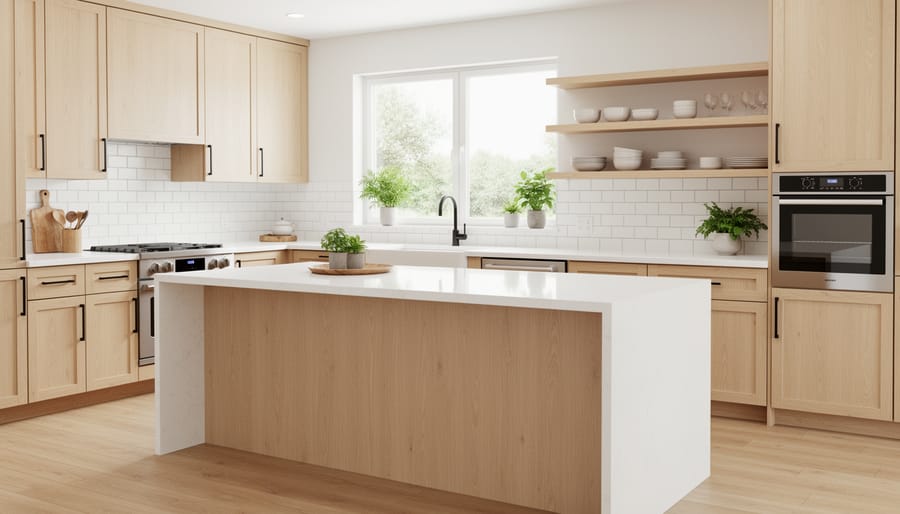
Modern rustic kitchens are now showcasing lighter wood species like natural oak, ash, and maple. These warmer blonde tones bring all the organic texture you love while reflecting light beautifully throughout your space. Whitewashed or lime-washed wood treatments offer another fantastic middle ground, maintaining that weathered, timeworn character while keeping things bright and airy.
The real magic happens when you start mixing materials thoughtfully. Consider pairing light oak cabinets with darker wood open shelving, or combining white-painted lower cabinets with natural wood uppers. This layered approach creates visual interest without the visual weight that comes from monochromatic dark wood.
If you’re working with existing dark wood elements, you don’t necessarily need to rip everything out. Strategic updates can make a dramatic difference. Painting lower cabinets white while keeping natural wood uppers, adding lighter countertops, or introducing light-colored backsplash tile can break up that darkness effectively. Your kitchen will feel larger, brighter, and much more in tune with current design sensibilities while keeping its rustic soul intact.
Rooster Motifs and Farm Animal Decor
Remember when every farmhouse-inspired kitchen came complete with decorative roosters perched on countertops and cow-print dish towels draped over the oven handle? While these charming touches once defined country kitchen style, they’re now crowing their way out of contemporary design.
The shift away from literal farm animal motifs doesn’t mean farmhouse style is disappearing. Instead, it’s maturing into something more sophisticated and less kitschy. Those ceramic rooster canisters and chicken wire cabinet inserts that felt so whimsical a few years ago now read as overly themed, almost like decorating your home to match a country diner.
Today’s evolved farmhouse aesthetic embraces functionality over novelty. Rather than displaying decorative farm animals, homeowners are incorporating authentic agricultural elements that serve a purpose. Think vintage milk jugs repurposed as flower vases, wooden cutting boards that double as wall art, or antique egg baskets used for organizing produce. These pieces tell a story and work hard in your kitchen rather than just collecting dust.
The problem with heavy-handed farm decor is that it can quickly overwhelm a space, making your kitchen feel more like a barn theme park than an inviting cooking environment. Modern rustic design understands that subtlety creates lasting appeal. A single vintage farm tool as wall art makes a stronger statement than a dozen decorative chickens scattered throughout the room.
If you’re ready to update your kitchen but love that farmhouse feeling, consider swapping obvious animal motifs for natural textures like reclaimed wood shelving, stone accents, or handcrafted pottery. These elements capture the essence of rural living without screaming “farm” at every turn, creating a timeless space that won’t feel dated next season.
Matchy-Matchy Everything
Remember when everything in your kitchen had to match perfectly? Those sets of six identical farmhouse chairs, the coordinating dish towels hanging just so, and those ubiquitous matching glass canisters lined up like soldiers on the counter? Well, that trend is officially taking its leave, and honestly, it’s about time.
The rustic aesthetic was never meant to look like it came straight from a catalog showroom. Real farmhouses and country homes evolved over generations, with pieces collected from different eras, inherited from family members, or picked up at local markets. That authentic, lived-in character is what made rustic design charming in the first place.
Today’s approach celebrates intentional mismatching. Think about mixing wooden dining chairs in different styles around your farmhouse table. Maybe combine a couple of vintage spindle-backs with some painted ladder-backs. The key is finding pieces that share a similar scale or color story without being identical twins.
The same philosophy applies to your kitchen textiles and accessories. Instead of a matched set of dish towels, layer patterns and textures that complement each other. Swap out those uniform canisters for a collection of vintage crocks, glass jars, and ceramic containers in varying heights and finishes.
This curated approach feels more personal and tells a story about your space. It shows that your kitchen has personality beyond what a single shopping trip could provide. Plus, it takes the pressure off finding exact replacements when something breaks or wears out.
The beauty of this shift is the freedom it gives you to gradually build your kitchen’s character. You can shop antique markets, inherit pieces from family, and mix in contemporary elements without worrying about everything coordinating perfectly. Your rustic kitchen becomes uniquely yours, not a replica of someone else’s design vision.

Copper Overload
Remember when copper seemed to be everywhere in rustic kitchens? From gleaming sinks to entire walls of copper pots and pans, those rosy metallic accents promised warmth and farmhouse charm. While copper certainly had its moment in the spotlight, the trend of copper overload has definitely cooled off.
The issue wasn’t copper itself, but rather how it was being used. Many homeowners went all-in, installing copper farmhouse sinks, copper pendant lights, copper cabinet hardware, and rows of copper cookware hanging from pot racks. The result? Kitchens that felt more like themed showrooms than livable spaces. The metal’s reflective quality, when used excessively, created visual chaos rather than the cozy ambiance people were hoping for.
Design professionals are now taking a more restrained approach. Instead of copper dominating every surface, they’re using it strategically as a subtle accent. Think a single copper pendant over an island or a few copper accessories on open shelving. This shift allows copper to shine without overwhelming the space.
What’s taking its place? Brass has emerged as the more sophisticated cousin, offering similar warmth with a more refined appearance. Its softer, less reflective finish works beautifully in both traditional and contemporary rustic settings. Matte black finishes have also gained serious traction, providing dramatic contrast that feels fresh and modern while still complementing natural wood tones and stone surfaces.
If you’ve invested in copper elements, don’t worry. You don’t need to rip everything out. Consider mixing in other metallic finishes to create balance, or swap out a few high-impact pieces like light fixtures or hardware. The goal is creating a collected, layered look rather than a matchy-matchy copper showcase.
Chunky, Ornate Hardware
Remember those elaborate wrought-iron handles that looked like they belonged on a medieval castle door? While they once felt like the perfect complement to rustic kitchens, these chunky, ornate pieces are now overwhelming the very spaces they were meant to enhance. The trend toward oversized, highly decorative hardware is giving way to something much more refined.
Here’s the thing about rustic design: it’s meant to feel warm and inviting, not theatrical. When your drawer pulls are competing for attention with your beautiful wood grain or carefully chosen backsplash, something’s off balance. Those massive scrollwork handles and elaborate knobs can make even a spacious kitchen feel cluttered and busy.
The shift toward streamlined hardware doesn’t mean abandoning rustic charm entirely. Think of it as letting your other design elements breathe. Modern rustic kitchens are embracing simpler profiles—think sleek bar pulls in matte black or aged brass, or subtle cup pulls that nod to farmhouse style without shouting about it. These understated cabinet hardware choices actually enhance rustic warmth rather than competing with it.
Consider swapping those heavy, ornamental pieces for hardware with clean lines and quality finishes. A simple leather-wrapped pull or a smooth bronze handle can deliver rustic character while maintaining visual calm. The beauty of this transition is that it’s an easy weekend project with immediate impact—no need to wait for a full renovation.
Your kitchen’s rustic soul comes from the warmth of the materials and the welcoming atmosphere you create, not from oversized hardware trying too hard to make a statement. Sometimes, the most powerful design choice is knowing when to dial it back.
Open Shelving for Everything
Remember when it seemed like every rustic kitchen was tearing down cabinet doors to reveal perfectly styled open shelving? While the appeal of displaying your gorgeous dishware collection is undeniable, the reality of maintaining those Instagram-worthy shelves has many homeowners rethinking the wall-to-wall approach.
The truth is, open shelving looked beautiful in theory but proved challenging in practice. Dust accumulation, visual clutter, and the constant pressure to keep everything picture-perfect became exhausting. Not to mention, most of us simply need more concealed storage than we initially thought for everyday items that don’t deserve display status.
The shift we’re seeing now isn’t about abandoning open shelves entirely. Instead, homeowners are getting smarter about balancing storage and display. Think of it as curated rather than comprehensive. A few floating shelves showcasing your favorite ceramics or vintage finds adds personality and warmth, while closed cabinets handle the less photogenic necessities like plastic storage containers and mismatched mugs.
This balanced approach gives you the best of both worlds. You maintain that rustic, lived-in character that open shelving provides without sacrificing practicality. Consider limiting open shelves to one wall or using them strategically above a coffee station or bar area where you naturally display attractive items anyway.
The modern rustic kitchen embraces functionality alongside beauty. By mixing closed and open storage thoughtfully, you create a space that feels personal and authentic rather than overly staged. Your kitchen becomes easier to maintain while still expressing your style, and that’s a trend worth keeping.
Busy, Cluttered Countertops
Remember when rustic kitchens meant covering every square inch of counter space with mason jars filled with utensils, vintage scales, ceramic roosters, and weathered cutting boards propped against the backsplash? That maximalist approach to rustic décor is officially losing its charm. Today’s homeowners are discovering that less really can be more, even in cozy country kitchens.
The shift away from cluttered countertops isn’t about abandoning rustic style altogether. It’s about refining it. Think of it like editing your favorite photo—sometimes removing a few elements makes the remaining ones shine brighter. When every surface is packed with decorative items, nothing stands out, and your kitchen can start feeling chaotic rather than charming.
Modern rustic design embraces the “curated display” philosophy. Instead of showcasing your entire collection of vintage finds simultaneously, choose a few meaningful pieces that tell your story. That antique bread box your grandmother used? Perfect. But does it need to share counter space with four different utensil crocks, three cutting boards, and a stack of decorative cookbooks? Probably not.
Cleaner countertops also serve a practical purpose that busy home cooks genuinely appreciate. You’ll have actual workspace for meal prep without playing Tetris with your décor collection every time you need to chop vegetables. Plus, cleaning becomes infinitely easier when you’re not moving a dozen items just to wipe down surfaces.
The beauty of this trend is its flexibility. Rotate your displays seasonally, swap pieces based on your mood, or keep it minimal year-round. Your kitchen will feel more spacious, more functional, and honestly, more intentionally designed. Sometimes the most welcoming rustic kitchens are the ones with room to breathe.
Cold, Industrial Metals Paired with Wood
Remember when mixing industrial elements with rustic wood felt edgy and sophisticated? That trend of pairing cold stainless steel appliances with chunky wood shelving and raw metal pendant lights has been everywhere for the past few years. But here’s the thing: that stark contrast between icy metals and warm wood is starting to feel more jarring than intentional.
The problem with this design approach is that it often creates visual tension rather than harmony. Your eye bounces between the cold, utilitarian feel of industrial metals and the cozy warmth of natural wood, never quite finding a place to rest. Instead of feeling curated, these spaces can end up looking like two different design styles competing for attention in the same room.
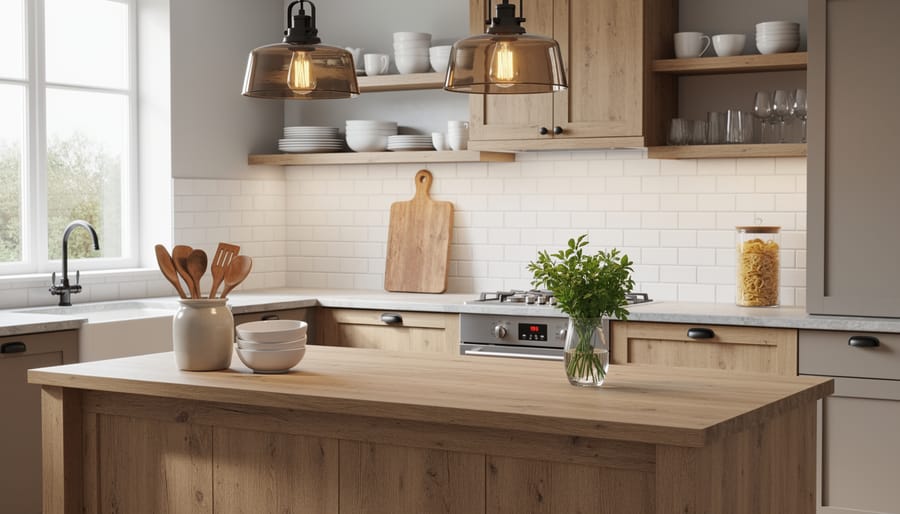
The good news? Design is shifting toward a more cohesive, integrated approach. Warmer metal finishes like brushed brass, aged copper, and champagne bronze are taking center stage, creating a gentler conversation with wood elements rather than a stark opposition. These metals share similar warm undertones with wood, making the entire space feel more pulled together and intentional.
Think of it this way: instead of creating contrast for contrast’s sake, you’re building layers of warmth that complement each other. A brass faucet paired with walnut cabinetry feels like they belong in the same family. Matte black can still work, but it’s being used more sparingly as an accent rather than the dominant metal throughout.
If you’re stuck with stainless steel appliances, don’t worry. You don’t need to replace everything immediately. Consider swapping out smaller fixtures like cabinet hardware, lighting, or faucets to warmer finishes first. This simple update can dramatically soften the overall feel and create that harmonious blend that’s defining today’s kitchens.
Here’s the thing about rustic kitchen design: it’s not going anywhere, it’s simply growing up. The trends we’ve explored that are fading away don’t signal the end of rustic style, but rather its natural evolution into something more refined and livable. Think of it as your kitchen shedding a few outdated layers while keeping its heart and soul intact.
These changes are actually exciting opportunities to breathe fresh life into your space. Modernizing your kitchen doesn’t mean stripping away the warmth and character that drew you to rustic design in the first place. Instead, you’re creating a version that feels authentic to how we actually live today, balancing coziness with clean lines, natural materials with thoughtful restraint, and timeworn charm with fresh functionality.
The beauty of this evolution is that you get to pick and choose what stays and what goes. Maybe you’ll keep those open shelves but style them more minimally, or maintain your farmhouse sink while updating the surrounding cabinetry. The goal isn’t perfection or following every new trend, it’s creating a kitchen that feels both timeless and current.
Remember, the best rustic kitchens have always been about creating spaces that feel lived-in, welcoming, and genuine. That core principle never goes out of style, it just takes on new expressions that reflect our changing tastes and lifestyles.


