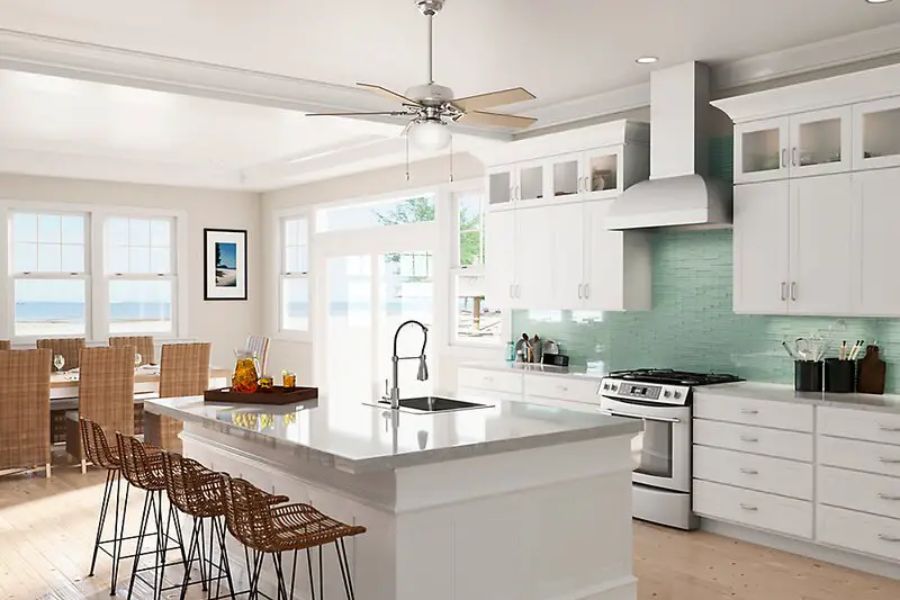

Rethink your tiny kitchen as an opportunity for clever design rather than a limitation. Install wall-mounted magnetic knife strips, hanging pot racks, and pegboards to free up valuable drawer and counter space instantly. Replace bulky cabinet doors with open shelving or glass-front alternatives to create visual depth while keeping essentials within easy reach. Use the inside of cabinet doors by adding adhesive hooks for measuring cups, pot lids, and kitchen towels—this often-overlooked real estate can maximize modest kitchen space without any permanent modifications.
Choose furniture that works double duty: rolling carts provide mobile storage and extra prep surface, while fold-down tables expand your workspace only when needed. Invest in stackable containers and drawer dividers to organize pantry items vertically rather than horizontally, multiplying your storage capacity. Corner spaces become functional with lazy Susans and pull-out organizers that transform awkward angles into accessible storage zones. Light colors on walls and reflective surfaces like stainless steel or glass backsplashes bounce light around the room, making your kitchen feel surprisingly spacious. These strategic changes prove that smart organization and thoughtful design choices matter far more than square footage when creating a kitchen that truly works for your lifestyle.
Why Small Kitchens Actually Work Better (When You Know the Tricks)
Here’s a secret that might surprise you: small kitchens aren’t actually the design disaster you think they are. In fact, they can be surprisingly efficient when you embrace their compact nature instead of fighting against it.
Think about the classic kitchen work triangle, the relationship between your sink, stove, and refrigerator. In a sprawling kitchen, you might walk miles during meal prep. But in a tiny space? Everything you need is literally within arm’s reach. Professional chefs understand this perfectly. Julia Child’s famous kitchen in Cambridge was just 147 square feet, yet she created culinary magic there for decades. The compact layout meant less time walking and more time cooking.
When you’re working with limited space, every decision becomes intentional. You can’t mindlessly accumulate gadgets you’ll use once a year, so you naturally curate a collection of tools you actually love and use. This forced simplicity often leads to a more stylish and functional kitchen than those overflowing with rarely-used items.
Small kitchens also encourage creative problem-solving. Need more counter space? You’ll discover the magic of cutting boards that slide over the sink. Running out of storage? Suddenly you’re finding vertical solutions you never would have considered in a larger space. These constraints don’t limit you, they inspire innovation.
Plus, there’s something genuinely satisfying about a cozy cooking space. It feels intimate and personal, like your own little culinary workshop. Many home cooks report feeling more focused and productive in compact kitchens because everything has its designated place and purpose. When you know where everything is and can reach it without taking a step, cooking becomes less about the space you have and more about the meals you create.
The Three Zones That Transform Any Tiny Kitchen
Creating Your Prep Zone Without Counter Space
No counter space? No problem! The beauty of tiny kitchens is that they force us to think creatively about where prep happens.
Start with pull-out cutting boards that tuck into narrow gaps between appliances or cabinets. Many kitchens already have these built-in spaces just waiting to be utilized. You can install a pull-out board for around $30-50, giving you instant workspace that disappears when you’re done. Just measure carefully and look for models with non-slip surfaces.
Over-the-sink cutting boards are absolute game-changers. These boards rest securely across your sink, creating a generous prep area right where you need it most. Bonus: vegetable scraps go straight into the sink for easy cleanup. Choose one with a colander insert, and you’ve got a mini food prep station that stores flat against the wall.
Portable prep stations deserve serious consideration too. A small butcher block cart on wheels gives you flexible workspace that moves where you need it. Use it as a prep surface while cooking, then roll it aside to become extra storage or even a mini bar cart when entertaining.
The key is thinking beyond permanent fixtures. Your prep zone can be modular, movable, and completely adaptable to whatever you’re cooking up that day.
Making Your Cooking Zone Multitask
Your stove area works harder than any other spot in your kitchen, so make every inch count. Start by installing a magnetic knife strip on the wall beside your range—it frees up precious counter space and keeps your most-used tools within arm’s reach. Add adhesive hooks or a slim rail system along your backsplash to hang frequently-used utensils, pot holders, and measuring cups.
When choosing cookware for tight quarters, think versatility. A quality cast-iron skillet can sear, bake, and even serve as a pizza stone, eliminating the need for multiple specialty pans. Nesting cookware sets with removable handles are game-changers, allowing you to stack pots and pans flat in narrow cabinets. Consider a multi-cooker that pressure cooks, slow cooks, and sautés—it replaces several bulky appliances while living permanently on your counter.
Don’t overlook the sides of your cabinets flanking the stove. Install narrow pull-out organizers for spices and oils, or attach a slim tension rod inside a cabinet door to hang spray bottles and kitchen towels. These small adjustments transform dead space into hardworking storage that keeps cooking essentials exactly where you need them.
Vertical Space: Your Kitchen’s Secret Superpower
Wall Solutions That Don’t Require Permanent Installation
If you’re renting or simply want to avoid drilling holes in your walls, you’re in luck! Today’s mounting solutions offer incredible versatility without the commitment. Adhesive hooks have come a long way from flimsy stick-ons—look for heavy-duty command hooks that can support several pounds each. They’re perfect for hanging lightweight pots, utensils, or even floating shelves designed specifically for adhesive mounting.
Tension rods are absolute game-changers in tiny kitchens. Install them inside cabinets to create dividers for baking sheets and cutting boards, or position one under your sink to hang spray bottles. You can even mount them vertically between countertop and upper cabinets to create hanging storage for lightweight items like dish towels or small baskets.
Magnetic mounting systems deserve special attention too. If your walls contain metal studs or you have a metal backsplash, magnetic knife strips, spice racks, and even small shelving units can transform vertical space instantly. For non-magnetic walls, consider adhesive-backed magnetic strips that you can mount temporarily.
The beauty of these solutions is their flexibility. As your needs change, simply reposition them without leaving behind damage or losing your security deposit. Start small, experiment with placement, and build your perfect kitchen layout one removable solution at a time.
The Magnetic Strip Revolution
Think beyond knife storage and unlock the full potential of magnetic strips in your compact kitchen! These humble organizers are absolute game-changers for vertical storage. Mount one inside a cabinet door to corral metal spice tins, keeping your favorite seasonings at eye level and freeing up precious shelf space. You can also attach small metal containers to hold everything from bobby pins to twist ties. Got a jumble of kitchen shears, whisks, and peelers? A magnetic strip near your prep area keeps these tools within arm’s reach while clearing out that overstuffed drawer. The beauty of this solution is its flexibility—you can install strips anywhere there’s a bit of wall space, from behind the sink to that awkward gap between appliances. Plus, the industrial-chic look adds character to your kitchen while solving real storage headaches.
Hidden Storage Spots You’re Probably Ignoring
Inside Your Cabinet Doors
The backs of your cabinet doors are prime real estate you’re probably not using! These hidden spaces are perfect for storing all those awkward items that clutter your shelves. Start with adhesive hooks or over-the-door organizers to hang measuring cups and spoons—you’ll free up drawer space and keep these essentials within easy reach.
For pot and pan lids, install a simple wire rack on the inside of a lower cabinet door. No more digging through stacks to find the right lid! You can find affordable options at most home stores, and installation usually takes just minutes with basic screws or heavy-duty adhesive strips.
Don’t forget about upper cabinet doors either. Slim mounted baskets work wonderfully for storing aluminum foil, plastic wrap, and sandwich bags. When you organize kitchen cabinets this way, everything has a designated spot and you’ll avoid the jumbled mess that typically accumulates in drawers. These door-mounted solutions are renter-friendly too—most can be removed without damage when you move.

That Awkward Corner Everyone Hates
We all have that one corner cabinet where things go to die, never to be seen again until your next move. But here’s the good news: those dead zones can become your kitchen’s secret weapon with the right setup.
Lazy Susans are the classic solution for a reason. They transform that frustrating reach-around-the-corner situation into a simple spin-and-grab motion. Look for two-tiered versions to maximize vertical space, perfect for storing spices, oils, or canned goods you actually want to use.
For deeper corner cabinets, pull-out drawer systems are game-changers. These ingenious contraptions slide out and swing to the side, bringing everything into view. Yes, they’re an investment, but consider how much usable space you’re currently wasting.
If you’re renting or working with a tight budget, try stackable corner shelves that create multiple levels within the existing space. Add some small bins or baskets to corral loose items, and suddenly that awkward corner becomes an organized storage powerhouse. The key is making everything visible and accessible, so nothing gets lost in the abyss.
Furniture That Earns Its Keep in a Small Kitchen
In a tiny kitchen, every piece of furniture needs to pull double (or triple!) duty. The right multi-functional pieces can completely transform how you work and move in your space, turning cramped quarters into a surprisingly efficient cooking zone.
Let’s start with the workhorse of small kitchens: rolling carts. These mobile marvels slide wherever you need them, whether that’s extra prep space beside the stove, a temporary serving station, or tucked away in a corner when not in use. Look for carts with butcher block tops for additional cutting surfaces, and choose models with shelves or baskets below to store everything from utensils to cookbooks. The beauty here is flexibility—you’re not locked into one configuration.
Fold-down tables are absolute game-changers when floor space is at a premium. Wall-mounted drop-leaf tables create instant dining or prep areas that disappear when you’re done. I’ve seen clever setups where a fold-down becomes a breakfast nook in the morning and vanishes by lunchtime, freeing up precious walking room. Some models even include built-in storage compartments for napkins, placemats, or kitchen gadgets.
Storage-integrated seating deserves serious consideration too. Bench seating with lift-up tops or pull-out drawers underneath offers hidden homes for seasonal items, extra linens, or bulky appliances you only use occasionally. Position one of these benches at a small dining table, and you’ve created comfortable seating while simultaneously solving storage headaches.
For more inspiration on making furniture work harder in compact cooking spaces, check out these small apartment kitchen ideas that showcase creative furniture arrangements. Remember, in tiny kitchens, furniture that just sits there is furniture you probably can’t afford to keep.

The Ruthless Decluttering Method That Actually Works
Let’s be honest – the real reason your tiny kitchen feels cramped isn’t always the size. It’s the collection of three spatulas you never use, the duplicate measuring cups, and that panini press from 2019 gathering dust. Here’s a decluttering approach that actually sticks.
Start by removing everything from your cabinets and drawers. Yes, everything. This visual shock helps you realize just how much you’re trying to cram into limited space. Now comes the evaluation phase, and it’s time to get ruthless.
For each item, ask yourself these three questions: Have I used this in the past three months? Could I easily borrow or improvise with something else if needed? Does this item earn its space by serving multiple purposes? If you’re answering “no” to these questions, it’s time to let go.
The items worth keeping in a tiny kitchen are your true workhorses – that chef’s knife you use daily, the cutting board that fits your counter perfectly, and the Dutch oven that handles everything from soup to bread. Specialty gadgets that only do one thing? They’re taking up valuable real estate.
Now implement the “one in, one out” rule. Got a new mixing bowl? Say goodbye to an old one. This simple boundary prevents clutter from creeping back in.
To maintain your newly streamlined space, do a quick monthly audit. Set a calendar reminder and spend fifteen minutes reassessing what’s still earning its spot. Think of it like weeding a garden – regular maintenance prevents overgrowth. Your tiny kitchen will breathe easier, and so will you when cooking becomes a pleasure instead of a frustrating game of Tetris.
Smart Swaps: Compact Alternatives to Bulky Kitchen Gear
You don’t need every gadget taking up precious real estate in your tiny kitchen. Instead, think multi-purpose and compact when choosing your essential kitchen appliances.
Swap that bulky food processor for an immersion blender, which does most of the same jobs while fitting snugly in a drawer. Blend soups right in the pot, whip up smoothies, and even tackle light chopping tasks with attachments. You’ll save counter space and skip the dishwasher Tetris afterward.
Invest in nesting cookware sets where pots and pans stack inside one another like Russian dolls. Look for handles that fold or detach for even slimmer storage. Nesting mixing bowls with lids pull double duty as prep containers and storage, eliminating the need for separate items.
Collapsible tools are game-changers. Try silicone colanders that flatten to less than an inch, expandable dish racks that adjust to your needs, and collapsible measuring cups that store flat. These clever designs give you full functionality when needed and disappear when you’re done.
Consider a toaster oven instead of separate appliances for toasting, baking, and reheating. One versatile unit replaces three or four single-purpose gadgets. Similarly, an electric kettle handles hot water needs faster than stovetop, taking up minimal space.
The key is being intentional about what earns a place in your kitchen. Every item should justify its footprint by working harder and smarter for you.
Visual Tricks That Make Your Kitchen Feel Twice as Large
Here’s a secret that interior designers have known forever: you don’t need to knock down walls to make your kitchen feel more spacious. The right visual tricks can genuinely transform how large your kitchen appears, and the best part? Most of these changes won’t break the bank.
Start with color, your most powerful ally. Light, neutral tones on walls and cabinets reflect more light and create an airy atmosphere. Think soft whites, warm creams, or gentle grays. If all-white feels too clinical for your taste, consider a two-tone approach with lighter upper cabinets and slightly darker lowers to draw the eye upward.
Lighting deserves serious attention in small spaces. Layer your lighting with under-cabinet strips, pendant lights, and recessed ceiling fixtures to eliminate shadows that make spaces feel cramped. A well-lit kitchen automatically feels more open and welcoming.
Reflective surfaces work like magic mirrors for your space. Glass-front cabinet doors create depth by letting you see through to the back wall rather than hitting a visual dead end. Glossy tile backsplashes bounce light around beautifully, while a strategically placed mirror can double your perceived square footage.
Consider replacing solid cabinet doors with glass fronts on upper cabinets. This transparency tricks the eye into seeing more space. Just keep those interiors tidy since they’ll be on display. A sleek stainless steel backsplash or polished countertops also contribute to that light-reflecting effect that makes everything feel larger and brighter.
Here’s the truth about tiny kitchens: they’re not a problem to solve, they’re an opportunity to embrace. You’ve just discovered that with the right combination of smart storage, creative design choices, and a shift in perspective, your compact kitchen can work just as hard as any spacious culinary haven. Even better, it can reflect your personal style while staying completely functional for your daily needs.
The best part? You don’t need to tackle everything at once. Start small. Maybe this week you’ll install that magnetic knife strip or swap out a bulky dish rack for a wall-mounted version. Next month, you might add under-shelf baskets or paint your walls in a light, space-enhancing color. Each little improvement compounds, and before you know it, you’ll have transformed your kitchen into a space that feels surprisingly spacious and genuinely enjoyable to cook in.
Remember, some of the world’s most efficient kitchens are tiny. Your small kitchen isn’t holding you back, it’s simply asking you to be more intentional about every choice you make. And that intentionality often leads to spaces that are more beautiful, organized, and purposeful than their sprawling counterparts.