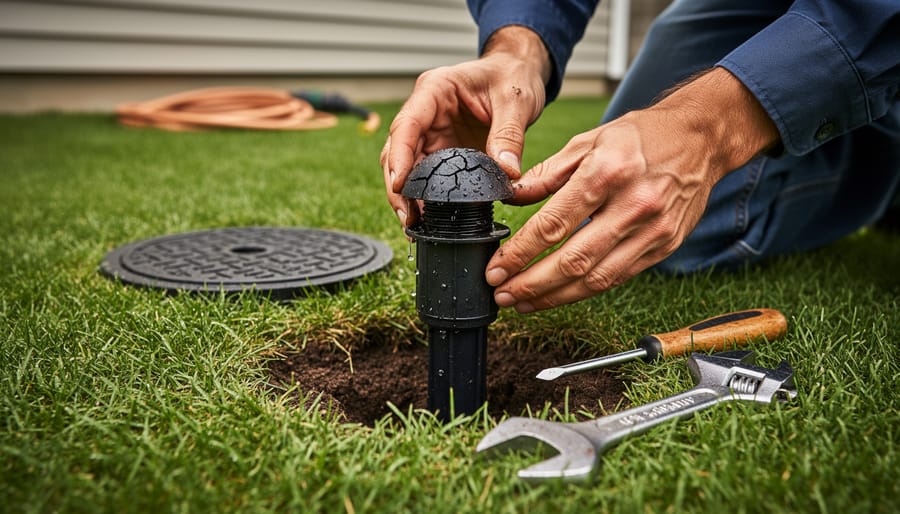
Locate the faulty component by turning on your Orbit system and watching for leaks, weak spray patterns, or zones that won’t activate—most sprinkler problems stem from clogged nozzles, damaged valves, or broken sprinkler heads that you can fix in under an hour with basic tools. Replace a cracked sprinkler head by digging around the base, unscrewing the old unit, and threading on a new one (they’re usually under $5 at hardware stores). Clear clogged spray nozzles by removing the top cap, rinsing the filter screen under running water, and using a paperclip to dislodge debris from tiny openings. Test your Orbit timer’s battery and programming if multiple zones fail simultaneously, as dead batteries cause the entire system to stop functioning despite appearing operational.
You don’t need professional expertise to tackle these common repairs yourself. Most Orbit sprinkler issues follow predictable patterns, and once you understand what to look for, you’ll save hundreds in service calls while keeping your lawn perfectly hydrated. The satisfaction of diagnosing that mysterious dry patch in your yard and fixing it before dinner? That’s the DIY victory worth celebrating—plus your grass will thank you.
Why Orbit Systems Break Down (And Why That’s Actually Good News)
Here’s the truth that might actually make you feel better: Orbit sprinkler systems break down for pretty predictable reasons, and most of them are totally fixable without calling in expensive reinforcements. Think of it like your favorite garden hose—it works beautifully until it doesn’t, and usually the culprit is something straightforward.
The most common troublemaker? Good old-fashioned wear and tear. Your sprinkler system works hard, cycling on and off throughout the season, with moving parts that eventually get tired. Valves wear out, seals dry up and crack, and those tiny springs inside timers can lose their oomph after years of faithful service. It’s not a design flaw—it’s just the natural lifecycle of outdoor equipment.
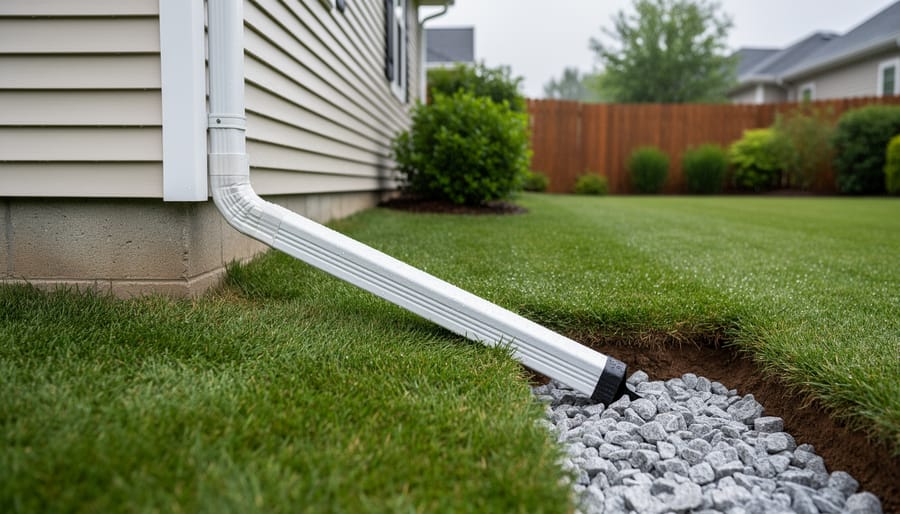
Weather exposure ranks as the second usual suspect. Your Orbit system lives outside 24/7, baking in summer heat and enduring winter freezes. UV rays make plastic brittle over time, while freeze-thaw cycles can crack components that weren’t properly winterized. Even heavy rain can create issues when combined with proper landscape drainage problems, causing water to pool around system components.
Water pressure fluctuations round out the top three reasons for system failures. Too much pressure can blow seals and crack fittings, while too little leaves you with sad, droopy spray patterns that barely reach your thirsty lawn.
Here’s why this is actually encouraging: these aren’t mysterious technological failures requiring specialized knowledge. They’re mechanical issues with logical causes and practical solutions. Once you understand what typically goes wrong, you’re already halfway to fixing it. Most repairs need nothing fancier than basic tools and a willingness to get your hands a little dirty.

The 5-Minute Diagnosis: What’s Actually Wrong
When Water Won’t Flow (or Won’t Stop)
Water flow issues can turn your beautiful lawn into a patchy disaster, but the good news is they’re often easier to fix than you might think. Let’s tackle the most common culprits together.
If water won’t flow at all, you’re likely dealing with a stuck valve. Picture this: mineral deposits and debris can build up over time, essentially gluing your valve shut. Try manually opening the valve by turning the solenoid (that cylindrical piece on top) counterclockwise about a quarter turn. If water starts flowing, you’ve confirmed the issue. A thorough cleaning or valve replacement usually does the trick.
On the flip side, a valve that won’t stop flowing means your sprinklers are throwing an around-the-clock pool party nobody invited. This typically points to a diaphragm problem inside the valve. The rubber diaphragm can wear out, tear, or get debris stuck underneath it, preventing a proper seal. Replacing this inexpensive part takes about fifteen minutes and can save hundreds in water bills.
Complete blockages often hide in the pipes themselves. Dirt, rocks, or even curious tree roots can create serious obstacles. Start by checking your filter screens and flushing the lines. Sometimes the simplest solution is the right one.
Sprinkler Heads Acting Strange
Nothing ruins your lawn’s aesthetic quite like sprinkler heads that seem to have a mind of their own! Let’s troubleshoot these quirky behaviors together.
If your pop-up heads aren’t rising properly, start by checking for debris around the stem. Dirt and grass clippings love to wedge themselves into tight spaces, preventing the head from extending fully. Turn on the zone and gently wiggle the head while water flows—sometimes it just needs a little coaxing to break free.
Broken heads are usually obvious culprits, often snapped off by lawnmowers or foot traffic. The good news? They’re typically easy to unscrew and replace with a matching Orbit head from your local hardware store.
Clogged nozzles create those frustrating misting patterns or weak streams. Remove the nozzle, rinse it under running water, and use a small pin or toothpick to clear any mineral deposits. This simple five-minute fix can dramatically improve coverage.
When your sprinkler head won’t rotate or produces uneven spray patterns, inspect the filter screen at the base of each head. These tiny mesh screens catch sediment but need occasional cleaning to maintain proper water flow and distribution across your lawn.
Timer and Controller Problems
Your sprinkler timer is essentially the brain of your irrigation system, so when it starts acting up, you’ll definitely notice. The good news? Many controller problems are surprisingly simple to fix once you know what to look for.
Start by checking if the display is showing anything at all. A completely blank screen usually points to a power issue. Take a look at your circuit breaker and make sure nothing’s been tripped. Sometimes it’s really that straightforward! Also inspect the power cord for any visible damage or loose connections at the wall outlet.
If your display is lit but the zones aren’t running on schedule, you’ve likely got a programming glitch. Controllers can lose their settings after power outages or when batteries run low. Replace backup batteries annually to prevent this frustration. Walk through your programming settings and confirm the current time, watering days, and zone durations are all correct.
Notice certain zones working while others don’t respond? This suggests wiring problems between the controller and valve box. Check terminal connections inside the timer for corrosion or loose wires. A simple tightening or cleaning with a wire brush might be your solution. Test the continuity with an inexpensive multimeter if you’re comfortable using one, or call in a professional if electrical troubleshooting feels beyond your comfort zone.
Fix It Yourself: Step-by-Step Repairs for Common Orbit Issues

Replacing a Broken Sprinkler Head
Good news—replacing a broken sprinkler head is one of the easiest repairs you can tackle, even if you’ve never worked on your irrigation system before. Think of it as changing a lightbulb, but for your lawn!
First, gather your supplies. You’ll need a replacement Orbit sprinkler head (match the type you’re replacing), a small shovel or trowel, and possibly some Teflon tape if you’re dealing with threaded connections. Most Orbit heads simply twist off, making this a 15-minute project.
Start by turning off your sprinkler system to avoid an impromptu shower. Dig carefully around the broken head, exposing about 4-6 inches of the riser pipe. Here’s where it gets satisfying: grip the old sprinkler head firmly and turn it counterclockwise. It should unscrew easily. If it’s stubborn, a pair of pliers wrapped in a cloth can help without damaging the pipe.
Before installing the new head, check the riser pipe for cracks or damage. Clean any dirt or debris from the threads. Now screw on your new Orbit head, turning clockwise until snug. Don’t overtighten—hand-tight plus a quarter turn is perfect.
The secret to professional results? Alignment matters. Make sure your new head sits level with the ground and faces the correct direction for your spray pattern. Turn the system on briefly to test coverage and adjust the spray arc as needed. Once you’re happy with the positioning, backfill the soil and pat it down gently.
Cleaning Clogged Valves and Nozzles
Here’s the thing about clogged valves and nozzles: they’re usually the culprit behind weak spray patterns and uneven coverage, but the good news is you probably don’t need to replace anything. A good cleaning can work wonders and save you a trip to the hardware store.
Start by turning off your water supply and releasing any pressure in the lines. For surface debris around nozzles, simply unscrew the nozzle by hand and rinse it under running water. You’d be surprised how much dirt, grass clippings, and mineral buildup can accumulate in those tiny openings. Use an old toothbrush to gently scrub away stubborn deposits.
For valves, locate the solenoid (that cylindrical component on top) and carefully remove it by unscrewing counterclockwise. Inside, you’ll find a small plunger and spring. Remove these parts and inspect for any debris or slime—yes, it can get pretty gross in there. Rinse everything thoroughly with clean water, and if you spot mineral buildup, soak the components in white vinegar for about 30 minutes.
Before reassembling, flush the valve body by briefly turning the water back on. This clears out any remaining debris hiding in the line. Once everything’s clean and dry, reassemble in reverse order, hand-tightening each component. Turn your system back on and enjoy watching that beautiful, even spray pattern return to life.
Fixing Leaky Valves and Connections
Leaky valves and connections are the troublemakers behind most Orbit sprinkler system headaches, but here’s the good news: they’re usually easier to fix than you might think! Let’s tackle these drippy culprits one by one.
Start by checking your valve diaphragms, those little rubber discs inside control valves that open and close to regulate water flow. Over time, they crack or collect debris, causing annoying leaks. Turn off your water supply, unscrew the valve bonnet, and carefully lift out the diaphragm. Give it a good look—if it’s torn, brittle, or misshapen, replacement is your answer. New diaphragms cost just a few dollars at hardware stores and pop right in. Make sure to clean the valve body thoroughly before installing the fresh one.
Next up: loose connections. Walk your system’s pipeline and feel around fittings and joints while the water’s running (wear gloves if it’s chilly!). Tighten any wobbly connections with adjustable wrenches, but don’t go Hulk-mode—overtightening can crack plastic fittings.
For stubborn pipe joint leaks, Teflon tape becomes your best friend. Shut off the water, disconnect the leaking joint, wrap the threaded end with three to four layers of Teflon tape in a clockwise direction, then reconnect firmly. Adding sprinkler system maintenance to your regular plumbing maintenance checklist helps catch these issues early.
Remember, taking photos before disassembling anything creates a helpful roadmap for reassembly—future you will definitely appreciate it!
Resetting and Reprogramming Your Timer
Sometimes your Orbit timer just needs a fresh start. If you’ve experienced a power outage or your sprinkler schedule seems to have vanished into thin air, don’t panic—getting everything back on track is easier than you think.
Start by checking the batteries in your controller. Even hardwired models typically have a backup battery that maintains programming during outages. Pop open the front panel and look for a 9-volt battery or AA cells. If they’re corroded or more than a year old, replace them immediately. This simple fix solves most reprogramming headaches.
After replacing batteries, you’ll likely need to reset the clock and your watering schedule. Most Orbit controllers have a reset button—usually a small recessed button requiring a paperclip to access. Press and hold for about five seconds to clear the system. Then, set your current time first, as all schedules depend on this foundation.
Reprogramming might feel tedious, but treat it as an opportunity to optimize your watering schedule. Consider adjusting run times for seasonal changes or tweaking zones that have seemed too wet or dry. Keep a photo of your ideal settings on your phone for quick reference during future resets. If the controller continues losing programming despite fresh batteries, the internal memory may be failing, signaling it’s time for a replacement.
Repairing Damaged Underground Lines
Finding underground line breaks can feel like detective work! Start by turning on the zone and looking for soggy spots, sunken areas, or geysers in your lawn—these are telltale signs of trouble below. Once you’ve pinpointed the problem area, carefully excavate around the suspected break using a small shovel or trowel, digging about 6-8 inches down. Keep your movements gentle to avoid creating more damage. When you expose the broken PVC pipe, assess whether you need a simple patch or full section replacement. For clean breaks, cut out the damaged portion with a hacksaw and install a new piece using slip-fix couplings—no glue needed, making future repairs easier. For hairline cracks, PVC primer and cement can create a watertight seal. Always let repairs cure for at least two hours before refilling the trench and testing your system.
The Tools and Parts You’ll Actually Need
Good news: you won’t need a truckload of fancy tools to tackle most Orbit sprinkler repairs! Let’s talk about what should live in your garage versus what you can grab as situations arise.
For your basic repair toolkit, keep these essentials handy: a pair of adjustable pliers, a flathead and Phillips screwdriver set, and a utility knife for cutting pipes or trimming ragged edges. A small roll of Teflon tape is your best friend for preventing leaks at threaded connections, and you’ll thank yourself later for having a bucket and some old towels to catch water during repairs.
Now, about replacement parts. The most common culprits are sprinkler heads, valves, and timer batteries. Here’s my advice: stock up on a couple of extra sprinkler heads in the sizes you use most. They’re inexpensive and break more often than you’d think from lawn mowers or foot traffic. Keep fresh 9-volt batteries around if your timer uses them.
When it comes to Orbit parts versus compatible alternatives, genuine Orbit components guarantee perfect compatibility, especially for timers and valve systems. However, generic sprinkler heads and basic fittings often work just fine and cost less. Check your system’s model number before shopping, and don’t hesitate to ask at your local home improvement store—they usually know which universal parts play nicely with Orbit systems. Save receipts for returns, just in case compatibility becomes an issue.

When to Call in the Pros (And When You’re Just Being Paranoid)
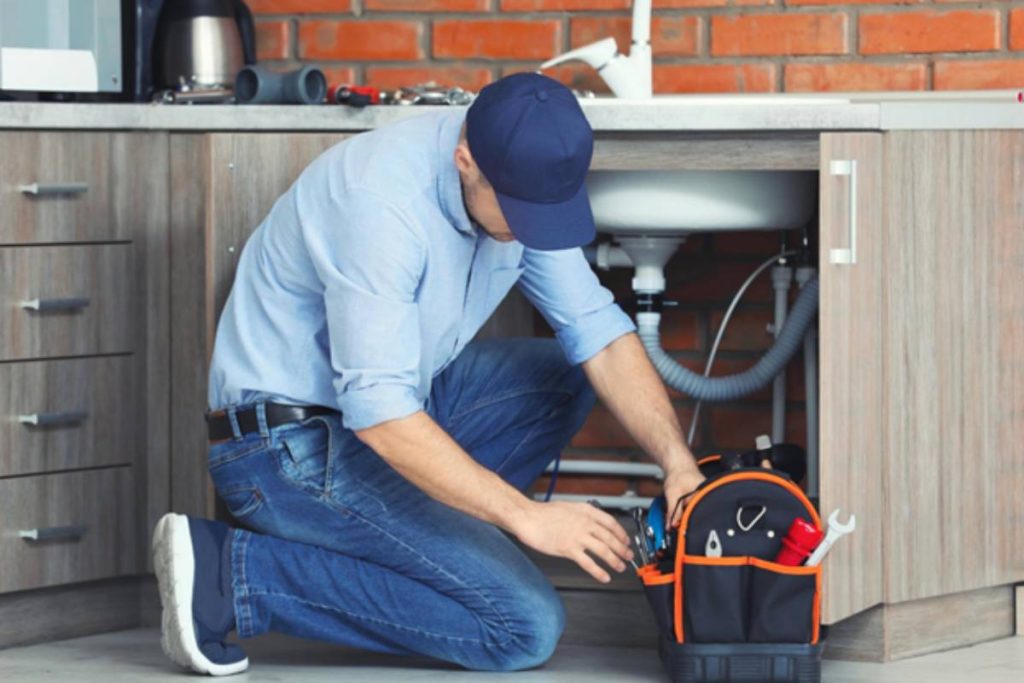
Let’s get real for a moment. Most Orbit sprinkler repairs are totally within your wheelhouse. Replacing sprinkler heads, adjusting spray patterns, or swapping out a timer? You’ve got this! These are perfect weekend projects that’ll save you a service call fee.
However, some situations genuinely call for professional backup. If you’ve got water erupting from your mainline deep underground, especially near your home’s foundation, bring in the pros. The same goes if you’re dealing with complex electrical issues beyond basic timer replacements, or if you’re troubleshooting a commercial-grade system with multiple zones and advanced controllers. Major backflow preventer problems also warrant expert attention since they’re connected to your home’s water supply and local codes.
Here’s the litmus test: If the repair requires excavating more than a foot deep, involves your home’s main water supply, or needs permits, call a professional. But that stuck valve or leaky coupling? Channel your inner DIY spirit and tackle it yourself. You’ll learn something new, save money, and earn serious homeowner bragging rights. Trust your instincts—if you’ve successfully diagnosed the problem using basic troubleshooting, you’re probably capable of fixing it too.
You’ve just mastered Orbit sprinkler system repairs, and that’s something to celebrate! These fixes aren’t reserved for professionals with specialized training—they’re completely within your reach as a capable homeowner. By tackling these repairs yourself, you’re not only saving hundreds of dollars in service calls, but you’re also gaining valuable knowledge about how your irrigation system works. Remember, the key to avoiding future headaches is consistent preventive maintenance. Checking your system seasonally, cleaning filters, and adjusting spray patterns will keep everything running smoothly. When you invest a little time in upkeep, you’re rewarded with easier yard maintenance and a lush, healthy lawn all season long. So grab your tools with confidence—you’ve got this!