Picture your kitchen transformed with a stunning hood that commands attention while whisking away smoke and steam effortlessly. The right range hood becomes your kitchen’s crown jewel, merging industrial-strength ventilation with architectural beauty that elevates your entire space. Whether you’re drawn to sleek stainless steel statements, rustic copper accents, or minimalist concealed designs, today’s modern kitchen hoods offer unprecedented opportunities to express your personal style while solving real cooking challenges.
Gone are the days when range hoods were purely utilitarian afterthoughts. Modern designs seamlessly balance form and function, transforming ventilation from a necessary evil into a design focal point that ties your entire kitchen aesthetic together. From wall-mounted chimney hoods that create dramatic vertical lines to island hoods suspended like sculptural art pieces, your options extend far beyond basic builder-grade boxes.
Smart renovation planning starts with understanding how hood design impacts everything from cabinet placement to electrical requirements. You’ll need to consider CFM ratings that match your cooking style, ductwork routing that doesn’t compromise your layout, and height placement that maximizes both efficiency and visual impact. The investment ranges widely depending on materials, features, and installation complexity, but the payoff extends beyond mere ventilation.
This comprehensive guide walks you through choosing, budgeting, and installing the perfect modern kitchen hood that complements your renovation vision while delivering the performance your cooking deserves.
The Ventilation-Design Balance in Modern Kitchens
Here’s the thing about modern kitchen hoods—they’re no longer just industrial-looking boxes that happen to suck up smoke. Today’s designs have evolved into statement pieces that can completely transform your kitchen’s aesthetic while still doing the heavy lifting when you’re searing steaks or experimenting with stir-fry. Finding that sweet spot between performance and style is what makes hood selection such an exciting (and sometimes challenging) part of your renovation journey.
When planning your kitchen remodel, it’s tempting to fall in love with a sleek, minimalist hood that looks incredible in those glossy magazine spreads. But here’s where reality kicks in: a gorgeous hood that can’t handle your cooking habits will leave you frustrated and your kitchen filled with lingering odors and grease buildup. That’s why understanding proper kitchen ventilation requirements is just as important as choosing a finish that complements your cabinet hardware.
The good news? You don’t have to compromise. Modern manufacturers have cracked the code on creating hoods that deliver powerful CFM ratings while maintaining clean, contemporary lines. Think of it as choosing between a sports car that only looks fast versus one that actually performs—except in this case, you can genuinely have both.
During renovation planning, address ventilation early in your design process. If you’re switching from recirculating to ducted ventilation or upgrading to a high-output range, you might need to rework ductwork or add external venting—changes that affect everything from your timeline to your budget. Getting this balance right from the start means your beautiful new hood will be working as hard as it looks good.
5 Modern Kitchen Hood Styles That Transform Your Space
Wall-Mounted Statement Hoods
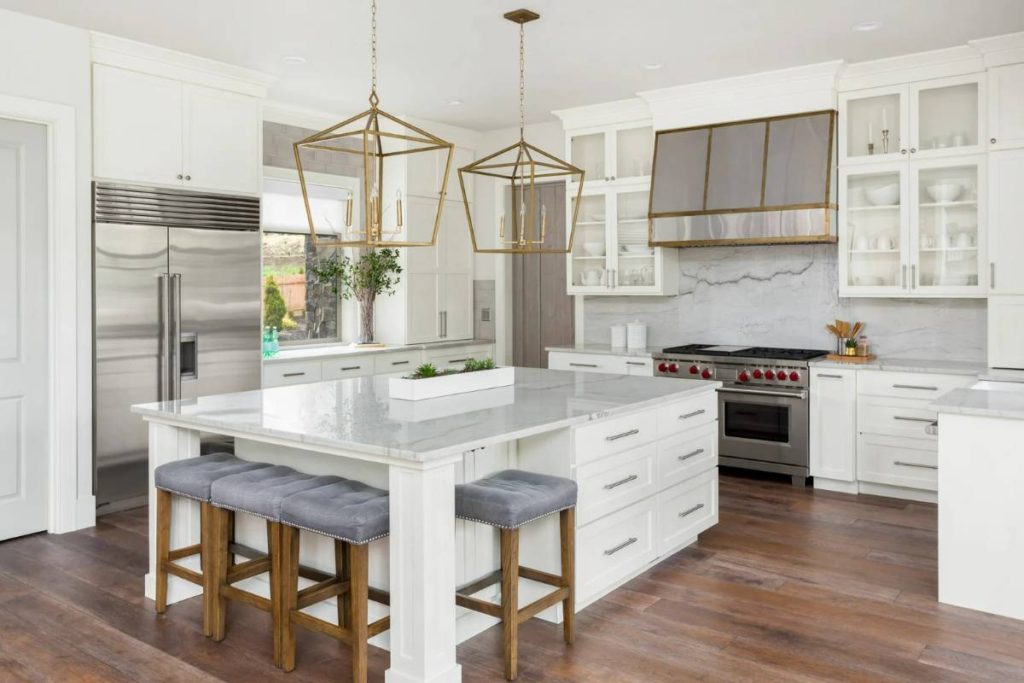
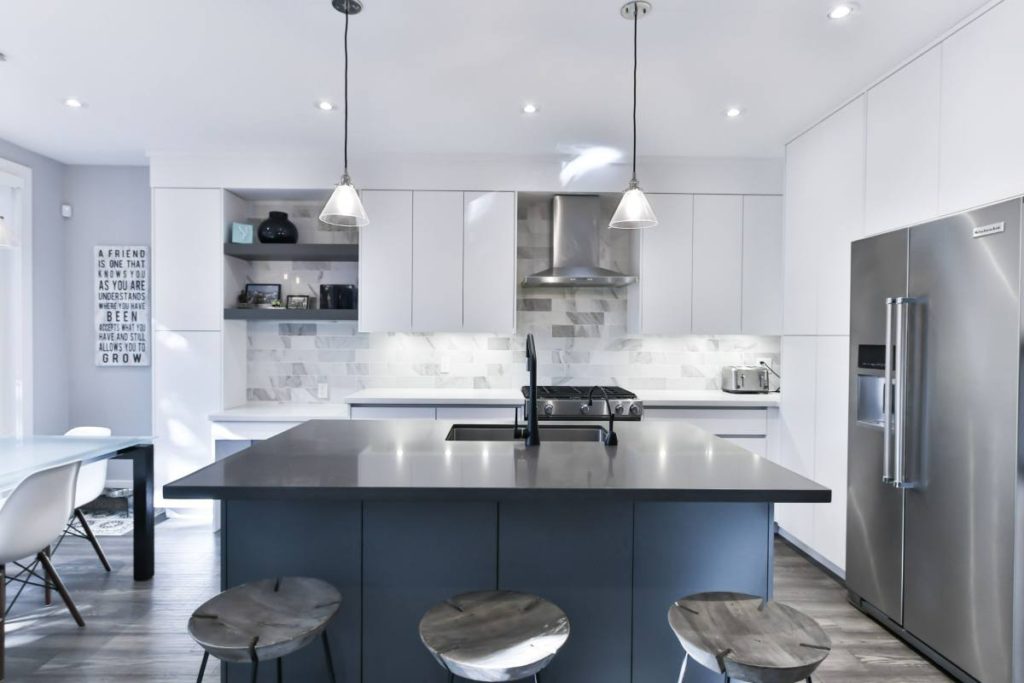
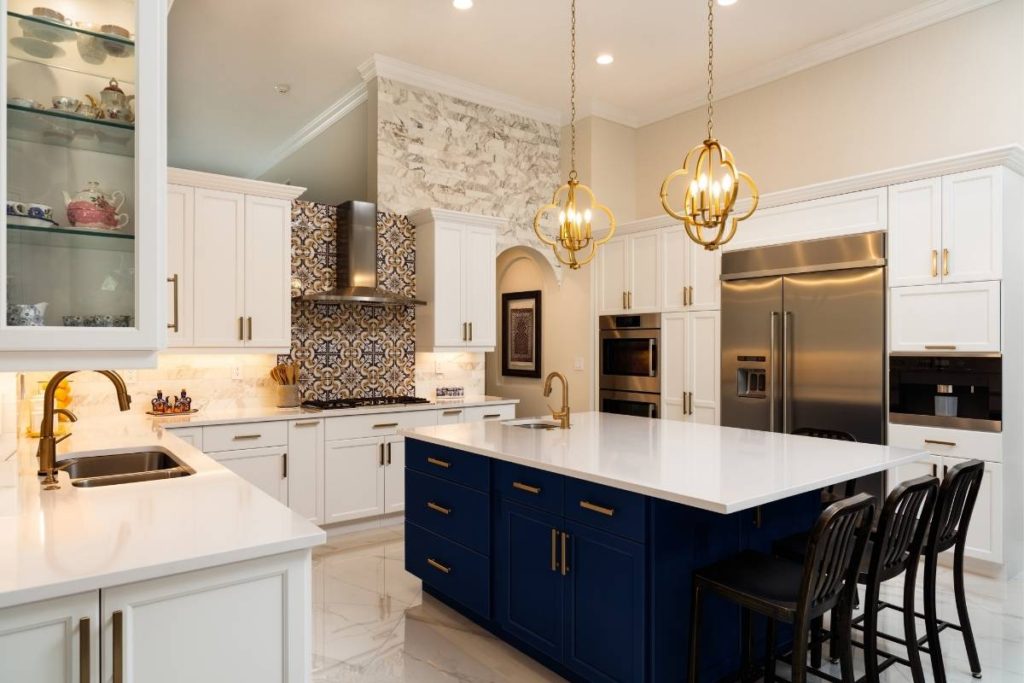
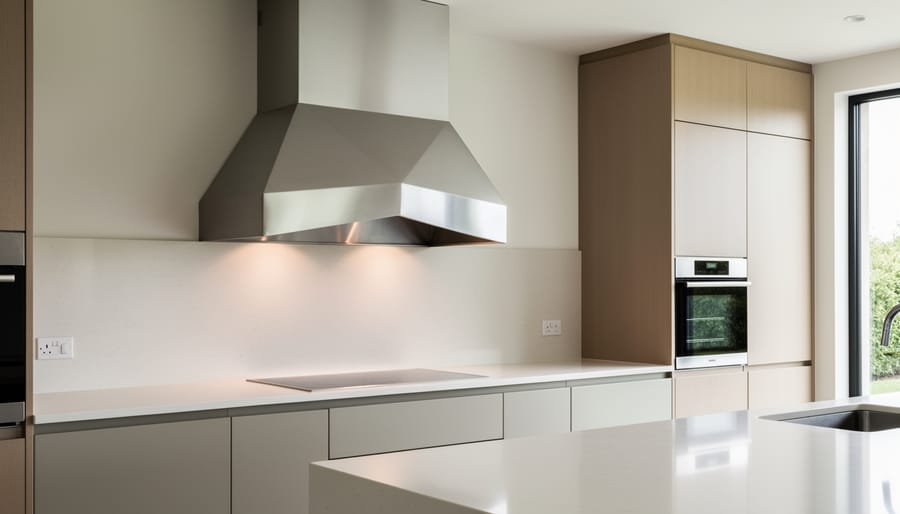
Wall-mounted statement hoods transform your kitchen from functional space to showstopper. These chimney-style beauties climb your wall like sculptural art pieces, demanding attention while whisking away cooking odors. Think of them as the chandelier of your kitchen—both practical and gorgeous.
Material choices really set the tone here. Stainless steel offers that crisp, professional look that never goes out of style, while copper develops a rich patina over time, adding warmth and character. For a softer aesthetic, consider plaster or drywall hoods that can be painted to blend seamlessly or contrast boldly with your cabinetry.
Installation requires some planning. You’ll need proper venting to the exterior, which means coordinating with your wall structure and potentially your roof line. The hood should extend 3-6 inches beyond your cooktop on each side for optimal performance. Most wall-mounted hoods work best with 30-36 inch ranges, though larger options exist for serious home chefs.
Consider the visual weight too—a substantial hood balances well with open shelving or glass-front cabinets nearby, preventing your kitchen from feeling top-heavy.
Island Hoods as Sculptural Elements
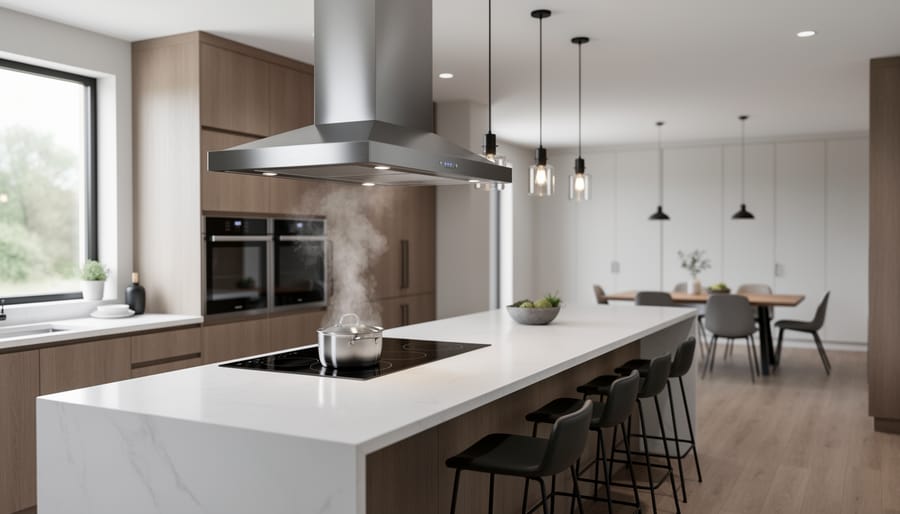
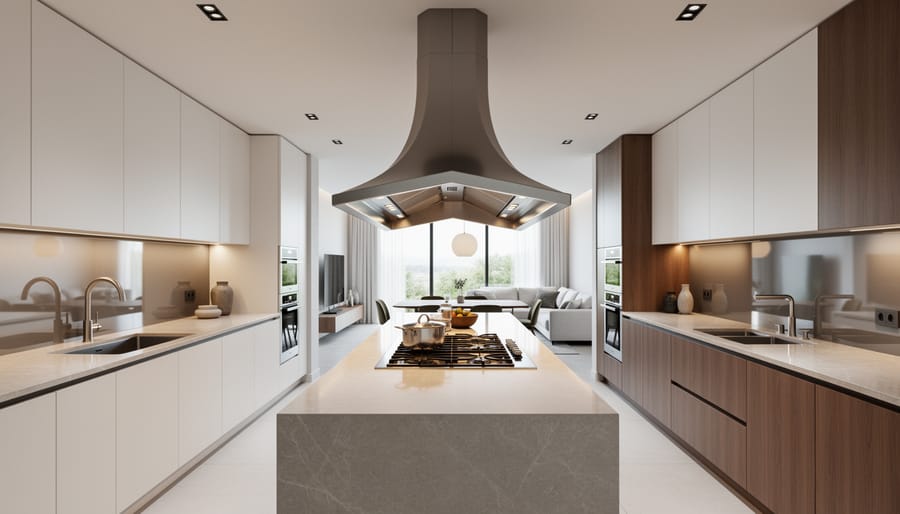
Island hoods make a stunning statement in open-concept kitchens, functioning as both practical ventilation and eye-catching design features. These suspended beauties hang from the ceiling, creating a dramatic focal point that naturally draws the eye upward and defines your cooking zone without walls.
When planning for an island hood, you’ll need to consider clearance requirements—typically 30 to 36 inches above your cooktop for optimal performance and headroom. The hood becomes architectural sculpture, so choose a design that complements your kitchen’s personality. Sleek stainless steel cylinders offer industrial elegance, while glass and minimalist metal frames create an airy, contemporary feel.
Think about your space’s proportions too. A generous island deserves a hood that holds its own visually without overwhelming the room. These show-stopping fixtures work hardest in open layouts, anchoring the kitchen area while maintaining that coveted flow between cooking and living spaces.
Integrated and Hidden Hood Systems
If you’re aiming for that sleek, “where did the hood go?” look, integrated and hidden systems are your secret weapon. These clever designs tuck ventilation out of sight while keeping your kitchen air fresh and clean.
Downdraft systems pop up from behind your cooktop when you’re cooking, then disappear completely when you’re done. They’re perfect for island setups where you want an unobstructed view across your space. Just keep in mind they work best with electric or induction cooktops, and while they’re improving, some models still capture less than half of pollutants compared to overhead options, so check those CFM ratings carefully.
Cabinet-integrated hoods hide beneath your upper cabinets with just a slim panel showing. They blend seamlessly into your cabinetry, making them ideal for galley kitchens or smaller spaces where visual clutter is your enemy.
Telescoping designs offer the best of both worlds. When you need them, they extend out with powerful extraction. When you don’t, they retract into a sleek cabinet or backsplash. It’s like having a transformer in your kitchen, minus the sound effects but with all the wow factor.
Under-Cabinet Low-Profile Options
Under-cabinet hoods have come a long way from those clunky metal boxes of yesteryear. Today’s low-profile options blend seamlessly into your kitchen while packing impressive ventilation power. Look for slim designs finished in stainless steel, matte black, or even custom panel-ready versions that disappear behind cabinetry for an ultra-clean look.
What makes these modern versions truly shine are the smart features tucked inside their compact frames. Many now include touch controls, LED lighting that doubles as task lighting for your cooktop, and variable speed fans that adjust based on cooking intensity. Some premium models even offer Bluetooth connectivity, letting you control settings from your phone or sync with your smart home system.
The beauty of low-profile hoods is their versatility. They work wonderfully in galley kitchens where space is tight, or when you prefer keeping the focus on statement backsplashes or open shelving. Installation is typically straightforward too, making them a favorite for DIY-savvy homeowners looking to upgrade without major construction headaches. Just ensure you choose adequate CFM ratings for your cooking style and kitchen size.
Custom and Designer Hoods
When you’re investing in a significant kitchen renovation and want something truly show-stopping, custom and designer hoods are worth serious consideration. These bespoke solutions transform your range hood from a functional necessity into a genuine focal point that reflects your personal style.
Think of custom hoods as sculptural pieces that happen to ventilate. Maybe you’ve fallen in love with a specific patina on copper, or you envision a dramatic geometric design that echoes your home’s architecture. Working with specialized fabricators or high-end designers means you’re not limited by standard dimensions or finishes. This is particularly valuable in kitchens with unusual layouts, extra-high ceilings, or when you’re matching specific historical details.
The investment makes sense when your kitchen serves as the entertaining hub of your home, when architectural details matter deeply to you, or when off-the-shelf options simply won’t fit your space or vision. Custom work elevates good renovations to extraordinary ones.
Material and Finish Choices That Define Modern Style
The material you choose for your kitchen hood sets the entire tone for your modern space, and trust me, this decision is just as important as the hood’s shape. Let’s explore how different materials can transform your kitchen’s personality while keeping practicality front and center.
Stainless steel remains the reigning champion of modern kitchen hood design, and for good reason. Its sleek, professional appearance instantly elevates any cooking space, reflecting light beautifully and creating that coveted chef’s kitchen vibe. Black stainless steel has emerged as a sophisticated alternative, offering the same durability with a warmer, fingerprint-resistant finish that’s perfect if you’re tired of constant polishing. I’ve seen countless homeowners fall in love with black stainless precisely because it maintains that modern edge while being remarkably forgiving in busy households.
| Material | Visual Impact | Maintenance | Best Kitchen Style |
|---|---|---|---|
| Stainless Steel | Bright, professional, reflective | Regular cleaning, shows fingerprints | Industrial, contemporary |
| Black Stainless | Sophisticated, warm undertones | Low maintenance, hides smudges | Transitional, modern |
| Copper | Rich, warm, develops patina | Specialized cleaners needed | Rustic modern, eclectic |
| Glass | Minimalist, seamless | Easy to clean, shows streaks | Ultra-modern, Scandinavian |
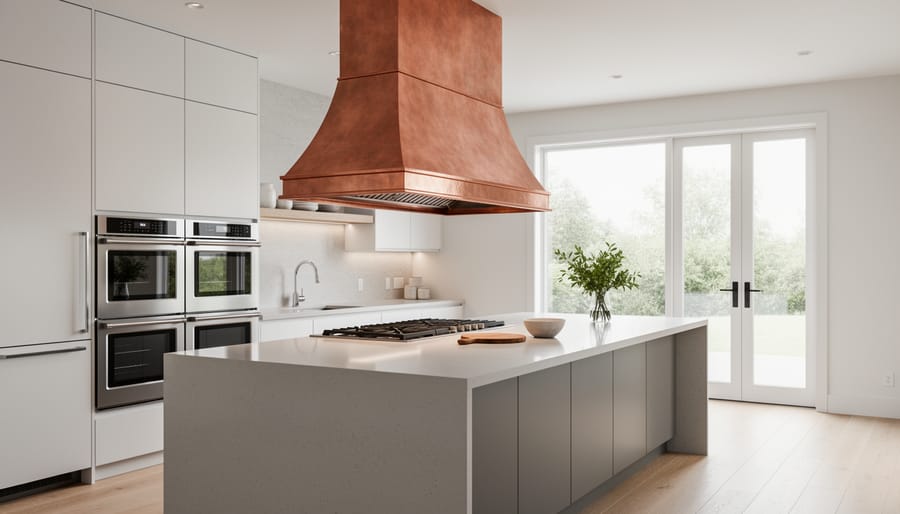
For those craving something truly distinctive, copper hoods bring warmth and character that stainless simply cannot match. The living finish develops a unique patina over time, making your hood a one-of-a-kind centerpiece. Glass hoods, particularly in tempered or tinted variations, create an almost invisible presence that’s perfect for minimalist designs where you want the backsplash or surrounding cabinetry to shine.
Wood accents are making exciting comebacks in modern kitchens, typically integrated as trim or paneling around metal hoods. This combination softens the industrial feel while maintaining clean lines. Consider matching wood tones to floating shelves or island bases for a cohesive look that feels intentional rather than random. The key is balancing these warmer elements with cooler materials to maintain that modern sensibility you’re after.
Smart Features Worth Adding to Your Hood
Today’s kitchen hoods aren’t just about pulling smoke out of the air—they’re packed with intelligent features that make cooking more enjoyable and your kitchen genuinely smarter. If you’re already investing in a modern hood during your renovation, these tech upgrades are worth serious consideration.
Automatic sensors are game-changers. These clever systems detect heat and smoke levels, adjusting fan speed automatically without you lifting a finger. Picture this: you’re searing a steak and things get a bit smoky. Your hood kicks into high gear on its own, then dials back down once the air clears. No more guessing at the right setting or forgetting to turn it off entirely.
Adjustable LED lighting has transformed hood illumination from afterthought to centerpiece. You can shift from bright task lighting while chopping vegetables to warm ambient glow during dinner parties. Many models let you customize color temperature and intensity, creating the perfect atmosphere for any occasion.
WiFi connectivity might sound excessive until you experience it. Control your hood from your smartphone, receive filter replacement reminders, or integrate it with your smart home system. Some models even sync with your cooktop, automatically activating when you start cooking.
Touch controls deliver that sleek, modern aesthetic while being surprisingly practical. They’re easier to clean than traditional knobs and buttons, and many feature gesture sensors so you can adjust settings with a simple wave—perfect when your hands are covered in flour or sauce. These upgrades transform your hood from functional necessity to kitchen command center.
Planning Your Hood Installation During Renovation
Getting the timing right for your hood installation can make the difference between a smooth renovation and a costly headache. The key is treating your hood not as an afterthought, but as a central player in your kitchen’s design that needs careful coordination from the very beginning.
Start by selecting your hood early in the renovation process, ideally before finalizing your cabinetry plans. Your hood’s dimensions and ventilation requirements will influence cabinet placement, ceiling modifications, and even your kitchen’s layout. Many homeowners discover too late that their dream hood won’t fit their space or requires extensive ductwork modifications.
Here’s a practical timeline to integrate your hood selection seamlessly into your kitchen renovation schedule:
- During initial planning (weeks 1-2): Choose your hood style and check manufacturer specifications for clearance requirements and CFM ratings
- Before framing work begins (weeks 2-3): Coordinate with your contractor about ductwork routing and any structural modifications needed for venting
- During electrical rough-in (weeks 4-5): Ensure proper electrical circuits are installed, typically requiring a dedicated 120V line for most residential hoods
- Before drywall installation (week 6): Verify duct placement and confirm the pathway won’t interfere with other systems like plumbing or HVAC
- After cabinet installation (weeks 10-12): Schedule hood installation, ensuring proper mounting support is in place for heavier models
Common pitfalls to avoid include underestimating ductwork complexity, especially in older homes where routing to an exterior wall might require creative problem-solving. Don’t assume your existing electrical setup can handle a high-powered hood, as many modern units need upgraded circuits. Also, resist the temptation to choose your hood based solely on aesthetics without confirming it meets your cooking ventilation needs. A stunning hood that can’t handle your stovetop’s heat output is just expensive wall art.
Budget Considerations: Where to Splurge and Where to Save
Kitchen hoods can range from a few hundred dollars to well over ten thousand, so understanding where your money goes makes all the difference in your renovation planning. The good news? You don’t necessarily need to break the bank to get a hood that looks amazing and performs beautifully.
At the budget-friendly end (think $300-$800), you’ll find standard under-cabinet hoods with basic stainless steel finishes and standard CFM ratings. These work perfectly fine for typical home cooking and can look quite sleek in a modern kitchen. Mid-range options ($800-$2,500) bring better materials, higher extraction power, quieter motors, and more design flexibility like chimney-style hoods or island configurations. The luxury tier ($2,500 and up) is where you’ll find custom range hoods, premium materials like hand-hammered copper, professional-grade ventilation systems, and designer brands that become true focal points.
Here’s my strategic advice: if you’re an everyday cook without heavy-duty needs, save on the hood and splurge on countertops or cabinetry instead. A $600 hood with the right CFM rating and a clean design will serve you wonderfully. However, if you’re passionate about cooking, host frequently, or have an open-concept layout where kitchen odors travel easily, investing in a quality hood with higher extraction power and quieter operation is absolutely worth it.
Consider this approach: allocate 5-10% of your total kitchen renovation budget to your hood. For a $30,000 kitchen remodel, that means $1,500-$3,000 gets you an excellent hood without compromising other essential elements. Remember, proper installation matters as much as the hood itself, so factor in ductwork and electrical costs when planning your budget.
Choosing the right modern kitchen hood isn’t just about checking a box on your renovation list—it’s about anchoring your entire kitchen design with a statement piece that works as hard as it looks. Throughout this journey, we’ve explored everything from sleek minimalist designs to bold architectural statements, and one thing remains crystal clear: your hood is both a functional necessity and a design opportunity you don’t want to miss.
As you move forward with your kitchen renovation, remember that the best hood design is one that reflects your personal style while meeting your cooking needs. Whether you’re drawn to the clean lines of a contemporary wall-mounted canopy, the sophisticated presence of an island hood, or the seamless integration of a built-in model, trust your instincts while keeping practical considerations in mind.
Your dream kitchen is within reach, and selecting the perfect modern hood is a cornerstone decision that sets the tone for the entire space. Don’t rush this choice. Take time to visualize how different styles complement your cabinetry, consider how various materials play with your lighting, and think about the cooking experiences you want to create in this space.
The beauty of modern hood design lies in its versatility—there’s truly something for every aesthetic and budget. So dive in with confidence, embrace both form and function, and create a kitchen that not only looks incredible but works beautifully for years to come. Your culinary sanctuary awaits.