
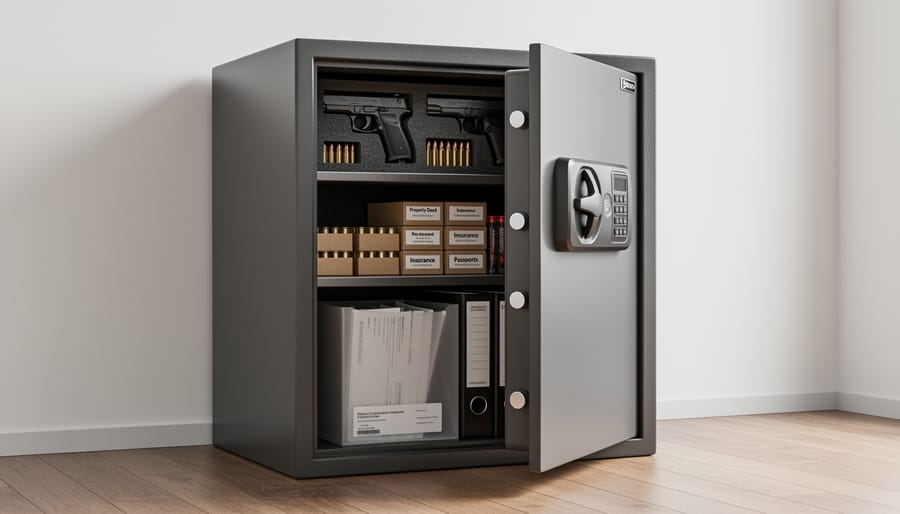
Protect your most important possessions by choosing a safe with UL-certified fire protection rated for at least 1,550°F and water resistance verified through ETL submersion testing. Store firearms, passports, birth certificates, and irreplaceable photos in a container designed to withstand both house fires that rage for 30-60 minutes and flooding from burst pipes or natural disasters. Compare fire ratings carefully since a safe marked “fireproof” might only protect paper documents at temperatures below 350°F, while digital media and photographs require even lower internal temperatures to survive. Verify waterproof claims by looking for safes tested to withstand submersion in several inches of water for 24 hours or more, not just moisture resistance.
Your investment in a quality fireproof and waterproof safe delivers peace of mind that extends beyond simple storage. The right safe becomes your home’s emergency vault, protecting what you cannot replace when disaster strikes. Whether you’re safeguarding family heirlooms, legal documents, or firearms in compliance with local storage laws, understanding protection ratings transforms an overwhelming purchase into a confident decision.
This guide walks you through the real differences between marketing claims and actual protection, showing you exactly what those certification numbers mean for your belongings. You’ll discover which features matter most for your specific situation, how to balance security with accessibility, and where to position your safe for maximum protection. We’ll compare options across different price points so you can find the best value without sacrificing the protection your valuables deserve. By the end, you’ll know precisely which safe meets your needs and why it’s the right choice for your home.
Understanding Firearm Storage Laws and What They Mean for Your Home
State-by-State Requirements: What You Actually Need to Know
Here’s the honest truth: safe storage laws vary wildly from state to state, and while I can’t give you legal advice, I can help you understand the common themes that’ll keep you on the right side of regulations.
Most states with firearm storage requirements focus on three main areas. First up is secure locking mechanisms. Your safe needs a dependable lock, whether that’s a traditional key, combination dial, or electronic keypad. The key word here is “secure,” meaning it shouldn’t be something a curious child could easily bypass.
Second, many states have accessibility restrictions, especially if minors live in or visit your home. Think of it as common-sense stuff: if kids are around, your firearms need to be locked away and inaccessible without adult intervention. Some states get specific about this, while others leave it more open to interpretation.
Third, child safety provisions are becoming increasingly standard. These typically require that unauthorized users, particularly children, cannot access firearms. Your fireproof and waterproof safe should meet this requirement naturally, as long as you’re keeping the combination private and the keys secured.
Here’s my recommendation: before purchasing your safe, check your state’s specific requirements through your local law enforcement website or state attorney general’s office. They’ll have the most current information. Remember, these laws exist to prevent tragedies, so even if your state doesn’t mandate specific storage, following these guidelines just makes good sense for protecting both your family and your valuables.
Beyond Compliance: Protecting Your Family and Your Investment
Meeting the bare minimum legal requirements for firearm storage is certainly important, but let’s be honest – it’s just the foundation. Think of it like building a house: you wouldn’t stop at the framing, would you? The same principle applies to protecting your firearms, important documents, and family heirlooms.
Here’s something many people don’t consider until it’s too late: fires can reach temperatures exceeding 1,000 degrees Fahrenheit in just minutes, and a standard gun safe offers zero fire protection. Your investment in firearms could literally melt away, along with passports, birth certificates, and those irreplaceable family photos you’ve been meaning to digitize. Adding fireproof and waterproof features transforms your safe from a basic compliance tool into genuine disaster insurance.
Water damage often gets overlooked, but it’s equally devastating. Whether from firefighter hoses, burst pipes, or flooding, moisture can ruin firearms through rust and corrosion faster than you’d imagine. Waterproof seals aren’t just about surviving a flood – they protect against humidity and everyday moisture too.
Consider this real-world scenario: a small kitchen fire triggers your sprinkler system. Without waterproof protection, you’re looking at potentially thousands in firearm restoration costs, even though the fire never reached your safe. That’s why investing in combined fireproof and waterproof protection isn’t excessive – it’s smart home stewardship that protects both your financial investment and your family’s security for years to come.
What Makes a Safe Truly Fireproof (And Why It Matters)
Fire Ratings Decoded: Understanding the Numbers
When you’re shopping for a fireproof safe, you’ll notice ratings like “30-minute” or “120-minute” stamped right on the label. But what do these numbers actually mean for your valuables during a real emergency?
Think of fire ratings as your safe’s report card from UL (Underwriters Laboratories), an independent testing organization that puts safes through intense heat challenges. When a safe earns a 30-minute rating, it means the interior stayed below 350°F for half an hour while exposed to temperatures exceeding 1700°F. That’s roughly what your safe would face during an average house fire.
Here’s where it gets practical: most residential fires are controlled within 20-30 minutes by firefighters, making a 30-minute rated safe adequate for many homeowners. However, if you live in a rural area with longer emergency response times, or you’re protecting irreplaceable items like family photos and legal documents, stepping up to a 60-minute or 120-minute rating provides that extra cushion of protection.
The temperature threshold matters too. Paper documents char at around 400°F, so that 350°F standard keeps your birth certificates and property deeds safe. Digital media like USB drives and external hard drives? They’re more sensitive, requiring special media-safe ratings that maintain internal temperatures below 125°F.
When comparing safes, look beyond just the time rating. Check whether the safe passed independent UL testing versus manufacturer-only testing. Independent certification means someone verified those claims, giving you confidence that your investment will actually perform when flames threaten your home.
What Actually Happens Inside Your Safe During a Fire
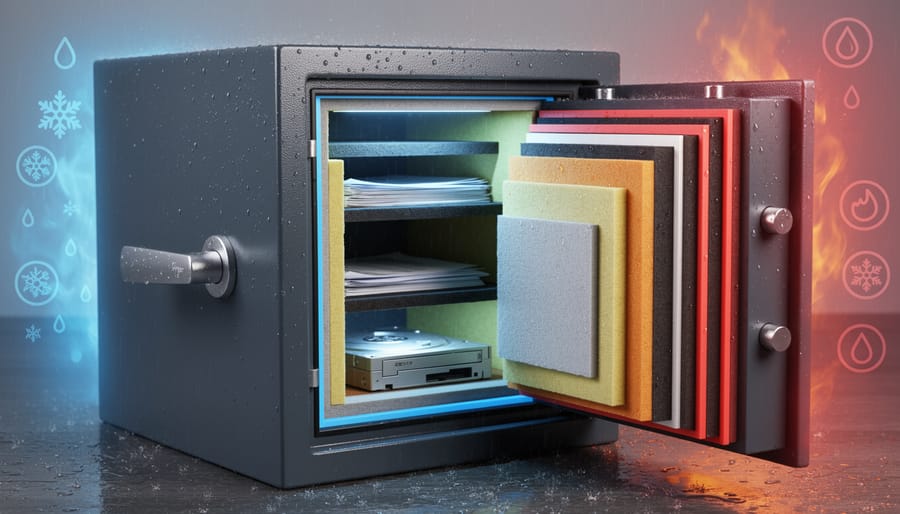
When fire strikes, your safe becomes a protective cocoon using some pretty impressive science. Most fireproof safes rely on special insulation materials that contain water molecules or other compounds that absorb and dissipate heat. Think of it like a thermal barrier that keeps the temperature inside significantly lower than the inferno outside.
Here’s what’s really happening: as flames engulf the exterior, the insulation materials begin releasing moisture as steam, which actively cools the interior. Quality safes maintain internal temperatures below 350°F even when external temps reach 1200°F or higher. This matters tremendously because paper documents start charring around 400°F, so that safety margin is crucial.
For firearms and ammunition, the stakes are different. While metal gun parts can withstand high heat, the real concern is ammunition. Modern ammo is designed with safety in mind, but extended exposure to extreme heat can still cause degradation or, in worst cases, discharge. That’s why serious gun owners invest in safes with robust fire ratings, not just basic protection.
The layered insulation approach creates multiple defense zones, giving your valuables precious extra minutes or even hours of protection. It’s not magic, just smart engineering that buys time when every second counts during a disaster.
The Truth About Budget Fireproof Safes
Let’s get real about budget fireproof safes. That $100 model at your local big-box store? It’ll handle a quick house fire better than a filing cabinet, but don’t expect miracles. Most budget safes offer 30-60 minutes of fire protection at around 1200°F, which honestly covers many residential fires. Where manufacturers cut corners is typically in the locking mechanism, wall thickness, and waterproofing quality.
Here’s where you can compromise: If you’re protecting everyday documents like tax returns or family photos, a budget safe works fine. The decorative appearance doesn’t matter if it’s tucked in a closet, and basic digital locks get the job done.
Where you shouldn’t skimp: If you’re storing irreplaceable items, firearms requiring legal compliance, or significant valuables, invest in better waterproof seals and longer fire ratings. A safe that survives the fire but floods with water from firefighting efforts defeats the purpose. Also, if you live in flood-prone areas or have a basement installation planned, waterproofing becomes non-negotiable, not optional. Sometimes spending an extra $200 means the difference between a soggy mess and protected memories when disaster strikes.
Waterproof Protection: Your Insurance Against Floods and Firefighters
How Waterproof Ratings Actually Work
Understanding waterproof ratings doesn’t have to feel like decoding a secret language. Let’s break down what those numbers actually mean for your safe.
Most waterproof safes use IPX ratings, which measure protection against water intrusion. The first number indicates solid particle protection, while the second tells you about water resistance. For safes, you’ll typically see ratings like IPX7 or IPX8. An IPX7-rated safe can handle submersion in up to three feet of water for about 30 minutes, while IPX8 goes deeper and longer, sometimes up to seven feet for several hours.
Here’s where your location matters. If you live in a flood-prone area or have a basement safe, you’ll want at least an IPX7 rating, though IPX8 offers better peace of mind. For upper-floor installations in low-risk zones, even basic water resistance might suffice for protecting against firefighting efforts or minor leaks.
Think about real-world scenarios too. Hurricane zones need serious submersion protection, while homes in drier climates might prioritize fire ratings instead. Many quality safes will specify exactly how long they’ll protect contents underwater, usually ranging from 24 to 72 hours.
The sweet spot for most homeowners is finding a safe that handles at least 24 hours of submersion at two feet deep, which covers most residential flooding situations without breaking the bank.
The Firefighter Problem Nobody Talks About
Here’s something most people don’t realize until it’s too late: firefighters use an enormous amount of water to put out house fires. We’re talking thousands of gallons that can flood your home, seep through floors, and saturate everything in its path. While your fireproof safe might protect your documents and valuables from flames, what happens when hundreds of gallons of water come rushing through your home?
This is where the waterproof feature becomes absolutely essential, not just a nice bonus. Think about it like this: even if a fire doesn’t reach your safe directly, the water damage from extinguishing nearby flames can be equally devastating. Paper documents turn to mush, electronics get fried, and family heirlooms become irreparably damaged. I’ve heard heartbreaking stories from homeowners who thought their fireproof safe was enough protection, only to open it after a fire and find everything destroyed by water that seeped through unsealed seams.
The reality is that fire and water damage go hand-in-hand during house fires. A truly protective safe needs to guard against both threats. Look for safes with waterproof seals rated for submersion, not just water resistance, because you need protection that works even when your safe is sitting in standing water for hours.
Choosing the Right Size and Placement for Your Home
Sizing for Firearms and Other Valuables
Choosing the right size safe is like planning a closet renovation—you need to think beyond today’s needs and anticipate tomorrow’s growth. Start by taking inventory of everything you want to protect. For firearms, measure your longest gun (typically rifles or shotguns) to ensure adequate interior height. Most gun safes list their capacity, but here’s an insider tip: manufacturers often calculate capacity using slim rifles without scopes. In reality, plan for about half the advertised gun capacity if you have accessories or optics attached.
Consider your handgun collection separately. Many safes include adjustable shelving or door organizers perfect for pistols, keeping them accessible yet secure. Don’t forget ammunition storage—keeping it in a fireproof, waterproof environment is both smart and safe. Calculate approximately 5-10% of your safe’s volume for ammo boxes.
Beyond firearms, think about those irreplaceable items: passports, birth certificates, property deeds, family photos, jewelry, or cash reserves. Document folders and small valuables can fit nicely on shelves between long guns or in door pockets.
Here’s a practical approach: list everything you own now, then add 25-30% for future purchases or acquisitions. If you’re just starting out with firearms, smaller safe options might work initially, but most enthusiasts find themselves upgrading within a few years. When in doubt, size up—you’ll thank yourself later when your collection grows.
Where to Install Your Safe (And Where Never to Put It)
Choosing the right spot for your fireproof and waterproof safe is just as important as selecting the right model. Think of it as finding the perfect home within your home for your most precious belongings.
First, let’s talk about the ideal locations. Your primary bedroom closet often makes an excellent choice because it’s accessible when you need it, yet away from main living areas where guests might wander. The closet floor provides solid support, especially important for heavier safes that can weigh several hundred pounds when loaded. A ground-floor location is preferable since concrete slabs offer better stability than upper floors with wooden joists.
Consider accessibility carefully. You want authorized family members to reach the safe quickly during emergencies, but you also want some level of discretion. This is where creative concealment options come into play, balancing security with smart placement.
Now for the never-do list. Avoid placing your safe in unfinished basements prone to flooding, no matter how waterproof the rating claims. Garages experience extreme temperature fluctuations that can compromise seals over time. Upper-floor installations risk structural damage and make your safe vulnerable during fires when floors can collapse.
Steer clear of exterior walls where thieves might cut through from outside, and never place a safe in an obvious location like behind a predictable painting or in a home office visible through windows. The master bathroom might seem clever, but humidity can wreak havoc on contents despite waterproof ratings designed for flooding, not constant moisture exposure.
Lock Types and Security Features That Actually Matter
Electronic vs. Mechanical vs. Biometric: The Real Differences
Choosing the right lock for your fireproof and waterproof safe isn’t just about preference—it directly impacts how quickly you can access your belongings during emergencies and how reliably your safe performs over time.
Electronic locks offer the fastest access, typically opening in seconds with a simple code entry. They’re perfect for compliance situations where quick access matters, like safely storing firearms while keeping them available for home defense. The downside? They require battery changes every year or two, and humidity from water exposure can potentially affect circuitry over time. Keep spare batteries nearby and test your code regularly.
Mechanical combination locks are the workhorses of the safe world. They never need batteries, work reliably after water exposure, and can last decades without failure. However, they’re slower to open—expect 20-30 seconds of dial turning—and if you forget your combination, you’ll need a professional locksmith. They’re ideal for document storage or situations where rapid access isn’t critical.
Biometric lock options use your fingerprint for lightning-fast access, making them popular for firearm storage. Modern versions work well, but they can struggle with wet or dirty fingers and may fail to recognize prints as you age. They also require batteries and typically cost more upfront.
For most homeowners, electronic locks strike the best balance between speed and reliability. However, if your safe will be in a damp basement or you prefer maximum simplicity, mechanical locks remain a bulletproof choice.
Pry-Resistance, Bolt Work, and Other Features Worth Paying For
Let’s talk about what actually keeps your valuables secure versus what just looks impressive in a product photo. When it comes to pry-resistance, door thickness matters more than you might think. Look for safes with doors at least 1/4 inch thick with steel construction—anything thinner can be surprisingly vulnerable to determined tampering.
Here’s something most manufacturers won’t advertise: bolt count isn’t everything. A safe with twelve bolts sounds more secure than one with four, right? Actually, what matters is the diameter and throw depth of those bolts. Four robust 1-inch diameter bolts will outperform a dozen flimsy ones every time. Think of it like deadbolts on your front door—one quality lock beats three cheap ones.
Anti-pry features like recessed doors and relocker systems provide real protection by making it nearly impossible to wedge tools between the door and frame. These aren’t just bells and whistles; they’re the difference between a burglar giving up and gaining access.
For anchoring, pay attention to pre-drilled mounting holes. A safe that can’t be bolted down is essentially a heavy briefcase for thieves. Look for multiple anchor points that let you secure the unit to both floor and wall, creating a genuinely immovable fortress for your valuables.
Real-World Recommendations: Balancing Budget, Compliance, and Protection
For First-Time Firearm Owners on a Budget
If you’re new to firearm ownership, you’ll need storage that meets your state’s requirements while protecting against disasters—all without draining your wallet. The good news? Several manufacturers offer quality safes under $1,000 with basic fireproof and waterproof features that cover the essentials. Look for models with at least 30-minute fire ratings and basic water resistance, which typically handle most residential emergencies. These entry-level options usually accommodate 8-12 long guns, perfect for starting your collection. Many include pre-drilled holes for anchoring to studs or concrete, satisfying legal storage requirements in most states. Stack-On and SentrySafe offer reliable budget-friendly models that balance legal compliance with practical protection. Think of this first safe as your foundation—you can always upgrade as your collection grows, but starting with certified protection keeps your investment and family secure from day one.
For Serious Collectors and Multi-Firearm Households
If you’re managing a collection worth thousands or need to meet strict state compliance requirements, investing in premium protection makes practical sense. These top-rated gun safes typically offer 90-120 minutes of fire protection at 1700°F, plus extended waterproof ratings that can handle complete submersion for days rather than hours.
Look for models with electronic locks paired with backup key access, adjustable interior configurations that grow with your collection, and built-in dehumidifiers to prevent moisture damage during long-term storage. Many high-end options include fireproof document drawers as a bonus, protecting your permits and registration papers alongside your firearms.
While these safes represent a significant upfront investment, think of it this way: you’re protecting assets you’ve already invested in, plus ensuring you’re covered if insurance or legal questions arise after a disaster. The peace of mind that comes from maximum protection is worth the upgrade.
For Families with Children: Safety First Considerations
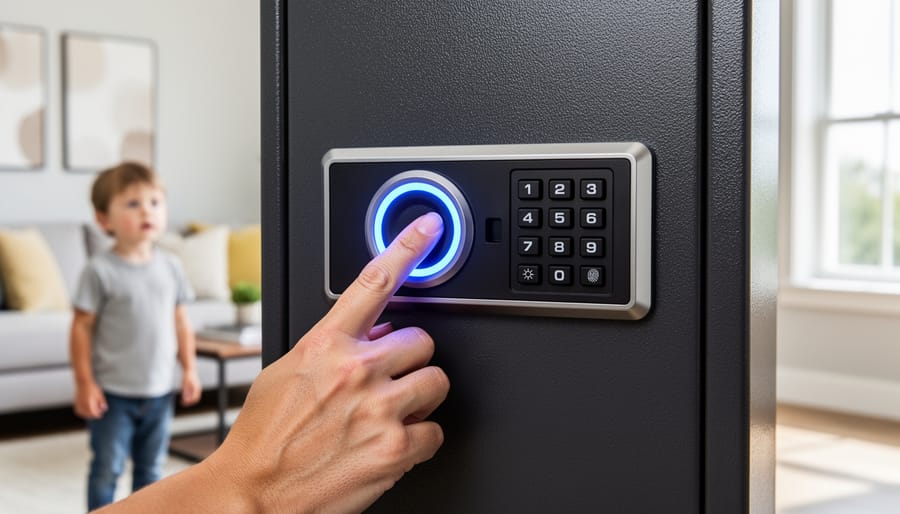
When you have curious little ones at home, your safe needs to work double-duty: keeping valuables secure from disasters while preventing unauthorized access by children. Look for models with biometric fingerprint readers or electronic keypads that adults can open quickly in emergencies but that remain completely child-proof. Many states actually require firearms to be stored in locked containers inaccessible to minors, so this isn’t just about peace of mind—it’s often a legal necessity.
The sweet spot is finding a safe with CAL DOJ certification, which verifies child-resistance while maintaining rapid adult access. Spring-loaded doors that pop open after authentication mean you’re not fumbling with heavy lids during stressful moments. Consider mounting height too—bolting your safe at adult eye-level in a closet keeps it completely out of a child’s view and reach. Some families even use multiple safes: a smaller quick-access biometric unit for frequently-needed items, and a larger fireproof-waterproof safe for long-term document storage. This layered approach gives you flexibility while maintaining that crucial safety barrier between children and potentially dangerous items.
Installation and Maintenance: Making Your Investment Last
DIY Installation vs. Professional Setup
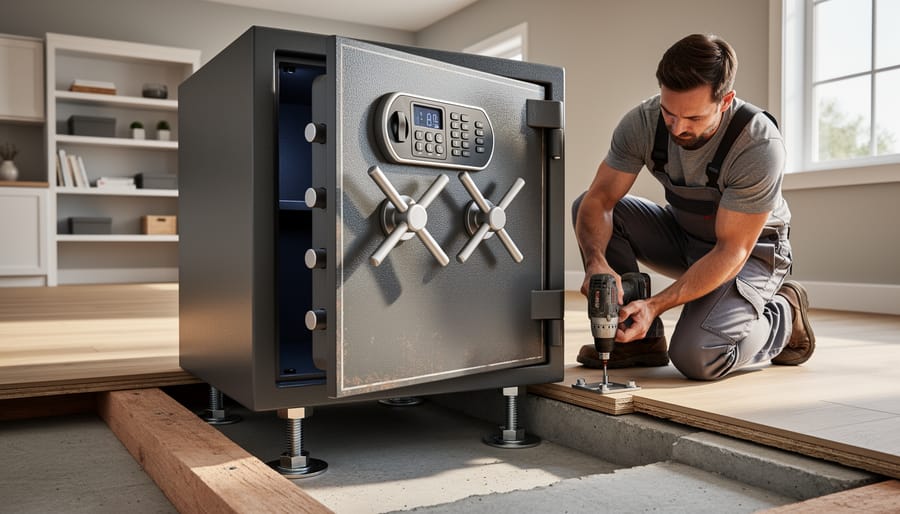
Most compact safes under 500 pounds are perfect DIY projects, especially if you’re comfortable with basic tools. Installing a smaller fireproof and waterproof safe typically involves choosing a discreet location, marking anchor holes, and drilling into concrete or wood studs. You’ll need a masonry bit for concrete floors, lag bolts for studs, and about an hour of your time. Think of it like mounting a heavy-duty TV bracket, just on steroids.
However, larger safes weighing 700 pounds or more call for professional help. These behemoths require specialized equipment like dollies and furniture straps, plus knowledge of floor load capacities. If you’re installing on a second floor or need to navigate tight corners and staircases, professionals can prevent costly damage to your walls, floors, and the safe itself.
Consider hiring pros when dealing with structural concerns like reinforcing floor joists or cutting through tile flooring. Professional installers also understand building codes and can ensure your anchoring meets any insurance requirements. While DIY saves around $150-300, peace of mind knowing your investment is properly secured might be worth the expense.
Keeping Your Safe in Top Condition
Think of your fireproof and waterproof safe like your car—it needs a little TLC to keep performing at its best. The good news? Maintenance is surprisingly simple and only takes a few minutes every couple of months.
Start with moisture control. Even waterproof safes can trap humidity inside, which is bad news for documents and firearms. Toss a few silica gel packets or a rechargeable dehumidifier inside and replace them every few months. You’ll notice the difference immediately, especially if you live in humid climates.
Next, show your lock some love. Electronic locks need fresh batteries annually—don’t wait for the low battery warning. For mechanical locks, a light application of graphite lubricant once a year keeps the dial spinning smoothly. Never use oil-based lubricants, as they attract dust and gunk things up.
The door seal is your safe’s secret weapon against water and smoke. Run your fingers along it quarterly, checking for cracks, brittleness, or gaps. If it feels stiff or looks damaged, contact the manufacturer about replacement—it’s easier and cheaper than you’d think.
Finally, test your safe regularly. Practice opening it with your backup key or emergency override. This simple habit ensures you won’t fumble during a real emergency when every second counts.
Let’s be honest—choosing the right fireproof and waterproof safe isn’t just about checking a box on your compliance list. It’s about creating a safety net for everything that truly matters to you. Think of it as an insurance policy that sits right in your home, ready to protect your family’s most precious items when disaster strikes.
Whether you’re safeguarding firearms, irreplaceable family documents, jewelry passed down through generations, or those digital backup drives containing years of memories, the right safe delivers protection that extends far beyond legal requirements. It’s the difference between losing everything in a house fire or flood and being able to rebuild your life with your most important possessions intact.
Take a moment to assess what you really need to protect. Consider your climate, your home’s layout, and the specific valuables you’re securing. A family in a flood-prone area needs different protection than someone living in a dry climate prone to wildfires. Your safe should reflect your unique situation, not just the minimum standard.
The initial investment might seem significant, but compare it to the irreplaceable value of what you’re protecting. Can you put a price on your grandmother’s wedding ring or the only copies of your children’s birth certificates? That perspective shift makes the decision much clearer.
Don’t put this off—take action today to protect what matters most. Your future self will thank you for the peace of mind that comes with knowing your valuables are truly secure.


