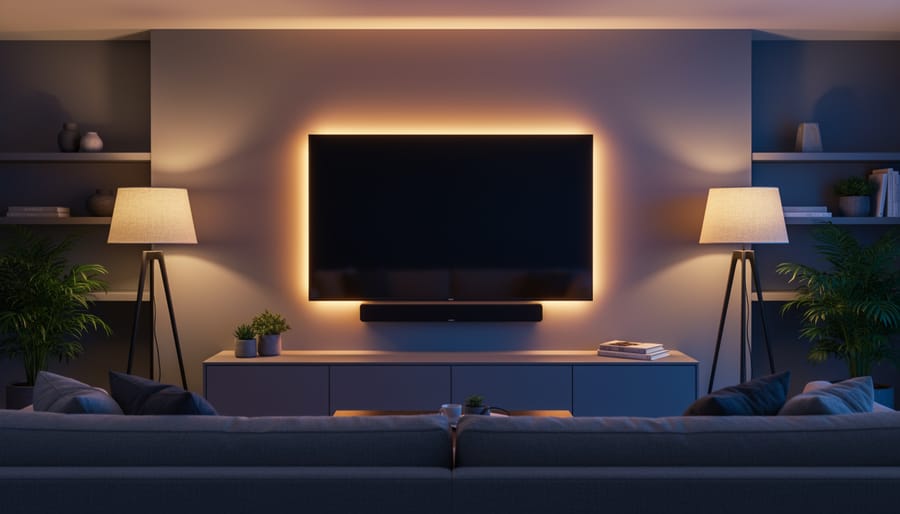
Layer soft, indirect lighting behind your TV screen to reduce eye strain and create a cinematic atmosphere that transforms your home entertainment center from ordinary to extraordinary. Install LED strip lights with adjustable color temperatures along the back edges of your television or mount, allowing you to shift from cool blues during action movies to warm ambers for cozy date nights.
Position floor lamps or wall sconces at 45-degree angles from your seating area to eliminate harsh shadows without creating screen glare. Choose fixtures with dimmer switches so you can fine-tune brightness levels based on the time of day and content you’re watching, keeping the room comfortable whether you’re binge-watching a new series or hosting game night with friends.
Ambient lighting isn’t just about aesthetics—it’s about protecting your vision and enhancing your viewing experience. The contrast between a bright screen and a pitch-black room forces your eyes to work overtime, leading to headaches and fatigue. By adding gentle background illumination, you’re creating depth and dimension in your space while giving your eyes the relief they need during those marathon viewing sessions.
Smart bulbs offer the ultimate flexibility, letting you program lighting scenes that match your mood or automatically adjust as natural daylight fades. Pair them with motion sensors for hands-free convenience, or sync them with your entertainment system for immersive lighting effects that pulse and change with on-screen action, turning every movie night into an unforgettable sensory experience.
Why Ambient Lighting Changes Everything for Your Entertainment Space

The Science Behind Comfortable Viewing
Ever wonder why your eyes feel tired after binge-watching your favorite shows in a dark room? The culprit is contrast fatigue. When you watch bright screens in complete darkness, your eyes constantly strain to adjust between the intense light from your TV and the surrounding shadows. This dramatic difference creates what experts call an extreme contrast ratio, forcing your pupils to work overtime.
Adding ambient lighting behind or around your screen changes everything. By introducing a soft glow into your space, you’re essentially giving your eyes a middle ground to rest on. Think of it like a visual bridge between your bright display and the dark room. This gentler transition means less pupil dilation, reduced eye strain, and more comfortable marathon viewing sessions.
The benefits extend beyond comfort too. With properly designed ambient lighting around your home theater systems, you’ll notice improved perceived color accuracy and detail retention on screen. The soft background illumination helps your eyes maintain better focus, making dark scenes clearer and bright scenes less overwhelming. It’s a simple upgrade that transforms how you experience your entertainment space.
Setting the Mood Without Sacrificing Visibility
The secret to great ambient lighting isn’t about choosing between mood and functionality—it’s about layering them together. Think of your lighting setup like a dimmer switch for your entire room’s personality. You want enough soft illumination to navigate safely without stubbing your toe on the coffee table, but not so much that it washes out your TV screen or disrupts that cozy movie-night vibe.
Start by placing your ambient lights strategically behind furniture or screens where they create atmosphere without shining directly into eyes or reflecting on screens. LED strips with adjustable brightness give you total control—crank them up when you’re settling in with snacks and drinks, then dial them down once the show starts. Consider motion-activated pathway lighting for those inevitable bathroom breaks during long binge sessions. These small lights provide just enough guidance without forcing everyone to adjust their eyes.
Keep a small task light nearby for checking phones or finding the remote without flooding the room with brightness. Smart bulbs let you save preset scenes for different activities—one for active socializing, another for focused viewing. The goal is creating flexibility so your lighting adapts to whatever the evening brings.
Types of Ambient Lighting Perfect for Home Entertainment

LED Strip Lights: The Versatile Workhorse
LED strip lights have earned their reputation as the go-to choice for ambient lighting beginners, and for good reason. These flexible, adhesive-backed strips pack impressive punch while remaining budget-friendly and incredibly easy to install. You’ll find two main varieties: RGB strips that let you cycle through millions of colors to match your mood or movie genre, and single-color options (typically warm white or cool white) for those who prefer classic simplicity.
The beauty of LED strips lies in their versatility. Mount them behind your TV to reduce eye strain and create that coveted theater glow, or run them along the top edge of walls near the ceiling for a gentle wash of light that transforms the entire room. Behind floating shelves, under cabinets, or along baseboards are equally popular placements that add depth and dimension.
What makes them perfect for first-timers? Most strips come with peel-and-stick backing, plug-and-play connectors, and smartphone apps for effortless control. No complicated wiring or electrical work required. Within 30 minutes, you can completely reimagine your entertainment space. Start with a basic 16-foot RGB kit behind your TV, experiment with colors during different viewing sessions, and you’ll quickly understand why these little lights have become the foundation of modern ambient lighting setups.
Smart Bulbs and Lamps for Flexible Control
Smart lighting has completely transformed how we control ambiance in our homes, and the best part is how incredibly user-friendly these systems have become. Smart bulbs fit right into your existing fixtures, whether that’s a cozy floor lamp beside your sofa, a stylish table lamp on your media console, or recessed ceiling fixtures throughout your entertainment space.
The real magic happens through your smartphone or voice assistant. Imagine dimming your lights to just the right level for movie night without getting up from your seat, or switching from bright white light during daytime TV to a warm amber glow for evening relaxation. Many smart bulbs offer millions of color options, letting you create the perfect backdrop for gaming sessions with cool blues or romantic movie nights with soft rose tones.
Popular options like Philips Hue, LIFX, and Wyze bulbs work seamlessly with platforms like Alexa, Google Home, and Apple HomeKit. You can even create custom scenes that adjust multiple lights simultaneously. For example, a “Movie Time” scene might dim your overhead recessed lights to 10%, turn your floor lamps to a soft warm white, and add a subtle blue accent behind your TV. The initial investment pays off quickly in convenience and the ability to transform your space instantly for any viewing experience.
Bias Lighting: The Cinema Professional’s Secret
If you’ve ever noticed your eyes straining during movie night or struggled with washed-out screen colors, bias lighting might be the game-changer you didn’t know you needed. This isn’t just another decorative light strip—it’s a scientifically-backed solution that cinema professionals have used for years.
Bias lighting refers to a subtle light source placed directly behind your television or monitor, creating a gentle glow against the wall. The magic happens at 6500K color temperature, which matches daylight and reduces the contrast between your bright screen and dark room. This strategic placement tricks your eyes into perceiving better color accuracy and reduces the fatigue that comes from staring at a bright rectangle in complete darkness.
Unlike decorative ambient lighting that sets mood and atmosphere throughout your room, bias lighting has one focused job: improving your viewing experience. Think of it as functional rather than fashionable. While your decorative lights might cycle through rainbow colors or dim for romantic evenings, proper bias lighting maintains that consistent neutral white specifically calibrated for screen viewing. The result? Your eyes work less hard, colors look more vibrant, and those binge-watching sessions become significantly more comfortable.
Where to Place Your Ambient Lights for Maximum Impact
Behind the Screen: Getting TV Backlighting Right
TV backlighting transforms your viewing experience while giving your entertainment area that cozy theater vibe. Here’s how to get it right without any guesswork.
Start by measuring your TV perimeter to determine how many feet of LED strips you’ll need. Most strips come with adhesive backing, making installation a breeze. Clean the back of your TV thoroughly with rubbing alcohol before applying the strips around the edges, starting from the bottom corner and working your way around.
For optimal effect, position your TV 4-6 inches away from the wall. This distance allows the light to diffuse beautifully, creating that signature glow without harsh spots. The light should spread evenly across the wall behind your screen, covering an area roughly 6-12 inches beyond your TV’s edges.
Brightness matters more than you might think. Set your bias lighting to approximately 10-15% of your TV’s brightness. Too bright and it becomes distracting; too dim and you lose the eye-strain reduction benefits. Choose warm white or neutral tones rather than vibrant colors for everyday viewing, as these reduce eye fatigue during those weekend binge-watching sessions. Many modern LED strips include remotes or apps, letting you adjust brightness and color temperature until you find your perfect setting.
Accent Lighting for Shelves, Ceilings, and Corners
Think beyond the obvious and let your space shine from unexpected angles. Accent lighting transforms ordinary rooms into dimensional showpieces by highlighting architectural features you might overlook. LED strip lights tucked beneath floating shelves create a gorgeous glow that makes your collectibles and books pop while adding soft illumination that won’t compete with your screen.
Consider uplighting in corners using slim floor lamps or compact LED fixtures aimed toward the ceiling. This technique bounces light off upper surfaces, creating ambient fill that eliminates harsh shadows without introducing glare. The effect is particularly stunning with textured ceilings or exposed beams.
Behind your TV unit or media console, adhesive LED strips add professional polish while reducing eye strain. The key is positioning lights where they enhance depth rather than create distractions. Crown molding offers another brilliant opportunity for hidden strips that wash walls with gentle color.
For maximum impact with minimal effort, install battery-operated puck lights inside glass-front cabinets or above artwork. These battery-powered solutions require zero wiring knowledge and can be repositioned until you achieve the perfect balance. Remember, accent lighting should complement your primary ambient sources, creating layers of light that work together harmoniously throughout your entertainment space.
What Not to Do: Common Placement Mistakes
Even well-intentioned lighting plans can miss the mark if you don’t watch out for these common pitfalls. One of the biggest mistakes is placing lights directly behind your TV or screen where they reflect and create distracting glare. You want that ambient glow around the screen, not bouncing off it. Similarly, avoid positioning fixtures at eye level when you’re seated, as this creates uncomfortable brightness rather than that soft background wash you’re after.
Creating hot spots is another frequent error. When you cluster too many lights in one area or use overly bright bulbs, you get pools of intense light that defeat the whole purpose of gentle ambiance. Space your lighting sources evenly around the room instead. Also, resist the urge to use cool white bulbs in relaxation spaces. They create a clinical feel that works against the cozy atmosphere you’re building. Stick with warm tones between 2700K-3000K for entertainment areas where you want to unwind and enjoy.
Choosing the Right Color Temperature and Brightness
Warm vs. Cool: Finding Your Perfect Temperature
Color temperature might sound technical, but it’s simply about whether your lights feel warm and cozy or cool and crisp. Measured in Kelvins, this characteristic dramatically affects how your space feels during movie nights or gaming sessions.
For most entertainment areas, aim for the 2700K to 3000K range—that warm, inviting glow similar to traditional incandescent bulbs. This temperature reduces eye strain during extended viewing and creates a theater-like atmosphere that helps you relax into your content. Think of that soft amber hue you experience at sunset, perfect for winding down with your favorite shows.
If your space doubles as a workstation or gaming setup where you need sharper focus, consider tunable white options. These let you shift between warm tones for evening entertainment and cooler 4000K to 5000K temperatures when you need alertness for competitive gaming.
Matching your existing decor matters too. Rooms with warm wood tones and earth-colored furnishings naturally complement warmer lights, while modern spaces with gray, white, or metallic accents can handle slightly cooler temperatures. The beauty of today’s smart bulbs is you don’t have to commit—adjust throughout the day to find what feels right for each activity and season.
Brightness Levels That Won’t Overwhelm
Getting the brightness just right can feel like a Goldilocks situation—too bright and you’ve defeated the whole purpose, too dim and you can’t see a thing! For ambient lighting in entertainment spaces, aim for bulbs in the 200-400 lumen range. This creates that soft, welcoming glow without competing with your screen.
Here’s the golden rule: you should always be able to dim your ambient lights. Install dimmer switches or choose smart bulbs with adjustable brightness through apps. This flexibility lets you customize the mood for movie night versus game night versus casual TV watching. Think of it like having different lighting recipes for different occasions.
Before you commit to permanent installation, do a test run. Plug in your lights temporarily and live with them for a few evenings. Watch different types of content—dark movies, bright sports games, animated shows—and adjust accordingly. Notice any annoying reflections on your screen? Does the light feel comfortable after an hour of viewing?
A practical tip: start dimmer than you think you need. Your eyes will adjust, and you can always increase brightness. It’s much harder to ignore lighting that’s too bright and distracting. Remember, ambient lighting should enhance your viewing experience, not announce itself like a stage spotlight.
Budget-Friendly Ambient Lighting Projects You Can DIY

The Weekend Project: Basic LED Strip Installation
Ready to dip your toes into ambient lighting? This weekend project is perfect for first-timers and requires minimal tools. You’ll need a basic LED strip kit (look for ones with adhesive backing and a remote control, typically $15-30 for 16 feet), scissors, and rubbing alcohol for surface prep. Popular budget-friendly options include Govee or Philips basic strips available at most home improvement stores.
Start by measuring the area you want to illuminate, whether behind your TV, under kitchen cabinets, or along bedroom shelving. Clean the surface thoroughly with rubbing alcohol and let it dry completely. This step makes all the difference in ensuring your strips actually stay put.
Peel back about six inches of the adhesive backing and press firmly at your starting point. Work in small sections, smoothing as you go to avoid bubbles and wrinkles. Most strips have cut marks every few inches if you need to trim for corners. Connect your power adapter, plug it in, and test before securing the entire length.
Common hiccups include strips falling down (usually from skipping the cleaning step), uneven lighting (make sure strips are straight), or sections not illuminating (check all connections are snug). If a section won’t light up, the strip might be damaged at a connection point.
Within an hour, you’ll transform any space with that cozy glow you’ve been admiring in design magazines. The best part? If you don’t love the placement, simply peel and reposition.
Level Up: Creating Dynamic Smart Lighting Scenes
Ready to take your ambient lighting to the next level? Smart home integration transforms static lighting into dynamic scenes that adapt to whatever you’re watching or playing. Think of it as having a professional lighting designer at your fingertips, ready to set the perfect mood with a simple voice command or tap.
Start with a smart lighting ecosystem that fits your budget and tech comfort level. Philips Hue remains the gold standard with vibrant colors and seamless integration, while LIFX offers similar features without requiring a hub. Budget-conscious homeowners can explore Govee or Wyze for surprisingly capable options. The key is choosing lights that sync with your existing entertainment setup and voice assistant preference.
Creating preset scenes is where the magic happens. Design a movie mode with warm, dimmed backlighting that reduces eye strain without causing screen glare. For sports viewing, try brighter, cooler tones that energize the room and match the stadium atmosphere. Gaming scenes work best with reactive lighting that responds to on-screen action, creating an immersive experience that extends beyond your display.
Most smart lighting apps let you save these custom scenes for instant activation. The Philips Hue app excels at scheduling and automation, while platforms like Home Assistant offer advanced customization for tech enthusiasts. Many systems also integrate with streaming services through apps like Hue Sync, automatically adjusting lights based on what’s playing. Start simple with two or three scenes, then expand as you discover what enhances your viewing experience most.
Transforming your entertainment space doesn’t require a professional installer or a complete room makeover. The beauty of ambient lighting lies in its simplicity and versatility. Whether you’re adding a strip of bias lighting behind your television or installing a smart bulb in your existing lamp, even one thoughtful upgrade can dramatically enhance your viewing experience. You’ll notice the difference immediately—reduced eye strain during long movie marathons, richer colors on screen, and an atmosphere that feels purposefully designed rather than accidentally thrown together.
The most rewarding part? You’re not locked into a single solution. Start with the simplest option that fits your space and budget, then build from there as you discover what works best for your setup. Maybe that’s a basic LED strip this weekend and dimmable floor lamps next month. Great ambient lighting isn’t about perfection or expensive equipment—it’s about creating a space that feels comfortable, looks impressive, and makes every viewing experience more enjoyable. Your personalized home theater is just one lighting choice away.