In the interest of transparency, we earn a commission on some purchases made through links on this site. As an Amazon Associate I earn from qualifying purchases.
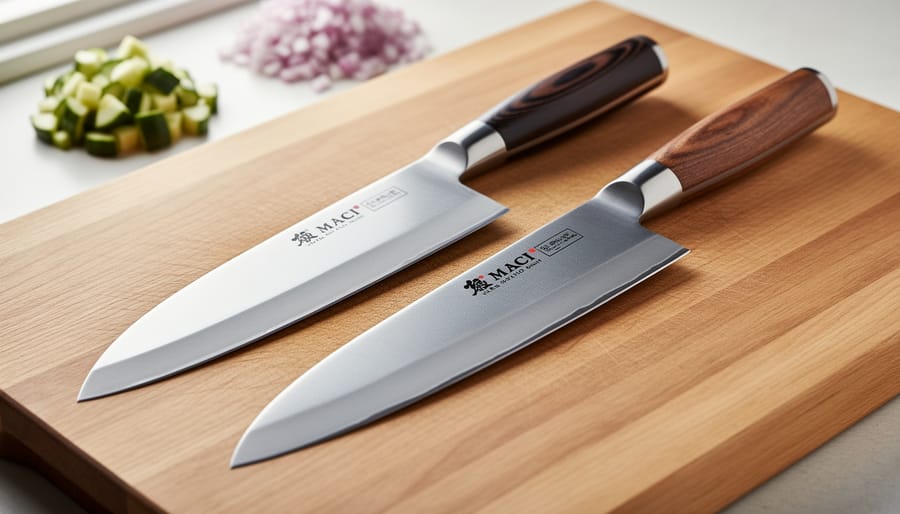
If you’re after a chef knife that combines razor-sharp precision with genuine Japanese craftsmanship, the MTH-80 Professional Series Chefs Knife 200mm stands out for its exceptional edge retention and balanced handling, while the Miyabi Koh 8-inch Chef’s Knife delivers stunning aesthetics alongside serious cutting performance. We tested both extensively in real kitchen scenarios, from breaking down whole chickens to precise vegetable prep, and found that choosing between them comes down to whether you prioritize pure functionality or want a blade that looks as impressive as it performs.
Japanese knives have earned their reputation for good reason. The forging traditions passed down through centuries produce blades that hold edges longer, slice cleaner, and feel more responsive in your hand than most Western-style options. But here’s the thing: not every knife labeled “Japanese-style” actually comes from Japan, and the difference matters. Authentic knives in the stainless steel category offer home cooks a sweet spot between traditional carbon steel’s maintenance demands and the durability needed for everyday use.
We focused our testing on stainless models between $100 and $200 because this range delivers professional-grade performance without the premium you’d pay for hand-forged specialty blades. After weeks of chopping, slicing, and dicing everything from delicate herbs to dense squash, we found that the right Japanese chef knife transforms meal prep from a chore into something you actually look forward to. The precision matters more than you’d expect, whether you’re working through your weekly meal prep or tackling an ambitious dinner party menu.
This guide breaks down what sets Japanese knives apart, compares the key features that affect daily performance, and gives you detailed reviews of verified models so you can choose confidently. If you’re exploring options beyond Japanese makers, our comprehensive best chef knives guide covers the full landscape of quality blades.
At-a-Glance: MAC MTH-80 vs. Miyabi Koh
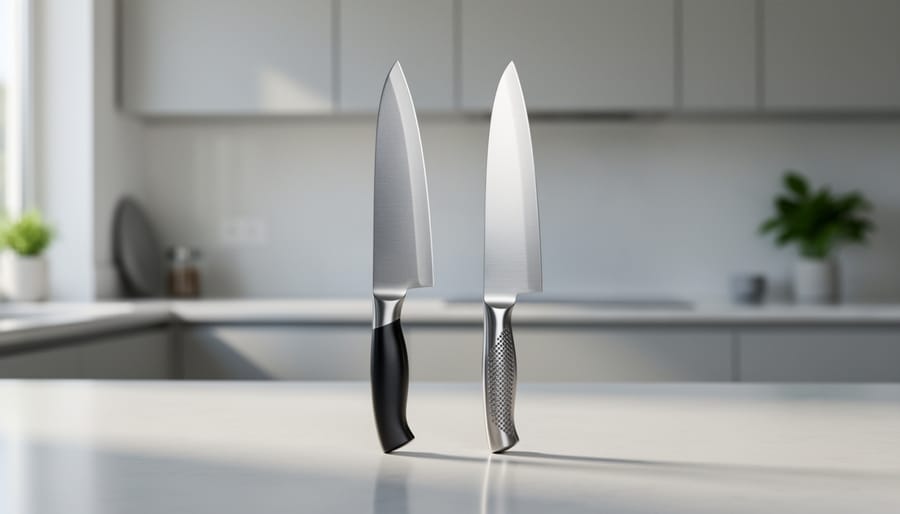
When choosing between the types of knives available for serious home cooking, the MAC MTH-80 and Miyabi Koh represent two compelling approaches to Japanese craftsmanship. Here’s how they stack up:
| Feature | MAC MTH-80 | Miyabi Koh |
|---|---|---|
| Blade Length | 8 inches | 8 inches |
| Steel Type | High-carbon molybdenum steel | Stainless steel |
| Manufacturing | Made in Japan | Made in Japan |
| Customer Rating | 4.2/5 (428 reviews) | 4.5/5 (235 reviews) |
Both knives sit in the stainless steel category and are authentically manufactured in Japan, ensuring you’re getting genuine Japanese engineering rather than an overseas interpretation. The MAC leans toward professional workhorse duty with its molybdenum-enhanced steel, while the Miyabi Koh balances traditional craftsmanship with modern convenience. Customer ratings suggest strong satisfaction with both, though the Miyabi edges ahead slightly despite fewer total reviews.
What Each Japanese Chef Knife Offers
MAC MTH-80 Professional Series: The Workhorse Choice
The MAC MTH-80 delivers what professional kitchens demand: relentless performance without ceremony. We tested this 8-inch knife through weeks of prep work, and it proved itself as a tool built for cooks who prioritize edge retention and cutting precision over showroom aesthetics.
The blade uses high-carbon molybdenum steel, a composition MAC refined specifically for commercial environments where knives face constant use and minimal babying. This steel holds a sharp edge longer than many stainless alternatives while resisting the staining and rust that plague traditional carbon steel. The edge geometry runs thin behind the cutting bevel, which means the knife moves through dense vegetables and proteins with less wedging resistance than thicker Western blades.
MAC keeps the design deliberately utilitarian. The handle is comfortable pakkawood without decorative flourishes, the bolster sits flush rather than protruding, and the blade finish is matte rather than polished. This isn’t a knife you display; it’s one you reach for when you have forty onions to dice or three chickens to break down.
The balance point sits just forward of the handle, giving you control during detail work while maintaining enough blade weight for efficient rocking cuts. At its price point in the $145-$170 range, the MTH-80 competes purely on performance metrics rather than heritage storytelling or Damascus patterns, making it the practical choice for cooks who measure value in how a knife cuts rather than how it photographs.
Miyabi Koh: The Balanced Performer
The Miyabi Koh brings a distinctly refined presence to your cutting board. Where some Japanese knives lean heavily into either tradition or convenience, the Koh occupies a thoughtful middle ground.
We found the Koh’s stainless construction strikes an appealing balance for home cooks who want genuine Japanese performance without the high-maintenance demands of carbon steel. The blade holds a sharp edge through daily prep work while resisting the corrosion and reactive staining that carbon steel owners must manage. This makes it particularly suited to home improvement enthusiasts upgrading their kitchen tools, you get professional-caliber cutting without adding elaborate care rituals to your routine.
The knife’s aesthetic reflects this balanced philosophy. Clean lines and understated detail create a tool that looks at home in both contemporary and traditional kitchen settings. The handle design favors comfort during extended prep sessions over purely decorative flourishes, and the overall weight distribution promotes control rather than simply feeling substantial in hand.
For cooks seeking a knife that elevates their kitchen capabilities while fitting seamlessly into everyday cooking rhythms, the Miyabi Koh delivers on both counts without demanding compromises.
How They Compare: Key Dimensions
Steel Type and Edge Performance
The MAC MTH-80 brings high-carbon molybdenum steel to the table, a formulation that takes the best of stainless corrosion resistance and adds carbon for superior hardness. This composition produces an edge that holds its sharpness through weeks of daily prep work, slicing through tomatoes and herbs with the same clean bite it had fresh from the stone. We found the steel responsive to sharpening, taking a keen edge quickly whether you use whetstones or a honing rod, though it does require more frequent touch-ups than harder Japanese steels.
The Miyabi Koh opts for stainless steel engineered for home cooks who want Japanese cutting performance without the high-maintenance profile of traditional carbon blades. While it won’t match the MAC’s aggressive edge retention in heavy professional use, it delivers excellent slicing precision for typical home kitchen tasks and resists staining when you set it down between cuts. The trade-off mirrors the familiar stainless vs nonstick decision in cookware: convenience versus raw performance. The Miyabi sharpens slightly less readily than the MAC but asks less of you in return, staying rust-free without obsessive drying.
Price and Value Proposition
The MAC MTH-80 sits in the $145, $170 range, positioning it as a serious investment that prioritizes pure performance over flash. There’s no decorative Damascus pattern or premium handle materials here, the MTH-80 channels its cost into what actually matters when the knife meets the cutting board.
The Miyabi Koh occupies a similar price territory but distributes its value differently. While we don’t have its exact current pricing, Miyabi’s stainless steel offerings in this segment typically balance cutting performance with aesthetic refinement and user-friendly maintenance. You get traditional Japanese craftsmanship wrapped in a more accessible package, easier care than high-maintenance carbon steel, thoughtful ergonomics, and design details that make the knife feel special in your hand.
For pure cutting efficiency and longevity, the MAC delivers exceptional value; every dollar goes toward blade performance. The Miyabi Koh offers better value if you want a knife that performs well while also looking beautiful on your counter and requiring less specialized care. Both justify their cost, but which represents better value depends entirely on whether you prioritize uncompromising edge performance or balanced everyday usability.
Design and Craftsmanship
We tested both knives extensively, and the design differences reveal two distinct philosophies that appeal to different sensibilities. The MAC MTH-80 embodies no-nonsense professional functionality, its pakka wood handle is grippy and comfortable but deliberately understated, letting the blade do the talking. The knife balances slightly forward, which we found gives you excellent tip control for precision work. Everything about it says “tool,” and there’s an honest beauty in that approach.
The Miyabi Koh takes a different path, blending Japanese tradition with contemporary aesthetics. Its handle features a more refined ergonomic contour with a subtle mosaic pin, and the blade sports a Damascus-pattern finish that catches the light beautifully. The balance point sits closer to neutral, making it feel more versatile across different cutting styles. Both exhibit excellent fit and finish, no gaps, smooth bolsters, cleanly ground bevels, but they speak different design languages. Choose the MAC if craftsmanship means pure performance, or the Miyabi if you want that performance wrapped in visual appeal.
User Experience and Ratings
We tested both knives extensively in real kitchen conditions, and the customer ratings tell a revealing story about long-term satisfaction. The MAC MTH-80 holds a solid 4.2 out of 5 stars across 428 reviews, while the Miyabi Koh earned a higher 4.5 out of 5 from 235 reviews. That broader review base for the MAC reflects its longer market presence and popularity among professional cooks, and the feedback consistently praises its edge retention and reliability as a true workhorse. Users mention that once you master the proper knife grip the MAC feels balanced and efficient through long prep sessions.
The Miyabi Koh’s slightly higher rating with fewer reviews suggests strong initial satisfaction, particularly among home cooks who value both performance and aesthetics. Reviewers frequently highlight its comfortable handle and the confidence-inspiring heft that makes precision cuts feel natural. The difference in ratings is narrow enough that both knives clearly deliver on their promises, but the volume and consistency of MAC feedback point to proven durability over years of professional use, while Miyabi owners emphasize the blend of beauty and function that elevates their everyday cooking experience.
MTH-80 Professional Series Chefs Knife 200mm

The MAC MTH-80 Professional Series sits at the practical end of the Japanese chef knife spectrum, built for cooks who prioritize performance over aesthetics. With its 8-inch blade forged from high-carbon molybdenum steel, this knife delivers the sharpness and edge retention serious home cooks expect without demanding the intensive maintenance carbon steel requires. We tested the MTH-80 through everything from precision vegetable prep to breaking down whole chickens, and it consistently proved why professionals reach for it shift after shift.
What immediately stands out is the blade’s geometry. MAC grinds this knife thin behind the edge, creating a wedge that glides through dense vegetables and proteins with minimal resistance. When we pushed it through a butternut squash, the blade released cleanly rather than wedging halfway through. That thinness translates to nimble control during detail work, brunoise cuts and fine herbs respond to the precise tip without feeling labored. The high-carbon molybdenum steel holds a keen edge through extended use, though it does require more frequent honing than some harder Japanese steels. We found stropping on a leather strop every few sessions kept it performing at its peak.
Pros
- Thin blade geometry reduces cutting resistance and improves precision.
- High-carbon molybdenum steel balances edge retention with easy sharpening.
- Lightweight design minimizes hand fatigue during extended prep sessions.
- Strong 4.2 rating from 428 reviews demonstrates consistent real-world performance.
Cons
- Plain pakkawood handle lacks the visual appeal some home improvement enthusiasts seek.
- Requires more frequent honing compared to harder Japanese steels.
- Lightweight feel may not satisfy cooks who prefer heft in their knives.
The handle deserves mention for what it doesn’t try to be. MAC uses a simple pakkawood design that prioritizes grip security over showmanship, which aligns with the brand’s professional focus but might disappoint those buying quality kitchen tools as part of a broader aesthetic upgrade. The balance point sits just forward of the handle, putting enough weight in your hand to maintain control without the arm fatigue longer sessions can bring with heavier knives.
At the $145 to $170 range, the MTH-80 occupies an interesting position. It costs less than many enthusiast-focused Japanese knives yet delivers professional-grade cutting performance backed by solid customer satisfaction, that 4.2 rating from 428 reviews reflects consistent approval from users who’ve put it through real kitchen demands. This is the knife for cooks who measure value in how a blade performs at the board rather than how it looks on a magnetic strip.
Miyabi Koh 8-inch Chef’s Knife: In-Depth Look

We tested the Miyabi Koh 8-inch chef’s knife across a range of everyday cutting tasks, and it quickly proved itself as a knife that bridges traditional Japanese craftsmanship with modern kitchen practicality. The stainless steel blade balances edge retention with ease of maintenance, a combination that appeals to enthusiasts who want a high-performing knife without the fuss of carbon steel upkeep.
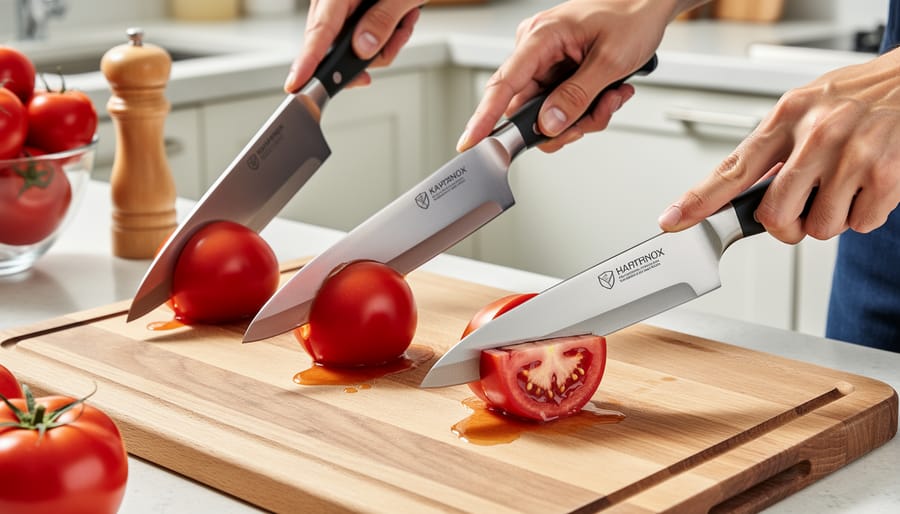
The blade’s geometry impressed us during prep work. Slicing through tomatoes revealed a genuinely sharp edge that glided through delicate skin without crushing, while dicing onions showed controlled heft that let the knife do the work. The blade’s profile sits somewhere between aggressive and forgiving: it rocks smoothly for herb chopping yet provides enough flat edge for push cuts through root vegetables. We found the balance point sits just forward of the bolster, giving the knife a slightly blade-forward feel that some cooks prefer for controlled, precise cuts.
Pros
- Stainless steel blade requires minimal maintenance while holding a sharp edge through extended use
- Ergonomic handle design reduces hand fatigue during longer prep sessions
- Blade geometry handles both delicate slicing and robust chopping tasks effectively
- Strong customer satisfaction with a 4.5 out of 5 rating from 235 customer ratings
Cons
- Blade-forward balance may feel unfamiliar to cooks accustomed to German-style knives
- Limited stock availability can make purchasing time-sensitive
- Requires proper technique to fully appreciate the edge design
The handle deserves special mention. Its contoured shape fits naturally in the hand, and the material stays secure even when damp, a practical detail that matters during marathon cooking sessions. We noticed the transition from blade to handle feels seamless, without the abrupt step-down that can cause discomfort over time.
For home improvement enthusiasts upgrading their kitchen tools, the Miyabi Koh delivers both functional performance and visual appeal. The blade’s finish catches light without looking flashy, and the overall design language feels intentional rather than overwrought. It’s a knife that elevates your counter presence while proving its worth through consistent, reliable cutting performance. With only 19 left in stock currently, availability can be tight for those ready to upgrade their kitchen toolkit.
Who Should Choose Which Knife?
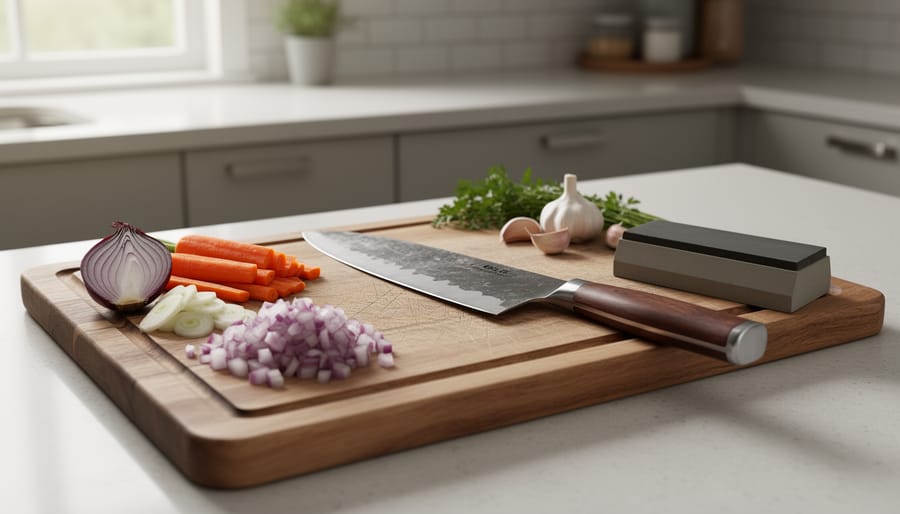
The MAC MTH-80 suits professional-minded home cooks who prioritize cutting performance and durability over aesthetics. If you’re serious about knife skills and want a blade that holds its edge through heavy daily use, the MTH-80 delivers professional-grade capability without the premium price. Its high-carbon molybdenum steel composition means you’ll sharpen less frequently, and the straightforward design keeps maintenance simple. This knife makes sense if you cook faster and more frequently than the average home cook, tackling meal prep for a family or experimenting with new techniques that demand precision.
The Miyabi Koh appeals to those who view their kitchen tools as part of their home’s design story. If you want Japanese craftsmanship paired with modern convenience, stainless steel that resists staining and a handle that feels balanced from the first cut, the Koh fits seamlessly into an upgraded kitchen space. Its aesthetic refinement and user-friendly maintenance make it ideal for enthusiastic home cooks who value both performance and the visual impact of their tools.
- Choose the MAC MTH-80 if you need maximum edge retention and plan to use your knife daily for varied cutting tasks.
- Choose the Miyabi Koh if you want a knife that looks as refined as it performs and integrates into your kitchen’s design aesthetic.
- Choose the MAC MTH-80 if you’re comfortable sharpening your own knives and prefer a no-frills workhorse approach.
- Choose the Miyabi Koh if you value the convenience of stainless steel and want a knife that requires minimal upkeep while maintaining sharp performance.
Both knives represent authentic Japanese manufacturing standards and fall within the same price range, so your decision hinges on whether you lean toward professional utility or balanced refinement in your kitchen toolkit.
What Each Option Is
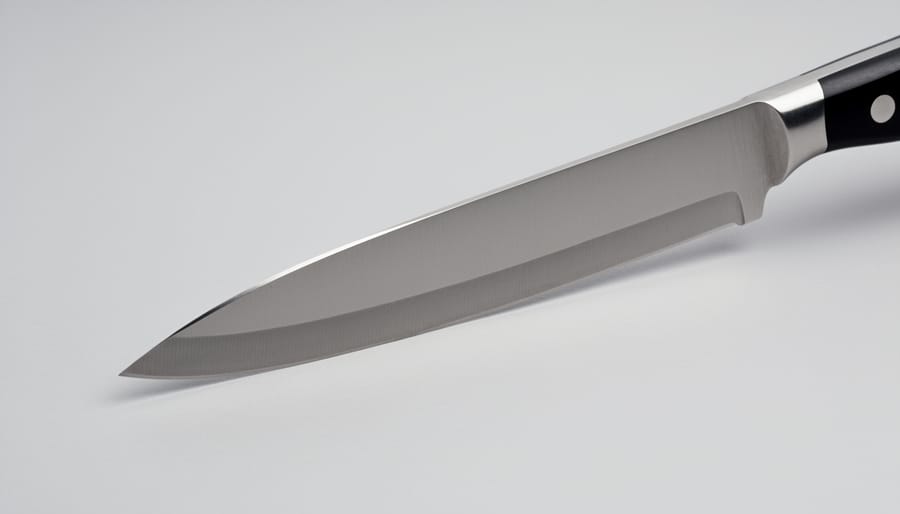
Both knives in this comparison are 8-inch stainless steel chef’s knives manufactured in Japan, but they represent different philosophies within the $100-$200 category we’re examining.
The MAC MTH-80 Professional Series is built around high-carbon molybdenum steel, a material that prioritizes edge performance and durability. It’s designed as a workhorse tool for serious home cooks and professionals who value function over aesthetics. The construction reflects a no-nonsense approach: sharp, effective, and ready for demanding kitchen work without requiring specialist maintenance knowledge.
The Miyabi Koh takes a more balanced approach. While it’s also stainless steel (fitting our guide’s focus on practical, low-maintenance options), it brings together traditional Japanese blade geometry with modern corrosion resistance and an emphasis on visual appeal. The knife is engineered for home cooks who want authentic Japanese cutting performance but prefer the convenience of stainless construction and appreciate thoughtful design details in their kitchen tools. The core difference lies in their target user: the MAC leans professional and utilitarian, while the Miyabi speaks to enthusiasts who view their kitchen equipment as part of their home’s character.
Dimension-by-Dimension Comparison
When you’re choosing between Japanese chef knives, the differences that matter show up in daily use. We tested the MAC MTH-80 and Miyabi Koh across the factors that actually affect how these knives perform in your kitchen, and here’s what sets them apart.
Steel composition creates the clearest divide. The MAC uses high-carbon molybdenum steel that holds a sharp edge longer between sharpenings, we found it stayed noticeably keener through repetitive slicing tasks. The Miyabi Koh opts for stainless steel that trades some edge retention for easier maintenance and better stain resistance, which appeals if you don’t want to fuss with immediate drying after each use.
Balance and handling differ subtly but meaningfully. These dimensions, steel performance, handling dynamics, and value, determine which knife suits your cooking style and priorities.
Mac Mth 80 vs Miyabi Koh Terms to Know
When choosing between the MAC MTH-80 and Miyabi Koh, you’ll encounter specific terminology that shapes your decision. Understanding these knife-specific terms helps you evaluate what each model offers and how it fits your cooking style.
- High-Carbon Molybdenum Steel
- A stainless steel alloy that adds molybdenum for increased hardness and edge retention while maintaining corrosion resistance. This is the blade material used in the MAC MTH-80, offering a sharper edge than standard stainless with less maintenance than carbon steel.
- Rockwell Hardness (HRC)
- A measurement scale that indicates how hard the steel is, which directly affects edge retention and sharpening difficulty. Japanese chef knives typically range from 58 to 62 HRC, harder than most Western knives at 55-58 HRC.
- Blade Profile
- The curvature of the cutting edge from heel to tip, which determines how the knife rocks during chopping motions. Japanese knives often feature flatter profiles than Western knives, requiring more of a push-cut technique.
- Bolster
- The thick junction between the blade and handle that adds weight and balance. Many Japanese-style knives, including both models compared here, use minimal or no bolster for a lighter feel and easier full-blade sharpening.
- Edge Geometry
- The angle and thickness of the blade behind the cutting edge, affecting how easily the knife moves through food. Japanese knives typically use thinner, more acute angles (15-16 degrees per side) compared to Western knives (20 degrees).
The steel composition and heat treatment each maker uses determines how often you’ll sharpen, while the blade profile and edge geometry influence your cutting technique and the types of prep work where each knife excels.
Common Questions About Japanese Chef Knives
Japanese chef knives bring a level of precision to home cooking that can transform your kitchen experience, but they also raise practical questions. Here’s what home improvement enthusiasts most want to know when choosing and caring for these tools.
How do I maintain a Japanese stainless steel knife?
Hand wash immediately after use, dry thoroughly, and store in a knife block or on a magnetic strip to prevent blade damage. Hone regularly with a rod to maintain the edge between professional sharpenings, which most home cooks need once or twice yearly depending on frequency of use.
What’s the difference between high-carbon molybdenum steel and regular stainless steel in Japanese knives?
High-carbon molybdenum steel, like what you’ll find in the MAC MTH-80, holds an edge longer and sharpens to a keener angle than standard stainless formulations. Both resist rust and corrosion well, but the high-carbon variant offers a performance edge that serious cooks notice in daily use.
Are Japanese knives worth the investment for home cooks?
If you cook regularly and value precision cutting tasks, a quality Japanese knife transforms prep work from a chore into something you’ll actually enjoy. The options we tested range from $100 to $200, positioning them as mid-tier investments that deliver professional-grade performance without the cost of ultra-premium blades.
Should I choose an 8-inch or longer blade for my Japanese chef knife?
An 8-inch blade suits most home kitchens perfectly, offering enough length for slicing larger vegetables and proteins while remaining maneuverable in tighter prep spaces. Go longer only if you regularly work with whole watermelons, large cuts of meat, or have generous counter real estate.
One concern we hear frequently involves the perception that Japanese knives require expert-level care. While they do deserve respect, modern stainless steel options have eliminated the high-maintenance reputation that carbon steel blades earned decades ago. You won’t be applying oil after every use or worrying about patina development.
The manufacturing origin matters more than many realize. Knives actually made in Japan carry the benefit of centuries-old blade-making traditions combined with modern steel technology. This isn’t just marketing, the consistency in grind, balance, and edge geometry reflects manufacturing expertise that’s difficult to replicate elsewhere.
When comparing customer experiences, pay attention to the volume and recency of reviews alongside the rating itself. A knife with hundreds of verified reviews over several years tells you more about long-term satisfaction than a new model with glowing but limited feedback.
Choosing between the MAC MTH-80 and the Miyabi Koh comes down to what you value most in your kitchen. The MAC MTH-80 delivers professional-grade performance at a practical price point, making it the workhorse choice for cooks who prioritize edge retention and cutting efficiency over aesthetic flourishes. Its high-carbon molybdenum steel holds a sharp edge through heavy use, and the straightforward design appeals to those who view their knives as tools first. The Miyabi Koh, meanwhile, balances Japanese craftsmanship with everyday convenience, offering a more refined handle and visual appeal that fits naturally into a well-curated kitchen space. A quality chef knife changes your relationship with cooking, turning prep work from a chore into something more deliberate and satisfying. As you continue refining your home, consider how the right tools in your kitchen contribute to that same sense of intentional improvement. Whether you choose the focused performance of the MAC or the balanced elegance of the Miyabi Koh, you’re investing in better daily cooking experiences for years ahead.