

Finding your GE portable dishwasher manual is straightforward: visit the GE Appliances support page, enter your model number (found on a label inside the door or on the unit’s side), and download your Owner’s Manual, installation instructions, and energy guide instantly. This documentation walks you through setup, daily operation, cycle options, troubleshooting, and seasonal storage, giving both new buyers and long-time owners the guidance they need to maximize their appliance’s performance.
Whether you’re evaluating the GPT225SSLSS with its sanitize cycle and stainless steel interior or troubleshooting a unit you’ve owned for years, understanding your manual unlocks features you might overlook and prevents common missteps that can shorten your dishwasher’s lifespan. Portable dishwashers occupy a unique space in home appliances. They roll into place, connect to your kitchen faucet, and tuck away when not in use, making them ideal for apartments, smaller kitchens, or homes without built-in dishwasher hookups.
The manual serves as your blueprint for proper installation, water pressure requirements, detergent recommendations, and care routines specific to your model. But beyond the technical specs, choosing the right portable dishwasher and using it correctly involves understanding capacity trade-offs, noise levels, cycle customization, and how to avoid the mistakes that plague first-time buyers. This guide bridges the gap between researching your purchase and confidently operating your GE portable dishwasher, combining manual insights with practical buying advice to help you make an informed decision and get the most from your investment.
Understanding Your GE Portable Dishwasher Manual
Your GE portable dishwasher manual is more than a booklet that arrived in the box, it’s your roadmap to years of reliable performance. GE Appliances provides several document types for each model, and knowing what’s included helps you get the most from your investment.
When you visit GE Appliances’ support page and enter your model number (found on a sticker inside the door or along the top edge), you’ll find four essential documents. The owner’s manual covers operation basics, cycle options, and recommended detergent types. Installation instructions walk you through setup steps specific to your series, whether you own a GPT225 or GPT145 model, you’ll get detailed guidance on faucet connections and positioning. The use and care guide dives deeper into cleaning filters, addressing hard water buildup, and seasonal storage for portable models. Finally, the energy guide shows you the estimated yearly operating cost and how your dishwasher compares to similar models.
Why bother with the manual when you could just wing it? Because portable dishwashers have unique requirements that built-in models don’t. The manual explains which faucet adapters work with your specific model, how to properly disconnect and store your unit during months when you’re not using it, and what those blinking lights actually mean when something goes wrong. Troubleshooting a drainage issue takes five minutes when you consult the manual’s diagnostic chart, without it, you’re guessing.
Bookmark the support page URL on your phone. You’ll reference these documents more than you expect, especially during the first few weeks of ownership and whenever you deep-clean or move the unit.
What to Look for When Choosing a Portable Dishwasher
Size and Capacity Considerations
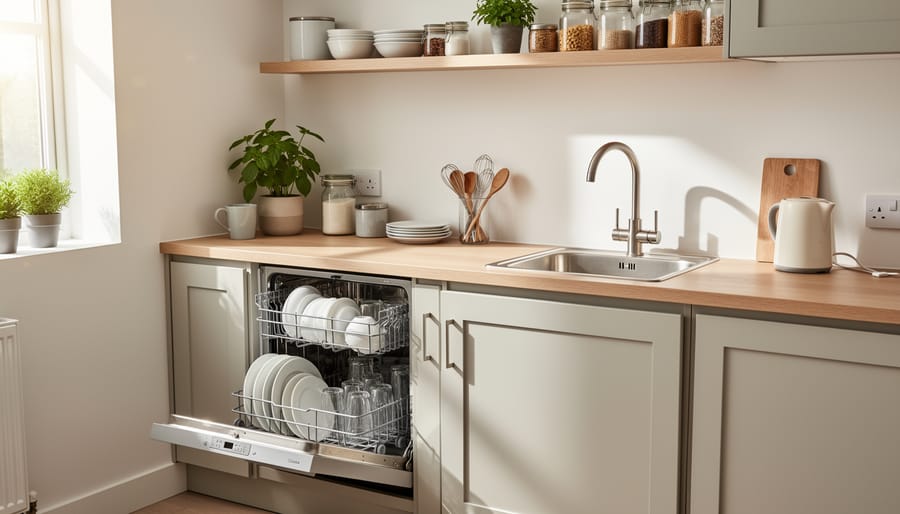
The first decision you’ll face is choosing between an 18-inch compact model and a 24-inch full-size portable dishwasher. That six-inch difference translates directly into capacity: 18-inch models typically hold 6-8 place settings, while 24-inch versions accommodate 12-14 place settings. A place setting includes a dinner plate, salad plate, bowl, cup, saucer, and silverware, think one person’s dishes from a complete meal.
Before falling for the appeal of maximum capacity, measure your kitchen honestly. You’ll need floor space for the unit itself, plus clearance for the door to swing open (at least 24 inches in front). Check your doorways and the path from storage to your sink, many people forget that a 24-inch dishwasher on casters still needs to navigate through tight spaces. Standard portable dishwashers stand around 36 inches tall, matching most countertop heights.
Consider your household size and cooking habits too. A couple who cooks occasionally might find an 18-inch model perfectly adequate, while a family of four will appreciate the breathing room a 24-inch unit provides. The GPT225SSLSS, GE’s 24-inch portable option, hits the sweet spot for households that want to avoid running multiple loads daily without sacrificing precious floor space.
Noise Level and Kitchen Comfort
Noise level matters more than most people realize when choosing a portable dishwasher. Since these units sit in your kitchen rather than tucked away behind cabinetry, every decibel counts. You’ll hear the appliance running during dinner prep, family conversations, or late-night cleanup sessions.
Dishwasher noise is measured in dBA (decibels adjusted for human hearing). For context, normal conversation registers around 60 dBA, while a whisper measures about 30 dBA. The GE GPT225SSLSS operates at 54 dBA, which falls into the quiet category. At this level, you can comfortably hold a conversation in the same room without raising your voice. The dishwasher becomes background hum rather than intrusive clatter.
Here’s a practical breakdown of dBA ranges:
50-54 dBA: Quiet operation, suitable for open-plan kitchens and evening use
55-59 dBA: Moderate noise, noticeable but not disruptive
60+ dBA: Louder models that may interfere with conversation
If your kitchen opens to living or dining areas, prioritize models at 54 dBA or below. For closed-off kitchens with doors, you have more flexibility with noise levels. Check the specifications carefully, some manufacturers don’t prominently display dBA ratings, which often signals a louder machine.
Interior Materials and Durability
The dishwasher tub material matters more than most shoppers realize. You’ll encounter two main options: stainless steel and plastic interiors.
Stainless steel tubs, like the one in the GE GPT225SSLSS, offer measurable advantages. They resist staining and retain fewer odors, even after years of washing greasy dishes and marinara-splattered containers. The metal surface also retains heat better during the drying cycle, which means your dishes emerge drier without extending run time. Expect a stainless interior to last the lifetime of the dishwasher without discoloration or warping.
Plastic tubs work adequately and cost less upfront, but they show their age faster. Light-colored plastics can yellow or stain from tomato-based sauces and heavily spiced foods. They also hold onto food smells more stubbornly, especially if you occasionally skip the rinse cycle. Drying performance lags slightly because plastic doesn’t retain residual heat as effectively.
For portable models that you’ll use daily and move regularly, durability becomes even more important. The bumps and shifts of wheeling your dishwasher to the sink put extra stress on interior components. Stainless steel handles that wear better than plastic, which can crack at mounting points over time.
If you’re planning to keep your portable dishwasher for five-plus years, the stainless interior pays off in consistent performance and appearance.
Types of Portable Dishwashers Compared
Portable dishwashers come in three main categories, each designed for different kitchen setups and household needs. Understanding these types helps you match the right model to your space before you even crack open that manual.
Full-size portable dishwashers measure 24 inches wide and offer the most capacity, typically handling 12 to 14 place settings. These units roll on casters and connect to your kitchen faucet when you need them, then tuck away beside a wall or counter when not in use. They’re built like standard dishwashers, just with wheels and a finished top surface that doubles as prep space. If you’re weighing a portable vs built-in setup, full-size portables deliver nearly identical cleaning power without the installation commitment. They suit families of four or more, or anyone who routinely hosts dinner parties and needs serious dish capacity.
Compact portable models shrink to 18 inches wide, holding 8 to 10 place settings. These work well in apartments, condos, or kitchens where floor space is tight. The narrower footprint makes them easier to maneuver and store, though you’ll run more loads to keep up with larger households. They’re ideal for couples or small families who cook at home regularly but don’t generate restaurant-level dish piles.
| Type | Capacity | Best For | Space Needed |
|---|---|---|---|
| Full-Size Portable (24″) | 12-14 place settings | Families, frequent hosts | 24″W × 24-27″D × 36″H |
| Compact Portable (18″) | 8-10 place settings | Couples, small households | 18″W × 24″D × 36″H |
| Countertop | 4-6 place settings | Singles, minimal dish loads | 22″W × 20″D × 18″H |
Countertop dishwashers sit directly on your counter and hold 4 to 6 place settings, making them the smallest option. They connect to your faucet with a quick-attach hose but stay put rather than rolling around. Think studio apartments, home offices with kitchenettes, or RVs. They handle daily dishes for one or two people who eat simple meals, but they’ll struggle with large pots or baking sheets.
Your kitchen layout matters more than you might think. Measure the path from your storage spot to the sink, checking for doorway widths and tight corners that might block a rolling unit. Full-size models need clearance to maneuver, while compact versions squeeze through narrower spaces. Counter height also plays a role since you’ll need enough room to attach the faucet adapter without the dishwasher top blocking access.
Spotlight on Current GE Portable Models
The GE GPT225SSLSS stands as the flagship model in GE’s current portable dishwasher lineup, delivering full-size cleaning power in a mobile package. This 24-inch unit features a stainless steel interior that resists stains and odors while improving drying performance compared to plastic tubs. With a 54 dBA noise rating, it runs quieter than many conversations, making it suitable even for open-plan kitchens where noise travels. The built-in sanitize cycle eliminates 99.999% of bacteria, giving you hospital-level cleanliness for baby bottles, cutting boards, and everyday dishes. ENERGY STAR certification means it meets strict efficiency standards, saving water and electricity without compromising cleaning results.
The GPT225SSLSS sits within the broader GPT225 series, which shares the same installation footprint and faucet adapter system outlined in GE’s installation instructions. This series typically offers variations in exterior finish while maintaining the core 24-inch capacity and performance features. If you’re working with tighter space constraints, the GPT145 series provides an 18-inch alternative that follows similar installation procedures but accommodates smaller kitchens or households with lighter dish loads.
What sets these current GE models apart is their balance of practical features and proven reliability. The stainless steel interior isn’t just about aesthetics; it genuinely improves long-term performance by preventing the plastic odors that plague some budget portables after a year of use. The 54 dBA operation level means you can run a cycle while entertaining guests without disrupting conversation. ENERGY STAR certification translates to real savings, particularly if you run your dishwasher daily. The sanitize cycle offers peace of mind that goes beyond visual cleanliness, which matters when you’re washing items that contact raw food or go into babies’ mouths.
These models have been in continuous production since October 2019, giving GE time to refine the design based on real-world feedback. You’ll find comprehensive support documentation for the GPT225SSLSS on GE’s website, including detailed owner’s manuals that walk you through every feature and maintenance requirement.
Our Top Recommendations for Different Needs
Choosing the right portable dishwasher means matching features to your actual living situation and priorities. Here’s how to find your ideal match based on common household scenarios.
Best for Small Apartments: Compact 18-Inch Models
If you’re working with limited kitchen space or live alone, an 18-inch portable dishwasher offers a sweet spot between functionality and footprint. These compact units typically hold 8 place settings, plenty for one or two people, and they tuck into corners or slide between appliances more easily than full-size models. Look for units with adjustable racks to maximize the limited interior space. The trade-off? You’ll run loads more frequently than a family of four would, but the space savings often outweigh that inconvenience in studio or one-bedroom apartments.
Best for Families: Full-Size 24-Inch Portable Models
When you’re feeding three or more people, a 24-inch portable dishwasher like the GE GPT225SSLSS becomes essential. With capacity for 12 to 14 place settings, these full-size portables handle dinner dishes, breakfast bowls, and lunch containers in a single load. Prioritize models with a stainless steel interior for durability and better drying results. The sanitize cycle becomes particularly valuable for families with young children, killing 99.999% of bacteria on bottles, cutting boards, and dinner plates. Yes, the unit takes up more floor space, but you’ll appreciate not running the dishwasher twice daily.
Best for Energy Efficiency: ENERGY STAR Certified Models
Energy-conscious households should focus exclusively on ENERGY STAR certified portable dishwashers, which use about 12% less energy than standard models. The GE GPT225SSLSS carries this certification, pairing efficiency with performance. Check the energy guide label to compare annual operating costs between models. Efficient dishwashers also use less water per cycle than handwashing, typically around 3.5 gallons versus the 27 gallons you’d use at the sink. If sustainability matters to you, this certification isn’t negotiable.
Best for Quiet Operation: Low dBA Ratings
Open-plan living spaces demand whisper-quiet appliances. Target portable dishwashers rated at 54 dBA or lower, like the GPT225SSLSS, which runs quietly enough to hold a conversation in the same room. Anything above 60 dBA starts to intrude on TV watching or dinner table conversations. The quietest models use better insulation and improved pump designs, features worth paying extra for if your kitchen flows into your living area.
When evaluating any best portable dishwasher options, keep these scenario-specific priorities in mind:
- Small spaces prioritize compact 18-inch width and flexible storage
- Families need 12+ place setting capacity and sanitize cycles
- Energy savers require ENERGY STAR certification and low water usage
- Noise-sensitive homes demand 54 dBA or quieter operation
Your specific needs might blend several categories. A small apartment dweller who entertains frequently might choose a 24-inch model despite tighter space, while a family in an open loft might prioritize both capacity and quiet operation. Map your household’s actual usage patterns and non-negotiables against these recommendations rather than defaulting to the biggest or cheapest option available.
Installation and Setup Essentials
Getting your GE portable dishwasher up and running is straightforward when you follow the installation instructions included with your model. The GPT225 and GPT145 series come with detailed setup guides that walk you through each step, ensuring your unit operates safely and efficiently from day one.
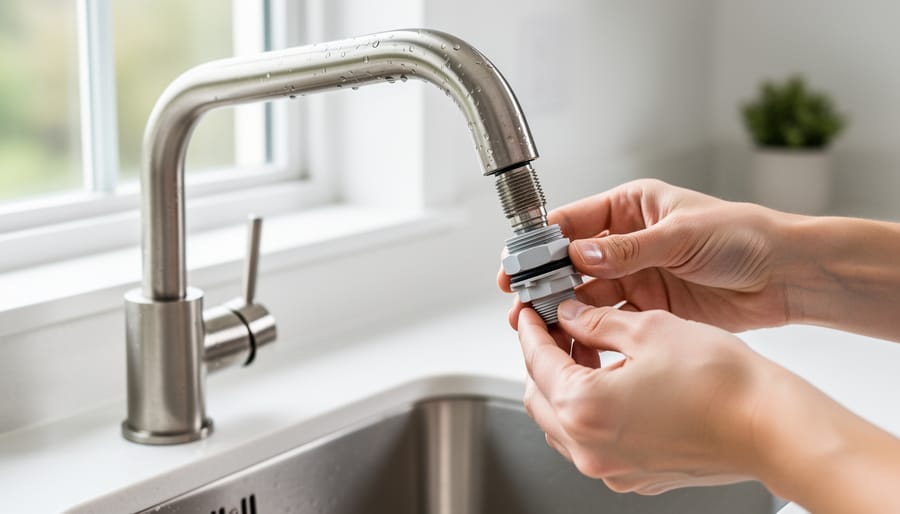
Start by checking faucet compatibility. Your portable dishwasher connects to your kitchen faucet using a threaded adapter, but not all faucets accept the standard adapter. Pull-out spray faucets, handheld sprayers, and faucets without removable aerators won’t work without a special conversion kit. Check your faucet type before unpacking, most round threaded faucets with removable aerators connect easily, while square or specialty faucets may require an adapter you’ll need to purchase separately.
Once you’ve confirmed compatibility, position your dishwasher near the sink with enough clearance to open the door fully. The unit should sit level front-to-back and side-to-side for proper drainage and wash performance. Adjust the leveling feet by turning them clockwise or counterclockwise until you’ve eliminated any wobble. Use a carpenter’s level if you want precision, but a quick visual check often works fine.
Connect the inlet hose to your faucet by removing the aerator, screwing on the adapter, then attaching the quick-connect coupling. The drain hose sits in the sink, secured so it won’t pop out during operation. Turn on the hot water fully and check for leaks at the connection point before closing the dishwasher door.
Run an initial test cycle empty or with a light load. This flushes the system and confirms everything’s working correctly. Listen for unusual sounds, watch for leaks at the connection, and ensure the drain hose stays positioned in the sink. If water pools under the unit, recheck your hose connections and leveling.
Your manual includes model-specific diagrams and torque specs, keep it handy during setup and refer back whenever you disconnect and reconnect the unit.
Common Mistakes to Avoid
Even seasoned homeowners stumble when buying portable dishwashers, and most mistakes stem from not reading the manual before committing to a model. Here’s what to watch for.
Misjudging your kitchen space ranks as the top error. Measure the spot where you’ll park your dishwasher between uses, and remember you need clearance to roll it to your sink. A 24-inch model might clean more dishes, but if it blocks your workflow or won’t fit through a doorway, the 18-inch version serves you better. Check your manual’s dimensions carefully, including height for storage under counters.
Overlooking noise ratings causes regret in open-plan homes where kitchen sounds carry to living areas. That bargain model rated at 60 dBA will intrude on dinner conversations, while GE’s 54 dBA models like the GPT225SSLSS run quietly enough for evening use. Read the specs sheet, not just the marketing claims.
Skipping the manual’s maintenance schedule invites problems down the road. Your GE manual outlines filter cleaning frequency, spray arm inspection, and monthly deep-clean routines that prevent dishwasher odor and keep water flowing properly. Set phone reminders based on these maintenance tips rather than waiting for performance issues.
Improper storage during off-season ranks among the costliest mistakes for seasonal home owners or those temporarily relocating. The manual’s “Disconnect and Store Your Dishwasher” section for portable models walks you through draining residual water, protecting hoses from freezing, and positioning the unit to avoid mold growth. Ignore this guidance and you risk cracked components or musty smells come spring.
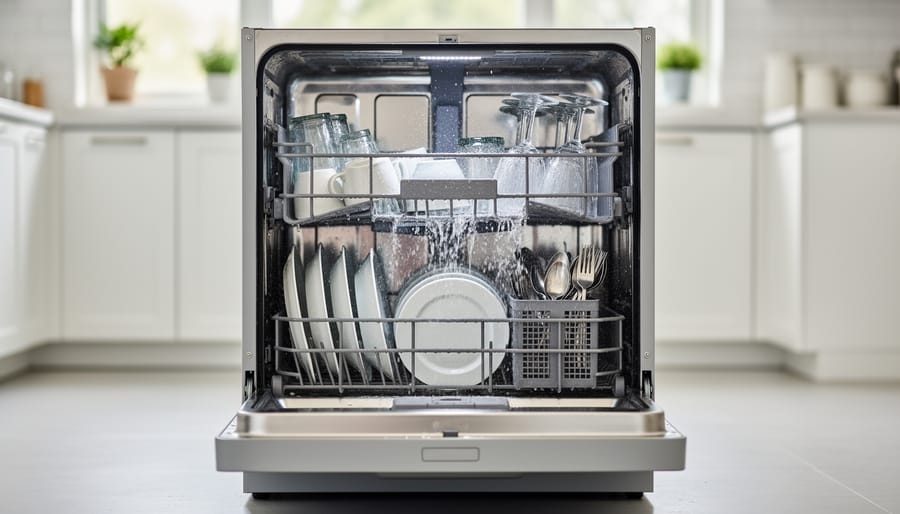
Overfilling derails cleaning performance faster than any other user error. Just because dishes fit doesn’t mean water can reach them. Your manual’s loading diagrams show proper spacing, and those plates touching won’t come out clean no matter how much detergent you add. Follow the recommended place settings and resist the temptation to cram in one more bowl.
Frequently Asked Questions
Owning a portable dishwasher comes with questions, especially if you’re new to this style of appliance. Here are answers to the most common concerns GE portable dishwasher owners face.
Where can I find my GE portable dishwasher manual by model number?
Visit the GE Appliances support page and enter your model number (like GPT225SSLSS) to access the owner’s manual, installation instructions, and energy guides specific to your unit. The model number is typically located on the door rim or inside the tub.
Do portable dishwashers clean as well as built-in models?
Yes, portable dishwashers use the same cleaning technology as built-in units and deliver comparable results. Models with sanitize cycles and multiple spray arms can match the performance of their built-in counterparts when loaded correctly.
How should I store my portable dishwasher when not in use?
Disconnect the unit from the faucet, drain any remaining water, and store it in a dry location away from freezing temperatures. The owner’s manual includes a “Disconnect and Store Your Dishwasher” section specifically for portable models with detailed winterizing steps.
What regular maintenance does a portable dishwasher need?
Clean the filter monthly, wipe the door gasket regularly, and run a cleaning cycle with dishwasher cleaner every few months. Check the spray arms for clogs and inspect the faucet adapter for wear to maintain optimal performance.
Will a portable dishwasher work with my kitchen faucet?
Most portable dishwashers include a universal faucet adapter that fits standard faucets, but pull-out spray faucets and some specialty designs may require additional adapters or won’t be compatible. Check your faucet type against the installation instructions before purchasing.
These questions represent what most people wonder when considering or using a portable dishwasher for the first time. The manual remains your best resource for model-specific guidance, but understanding these basics helps you make an informed decision and avoid common frustrations. If your question isn’t covered here, the troubleshooting section of your owner’s manual offers detailed solutions for specific operational concerns.
Choosing the right portable dishwasher means matching your kitchen’s reality with your household’s needs. You’ve got the key factors in hand now: measure your space carefully, check your faucet compatibility before you buy, prioritize noise levels if you live in open-plan quarters, and don’t compromise on interior quality if longevity matters to you. Whether you land on a full-size 24-inch model like the GPT225SSLSS or opt for an 18-inch compact, make sure the capacity fits your daily load and the features align with how you actually live.
Here’s the part many people overlook: your GE portable dishwasher manual isn’t just for setup day. Keep it accessible throughout ownership. When cycles aren’t performing as expected, when you’re prepping for seasonal storage, or when you need to troubleshoot a quirky noise, that manual holds the answers specific to your model. Bookmark the digital version or tuck the printed copy somewhere you’ll remember.
The right portable dishwasher transforms cleanup from a chore that eats your evening into a hands-off process that runs while you relax. You’re not just buying an appliance; you’re reclaiming time and counter space. Trust your measurements, consult the manual when questions arise, and choose the model that serves your kitchen’s specific constraints. You’ll wonder how you managed without it.


