
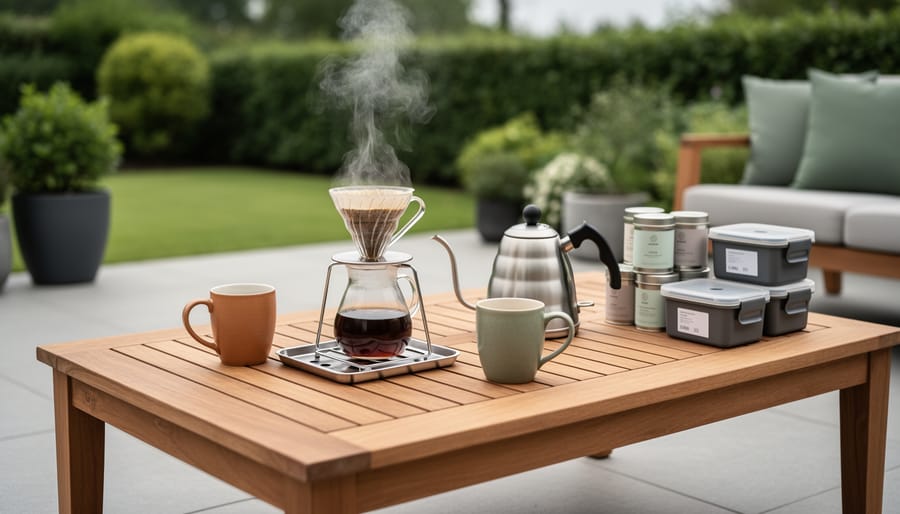
Creating an outdoor coffee and tea station around a teak coffee table takes about a weekend to complete and requires minimal DIY experience, yet delivers a lasting centerpiece that transforms your patio into a true entertainment hub. The setup centers on choosing the right teak table for its natural weather resistance and durability, then organizing your coffee equipment in a way that protects electronics while keeping everything accessible. Teak’s high oil content naturally repels moisture and resists rot, making it the ideal foundation for a project that combines both function and style in an exposed outdoor environment.
The appeal goes beyond just having coffee outside. You’re building a dedicated space that invites morning rituals, afternoon conversations, and those quiet evening moments with a warm cup in hand. Unlike indoor setups that rely on constant electricity and climate control, an outdoor station needs thoughtful weatherproofing, smart storage solutions for beans and supplies, and a layout that accounts for sun exposure and wind. Teak handles these challenges better than most materials, aging gracefully into a silver patina while maintaining its structural integrity through rain, humidity, and temperature swings.
This guide walks you through the complete process: selecting a teak table that fits your space and budget, gathering the right weatherproof accessories and storage containers, setting up your station with proper electrical considerations, and maintaining everything so it lasts for years. Whether you’re working with a compact balcony or a sprawling deck, the principles remain the same. You’ll learn exactly what works in real outdoor conditions and how to avoid the common mistakes that turn a promising project into a frustrating maintenance headache.
Why Teak is Perfect for Outdoor Beverage Stations
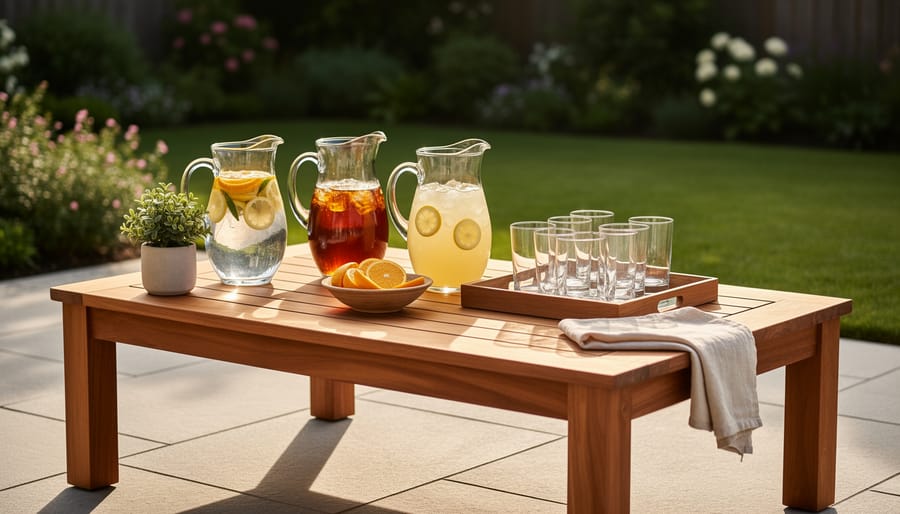
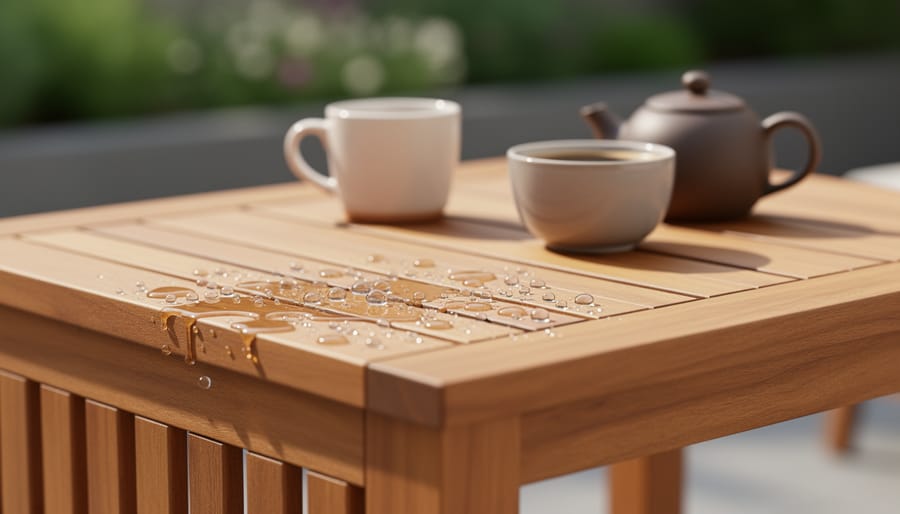
Teak stands out as the gold standard for outdoor furniture, and that reputation becomes especially valuable when you’re setting up a beverage station exposed to the elements. Unlike pine or oak, teak contains natural oils, primarily tectoquinone, that actively repel water rather than absorbing it. When you spill coffee during your morning routine or condensation drips from a cold pitcher, these oils prevent the moisture from penetrating the wood grain. This built-in water resistance means your table won’t warp, crack, or develop mold even after years of daily use.
Beyond moisture protection, teak’s dense grain structure provides exceptional resistance to rot and insect damage. Termites and other wood-boring pests simply won’t attack it, which matters when you’re storing coffee beans, tea leaves, and sweeteners outdoors. The wood also handles temperature extremes without splitting, so setting down a hot French press or electric kettle won’t leave scorch marks or damage the surface. This heat tolerance is crucial for a beverage station where you’ll frequently place warming plates, thermal carafes, and freshly brewed pots.
Perhaps the most appealing quality is how teak ages. While most woods deteriorate outdoors, teak develops a silvery-gray patina that many homeowners find even more attractive than the original honey-brown color. You can maintain the original tone with occasional oiling, or embrace the weathered look, either way, the structural integrity remains unchanged. For a coffee station that serves as both a functional workspace and a visual anchor in your outdoor space, this graceful aging means your setup actually becomes more characterful over time rather than looking worn out.
Tools and Materials You’ll Need
Setting up your outdoor coffee and tea station requires gathering materials from several categories. Before you begin, make sure you have everything on hand to avoid mid-project trips to the store.
Core Components and Supplies
Your teak coffee table is the foundation, but you’ll need additional items to complete the setup:
- Furniture: Teak outdoor coffee table (sized appropriately for your space), furniture pads or leveling feet, optional umbrella or shade structure
- Beverage Equipment: Coffee maker or French press, electric kettle, mugs and cups, coffee and tea storage canisters, sugar and cream containers, serving tray
- Weatherproofing Supplies: Teak sealer or oil (optional), waterproof storage baskets or bins with lids, protective covers for electronics, outdoor-rated extension cord with GFCI protection
- Organization and Hardware: Mounting hooks, drawer organizers or dividers, coasters, small waste bin, microfiber cloths
- Assembly Tools: Screwdriver set, level, measuring tape, drill with bits (if mounting hardware), cleaning brush, bucket for washing
Most coffee makers and kettles designed for outdoor use will specify their weatherproof rating. Even with weather-resistant appliances, you’ll want covers for when they’re not in use. The GFCI-protected extension cord is non-negotiable for electrical safety outdoors, standard indoor cords won’t provide adequate protection against moisture.
Gather cleaning supplies specifically: a soft-bristle brush works best for teak’s grain, while mild dish soap handles general cleanup without damaging the wood’s natural oils.
Safety and Placement Considerations
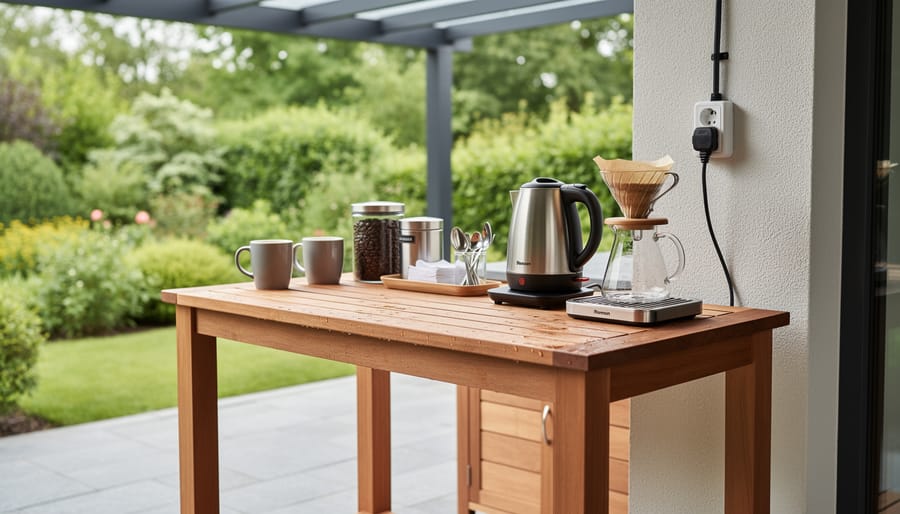
Before you position your teak table and start brewing, address a few critical safety points. Electrical equipment outdoors introduces serious risks if not handled correctly.
Beyond electrical concerns, check your teak table’s weight capacity before loading it with equipment. Most outdoor coffee tables handle 50 to 100 pounds comfortably, but a heavy espresso machine, full water reservoir, and storage containers add up fast. Verify the manufacturer’s specifications and distribute weight evenly across the surface.
Place your table on level ground. A wobbly station leads to spilled coffee, tipped appliances, and potential burns. Use shims or furniture levelers if needed, and test stability before adding gear.
Think through proximity to water sources. You’ll want convenient access for refilling reservoirs and cleaning, but avoid placing the station directly beside a pool, fountain, or sprinkler zone where splashing becomes a constant problem.
Sun exposure matters for both comfort and equipment longevity. A fully exposed table means scorching surfaces in summer and faster weathering of your appliances. If you prefer French press vs pour over brewing methods or plan to make coffee without a maker intense sun still degrades storage containers and heats mugs uncomfortably.
Choose a location that balances protection and accessibility. A covered patio or gazebo shields equipment from rain and direct sun while keeping you close to the kitchen. If you must place the station in an open area, factor in wind protection, gusts knock over lightweight items and cool your coffee too quickly. Position the table against a wall, fence, or hedge to create a natural windbreak.
Step-by-Step: Setting Up Your Teak Coffee Station
Prepare and Position Your Teak Table
Start by giving your teak table a thorough cleaning with warm water and a soft brush to remove any manufacturing residue or shipping dust. Let it dry completely, this typically takes a few hours in direct sunlight.
If your table is brand new, you’ll notice its golden honey color. Decide now whether you want to maintain this shade with teak oil or let it naturally age to a silvery gray patina. For a first-time treatment, apply teak oil sparingly with a clean cloth, working with the grain. One thin coat is plenty; excess oil attracts dirt and won’t penetrate anyway.
Location matters more than you might think. Scout your outdoor space for a spot that’s relatively level and offers some protection from direct rain, under an overhang, covered patio, or large umbrella works well. You want easy access to an electrical outlet for your coffee maker (keep extension cords short and rated for outdoor use to avoid issues like those covered in Keurig troubleshooting). Check that the ground beneath is stable, not soft soil that shifts with moisture.
Place the table and use a bubble level across both directions. Wobbly tables and hot beverages don’t mix. If your patio has slight drainage slopes, use adjustable furniture pads on the shorter legs to achieve balance. Consider setting the table on outdoor pavers or a raised platform to keep the legs off damp ground, which improves airflow underneath and extends the wood’s life.
Arrange Your Coffee and Tea Equipment
Start with your heaviest items first. Place your coffee maker or electric kettle against the back edge of the table, closest to your power source. This positioning keeps cords away from the main working area and prevents you from reaching over hot appliances. If you’re using a French press instead of an electric brewer, you’ll have more flexibility with placement since there’s no cord to manage.
Position your mug storage within arm’s reach but off to one side. A tiered rack or simple hooks mounted on a nearby wall work better than stacking mugs on the table itself, freeing up valuable surface space. Keep your daily-use mugs most accessible and reserve back positions for extras.
Cluster your canisters for coffee, tea, sugar, and cream in a central zone where you’ll naturally work. Group them on a waterproof tray or in a weatherproof basket to contain any spills and make cleaning easier. This also lets you quickly move everything indoors during severe weather.
Reserve the front edge of your table for active workspace. This is where you’ll set your mug while preparing drinks, add sweeteners, and stir. Keep a small container here with spoons and stirrers, along with a cloth for quick wipe-downs.
Check that your table doesn’t feel front-heavy or tippy after arrangement. Teak is sturdy, but uneven weight distribution can still cause problems, especially on slightly uneven ground.
Add Weatherproofing Elements
With your coffee station arranged, it’s time to shield your setup from the elements. Start by deciding whether to seal your teak table. While teak naturally resists moisture, a marine-grade sealer adds an extra layer of protection against coffee spills and condensation. Apply it according to manufacturer directions, typically with a clean cloth in thin, even coats. Let it cure completely, usually 24 hours, before placing items back on the surface.
Next, protect your appliances with a waterproof serving tray. Choose one with raised edges to contain spills and a non-slip bottom to prevent sliding. Stainless steel or sealed bamboo trays work brilliantly and complement teak’s warm tones. Position your coffee maker and kettle on this tray to create a moisture barrier between them and the wood.
For storage, swap open containers for lidded bins or baskets. Woven resin baskets resist humidity while keeping coffee pods, tea bags, and filters dry. Look for ones with tight-fitting lids that won’t blow off in wind. Store these bins under the table or on lower shelves if your setup includes a multi-tier cart.
Consider drainage beneath the table. If you’re on a deck, ensure there’s adequate airflow underneath. On concrete patios, small furniture risers lift the table slightly, preventing water from pooling beneath. Finally, if your location lacks natural overhead protection, add a weatherproof umbrella. Position it to shade the station during peak sun hours while providing rain coverage. An offset umbrella works best, keeping the pole away from your workspace.
Organize and Accessorize
With your station now functional and weatherproofed, it’s time to add those finishing touches that transform a basic setup into an inviting outdoor retreat. The key is choosing accessories that enhance both usability and aesthetics without creating maintenance headaches or compromising the weather resistance you’ve carefully built.
Start with a small decorative tray to corral frequently used items like sugar packets, stirrers, and napkins. Choose one made from weather-resistant materials like powder-coated metal or sealed bamboo. This keeps essentials organized while protecting your teak surface from repeated moisture exposure. Position the tray within easy reach but away from the immediate coffee-making zone to prevent crowding.
Add a compact waste solution next. A small stainless steel bin with a lid works perfectly, preventing wind from scattering used filters or tea bags. Tuck it beside or beneath the table, securing it if your location gets breezy. Include a waterproof liner for easy cleanup.
Install adhesive hooks on a nearby wall or post for hanging dish towels, a small brush for cleaning, or measuring spoons. This vertical storage keeps your table surface clear and items dry between uses. Choose rust-resistant hooks rated for outdoor use.
Coasters are essential for protecting teak from hot mugs and condensation rings. Cork or silicone options work well outdoors and dry quickly. Keep a stack visible so guests instinctively use them.
For seasonal touches, opt for weather-tolerant décor like a potted succulent in a drainage-friendly container or a small battery-operated lantern for evening ambiance. Avoid fabric elements that absorb moisture or items that require constant repositioning. A simple vase with fresh-cut herbs like mint or rosemary adds fragrance and function, they’re perfect for tea.
The goal is creating a space that feels curated, not cluttered. Every accessory should justify its presence by serving a practical purpose or bringing genuine joy without demanding extra maintenance.
Testing and Fine-Tuning Your Setup
Before you settle in for that first outdoor brew, run through these essential tests to confirm everything works smoothly and safely.
Start by plugging in your coffee maker and kettle. Switch them on to verify power flow, no tripped breakers or faulty connections. If you’re using extension cords, ensure they’re rated for outdoor use and that all connections stay elevated off the ground. Brew a test batch of coffee to check that your setup handles the heat and steam without issues. This trial run also lets you time how long brewing takes in your outdoor environment, which can differ from indoor conditions.
Next, deliberately press down on different corners of your teak table while it’s loaded with equipment. Any wobbling means you need to adjust the table’s position or add leveling feet. Walk around the station, reaching for mugs, canisters, and your coffee maker from multiple angles. If you’re stretching or bumping other items, rearrange for better flow.
For weatherproofing verification, lightly mist the setup with a garden hose set to gentle spray, simulating rain without soaking electronics. Check whether water pools anywhere on the table or seeps into storage containers. After you clean stainless coffee pot components following your test brew, note any spots where moisture lingers or drips collect.
Make adjustments immediately. Shift items that feel awkward to reach, add extra drainage under problem areas, or reposition your umbrella for better coverage. Your first real coffee session will reveal any remaining tweaks needed.
Ongoing Maintenance and Seasonal Care
Your outdoor coffee station will thrive with consistent care. Wipe down the teak table weekly using a soft cloth and mild soap solution, then rinse thoroughly and let it air dry. This prevents coffee stains and residue buildup while keeping the wood’s natural oils intact. Over time, teak develops a silvery patina, embrace this graceful aging, or apply a sealer twice yearly if you prefer the golden-brown tone. If your station includes a French press vs Keurig setup, check electrical connections monthly and store any appliances indoors during storms or freezing temperatures to prevent damage.
Here’s a simple maintenance schedule to keep everything running smoothly:
- Weekly: Clean table surface, check for loose accessories, wipe down appliances
- Monthly: Inspect teak for cracks, tighten any hardware, test electrical outlets
- Quarterly: Deep clean with specialized teak cleaner, reorganize storage, refresh weatherproofing
- Seasonally: Apply teak sealer if maintaining color, store delicate items before winter, inspect for moisture damage
Before winter arrives, perform a complete shutdown: bring all electronics inside, empty and clean storage containers, and apply a fresh coat of teak oil for protection against harsh conditions. If you live in a mild climate, you can keep the basic station operational year-round, but always cover or store electrical items during heavy rain or snow. Come spring, a quick cleaning and inspection will have your station ready for morning coffee on the patio again.
Frequently Asked Questions
Can I really leave my teak coffee table outside all year?
Yes, teak can remain outdoors year-round thanks to its high natural oil content and dense grain structure. The wood resists moisture, rot, and insect damage even through harsh winters and humid summers. That said, if you live in an area with extreme freeze-thaw cycles or prolonged heavy snow, consider moving the table to a covered patio or storing it in a garage during the worst months to extend its lifespan and minimize surface cracking.
How do I keep my teak table from getting stained by coffee spills?
Wipe up spills promptly with a damp cloth, teak’s natural oils provide some resistance, but dark liquids like coffee can leave marks if they sit for hours. For added protection, apply a teak sealer or use a waterproof serving tray under your coffee maker and mugs. If a stain does set in, light sanding with fine-grit sandpaper usually removes it without damaging the wood.
Do I need to seal or oil my teak table?
You don’t have to seal teak, but doing so helps maintain its original honey-brown color and adds an extra barrier against stains. Without sealer, teak naturally weathers to a silvery-gray patina, which is perfectly healthy for the wood and appeals to many people. If you prefer the warm tone, reapply teak oil or sealer every few months; if you like the weathered look, simply clean the table periodically and let it age.
Is it safe to run electrical appliances on my outdoor coffee station when it rains?
Never operate electric coffee makers or kettles outdoors during rain unless they’re under a fully covered, weatherproof structure with GFCI-protected outlets. Water and electricity are a dangerous combination. Unplug all appliances and store them indoors or in sealed waterproof containers when you’re not using the station, and always check that cords and outlets are dry before plugging anything in.
How should I winterize my outdoor coffee and tea station?
Before the first freeze, remove and store all electrical equipment, mugs, and perishable supplies indoors. Clean the teak table thoroughly, let it dry, and either cover it with a breathable furniture cover or move it to a sheltered spot like a garage or covered porch. Empty any water reservoirs, wipe down all surfaces, and store small accessories in sealed bins to prevent moisture damage and keep everything ready for spring setup.
Building your own outdoor coffee and tea station around a teak coffee table transforms ordinary mornings into something special. There’s genuine satisfaction in stepping outside with your favorite mug, brewing a fresh cup in the open air, and settling into a space you’ve designed for this exact purpose. The combination of warm teak, aromatic coffee, and natural surroundings creates a daily ritual worth savoring.
Your teak table anchors this experience with durability that matches its beauty. Unlike other materials that demand constant attention or deteriorate after a season or two, teak weathers naturally and gains character over time. It handles the moisture from brewing, the heat from appliances, and the occasional spill without complaint. That reliability means less time worrying about damage and more time actually enjoying your outdoor haven.
Start simple if you’re feeling overwhelmed by the full setup. A French press, a few mugs, and your teak table create a perfectly functional station. You can add the electric kettle next month, incorporate storage solutions when you find the right containers, and expand your beverage options as inspiration strikes. This project grows with you.
The beauty of this approach lies in its permanence. You’re not assembling something temporary that needs replacing next spring. You’re building a lasting outdoor feature that becomes part of your home’s rhythm, a place where weekend guests gather, where quiet mornings start, and where the simple act of making coffee becomes a genuine pleasure rather than a rushed chore.