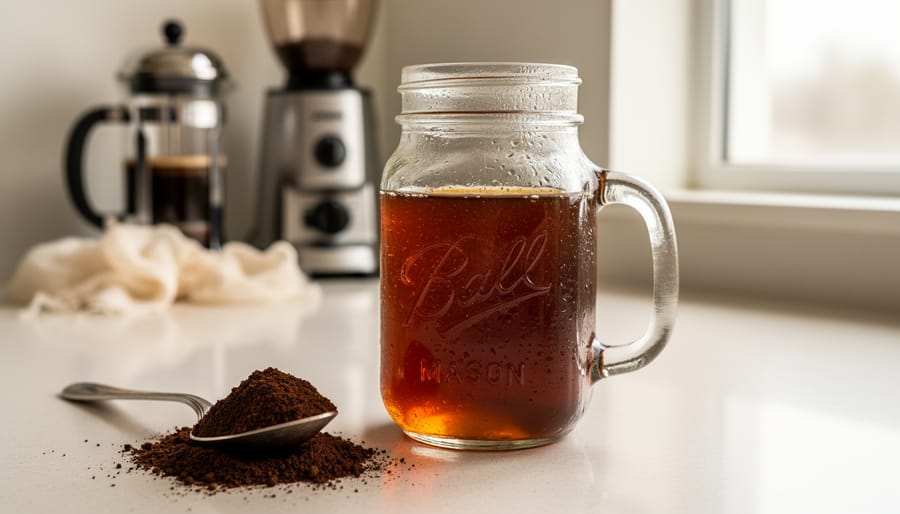
Grind your coffee beans coarsely to prevent bitter, over-extracted cold brew that tastes muddy and unpleasant. The ideal consistency resembles raw sugar or sea salt, allowing water to flow around each particle and extract smooth, sweet flavors over 12-24 hours. This single adjustment transforms your results more than any expensive equipment ever could.
Choose your brewing method based on your lifestyle and kitchen setup. The simplest approach uses a large mason jar with coffee grounds steeping directly in cold water, then strained through a fine-mesh sieve or cheesecloth. For cleaner results with less sediment, try a dedicated cold brew maker with a built-in filter basket that lifts out when steeping completes. French press owners already have everything needed—just don’t press the plunger until steeping finishes to avoid forcing bitter compounds into your concentrate.
Master the coffee-to-water ratio that matches your taste preferences. Start with a 1:4 ratio for concentrate that you’ll dilute later with water, milk, or ice, creating café-quality drinks at a fraction of the cost. Prefer ready-to-drink cold brew? Use 1:8 for a smoother, immediately enjoyable cup. Keep detailed notes about ratios, steeping times, and bean varieties so you can replicate your perfect batch.
Store your finished cold brew in an airtight container in the refrigerator for up to two weeks, though the brightest flavors shine within the first week. This make-ahead convenience means your morning routine becomes effortless, with delicious coffee waiting whenever you need that smooth, energizing boost.
Why Cold Brew Deserves Counter Space in Your Kitchen
If you’ve been scrolling through coffee enthusiast forums or browsing Pinterest for kitchen inspiration, you’ve probably noticed cold brew making a serious splash. But this isn’t just another trendy beverage—it’s a legitimate contender for permanent counter real estate in your home.
Unlike other brewing methods that demand your attention first thing in the morning, cold brew works on your schedule. Think of it as the slow cooker of the coffee world. You set it up the night before, and wake up to smooth, ready-to-drink coffee that stays fresh in your fridge for up to two weeks. For busy homeowners juggling morning routines, this is a game-changer.
The flavor profile alone justifies the counter space. Cold brewing extracts coffee differently than hot water methods, resulting in a naturally sweeter, less acidic cup. If you’ve ever winced at that harsh bite from regular coffee, you’ll appreciate how gentle cold brew is on your stomach. It’s chemistry working in your favor, pulling out the rich, chocolatey notes while leaving behind the compounds that cause bitterness.
From a kitchen design perspective, a dedicated cold brew setup actually elevates your space. Modern cold brew makers range from sleek glass carafes to minimalist stainless steel systems that look right at home next to your KitchenAid mixer or espresso machine. They’re conversation starters that signal you’ve thoughtfully curated your kitchen for both function and style.
The economics make sense too. That daily coffee shop run adds up quickly. With cold brew concentrate on hand, you’re creating café-quality drinks at a fraction of the cost, making this one home improvement that actually pays dividends every single day.
Setting Up Your Home Cold Brew Station

Essential Equipment (No Fancy Gadgets Required)
Here’s the great news: you don’t need to invest in expensive equipment to brew café-quality cold brew at home. In fact, you probably have most of what you need already sitting in your kitchen cabinets.
Start with a large glass jar or pitcher, anything from a mason jar to a repurposed pasta sauce container works beautifully. For filtering, you have several budget-friendly options. A fine-mesh strainer lined with cheesecloth creates perfectly smooth cold brew, or grab some inexpensive coffee filters from the grocery store. A nut milk bag, available for just a few dollars online, is reusable and makes straining effortless.
For storage, any airtight glass bottle or pitcher will keep your cold brew fresh for up to two weeks in the refrigerator. Those swing-top bottles look gorgeous on your counter and make pouring a breeze, but even a cleaned-out juice bottle works perfectly well.
The beauty of cold brew is its simplicity. Unlike espresso machines or pour-over setups, there’s no specialized equipment required. Your initial investment might be as little as five dollars if you’re starting from scratch, making this one of the most accessible kitchen upgrades you can tackle this weekend.
Optional Upgrades for the Dedicated Cold Brewer
If cold brew has become your daily ritual, upgrading to dedicated equipment can transform your kitchen setup and simplify your routine. Think of it as a mini coffee station that earns its countertop real estate.
Purpose-built cold brew makers offer convenience that mason jars simply can’t match. Models like the OXO Cold Brew Coffee Maker or Toddy System feature built-in filtration and easy-pour spigots, eliminating the messy transfer process. These typically range from $30 to $80 and can produce batches that last a full week. The best part? They’re designed to fit neatly in your refrigerator door, keeping everything streamlined.
For the ultimate upgrade, consider a countertop cold brew system with slow-drip functionality. These beautiful glass towers aren’t just brewing equipment; they’re genuine conversation pieces that add artisan café vibes to your kitchen. While pricier at $100 to $300, they deliver exceptionally smooth results through precise water-drip control.
Don’t overlook filtration improvements either. Reusable stainless steel filters reduce waste and often produce cleaner-tasting brew than paper alternatives. Pair your system with airtight dispensers featuring measurement markings, making it easy to create consistent drinks every morning without the guesswork.
The Classic Immersion Method: Your Foolproof Starting Point
The Perfect Coffee-to-Water Ratio
Getting your coffee-to-water ratio right is like finding the perfect paint color for your living room—it might take a little experimentation, but once you nail it, the results are absolutely worth it!
The golden standard for cold brew is a 1:4 ratio—that’s one part coffee to four parts water. This creates a concentrated brew that you’ll dilute later with water, milk, or your favorite creamer. Think of it as making a homemade concentrate, similar to how you’d prep ingredients for a big DIY project. For example, if you’re using one cup of coarsely ground coffee, combine it with four cups of cold water.
If you prefer a ready-to-drink strength right out of the jar, try a 1:7 or 1:8 ratio instead. This gives you a milder brew that needs no dilution—perfect for pouring straight over ice on those warm afternoons when you’re tackling outdoor projects.
Want something bolder? Go for 1:3 for an extra-strong concentrate that packs a serious caffeine punch. Or lighten things up with a 1:10 ratio for a gentler, more tea-like experience.
Start with the standard ratio, then adjust in small increments until you discover what tastes just right to you. Keep notes like you would for any good home project—you’ll thank yourself later!
Steeping Time and Temperature Secrets
The sweet spot for cold brew is typically between 12 to 24 hours, though your exact timing depends on where you’re brewing and how strong you like your coffee. Think of it like slow-cooking a perfect pot roast – patience yields incredible results, but there’s definitely a point where you’ve gone too far.
For room temperature brewing, stick to the 12-16 hour range. This method extracts flavors more quickly and gives you a bolder, more robust brew. It’s perfect if you’re planning your coffee the night before and want it ready by morning. Just keep it in a cool, dark spot away from direct sunlight – your pantry works beautifully.
Refrigerator brewing takes longer, usually 18-24 hours, since the cold slows down extraction. But here’s the payoff: you’ll get smoother, sweeter notes with less bitterness. Many home brewers prefer this method because it’s more forgiving. If you forget about your brew for an extra few hours, it won’t turn harsh and over-extracted.
Here’s a practical tip from experience: start with 16 hours at room temperature or 20 hours refrigerated, then adjust based on your taste preferences. Keep notes on what works best with your favorite beans – it’s like perfecting any DIY project, finding your ideal formula takes a little experimentation.
Filtering Without the Mess
Getting crystal-clear cold brew is easier than you might think, and you don’t need fancy equipment to nail it. The trusty cheesecloth method works wonders—simply line a fine-mesh strainer with two or three layers, place it over your container, and pour slowly. The key is patience; rushing creates sediment. For an even cleaner result, coffee filters are your best friend. They take longer but deliver café-quality clarity. Here’s a pro tip: dampen your filter first to prevent it from absorbing precious concentrate. If you’re straining larger batches, a nut milk bag combines the best of both worlds—it’s reusable, machine washable, and gives you excellent control. Whatever method you choose, strain twice for professional results. Your first pass catches the grounds, while the second removes any sneaky sediment. Think of it as polishing your creation to perfection, transforming your kitchen counter into a coffee bar you’ll actually want to show off.
The Slow Drip Technique: Elevate Your Cold Brew Game
Ready to take your cold brew obsession to the next level? The slow drip technique is like the artisan coffee shop’s secret weapon, and it’s easier to set up at home than you might think. This method produces a remarkably different cup compared to traditional immersion brewing, with a lighter body, more nuanced flavors, and a presentation that’ll impress anyone who walks into your kitchen.
Here’s what makes drip brewing special: instead of steeping grounds in water for hours, this technique slowly drips ice-cold water through coffee grounds at a rate of about one drop per second. The result? A cleaner, brighter flavor profile that highlights delicate tasting notes often lost in immersion methods. Think of it as the difference between a slow-cooked stew and a carefully prepared reduction sauce.
For the DIY enthusiast, you don’t need to drop hundreds on a fancy cold drip tower right away. Start with a simple setup using items you likely already own. Grab a large mason jar, punch small holes in the lid, fill it with ice water, and position it above a filter cone containing your coffee grounds. Place a carafe underneath to catch the precious drips. Adjust the flow by controlling how many holes you create or their size. It’s a satisfying weekend project that costs next to nothing.
If you’re hooked on the results and want to upgrade, commercial cold drip towers range from sleek countertop models around one hundred dollars to statement-piece towers that double as kitchen sculpture. These typically feature adjustable drip valves for precise control, multiple chambers, and elegant glass construction. They’re conversation starters that combine function with serious style points.
The brewing process takes six to twelve hours, so plan accordingly. Start your drip before bed, and wake up to liquid gold. The payoff is coffee so smooth and complex, you’ll wonder why you didn’t try this sooner.
Quick Cold Brew Hacks for Busy Homeowners
Let’s be honest—sometimes you need your cold brew fix, but waiting 12 to 24 hours just isn’t happening. Whether you’re hosting a last-minute brunch or simply forgot to prep yesterday, these clever shortcuts will get you that smooth, chilled coffee experience in a fraction of the time.
The Japanese iced coffee method is your secret weapon here. Instead of steeping grounds in cold water for hours, you’re brewing hot coffee directly over ice. Here’s the trick: use double-strength coffee (twice your normal grounds) and brew it straight into a carafe filled with ice cubes. The ice instantly cools and dilutes the coffee to perfect drinking strength. You’ll have delicious cold coffee in about five minutes. The flavor profile differs slightly from traditional cold brew—it’s brighter and more acidic—but it’s remarkably clean and refreshing.
Another time-saver is the rapid cool-down method. Brew your cold brew concentrate as usual but cut the steeping time to just 4 to 6 hours. Then strain and pour it into metal containers or wide, shallow dishes before refrigerating. Metal conducts temperature faster than glass, and the increased surface area speeds cooling dramatically. You can even nestle your container in an ice bath to shave off additional time.
For the ultimate emergency hack, try the shaker method. Combine grounds and cold water in a cocktail shaker with ice, then shake vigorously for two minutes. Strain through a fine-mesh sieve or coffee filter. While it won’t have the complexity of overnight cold brew, it produces surprisingly smooth results when you’re genuinely pressed for time. Think of it as the espresso shot equivalent in the cold brew world—quick, effective, and perfect for those mornings when you need to improvise.
Choosing and Grinding Your Coffee Beans
The foundation of exceptional cold brew starts long before water meets coffee—it begins with your bean selection and how you grind them. Think of this as choosing the right paint for your walls; the quality and preparation make all the difference in your final result.
For cold brew, medium to dark roasts typically shine brightest. These roasts develop chocolatey, nutty, and caramel notes that really pop during the extended steeping process. Light roasts can work, but they sometimes taste slightly acidic or tea-like in cold brew. If you’re new to this, grab a bag of medium roast from South American origins like Brazil or Colombia—they’re forgiving and delicious.
Now, let’s talk grind size, because this is where many home brewers stumble. For cold brew, you want a coarse grind similar to raw sugar or sea salt crystals. Too fine, and you’ll end up with bitter, over-extracted coffee that’s muddy and unpleasant. Too coarse, and your brew will taste weak and watery. The extended brewing time requires that coarse texture to slow down extraction and create smooth, balanced flavor.
This brings us to an important kitchen upgrade consideration: should you invest in a home grinder? Absolutely. Pre-ground coffee loses freshness quickly, and most store-ground options aren’t coarse enough for cold brew. A quality burr grinder gives you consistent particle size and the flexibility to experiment with different grind settings until you find your perfect brew.

Storage and Serving: Making Your Batch Last
Once you’ve perfected your cold brew, proper storage keeps it fresh and delicious for up to two weeks in the refrigerator. Store your concentrate in an airtight glass container or pitcher to preserve its flavor and prevent it from absorbing other fridge odors. Glass is ideal because it won’t retain flavors or stains like plastic might.
Consider investing in a stylish glass dispenser with a spigot—it’s not just practical but becomes a conversation piece on your kitchen counter or fridge shelf. These dispensers make serving effortless for busy mornings and add a café aesthetic to your space. Look for ones with chalkboard labels where you can note the brew date and coffee origin.
For serving, dilute your concentrate with equal parts water, milk, or your favorite non-dairy alternative. Get creative with ice cube trays by freezing leftover coffee into cubes that won’t dilute your drink. Add simple syrup, vanilla extract, or cinnamon for variety.
Remember that cleaning your equipment thoroughly between batches maintains optimal flavor. With proper storage and a bit of creativity, your homemade cold brew becomes an affordable luxury that elevates your daily routine while showcasing your DIY skills.

Common Cold Brew Mistakes (And How to Avoid Them)
Even the most enthusiastic cold brew makers hit a few bumps along the way. The good news? Most common problems have simple fixes that’ll get you back to enjoying smooth, delicious coffee in no time.
If your cold brew tastes bitter or overly strong, you’ve likely let it steep too long or used too much coffee. Think of it like painting a room—more coats don’t always mean better results. Reduce your steeping time to 12-16 hours rather than leaving it overnight and into the next day. Start with a 1:4 coffee-to-water ratio and adjust from there based on your taste preferences.
Weak, watery coffee is the opposite problem but just as frustrating. This usually means your grounds were too coarse or you didn’t use enough coffee. Try a medium-coarse grind instead of extra coarse, similar to the texture of rough sand rather than pebbles. Also double-check your measurements—eyeballing it rarely works as well as we hope.
Sediment and cloudy coffee can turn an otherwise perfect brew into a gritty disappointment. The culprit is usually grounds that are too fine or inadequate filtering. Use a coarser grind and filter your finished brew through a coffee filter or cheesecloth in addition to your strainer. Yes, it takes an extra minute, but the silky-smooth results are worth it.
Finally, if your cold brew develops off-flavors after a few days, you’re storing it incorrectly. Always keep your concentrate in an airtight container in the refrigerator and use it within two weeks. Glass containers work beautifully and won’t absorb odors like some plastics might.
Now that you’ve explored the wonderful world of cold brew techniques, it’s time to roll up your sleeves and start brewing. Think of this as your next home improvement project, one that doesn’t require power tools or permits, but delivers daily satisfaction and seriously impresses guests. Whether you’re looking to upgrade your morning routines or create a signature drink for your next backyard gathering, cold brew gives you that perfect blend of practicality and creativity.
The beauty of cold brew lies in its simplicity and flexibility. Start with the basic immersion method this weekend, experiment with different coffee beans, play with steeping times, and discover what works for your taste. You might find yourself tweaking ratios like you would paint colors or adjusting techniques like you would cabinet hardware until everything feels just right.
Your kitchen deserves this delicious upgrade, and your future self will thank you when that smooth, perfectly balanced cold brew is waiting in your refrigerator. So grab some quality beans, choose your method, and begin your cold brew journey today.