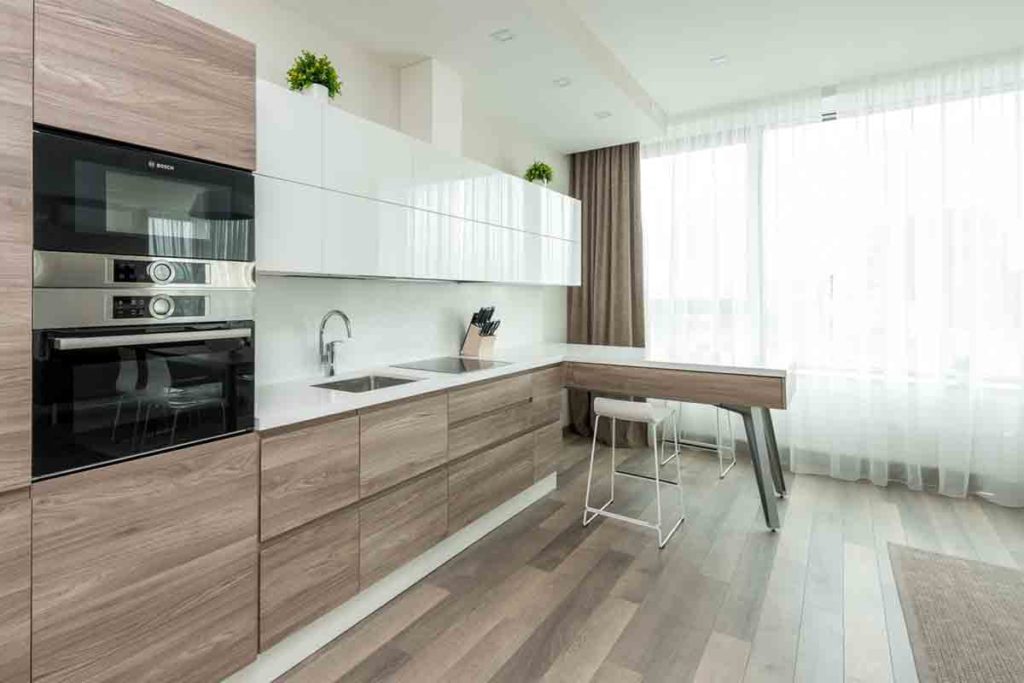

If you’re waking up congested, sneezing throughout the day, or watching your family suffer from unexplained allergies, your flooring might be the hidden culprit harboring dust mites, pet dander, and pollen that trigger your symptoms. Traditional carpets act like allergen magnets, trapping particles deep within their fibers where regular vacuuming can’t reach them, while certain hard surfaces create their own problems by allowing allergens to become airborne with every footstep.
The good news? Switching to hypoallergenic flooring can dramatically reduce your allergy symptoms by eliminating the spaces where allergens love to hide. The best options—luxury vinyl plank, bamboo, cork, and properly sealed hardwood—provide smooth, non-porous surfaces that prevent allergen accumulation while remaining easy to clean with simple damp mopping. Unlike carpet that requires professional deep cleaning and special treatments, these flooring types let you remove 99% of allergens with basic maintenance routines you can do in minutes.
Understanding which flooring materials genuinely reduce allergen exposure isn’t just about making a purchase—it’s about transforming your home into a space where you can breathe easier and feel better every single day. Room-specific considerations matter too, since moisture-prone bathrooms and high-traffic entryways each present unique challenges that require tailored solutions.
This guide walks you through the science behind allergen-friendly flooring, breaks down your best material options with honest pros and cons, and gives you practical installation and maintenance strategies that actually work for real families dealing with allergies.
Why Your Current Floors Might Be Making You Sneeze
Ever notice how you vacuum your carpets religiously, yet your allergies still act up indoors? You’re not imagining things. Your flooring might be the secret culprit behind those persistent sniffles and itchy eyes.
Here’s what’s happening beneath your feet: traditional carpeting acts like a magnet for allergens. Those soft, plush fibers you love? They’re creating thousands of tiny pockets where dust mites set up camp, pet dander nestles in, and pollen hitches a permanent ride from your shoes. Even with regular vacuuming, you’re only removing surface-level debris. The real troublemakers are buried deep in the carpet pile, sometimes as much as an inch below the surface where your vacuum can’t reach.
Think about it this way: every time you walk across your carpet, you’re essentially kicking up a mini dust storm of allergens that have been collecting for weeks or months. It’s like having an invisible cloud of irritants following you from room to room.
But carpets aren’t the only offenders. Older hardwood floors with cracks and crevices become perfect hideouts for allergens too. Those charming gaps between floorboards? They’re collecting everything that falls through, creating a reservoir of dust and debris that’s nearly impossible to clean thoroughly.
Wall-to-wall carpeting in bedrooms is particularly problematic since we spend roughly eight hours sleeping there, breathing in whatever particles are lurking below. Pet owners face an even tougher challenge, as Fluffy’s dander works its way deep into flooring materials, becoming practically impossible to eliminate completely.
The moisture factor matters too. Some flooring materials trap humidity, creating ideal conditions for mold spores and dust mites to multiply. These microscopic critters thrive in damp environments, and certain flooring types provide exactly what they need to flourish.
The good news? Understanding how your floors trap allergens is the first step toward breathing easier at home.

The Best Flooring Materials for Allergy Sufferers
Hard Surface Winners: Hardwood, Tile, and Vinyl
If you’re battling allergies, smooth and sealed surfaces are your best friends. Unlike carpet that acts like a cozy hotel for dust mites and pollen, hard surface flooring keeps allergens sitting on top where you can easily sweep them away. Let’s explore your stellar options.
Real hardwood and engineered hardwood deliver timeless beauty while being surprisingly allergy-friendly. The smooth, sealed surface doesn’t trap particles, and regular sweeping keeps things fresh. Engineered hardwood offers extra moisture resistance, making it perfect for kitchens or basements where humidity might be a concern. The benefits of hardwood floors extend beyond aesthetics—they’re genuinely easier to keep allergen-free with minimal effort.
Ceramic and porcelain tile take durability to another level. These surfaces are completely nonporous when properly sealed, meaning nothing penetrates the surface. They’re phenomenal in bathrooms and entryways where moisture and dirt accumulate. Plus, they’re practically indestructible and come in gorgeous designs that can mimic natural stone or even wood.
Luxury vinyl plank has become a superstar in recent years, and for good reason. It’s budget-friendly, incredibly durable, and offers realistic wood or tile looks without the maintenance headaches. Modern LVP is completely sealed and waterproof, making cleanup a breeze. Sheet vinyl works similarly but offers seamless installation in smaller spaces like bathrooms or laundry rooms.
The key to choosing the right flooring lies in understanding your lifestyle and maintenance commitment. All these hard surface options share one crucial advantage: a quick daily sweep or damp mop removes allergens rather than pushing them deeper into fibers. That simple difference can transform your home’s air quality and your daily comfort level.

Cork and Bamboo: Natural Alternatives That Work
Nature has gifted us some remarkable flooring materials that don’t just look beautiful—they actively fight against allergens. Cork and bamboo deserve serious consideration if you’re creating a healthier home environment.
Cork flooring brings impressive natural resistance to mold, mildew, and even dust mites thanks to a waxy substance called suberin found in its cell walls. This antimicrobial superpower means allergens have a much harder time taking root in your floors. Plus, cork feels wonderfully warm and cushioned underfoot, making it perfect for bedrooms or home offices where you want comfort alongside health benefits.
Bamboo offers similar allergy-fighting advantages with its dense, moisture-resistant structure that discourages microbial growth. It’s naturally antimicrobial and incredibly durable, standing up to high-traffic areas beautifully. Both materials are sustainable choices that regenerate quickly, so you’re being kind to the planet while protecting your respiratory health.
The best part? These natural alternatives need minimal maintenance—just regular sweeping and occasional damp mopping. No harsh chemicals required, which means fewer irritants in your indoor air. For homeowners who want eco-friendly solutions that actually work against allergies, cork and bamboo deliver style and substance in equal measure.
The Carpet Dilemma: When You Can’t Give Up Softness
Let’s be honest—sometimes the heart wants what it wants, and for many of us, that’s the cozy, sink-your-toes-in feeling of carpet. If you’re not ready to go full hardwood or tile, you can still make carpet work in an allergy-friendly home with a few smart choices.
The secret lies in selecting low-pile, tightly woven carpets. Think of pile height like allergen real estate: the shorter and denser the fibers, the less space dust mites, pollen, and pet dander have to set up camp. Berber and commercial-grade carpets are excellent options because their tight loops create a firm surface that doesn’t trap particles as aggressively as plush, shag-style carpeting.
Material matters too. Synthetic fibers like nylon and polyester resist moisture better than natural fibers, which means less mold growth and fewer dust mites setting up housekeeping. Look for carpets labeled with the Carpet and Rug Institute’s Green Label Plus certification, which indicates lower volatile organic compound emissions.
Area rugs can be your best friend in this scenario. They give you that soft landing zone without committing every square foot to carpet. Plus, they’re easier to remove and clean thoroughly—a crucial consideration for maintaining an allergen-free environment. Speaking of cleaning, regular maintenance is non-negotiable; check out our guide on carpet cleaning for pet owners for deeper strategies.
The bottom line? If you choose wisely and commit to frequent vacuuming with HEPA filters, carpet can still have a place in your allergy-conscious home.
What Makes Flooring Truly Hypoallergenic
Not all flooring marketed as hypoallergenic actually delivers on that promise, so understanding what truly makes flooring allergy-friendly is essential before you invest in new floors.
The gold standard for hypoallergenic flooring starts with smooth, non-porous surfaces. Think of the difference between a polished hardwood floor and a plush carpet. That smooth surface means allergens like dust mites, pet dander, and pollen have nowhere to hide. They simply sit on top where you can easily sweep or mop them away. Materials like luxury vinyl planks, sealed hardwood, and porcelain tile excel in this department.
Here’s something many homeowners overlook: grout lines. While tile floors are excellent choices, excessive grout lines create tiny crevices where allergens and moisture can accumulate. If you’re considering tile, opt for larger format tiles to minimize grout lines, and always seal them properly. This simple step makes cleaning dramatically easier and prevents mold growth in those narrow spaces.
Moisture resistance deserves special attention because dampness invites mold and mildew, two major allergy triggers. Your flooring should act as a barrier, not a sponge. Materials like porcelain, luxury vinyl, and properly sealed concrete score high marks here, especially for kitchens, bathrooms, and basements.
Now let’s talk about something you can’t see but definitely can breathe: VOCs or volatile organic compounds. These chemicals off-gas from flooring materials and adhesives, affecting your indoor air quality sometimes for months after installation. Look for products with low-VOC or zero-VOC certifications. Many manufacturers now proudly display certifications like FloorScore or GREENGUARD, which verify their products meet strict emission standards.
Remember, truly hypoallergenic flooring combines these elements: smooth surfaces, moisture resistance, easy cleaning, and clean air contributions. When shopping, ask specifically about VOC levels and request documentation. Your lungs will thank you.
Room-by-Room Flooring Recommendations
Bedrooms: Where You Spend Eight Hours Breathing
Your bedroom deserves special attention since you’re spending roughly a third of your life there with your face inches from the floor. While you sleep, dust mites, pet dander, and other allergens settle into carpeting and become airborne with every toss and turn. The good news? Switching to smooth-surface flooring transforms your bedroom into a cleaner breathing zone.
Hardwood, bamboo, or luxury vinyl plank are fantastic bedroom choices. They don’t trap allergens like carpet does, and a quick sweep or damp mop removes what settles on the surface. Cork flooring adds warmth underfoot while naturally resisting dust mites and mold. If you’re worried about cold floors on chilly mornings, consider radiant heating underneath or simply place a washable area rug beside your bed that you can toss in the laundry monthly. Think of it as creating a sleep sanctuary where allergens have nowhere to hide.
Bathrooms and Kitchens: Fighting Moisture and Mold
Bathrooms and kitchens are moisture magnets, creating the perfect breeding ground for mold spores and mildew that can trigger allergic reactions and respiratory issues. The good news? You can fight back with smart flooring choices that laugh in the face of humidity.
Luxury vinyl plank stands out as a champion for these damp-prone spaces. It’s completely waterproof, easy to clean, and won’t harbor moisture underneath like some materials can. Porcelain or ceramic tile also deserves applause for its moisture resistance, though you’ll want to seal those grout lines regularly to prevent mold from setting up camp between tiles.
Here’s a practical tip: add ventilation fans to these rooms and keep them running during showers or cooking sessions. Even the best moisture-resistant flooring benefits from good air circulation. Consider installing a small dehumidifier in particularly steamy bathrooms to keep humidity levels in check.
Avoid laminate in full bathrooms, as water can seep into the seams and cause swelling. If you love the wood look, stick with vinyl alternatives that mimic natural materials beautifully without the moisture vulnerability.
Living Areas: Balancing Comfort and Cleanliness
Your living room and family room see the most action, which means they’re also prime territory for allergen buildup. The good news? You can create a cozy gathering space that doesn’t trigger sniffles.
For high-traffic areas, engineered hardwood offers durability without the allergen-trapping properties of carpet. It handles kids, pets, and movie nights beautifully while staying easy to clean. If hardwood feels too cold for your comfort-loving family, luxury vinyl plank provides a softer alternative that still wipes clean in seconds.
Here’s a practical tip: Place washable area rugs in conversation zones where you want warmth underfoot. Choose low-pile or flat-weave options that you can shake out weekly and throw in the washing machine monthly. This gives you the best of both worlds—comfort where you need it and easy allergen removal.
Consider cork flooring if you’re after something unique. It’s naturally antimicrobial, warm to the touch, and provides cushioning that makes standing conversations more comfortable. Plus, it brings an interesting textural element that becomes a conversation starter itself.
Maintenance That Actually Keeps Allergens Away
Daily and Weekly Cleaning Habits
Good news: maintaining your floors doesn’t require hours of elbow grease. The key is consistency over intensity.
Start each day with a quick five-minute sweep or dry-mop session. This simple habit catches dust, pollen, and pet dander before they settle into microscopic crevices. Think of it as brushing your teeth—brief but essential. A microfiber dust mop works wonders because it actually traps particles instead of just pushing them around.
Weekly, dedicate fifteen minutes to damp mopping with plain water or a pH-neutral cleaner. Skip the harsh chemicals and fragrances that can irritate sensitive airways. For hardwood and laminate, a barely-damp mop prevents moisture damage while lifting stubborn allergens.
Don’t forget entryways! Place washable mats at every door to catch outdoor allergens before they travel through your home. Shake these out twice weekly, and toss them in the washing machine monthly.
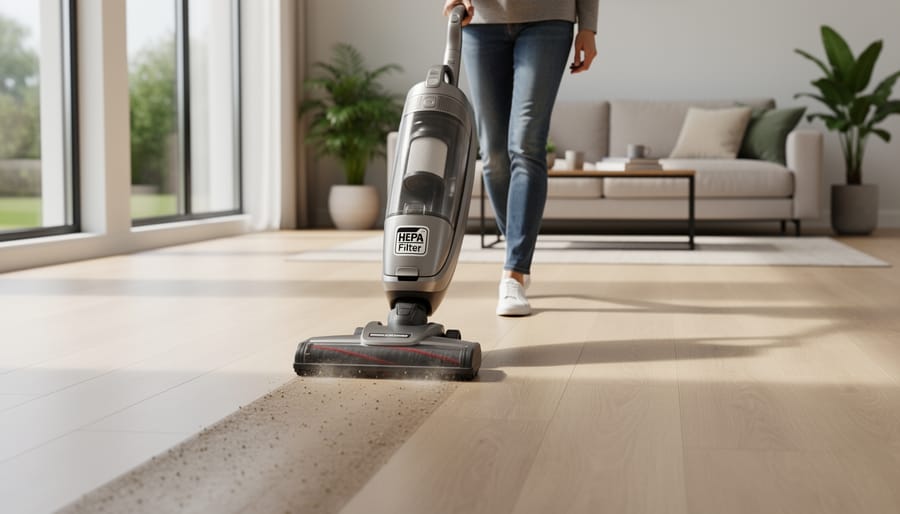
Finally, vacuum area rugs every seven days using a HEPA-filter machine. This prevents them from becoming allergen magnets that undermine your beautiful hypoallergenic flooring. These small routines compound into significant relief, letting you breathe easier in the space you love.
The Right Tools and Products for Allergy-Friendly Cleaning
Having gorgeous hypoallergenic flooring is only half the battle—you need the right cleaning arsenal to keep it that way. The good news? A few smart product choices can dramatically reduce allergens in your home rather than just pushing them around.
Let’s start with vacuums, your first line of defense. HEPA-filtered vacuums are absolute game-changers because they trap tiny allergen particles instead of releasing them back into the air. Look for models with sealed systems and brush rolls that you can turn off for hard floors—you don’t want to scatter dust before you vacuum it up. For homes with mostly hard flooring, canister vacuums often outperform uprights at getting into corners and along baseboards where allergens hide.
Now for mopping, which is where things get interesting. Best steam mops deserve special mention here because they sanitize without chemicals, using only water heated to temperatures that kill dust mites and bacteria. If you prefer traditional mopping, microfiber mop heads are your friend—they trap particles rather than spreading dirty water around. Just remember to wash mop heads frequently in hot water.
Here’s a crucial tip: avoid cleaning solutions that leave residue or strong fragrances. That sticky film you sometimes see after mopping? It actually attracts and holds onto dust and allergens. Choose pH-neutral, fragrance-free cleaners designed specifically for your flooring type. Simple solutions often work best—sometimes warm water alone does the trick.
Making the Switch: Installation Considerations
Ready to transform your home with hypoallergenic flooring? The installation process matters just as much as the material you choose. A poorly installed floor can trap allergens in hidden gaps or release irritating fumes during installation, so let’s walk through the key considerations that’ll help you breathe easier.
Start with your subfloor. Before laying anything new, address moisture issues and repair any damage. Moisture creates the perfect breeding ground for mold, which defeats the purpose of hypoallergenic flooring. Consider installing a moisture barrier, especially in basements or rooms prone to humidity.
The adhesives and underlayments you select are crucial. Look for low-VOC or zero-VOC products that won’t release harmful chemicals into your air. Many conventional adhesives contain formaldehyde and other respiratory irritants that linger long after installation. Water-based adhesives are typically your safest bet. If you’re installing luxury vinyl or laminate, choose underlayments specifically labeled hypoallergenic and antimicrobial.
Now for the DIY question. Cork tiles and vinyl planks with click-lock systems are genuinely DIY-friendly, even for beginners. You’ll save money and can work at your own pace, minimizing disruption to your household. Hardwood and sheet vinyl, however, really benefit from professional installation. The precision required prevents gaps where allergens can accumulate, and pros have the equipment to ensure proper adhesion without compromising air quality.
During installation, ventilate thoroughly. Open windows, run fans, and consider temporarily relocating family members with severe allergies. The first 48 hours are critical for off-gassing, even with low-VOC products. Patience here pays dividends in long-term comfort and health.
Real-World Success Stories and Budget-Friendly Options
When the Martinez family replaced their old bedroom carpeting with bamboo flooring, they noticed a dramatic change within just two weeks. Maria Martinez, who’d struggled with nighttime congestion for years, reported sleeping through the night for the first time in months. Their experience isn’t unique—countless homeowners have discovered that switching to hypoallergenic flooring delivers real relief from allergy symptoms.
Take James, a DIY enthusiast from Portland, who tackled his allergy-prone home one room at a time. Instead of overwhelming his budget with a whole-house renovation, he prioritized the bedroom first, installing luxury vinyl planks himself over a single weekend. Six months later, he moved to the living room, and eventually completed his main floor. This phased approach kept costs manageable while still providing immediate benefits where he spent the most time.
Budget-conscious homeowners have found creative ways to make hypoallergenic flooring work financially. Shopping end-of-season clearance sales can save 30-50% on quality materials. Cork and sheet vinyl offer excellent allergen resistance at lower price points than hardwood. Many retailers offer discounted or discontinued colors that perform identically to premium options.
Sarah, a single mom renovating on a tight budget, opted for peel-and-stick vinyl tiles in her children’s bedrooms. She completed both rooms for under $400, including all supplies. Within a month, her daughter’s morning sneezing fits had decreased noticeably, and Sarah felt confident enough to recommend the change to friends facing similar challenges.
The key is starting somewhere rather than waiting for the perfect moment. Even replacing flooring in just one high-traffic area creates a meaningful difference for allergy sufferers, proving that healthier homes don’t require unlimited budgets—just thoughtful planning and realistic expectations.
You’ve made it this far, and that tells me something important: you’re ready to breathe easier in your own home. The beautiful thing about choosing hypoallergenic flooring is that it’s not just about eliminating sniffles and sneezes. It’s about reclaiming comfort in the space where you spend your most precious moments.
Remember the essentials: hard surfaces beat carpet almost every time when it comes to allergen control. Cork, bamboo, tile, and sealed hardwood all offer winning combinations of beauty and breathability. The right flooring won’t trap dust mites, pet dander, or pollen the way traditional carpet does, and maintenance becomes genuinely simple rather than a constant battle.
Feeling overwhelmed by the thought of redoing your entire home? Start small. Pick one room where allergies bother you most, maybe your bedroom where you spend eight hours every night, or the living room where the family gathers. That single change can create a noticeable difference in how you feel day-to-day. You’ll likely find that success in one space motivates you to tackle the next.
Think of this as an investment in your health, not just your home’s appearance. Better sleep, fewer allergy medications, clearer breathing during everyday activities, all these benefits add up to a genuinely transformed quality of life. Your future self, the one waking up refreshed instead of congested, will thank you for taking this step. The path to an allergy-friendly home starts with just one decision. You’ve got this.