

Picture this: the gentle sound of trickling water greeting you each morning, dragonflies dancing across the surface, and neighbors stopping to admire your backyard oasis. A well-designed water feature transforms your outdoor space from ordinary to extraordinary, creating a focal point that engages all the senses while boosting your property value. Yet many homeowners hesitate, worried about complicated installation, endless maintenance, or costly mistakes that turn their dream feature into a backyard nightmare.
The truth is, adding a pond or water feature to your garden is more achievable than you think. Whether you’re drawn to a serene koi pond, a bubbling fountain, or a natural-looking stream, today’s materials and techniques have simplified what was once a daunting undertaking. You don’t need a massive budget or professional contractor to create something beautiful and functional.
The key is understanding what works for your specific space, climate, and lifestyle before breaking ground. From selecting the right location and size to choosing between preformed liners and flexible options, each decision shapes your project’s success. You’ll need to consider practical elements like electrical access, water source proximity, and sun exposure, but these challenges become manageable with proper planning.
This guide walks you through every phase of your water feature journey, from initial concept to seasonal care routines. You’ll discover which designs complement different garden styles, learn installation techniques that prevent common problems, and master maintenance strategies that keep your water crystal clear year-round without becoming a slave to upkeep.
Why Water Features Transform Your Garden (Beyond Just Looking Pretty)
Sure, you’ve probably heard that water features make gardens look gorgeous, but that’s honestly just scratching the surface. The real magic happens when you realize these additions can genuinely transform your outdoor space in ways you might not expect.
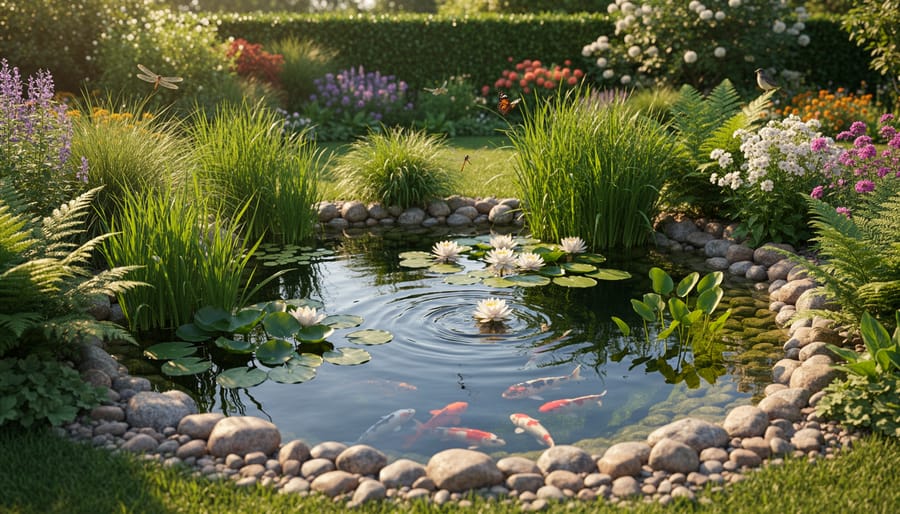
Let’s talk wildlife first. Within weeks of installing even a modest pond, you’ll notice dragonflies dancing across the water and birds stopping by for a drink. My neighbor Sarah installed a simple basin feature last spring, and by summer, she was hosting regular visits from robins, finches, and even a curious squirrel or two. It’s like turning your yard into a nature documentary, except you’re living in it.
Here’s something fascinating: water features actually create their own little weather systems. Through evaporation, they naturally cool the surrounding area by several degrees during hot months. If you’ve ever sat near a fountain on a sweltering afternoon, you know exactly what I mean. This cooling effect can make your patio genuinely more comfortable and might even reduce your reliance on indoor air conditioning when you’re spending time outside.
Property value gets a nice bump too. Real estate professionals consistently report that well-maintained water features can add thousands to home valuations. Buyers see them as premium additions that complete a backyard oasis, making your property stand out in competitive markets.
But perhaps the most underrated benefit? The mental health benefits are remarkable. The sound of flowing water naturally reduces stress and improves focus. Studies show that even fifteen minutes near water features can lower cortisol levels. After stressful workdays, having your own peaceful water retreat steps from your back door isn’t just convenient—it’s genuinely therapeutic.
Choosing the Right Water Feature for Your Space
Garden Ponds: From Small Preformed to Custom Naturalistic Designs
Choosing the right pond starts with understanding your space, budget, and vision. Let’s break down your options so you can find the perfect fit for your backyard oasis.
Small preformed ponds are ideal first projects for DIY beginners. These rigid plastic or fiberglass shells typically range from 50 to 500 gallons and come in various shapes. You simply dig a hole, drop them in, and you’re ready to add water and plants. They’re perfect for tucking into a corner garden bed or creating a focal point on a patio. The downside? You’re limited to predetermined shapes and sizes, and they can look somewhat artificial if not cleverly disguised with rocks and plantings around the edges.
Mid-sized flexible liner ponds offer creative freedom at a reasonable price point. Using EPDM rubber or PVC liners, you can design any shape that suits your landscape, from kidney-shaped retreats to meandering natural designs. These typically range from 500 to 2,000 gallons and allow for multiple depth zones, which benefits both plants and fish. You’ll need more planning and physical effort for excavation, but the customization possibilities make it worthwhile.
Large naturalistic ponds represent the ultimate backyard transformation. These custom designs incorporate beach entries, waterfalls, streams, and planted bog areas that blend seamlessly into your landscape. While they require professional consultation or advanced DIY skills, the result is a genuine ecosystem that attracts wildlife and creates a stunning retreat right outside your door.
Fountains and Bubblers: Water Movement Without the Commitment
Not ready to dig a full-blown pond but still craving that peaceful sound of moving water? Fountains and bubblers might be your perfect match. These delightful features bring all the zen without the extensive commitment of a traditional pond.
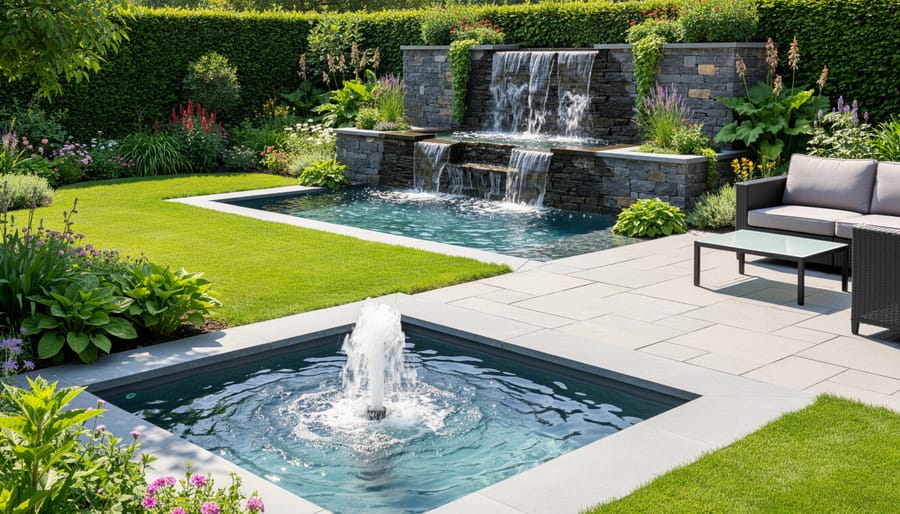
Standalone fountains are the superstars of low-maintenance water features. Picture a classic tiered fountain on your patio or a modern sphere bubbler tucked into your garden bed. Most plug into a standard outdoor outlet and simply need occasional refilling. They’re also wonderfully portable, so you can rearrange your outdoor space whenever inspiration strikes.
Wall-mounted fountains are brilliant space-savers for compact yards or balconies. They transform a plain vertical surface into a focal point while taking up virtually no ground space. Installation typically involves mounting a reservoir at the base and securing the decorative panel above.
Pondless water features offer the best of both worlds. Water disappears into a hidden reservoir filled with rocks, creating the illusion of a natural spring without standing water. This means fewer mosquito concerns, less maintenance, and greater safety around curious kids and pets. You get the soothing sounds and visual interest minus the weekly algae checks and fish feeding schedules.
Waterfalls and Streams: Creating Movement and Sound
There’s something magical about the sound of moving water that transforms an ordinary garden into a peaceful retreat. If you’re ready to add that soothing soundtrack to your outdoor space, waterfalls and streams are easier to create than you might think.
The key to successful flowing water features is the pump system. You’ll need a submersible pump powerful enough to circulate water from your pond’s bottom to the waterfall’s top. For most backyard installations, a pump rated between 2,000 and 5,000 gallons per hour works beautifully. The higher your waterfall, the more powerful pump you’ll need.
Creating natural-looking cascades starts with proper rock placement. Stack flat stones slightly overhanging each ledge to create that satisfying splashing effect. Use waterfall foam sealant behind rocks to direct water forward rather than letting it seep underneath where nobody sees it.
For streams, dig a shallow channel with gentle curves and line it with pond liner, then cover with gravel and river rocks. Adding bends makes the water’s journey more interesting and natural-looking.
Maintenance-wise, keep the pump intake clear of debris and expect to clean it monthly during peak season. Also check water levels weekly, as evaporation happens faster with moving water than still ponds.
Design Principles That Make Water Features Work
Location, Location, Location: Where NOT to Put Your Pond
Before you start digging, let’s talk about where your pond shouldn’t go. Trust me, getting this right now saves major headaches later.
First up, sunlight matters more than you’d think. Too much direct sun (over 6 hours daily) creates an algae party you definitely didn’t invite. But too much shade means your water plants won’t thrive. Aim for that sweet spot of partial shade, ideally afternoon shade to keep water temperatures manageable.
Trees might look picturesque overhead, but those beautiful branches become your nemesis. Falling leaves turn into decomposing gunk that clouds water and throws off your pond’s balance. Plus, tree roots are sneaky underground invaders that can puncture liners. Keep your pond at least 10 feet from mature trees.
Slope is another sneaker issue. Low-lying areas might seem convenient, but they collect runoff carrying lawn chemicals, soil, and debris straight into your water feature. Similarly, steep slopes make construction difficult and can cause erosion problems. Look for level ground or gentle grades you can easily manage.
Finally, consider visibility. You’re creating this beautiful feature, so position it where you’ll actually enjoy it from your deck, patio, or favorite window. What’s the point of a stunning pond if you never see it?
Size and Scale: Getting the Proportions Right
Getting the proportions right can make or break your water feature. A common mistake is going too big or too small for your available space. As a general rule, your pond or water feature should occupy no more than one-third of your garden’s visual area. Think of it like furniture placement in a living room—you want balance, not dominance.
For small gardens, consider a compact container pond or wall-mounted fountain rather than an in-ground pond. These options deliver that soothing water element without overwhelming your space. In larger yards, don’t be afraid to go bold with a generous pond, but keep sight lines in mind. You should be able to view your feature from multiple vantage points without it blocking pathways or garden beds.
Here’s a quick reality check: measure twice, dig once. Stake out your proposed dimensions with garden hoses or spray paint before breaking ground. Live with the layout for a few days, viewing it from different angles and times of day. Does it feel harmonious or awkward? Trust your instincts—if it looks too big during planning, it will definitely feel too big once installed. Remember, you can always expand later, but shrinking an oversized feature is costly and frustrating.
Integrating Your Water Feature with Existing Landscaping
The secret to a stunning water feature lies in how seamlessly it connects with your existing garden. Start by considering your landscape as a series of rooms, each with its own character. Your pond or fountain should feel like a natural extension rather than an afterthought dropped into the space.
Think about creating transitions with layered plantings around your water feature. Tall ornamental grasses and moisture-loving perennials like iris and cardinal flowers can bridge the gap between water and dry-land plants. These gradual zones mimic nature and create visual flow that guides the eye naturally through your garden.
When integrating hardscaping elements, use materials that echo your home’s architecture or existing pathways. Flagstone edging that matches your patio ties everything together beautifully, while decorative boulders can hide pump equipment and create dramatic focal points.
Consider your garden zones too. A water feature near your entertaining area adds ambient sound and movement, while one tucked into a quiet corner creates a contemplative retreat. Connect these spaces with meandering pathways or sightlines that invite exploration and make your water feature discoverable from multiple vantage points throughout your yard.
Installation: Bringing Your Water Feature to Life
Essential Equipment and Materials You’ll Actually Need
Let’s start with the essentials that’ll set your water feature up for success. For small container gardens or bubbling urns, you’ll simply need a compact submersible pump (around 50-200 gallons per hour) and some decorative stones. Think of it as the heart of your feature, quietly circulating water to prevent stagnation.
Moving up to medium-sized ponds (100-500 gallons), you’ll want a flexible rubber liner or preformed shell, a more robust pump (400-800 GPH), and a basic biological filter to handle the increased water volume. Don’t skip the underlayment padding beneath your liner—it’s like insurance against punctures from rocks or roots. Understanding water maintenance basics will help you choose the right filtration system.
For larger garden ponds with fish, add a UV clarifier to combat algae, an aerator for oxygen, and aquatic plant baskets. A quality EPDM liner offers the best durability for custom shapes. Budget around $300-500 for a complete medium pond setup, or $1,000+ for elaborate features with waterfalls and extensive plantings. Start simple—you can always upgrade components as your confidence grows.
The Installation Process: What to Expect
Ready to turn your backyard dream into reality? Let’s walk through what actually happens when you install a pond or water feature, so you can plan accordingly and avoid any surprises along the way.
The first step is excavation, which typically takes 1-2 days for a small to medium pond. You’ll be digging deeper than you might expect – aim for at least 18-24 inches to accommodate both the liner and varying depths for plants and fish. Here’s a pro tip: save that excavated soil! You can use it to build up berms around your pond for a more natural look.
Next comes liner placement, usually completed in half a day. This is where precision matters. Smooth out any sharp rocks or roots that could puncture your liner, and don’t skimp on underlayment fabric. Work with a helper to position the liner carefully, allowing extra material to drape over the edges. You’ll trim the excess later, but having too much is far better than coming up short.
The edging phase takes another day or two and really brings your vision to life. Whether you’re using flagstone, river rock, or decorative pavers, this step disguises the liner edges and creates that polished, professional appearance. Take your time here – rushing leads to uneven edges that are tough to fix later.
If you’re adding a pump or fountain, budget half a day for plumbing installation. Keep electrical components properly distanced from water and consider hiring an electrician if you’re uncertain about outdoor wiring requirements.
Finally, filling your pond takes 4-6 hours depending on size. The biggest challenge? Patience. Let the water settle for 24-48 hours before adding plants or fish, allowing chlorine to dissipate and temperature to stabilize.
When to DIY and When to Call the Pros
Small preformed pond liners and simple container water gardens are perfect weekend DIY projects that won’t overwhelm beginners. If you’re handy with basic tools and enjoy getting your hands dirty, installing a fountain kit or small bubbling rock feature is definitely within reach. These projects typically require minimal digging, straightforward plumbing connections, and come with detailed instructions that walk you through each step.
However, larger in-ground ponds exceeding 500 gallons, extensive waterfalls with multiple tiers, or features requiring electrical work should probably go to the professionals. Licensed contractors bring specialized equipment like excavators and pond liners large enough to handle ambitious projects without seams. They also understand critical elements like proper water circulation, filtration systems, and building permits that might be required in your area.
The electrical component deserves special attention. While you can certainly assemble the decorative aspects yourself, hire a licensed electrician for any outdoor wiring, GFCI outlet installation, or underwater lighting. Water and electricity are a dangerous combination, and this isn’t the place to cut corners or learn through trial and error.
A smart middle ground? Tackle the creative design and landscaping yourself while bringing in pros for technical infrastructure. You’ll save money where your skills shine and invest wisely where expertise matters most.
Keeping Your Water Feature Healthy Year-Round
Water Quality: The Make-or-Break Factor
Here’s the truth: crystal-clear water doesn’t happen by accident. Think of your pond like a miniature ecosystem that needs the right balance to thrive. The good news? Once you understand a few basics, maintaining healthy water becomes second nature.
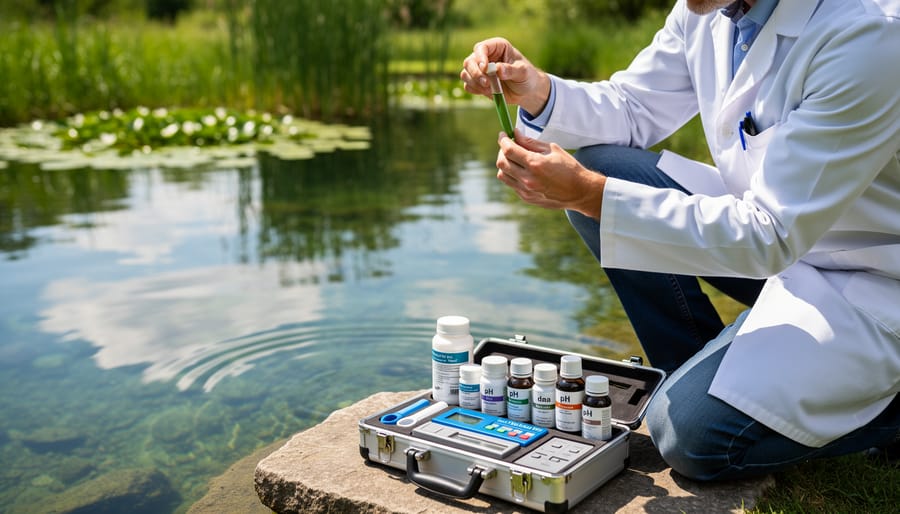
Start with pH levels, which should hover between 6.5 and 8.5 for most ponds. You can grab an inexpensive test kit from any garden center to check yours monthly. If your fish seem sluggish or plants aren’t flourishing, pH imbalance might be the culprit. Simple additives can adjust levels gradually, but avoid dramatic swings that stress your aquatic life.
Algae is every pond owner’s nemesis, but here’s a secret: you don’t want to eliminate it completely. A little algae actually indicates a healthy environment. Problems arise when sunlight and excess nutrients create an algae explosion. Combat this with shade-providing plants, limiting fish food portions, and removing debris promptly.
Beneficial bacteria are your invisible allies, breaking down fish waste and decaying organic matter naturally. Adding a bacterial supplement when you first fill your pond jumpstarts this process. Think of it as introducing helpful microorganisms that do the dirty work for you.
A quality filtration system handles mechanical cleaning, while those beneficial bacteria tackle the chemical side. Together, they keep your water sparkling without constant intervention. Most water quality issues stem from overfeeding fish or neglecting regular maintenance, so stay consistent with simple weekly checks, and your pond will reward you with years of clear, beautiful water.
Seasonal Care: Spring, Summer, Fall, and Winter
Your pond’s needs change dramatically with the seasons, and staying ahead of Mother Nature’s schedule keeps your water feature looking gorgeous year-round. Think of it as giving your pond a little seasonal wardrobe change, complete with different maintenance accessories.
Spring marks your pond’s wake-up call. As temperatures rise above 50°F, start your pump and filters, remove any netting you added for fall leaves, and trim back dead plant material. Your fish will become more active and hungry, so gradually increase feeding. This is also the perfect time to divide overcrowded plants and add new ones before the growing season kicks into high gear.
Summer demands your attention for water quality. Check levels weekly, top off evaporation losses, and watch for algae blooms during those scorching weeks. Your pump works overtime now, so clean filters more frequently. Early morning is ideal for these tasks before the day heats up.
Fall preparation prevents winter headaches. Stop fertilizing plants by late September, cut back hardy perennials, and remove tropical plants to indoor storage. Install netting over the pond to catch falling leaves before they sink and decompose. Once water temperatures drop below 50°F, reduce fish feeding.
Winter care depends on your climate. In freezing zones, keep a small area ice-free using a pond heater or aerator so gases can escape. Never break ice by force, as shock waves stress fish. In milder regions, continue light maintenance and enjoy your peaceful winter water feature.
Troubleshooting Common Problems Before They Become Disasters
Catching issues early can save you from major headaches down the road. If you notice your water level dropping faster than usual, you likely have a leak. Start by checking around the edges where liner meets stone, as settling soil often creates gaps. A simple fix? Reposition rocks and add extra liner if needed.
Murky water is probably the most common complaint, and the culprit is usually either too much sunlight causing algae or an underpowered pump. Consider adding more aquatic plants to provide natural shade and competition for nutrients. Your pump should circulate the entire volume of your pond at least once per hour, so upgrade if necessary.
When pumps fail, debris buildup is typically to blame. Make it a monthly habit to disconnect and rinse your pump’s intake filter. This five-minute task prevents motor burnout and extends equipment life significantly.
Mosquitoes breeding in still water? Add a fountain or bubbler to keep the surface moving, as mosquitoes won’t lay eggs in agitated water. Introducing mosquito fish provides an eco-friendly biological control that works beautifully.
The best troubleshooting strategy is prevention. Weekly visual checks help you spot small problems before they escalate. Look for unusual plant discoloration, listen for changes in pump sounds, and monitor water clarity. These simple observations become your early warning system.
Plants and Wildlife: Creating a Thriving Ecosystem
Best Plants for Ponds and Water Features
Choosing the right plants transforms your water feature from a simple pool into a thriving ecosystem that looks professionally designed. Let’s explore three essential plant categories that work together to create balance and beauty.
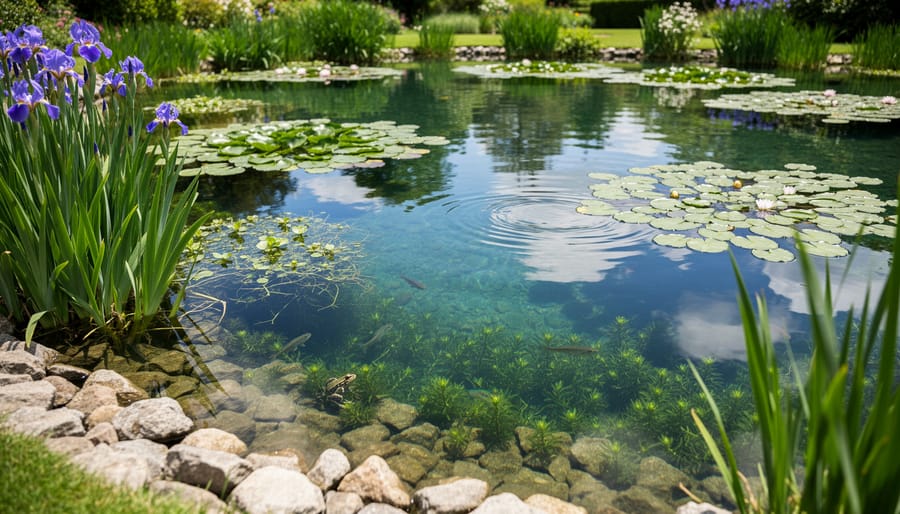
Marginal plants live along your pond’s edges, with their roots in shallow water and foliage above the surface. Irises bring gorgeous blooms in purple, yellow, or white, while cattails add vertical drama and help filter water naturally. For a softer look, try pickerel rush with its violet flower spikes or sweet flag grass with its attractive striped foliage. These edge-dwellers need 2-6 inches of water depth and help prevent erosion while creating natural-looking transitions between water and land.
Floating plants do exactly what their name suggests, drifting gracefully across the surface. Water lilies steal the show with stunning flowers in nearly every color imaginable, providing shade that keeps water temperatures stable and algae growth in check. For quicker coverage, water lettuce and water hyacinth multiply rapidly and feature interesting textures. Just remember that floaters can spread enthusiastically, so you’ll want to thin them occasionally to maintain balance.
Submerged oxygenators work beneath the surface as your pond’s unsung heroes. Plants like hornwort, anacharis, and parrot’s feather release oxygen that fish need while competing with algae for nutrients. They’re incredibly low-maintenance since they draw nutrients directly from the water, and they provide shelter for fish and beneficial bacteria. Aim to cover about one-third of your pond’s surface area with these underwater workhorses for optimal water clarity and health.
Fish and Other Wildlife: What to Welcome and What to Discourage
Adding fish brings movement and personality to your pond. Goldfish and koi are popular choices because they’re hardy and visually striking, but start small with just a few fish to avoid overwhelming your filtration system. Plan for about 10 gallons of water per inch of fish, and remember that koi grow quite large and need deeper ponds (at least 3 feet) to overwinter successfully in colder climates.
Beyond fish, your pond will naturally attract beneficial wildlife. Frogs are fantastic pest controllers and their evening chorus adds ambiance. Create shallow ledges with plants where they can easily enter and exit. Dragonflies and damselflies will appear too, helping control mosquitoes while adding flashes of iridescent color.
The challenge comes with unwanted visitors. Herons are beautiful but can decimate your fish population in minutes. Install netting across the pond or add fishing line strung 6-8 inches above the water surface to deter them. Motion-activated sprinklers work surprisingly well too. Raccoons love both fish and pond plants, so consider placing large rocks or specially designed barriers around the edges that prevent them from reaching in comfortably.
Algae-eating snails are welcome additions, but be cautious about introducing unknown plant material that might harbor invasive species. If predators become persistent problems, creating hiding spots with submerged clay pipes or rock caves gives your fish sanctuary. Think of wildlife management as an ongoing dance rather than a one-time solution, adjusting your strategies as needed while embracing the ecosystem you’re cultivating.
Creating a stunning water feature for your garden is absolutely within your reach, and the journey is just as rewarding as the destination. Yes, it requires thoughtful planning upfront. You’ll need to consider your space, budget, and how much time you can realistically dedicate to maintenance. But here’s the beautiful truth: once you’ve done your homework and put in the initial effort, your water feature becomes a self-sustaining source of daily joy.
Think of it this way. Every time you step outside and hear the gentle trickle of water or watch dragonflies dance across the surface, you’ll remember why you started this project. Your investment, whether it’s a simple container water garden or an elaborate koi pond, transforms your outdoor space into something extraordinary. It becomes a focal point that draws both your family and local wildlife, creating moments of peace in our increasingly busy lives.
Don’t let fear of the unknown hold you back. Start small if you’re feeling uncertain. A modest bubbling fountain or a half-barrel pond lets you learn the basics without overwhelming commitment. As your confidence grows, you can always expand or tackle more ambitious projects.
The maintenance routines that might seem daunting now will quickly become second nature. Checking water levels, skimming leaves, and monitoring your plants becomes a meditative practice rather than a chore. Many water feature enthusiasts find this regular interaction with their creation deeply satisfying.
So take that first step. Sketch out your ideas, visit a local pond supply store, or start researching which plants thrive in water gardens. Your backyard oasis is waiting, and the rewards of tranquility, beauty, and connection with nature are truly priceless.


