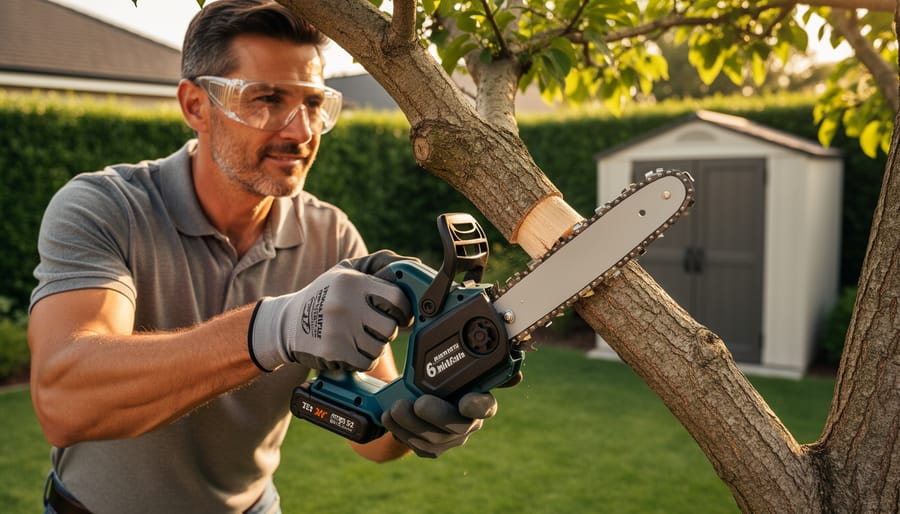
Consider a 6-inch chainsaw your secret weapon for quick pruning jobs, cutting branches up to 4-5 inches thick, and tackling those awkward spots where your full-size chainsaw feels like overkill. These pocket-sized powerhouses have transformed weekend yard maintenance from an all-day ordeal into a manageable hour-long task for countless homeowners who simply need to trim overgrown shrubs, clean up after storms, or refresh their landscape without hauling out heavy equipment.
Think of the 6-inch chainsaw as the cordless drill of the cutting world—not designed to replace your heavy-duty tools, but perfect for 80% of the jobs you’ll actually face around your property. Picture yourself comfortably reaching into dense hedges to remove dead wood, cutting kindling for your fire pit, or shaping that ornamental tree without setting up ladders and wrestling with a 16-inch bar. The lightweight design means you can work one-handed when necessary, though safety always calls for two-handed operation when possible.
The real question isn’t whether these mini chainsaws work, but whether your typical projects align with their sweet spot. If you’re clearing mature trees or processing firewood by the cord, you’ll quickly outgrow this tool’s capabilities. However, for homeowners focused on maintenance pruning, seasonal cleanup, and creative landscaping projects, a 6-inch chainsaw delivers surprising versatility without the fatigue, storage headaches, or intimidation factor of traditional models. Understanding what these compact cutters can and cannot handle will help you make a confident choice that actually gets used rather than gathering dust in your garage.
What Exactly Is a 6-Inch Chainsaw?
If you’ve stumbled across the term “6-inch chainsaw” and wondered whether it’s a toy or the real deal, you’re not alone. The name refers to the bar length, which is the cutting blade portion that extends from the body of the saw. Unlike the hefty traditional chainsaws that might measure anywhere from 12 to 20 inches or more, these compact powerhouses pack their punch in a much smaller package.
Think of a 6-inch chainsaw as the cordless drill of the chainsaw world. While traditional homeowner chainsaws can feel intimidating and cumbersome for quick tasks, these mini versions offer surprising versatility in a lightweight, easy-to-handle design. Most models today are battery-powered, typically running on rechargeable lithium-ion batteries that eliminate the hassle of mixing fuel or managing extension cords. You’ll also find some corded electric versions, though the cordless designs have become increasingly popular for their convenience.
Now, let’s clear up some misconceptions. These aren’t meant to replace your full-sized chainsaw for felling trees or processing firewood. A 6-inch chainsaw won’t tackle that massive oak branch hanging over your roof or help you clear storm damage from mature trees. What they excel at is pruning smaller branches, trimming bushes, cutting through 4-6 inch diameter limbs, and handling light cutting tasks around your property.
The beauty lies in their accessibility. You can operate one with a single hand in many cases, making overhead cuts or awkward angles much less daunting. They’re perfect for homeowners who need occasional cutting power without the commitment of maintaining and storing a full-sized saw. Just remember that their compact size is both their greatest strength and their natural limitation.

When a 6-Inch Chainsaw Makes Perfect Sense
Pruning and Light Tree Maintenance
This is where 6-inch chainsaws truly shine in the average homeowner’s toolkit. Think of these compact powerhouses as your go-to tool for keeping your yard looking tidy without breaking a sweat or your back.
For routine pruning tasks, a 6-inch chainsaw makes quick work of overgrown branches up to about 5 inches in diameter. Whether you’re shaping shrubs, trimming low-hanging limbs, or cutting tree limbs around your property, the lightweight design means you can work for longer periods without fatigue. One homeowner shared how she maintained her backyard fruit trees entirely with her mini chainsaw, appreciating how she could maneuver around delicate branches without the intimidating heft of traditional models.
These tools excel at seasonal cleanup too. That storm debris scattered across your lawn? Handled. Fallen branches after winter? Done in minutes. The manageable size lets you work in tight spaces between plants and navigate crowded garden beds where larger chainsaws would be awkward.
For maintaining smaller ornamental trees and managing hedges that have gotten woody over time, you’ll find the precision control invaluable. It’s like upgrading from scissors to a professional tool while keeping that same comfortable, controlled feeling.

Emergency Storm Cleanup
When Mother Nature unleashes her fury and leaves your yard littered with broken branches and debris, a 6-inch chainsaw becomes your go-to cleanup companion. These compact powerhouses truly shine in post-storm scenarios where you need to quickly clear pathways, driveways, and outdoor spaces without the hassle of dragging out heavy equipment.
The beauty of these mini chainsaws lies in their grab-and-go convenience. While your neighbors wrestle with gas-powered behemoths that won’t start after sitting in storage, you’re already halfway through clearing that fallen maple branch blocking your driveway. Most 6-inch models weigh under five pounds, meaning you won’t fatigue during those urgent cleanup sessions when every minute counts.
They’re particularly effective for tackling branches up to 6 inches in diameter, which covers the majority of storm debris homeowners encounter. The lightweight design lets you work overhead to remove hanging hazards or maneuver around tight spaces between garden beds and fences. Just remember to assess larger limbs carefully and call professionals for anything truly substantial or near power lines.
Indoor and Workshop Projects
Where your 6-inch chainsaw really shines is in those smaller indoor and workshop projects where precision trumps power. Think about bundling kindling for your fireplace—instead of wrestling with a full-sized saw, you can quickly cut uniform pieces that fit perfectly in decorative baskets. The compact size means you’re not knocking things over in your garage or shed.
For crafters and woodworking hobbyists, these little powerhouses open up exciting possibilities. Creating rustic picture frames, cutting dowels for shelving projects, or shaping small lumber pieces for furniture repairs becomes remarkably manageable. One DIYer shared how she used hers to fashion custom plant stands from reclaimed wood—something she’d never attempted with her intimidating full-sized chainsaw.
The maneuverability factor can’t be overstated. When you’re working on detailed cuts for birdhouses, garden markers, or decorative wall art, that lightweight design gives you control similar to using power tools you’re already comfortable with. Just remember to set up proper ventilation if you’re using a gas-powered model indoors, and always prioritize safety with protective eyewear and gloves.
The Real Advantages for Homeowners
Safety and Control
One of the most appealing aspects of a 6-inch chainsaw is how approachable it feels, especially if you’ve never picked up a chainsaw before. The compact design significantly reduces kickback risk compared to larger models, making it a confidence-building choice for beginners. Because there’s less weight pulling forward and less bar length to manage, you maintain better control throughout each cut.
Think of it this way: learning to ride a bike is easier on a smaller frame, and the same principle applies here. The lighter weight means your arms won’t fatigue as quickly, allowing you to focus on proper technique rather than wrestling with the tool. Many first-time users report feeling intimidated by full-sized chainsaws, but a 6-inch version feels more like an empowered pruning tool than heavy-duty equipment.
The reduced noise level also contributes to a less stressful experience. You’ll find yourself more comfortable tackling those overhanging branches or clearing garden debris without the anxiety that sometimes accompanies operating larger power tools. It’s an excellent stepping stone that builds your skills and confidence for any future projects.
Storage and Portability
One of the most appealing aspects of a 6-inch chainsaw is how easily it fits into your life. Unlike bulky gas-powered models that dominate garage space, these compact cutters tuck neatly onto shelves, hang on pegboards, or slide into storage bins alongside your other gardening tools. You won’t need to dedicate prime real estate in your shed or workshop to accommodate them.
The lightweight design makes all the difference when you’re moving around your property. Weighing typically between 2-4 pounds, you can carry one comfortably in one hand while hauling branches with the other or navigate uneven terrain without fatigue. Tossing it in your vehicle for trips to the cabin or family property requires zero effort—just charge the battery, and you’re ready to go.
For homeowners juggling multiple projects, this portability means you can keep your chainsaw accessible rather than buried in the back of the garage where it becomes an out-of-sight, out-of-mind tool you never actually use.
Budget-Friendly Operation
Here’s the great news for your wallet: 6-inch chainsaws won’t break the bank. These compact tools typically cost a fraction of what you’d pay for full-sized models, with many quality options available between $50-150. That’s a pretty sweet deal for occasional pruning and yard cleanup projects.
Maintenance is refreshingly simple too. Unlike their gas-guzzling cousins, cordless models eliminate fuel costs, spark plug replacements, and messy oil changes. You’ll mainly need to keep the chain sharp and occasionally tighten it—tasks you can handle in minutes.
Battery efficiency has come a long way, with modern lithium-ion batteries providing impressive runtime. Many homeowners find a single charge handles their typical weekend projects beautifully. Plus, if you’re already invested in a particular battery platform for other tools, you might find compatible 6-inch chainsaws that use batteries you already own.
For the homeowner who trims branches a few times per season rather than daily, the economics make perfect sense. You’re investing in exactly what you need, nothing more.
What a 6-Inch Chainsaw Can’t Do (And Why That’s Okay)
Let’s be honest—a 6-inch chainsaw isn’t going to fell the mighty oak in your backyard or slice through thick hardwood logs for your winter firewood supply. And you know what? That’s perfectly fine.
Think of it this way: you wouldn’t use a precision X-Acto knife to cut plywood, and you wouldn’t grab a circular saw to prune rose bushes. Each tool has its sweet spot, and understanding those limitations saves you money, frustration, and storage space.
Here’s what a 6-inch chainsaw simply can’t handle: cutting down trees with trunks thicker than about 4-5 inches, processing large volumes of firewood, working through dense hardwoods like oak or hickory for extended periods, or tackling professional-grade landscaping projects. If you’re planning to clear a wooded lot or regularly cut lumber, you’ll need a full-sized chainsaw with at least 14-16 inches of bar length.
But here’s the thing most homeowners discover—they don’t actually need those heavy-duty capabilities. Most household cutting tasks involve pruning branches, trimming overgrown shrubs, cutting small limbs after storms, and maintaining garden beds. A compact 6-inch model handles these beautifully without the weight, noise, or maintenance headaches of larger chainsaws.
Before purchasing any chainsaw, ask yourself these questions: What’s the thickest material I’ll regularly cut? How often will I use this tool? Do I have physical limitations that make lighter tools more practical? Will I tackle chainsaw cutting issues myself or call professionals for major jobs?
Understanding your actual needs—not hypothetical ones—helps you choose the right tool. Sometimes the smallest option is the smartest one for your specific situation.
Key Features to Look For
Power Source: Battery vs. Corded
When choosing your 6-inch chainsaw, the power source decision really comes down to how and where you’ll use it. Battery-powered models are the go-to choice for most homeowners, and honestly, they’re pretty liberating. You can tackle that overgrown rose bush by the mailbox, prune branches around your backyard, or clear debris after a storm without wrestling with extension cords or planning your work around outlet locations. Modern lithium-ion batteries pack impressive punch for 20-40 minutes of cutting time, which is usually plenty for typical yard tasks. Just remember you’ll need to recharge between sessions.
Corded models, on the other hand, deliver consistent power for as long as you need it. If you’re working close to your house or garage with accessible outlets, they eliminate battery anxiety altogether. They’re often lighter too, since there’s no battery weight to manage. The tradeoff? You’re tethered to your power source, limiting your range to about 100 feet with a good extension cord.
For most homeowners with quarter-acre to half-acre properties, battery-powered wins for sheer convenience. But if you’re planning extended pruning marathons near power sources, corded options deserve consideration.
Safety Features That Matter
Even though 6-inch chainsaws are smaller and generally easier to handle than their full-sized cousins, safety should never take a backseat. The good news? Most quality models come packed with features specifically designed to protect beginners.
Look for a chain brake as your first line of defense. This critical feature stops the chain instantly if kickback occurs—that sudden, upward motion that can catch new users off guard. Many models activate this brake automatically when the front guard is pushed forward, giving you peace of mind during those first nervous cuts.
A safety lock or two-button start system prevents accidental activation, which is especially important if you’re storing your tool in a busy garage or shed. You don’t want it starting up unexpectedly while you’re carrying it or putting it away.
Low-kickback chains are another game-changer for home users. These specially designed chains reduce the jarring motion that happens when the tip contacts wood, making your cutting experience smoother and more controlled.
Don’t overlook ergonomic grips with anti-slip texturing. Comfortable, secure handles reduce hand fatigue and give you better control throughout your project. Some models also feature hand guards that shield your fingers from flying debris—a small detail that makes a real difference when you’re trimming branches overhead.

Making It Work in Your Tool Arsenal
The beauty of a 6-inch chainsaw is how effortlessly it slots into your weekend routine. Think of it as a reliable sidekick rather than a solo performer. Keep yours hanging in the garage alongside your pruning shears and loppers, and you’ll find yourself reaching for it naturally when those tools just can’t handle the job. Consider dedicating a small toolbox or storage bin for your mini chainsaw kit, including extra chains, bar oil, and your charger if it’s battery-powered.
When it comes to keeping your compact chainsaw in peak condition, the good news is that proper chainsaw maintenance doesn’t require a mechanical engineering degree. After each use, wipe down the bar and chain, clear away any sawdust buildup, and check that the chain tension feels right. Top off the bar oil before storage, and you’re basically done. Battery models need even less attention, though you’ll want to keep batteries charged and stored properly.
For complete yard management, your 6-inch chainsaw works best as part of a tag team. Pair it with hand pruners for tiny branches, a sturdy bow saw or pole saw for anything beyond its reach, and a quality rake for cleanup. This combination covers virtually every pruning and cutting scenario you’ll encounter around the house. Some homeowners also find that keeping a sharpening tool handy extends chain life significantly, though replacement chains are affordable enough that many people simply swap them out seasonally. The key is treating your mini chainsaw as a specialized tool rather than expecting it to handle everything with a trunk.
Here’s the truth that might surprise you: not everyone needs a full-sized chainsaw gathering dust in their garage. If you’re a typical homeowner tackling seasonal pruning, clearing fallen branches after storms, or trimming back overgrown shrubs, a 6-inch chainsaw might be exactly what you’ve been looking for.
The beauty of these compact tools lies in their honesty about what they can do. They won’t fell massive trees or turn you into a lumberjack, but that’s not what most of us need anyway. What they will do is make those regular yard maintenance tasks feel less intimidating and far more manageable. You’ll actually use a tool that’s lightweight, easy to store, and doesn’t require a workout session just to lift it.
Before you invest in any chainsaw, take a moment to honestly assess your actual cutting needs. Walk around your property and note what you’re really dealing with. Are you trimming branches under 4 inches thick? Managing garden cleanup? Cutting kindling for your fire pit? If so, you’re in perfect 6-inch chainsaw territory.
The most empowering home improvement decisions come from matching the tool to the task, not buying based on what seems most impressive. A smaller, well-chosen tool that you’ll actually reach for beats a powerful beast that stays unused. Choose smart, choose appropriate, and you’ll discover that the right tool transforms frustrating chores into satisfying accomplishments.