

Starting a locksmith business requires between $10,000 and $50,000 in initial investment, though you can launch a mobile operation for as little as $5,000 if you’re strategic about your purchases. The biggest expense isn’t what most people expect—it’s not the fancy key-cutting machines or high-tech tools that will drain your budget first.
Your startup costs break down into three essential categories: licensing and training ($1,500-$5,000), vehicle and equipment ($8,000-$30,000), and marketing plus insurance ($2,000-$8,000). The licensing requirements vary dramatically by state, with some requiring extensive background checks and apprenticeships while others let you start immediately after a basic application.
The equipment list tells an interesting story about modern locksmith work. You’ll need basic tools like pick sets and key cutters, but today’s locksmiths increasingly rely on programming equipment for smart locks and keyless entry systems. This technological shift means your initial investment should account for both traditional mechanical skills and modern electronic security systems.
Whether you’re a homeowner trying to understand why professional locksmith services cost what they do, or an entrepreneur ready to enter the security industry, knowing these startup costs reveals the real value behind quality locksmith work. The business requires serious skill development, proper insurance coverage, and maintaining a mobile workshop—factors that directly impact the rates you’ll pay or charge for emergency lockouts, rekeying services, and security upgrades that protect your most valuable asset: your home.
Understanding Commercial Locksmithing vs. Residential Services
When you’re thinking about starting a locksmith business or evaluating services for your property, understanding the difference between commercial and residential locksmithing is absolutely essential. Think of it this way: residential locksmithing is like working on a cozy sedan, while commercial locksmithing resembles maintaining a fleet of heavy-duty vehicles. The scale, complexity, and investment requirements are vastly different.
Residential locksmiths primarily handle home entry systems, deadbolts, padlocks, and standard door hardware. It’s the kind of work that focuses on individual households and relatively straightforward security needs. The equipment list is manageable, and many residential jobs can be completed with a basic toolkit and some specialized picks and key-cutting machines.
Commercial locksmithing, however, operates in an entirely different league. These professionals deal with sophisticated access control systems, electronic card readers, biometric scanners, and master key systems that might secure dozens or hundreds of doors. The commercial locksmith traits required include expertise in electronic security integration, network connectivity, and compliance with building codes and safety regulations.
From a startup perspective, this distinction dramatically impacts your initial investment. Commercial work demands specialized tools that can cost thousands of dollars, extensive training in electronic systems, and often requires certifications that residential work doesn’t. You’ll also need a larger vehicle to transport bulkier equipment and potentially carry more inventory.
For property owners and managers, understanding this difference helps explain why commercial locksmith services typically cost more than residential calls. You’re not just paying for someone to change a lock; you’re investing in specialized expertise that protects your entire business infrastructure and ensures compliance with commercial security standards.
Initial Investment Breakdown: The Essential Startup Costs
Licensing, Training, and Certification Expenses
Before you hang your first locksmith shingle, you’ll need to navigate the licensing maze—and yes, it varies wildly depending on where you live. Some states require comprehensive licensing with background checks, fingerprinting, and written exams, while others have surprisingly relaxed requirements. You’re looking at anywhere from $50 to $500 for initial licensing fees, with annual renewals typically running $25 to $200. Think of this as your official ticket to operate legally and build trust with clients who are, after all, trusting you with their security.
Professional training programs are your next investment, and they’re worth every penny. Basic locksmith courses run between $500 and $2,000, covering everything from traditional lock mechanisms to modern electronic systems. More advanced training in automotive locksmithing or safe manipulation can add another $1,000 to $3,000 to your startup costs. Many aspiring locksmiths choose online courses for flexibility, though hands-on workshops provide invaluable real-world experience.
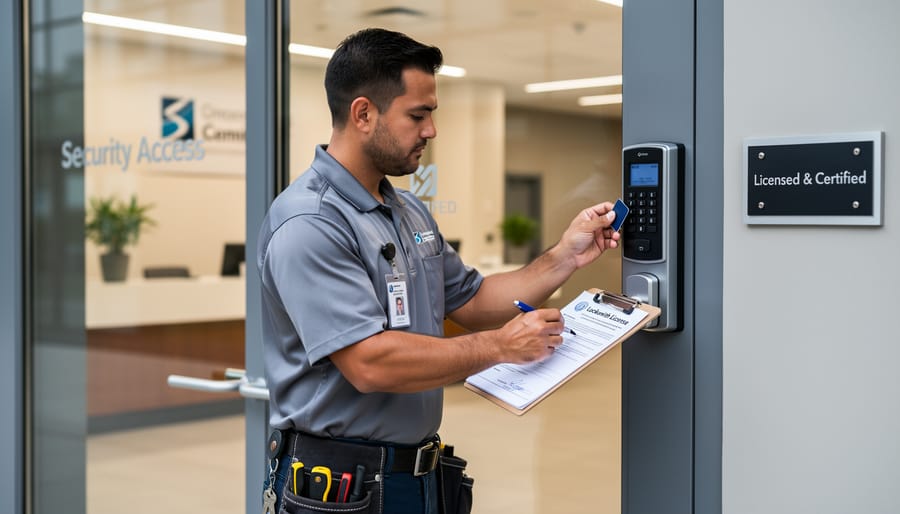
Certification from organizations like the Associated Locksmiths of America (ALOA) isn’t always mandatory, but it’s a powerful credential that sets you apart. Expect to invest $200 to $600 for certification exams and materials. These credentials signal professionalism to homeowners and business clients alike—showing you’re not just someone with a set of picks, but a trained security professional committed to quality service and ethical practices. For clients evaluating locksmith services, these certifications offer peace of mind that their property security is in capable hands.
Professional Tools and Equipment Investment
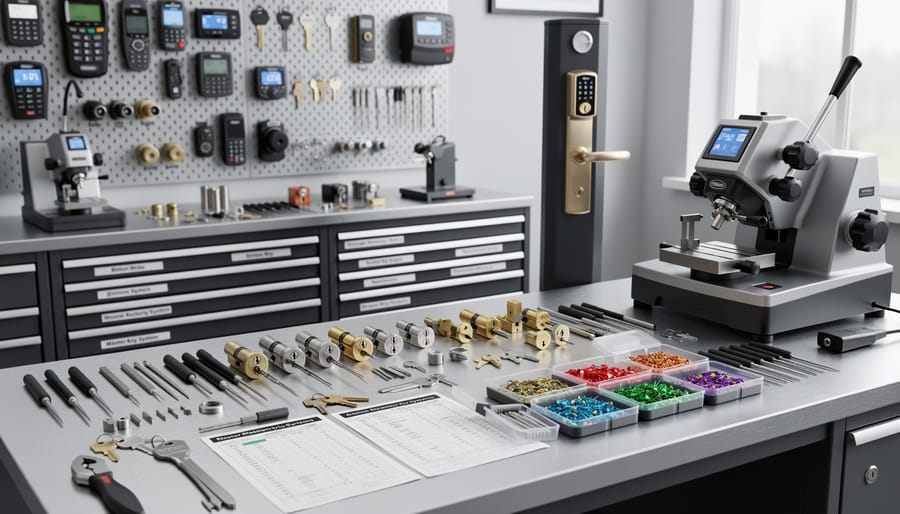
Starting a locksmith business requires investing in professional-grade equipment that can handle everything from basic residential locks to sophisticated commercial security systems. Think of it like setting up a woodworking shop—you need quality tools that’ll last and deliver consistent results for your clients.
Your initial equipment investment typically ranges from $5,000 to $15,000, depending on the services you plan to offer. At the foundation, you’ll need basic hand tools like pick sets, plug followers, and pinning kits, which collectively cost around $500-$1,000. These are your everyday essentials, similar to having a good hammer and drill for home projects.
The real investment comes with key cutting machines. A basic manual duplicator starts around $200-$400, perfect for standard house keys. However, if you’re serious about serving modern homeowners, you’ll want an automated key cutter ($1,500-$3,000) that handles transponder keys and higher-security profiles with precision. Many newer homes use advanced key management systems that require specialized equipment.
For commercial clients, you’ll need code cutting machines ($800-$2,500) that create keys from scratch using manufacturer specifications. High-security lock cylinders and rekeying kits add another $1,000-$2,000 to your startup costs.
Don’t overlook technology investments either. A reliable laptop or tablet ($500-$1,200) for accessing key code databases and security system software is essential. Many locksmiths also invest in key programming devices ($1,500-$3,500) for automotive work, which significantly expands your service offerings.
Quality matters here—buying professional-grade equipment upfront saves money on replacements and builds your reputation. Consider starting with essential tools and gradually expanding as your client base grows and you identify which services are most in-demand in your area.
Vehicle and Mobile Service Setup
The mobile nature of locksmith work means your vehicle becomes your rolling workshop, and setting it up properly is crucial for success. Most new locksmith business owners invest between $15,000 and $45,000 to get their mobile service roadworthy, depending on whether they lease, buy used, or purchase new.
Your vehicle choice matters more than you might think. A reliable cargo van or pickup truck with a cap works best, giving you room to organize tools while presenting a professional image to customers. Many locksmiths start with a clean used van in the $10,000 to $20,000 range, while others opt for leasing at $300 to $600 monthly to preserve capital.
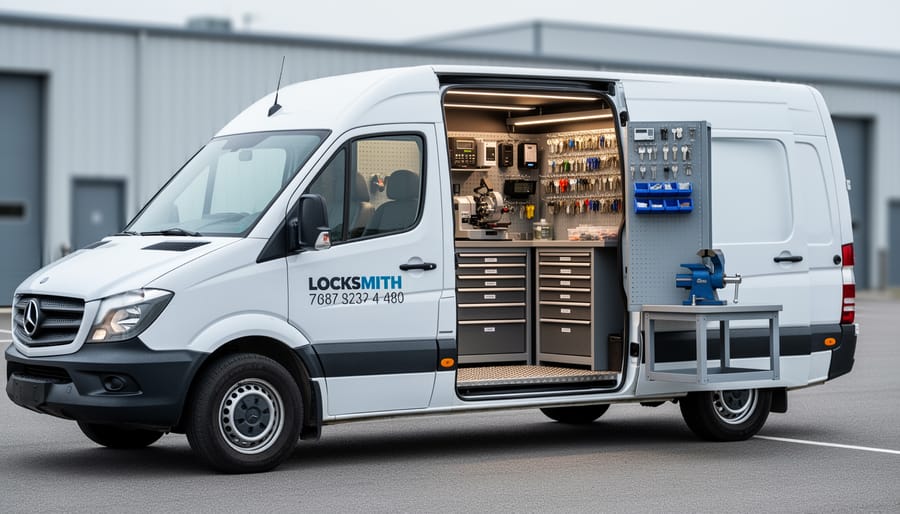
Custom shelving and organization systems transform your vehicle from a cargo space into an efficient workshop. Professional-grade shelving runs $800 to $2,500 and keeps everything secure and accessible. Think of it like creating the ultimate organized garage, but on wheels. You’ll need dedicated spots for key cutting machines, locks, blanks, and emergency equipment so you can find what you need in seconds.
Vehicle branding is your moving billboard. Professional vinyl wraps or magnetic signs cost between $500 and $3,000, instantly making your business visible to potential customers wherever you park. It’s like giving your home curb appeal, but for your business on wheels.
Don’t forget ongoing fuel costs, typically $200 to $500 monthly depending on your service area. Factor in commercial vehicle insurance at $100 to $300 monthly, and regular maintenance to keep your mobile workshop running smoothly.
Insurance and Bonding Requirements
Before opening your locksmith business, you’ll need to secure proper insurance and bonding—essential protections that safeguard both your livelihood and your customers’ peace of mind. Think of these as your business safety net, similar to how homeowners view investing in security for their own properties.
General liability insurance typically costs between $500 and $1,500 annually for a small locksmith operation. This coverage protects you if you accidentally damage a customer’s property while working on their locks or if someone gets injured during a service call. Given that you’ll be working with drills, keys, and security systems in people’s homes and businesses, this protection isn’t optional—it’s essential.
Bonding is equally important and runs approximately $100 to $300 per year. A surety bond reassures customers that they’re protected financially if you fail to complete a job or if theft occurs during your service. Many states legally require locksmith bonding, and customers specifically seek bonded professionals because it demonstrates trustworthiness and accountability.
As a homeowner hiring a locksmith, you should always verify these credentials. Reputable locksmiths proudly display their insurance and bonding information because it sets them apart from unlicensed operators. For aspiring business owners, budgeting around $600 to $1,800 initially for these protections builds customer confidence and demonstrates your commitment to professional standards. While these costs might seem like just another expense, they’re actually your ticket to building lasting customer relationships.
Ongoing Operating Expenses You Should Expect
Once you’ve launched your locksmith business, understanding your recurring costs helps you price services appropriately and maintain healthy cash flow. Think of these ongoing expenses like maintaining your home’s essential security items – regular investment keeps everything running smoothly.
Marketing typically represents one of your largest monthly expenses, ranging from $300 to $1,500 depending on your approach. Digital advertising through Google Ads or local directory listings works particularly well for locksmith services since customers often need help urgently. You might also allocate funds for vehicle wraps, business cards, and local sponsorships. Start conservatively and scale up as you identify which channels bring the best return.
Inventory replenishment becomes an ongoing balancing act. Budget approximately $200 to $500 monthly to restock commonly used items like key blanks, lock cylinders, and hardware. Just as homeowners replace batteries in smoke detectors or update weatherstripping, you’ll continuously refresh your supplies based on job demand. Keep track of which products move fastest to avoid overstocking specialty items that sit idle.
Continuing education and licensing renewals keep your skills sharp and credentials current. Most states require annual license renewals costing $50 to $200, while voluntary certifications and training courses might add another $500 to $1,000 yearly. These investments pay dividends by expanding your service offerings and building customer confidence.
Software subscriptions for scheduling, invoicing, and customer management typically run $30 to $150 monthly. These tools streamline operations and present a professional image, much like how smart home systems simplify security management for homeowners.
Vehicle maintenance deserves attention since your service truck represents your mobile workshop. Set aside $150 to $300 monthly for fuel, oil changes, tire rotations, and unexpected repairs. Regular maintenance prevents costly breakdowns that could sideline your business.
Insurance premiums, usually paid annually but worth budgeting monthly, average $100 to $300 per month for general liability and commercial auto coverage. Professional development memberships in locksmith associations add another $20 to $50 monthly but provide valuable networking and resources.
Altogether, expect monthly operating expenses between $850 and $3,000, depending on your market and growth ambitions. Building these costs into your pricing structure from day one ensures sustainable profitability while delivering quality service that keeps customers returning.
Low-Cost vs. Full-Service Setup: Which Path Makes Sense?
When you’re thinking about launching a locksmith business, you’re essentially choosing between two distinct paths—and honestly, both can work beautifully depending on your situation and goals.
The low-cost approach, running under $10,000, is perfect for someone testing the waters or starting as a side hustle. Picture this: you invest in basic lock picking tools, a starter key cutting machine (think portable units around $500-$800), and a vehicle you already own. You’ll handle simple residential calls—lockouts, basic rekeying, and standard deadbolt installations. This path means starting small, building your reputation through word-of-mouth, and gradually expanding as revenue flows in. The trade-off? You’ll turn away commercial clients needing advanced security systems, and response times might be slower since you’re probably juggling another job initially.
Now, the full-service setup at $30,000-$50,000 is a different beast entirely. You’re investing in professional-grade equipment including computerized key cutting machines, code cutting capabilities, and specialized tools for automotive and commercial work. Your truck gets wrapped with eye-catching branding, you’re stocked with extensive inventory, and you’ve got comprehensive insurance coverage from day one. This setup positions you as a serious player who can handle everything from basic home lockouts to complex access control systems for office buildings.
Here’s the reality check: the minimal approach limits your earning potential initially but carries far less financial risk. You might charge $75-$150 per residential call, handling maybe 3-5 jobs weekly at first. The comprehensive operation can command $200-$500 per commercial service call, but you need consistent volume to justify those hefty upfront costs.
Think about scalability too. Starting lean means you can pivot quickly based on what your local market actually needs. Maybe you discover your neighborhood has tons of older homes needing antique lock restoration—something you can learn and add without massive investment. The full-service route means you’re ready for growth immediately but committed to a specific business model.
For homeowners reading this, understanding these paths helps explain why locksmith pricing varies so dramatically. That budget locksmith might be perfectly fine for a simple lockout, while the premium service brings specialized expertise and faster response times when you’re securing a home renovation project or upgrading to smart locks.
Smart Ways to Reduce Your Initial Investment
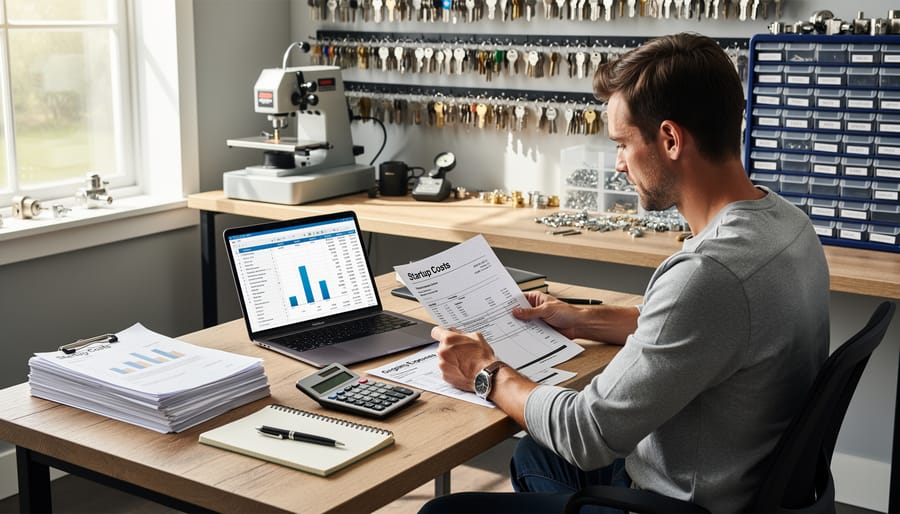
Starting a locksmith business doesn’t mean you need to drain your savings account on day one. Think of it like renovating your home – you can achieve impressive results by being strategic about where you invest your money first.
Consider buying quality used equipment instead of brand-new tools. Professional-grade locksmith tools are built to last, and you can often find gently used picks, key cutters, and programming devices from retiring locksmiths or business liquidations at 40-60% off retail prices. Check online marketplaces, auction sites, and locksmith forums for these opportunities. Just make sure to test everything thoroughly before purchasing.
Leasing your service vehicle is another smart move that reduces upfront costs dramatically. Instead of purchasing a van outright for $25,000-$35,000, you might lease one for $300-$500 monthly. This keeps cash available for other essentials and includes the bonus of potential tax benefits.
Starting part-time while keeping your day job is perhaps the wisest approach for minimizing financial risk. You can handle evening and weekend emergency calls, building your reputation and customer base gradually. This method lets you test the waters without diving into the deep end immediately.
Partnering with established businesses offers a fantastic way to gain experience while reducing overhead. Property management companies, real estate agencies, and general contractors often need reliable locksmith partners. These relationships provide steady work without requiring massive marketing budgets.
Focus on essential investments first. You don’t need every specialized tool on day one – start with basic lock installation and rekeying services, which require minimal equipment. As you grow and identify which services your customers actually need, you can expand your toolkit strategically.
Remember, some of the most successful locksmith businesses started in garages with basic tools and grew organically. Your skills and customer service matter far more than having the fanciest equipment from the start. Build smartly, grow steadily, and invest profits back into your business as opportunities arise.
What This Means for Homeowners and Property Managers
Now that you understand what goes into launching a legitimate locksmith business, you’re better equipped to evaluate the professionals you hire for your home or rental properties. When a locksmith quotes you for rekeying your doors or upgrading your security system, remember they’re covering significant overhead—from specialized tools and insurance premiums to licensing fees and ongoing training.
Fair market rates reflect these real business costs. A reputable commercial locksmith charging $150-250 for an emergency lockout isn’t overcharging; they’re covering their $50,000+ startup investment, commercial insurance, proper licensing, and the expertise they’ve developed through certification programs. These established professionals bring value that goes beyond simply opening your door—they provide reliable security breach prevention strategies and quality workmanship backed by proper insurance.
Watch for red flags that suggest someone is cutting corners. Unreasonably cheap services often indicate unlicensed operators who haven’t invested in proper insurance, quality tools, or professional training. While saving $50 on a service call might seem appealing, you’re risking property damage, voided insurance claims, or substandard security installations that could compromise your home’s safety.
When choosing a locksmith for your property, ask about their licensing, insurance coverage, and professional certifications. A legitimate business owner will proudly share these credentials because they represent substantial investments in their operation. You’re not just paying for fifteen minutes of work—you’re investing in the peace of mind that comes from working with a properly established professional who has the training, tools, and accountability to protect your property correctly.
Starting a locksmith business requires an investment that typically ranges from $10,000 to $50,000, depending on whether you’re launching a mobile operation or opening a physical storefront. If you’re considering this entrepreneurial path, remember that your initial investment directly impacts the quality and range of services you can offer from day one. Higher upfront costs often mean better equipment, comprehensive training, and stronger marketing, which translate to faster business growth and customer trust.
For homeowners and property managers reading this from the consumer side, understanding these startup costs helps you appreciate why professional locksmith services are priced the way they are. When you’re investing in your home’s security, whether it’s upgrading locks or handling an emergency lockout, you’re paying for expertise backed by significant business investment in specialized tools, licensing, insurance, and ongoing education.
The beauty of this knowledge works both ways. Aspiring locksmiths can make smarter decisions about which services to prioritize and how to allocate their startup budget effectively. Meanwhile, consumers gain confidence in selecting reputable professionals who’ve made proper investments in their craft rather than choosing solely based on the lowest price.
Whether you’re dreaming of launching your own security business or simply want to make informed choices about protecting your home, understanding the financial foundation behind locksmith services empowers better decisions. Quality security is an investment worth making, from either side of the transaction.