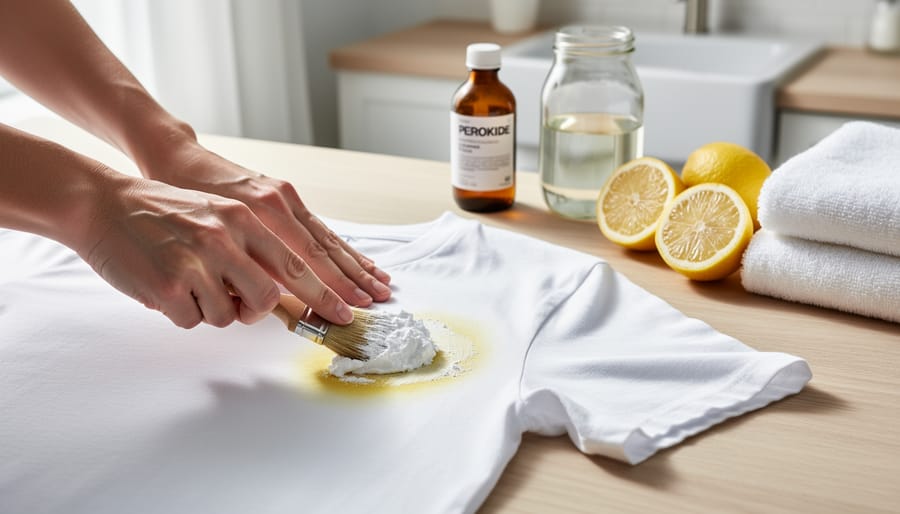
Soak yellowed whites in a mixture of one part hydrogen peroxide to two parts water for at least an hour before washing—this oxygen-based treatment breaks down organic stains without harsh chemicals. For stubborn underarm yellowing, create a paste using equal parts baking soda, hydrogen peroxide, and dish soap, then scrub it directly onto the stain and let it sit for 30 minutes before laundering. Restore dingy whites by boiling them in water with lemon slices for 10 minutes, as the citric acid naturally bleaches fabrics while leaving a fresh scent. Add a cup of white vinegar to your rinse cycle to strip away detergent buildup and hard water deposits that cause yellowing over time. If you’re dealing with old set-in stains, try overnight soaking in a solution of powdered oxygen bleach and hot water—this extended contact time allows the active ingredients to penetrate deep into fabric fibers. Understanding that yellowing typically comes from sweat, deodorant residue, body oils, or improper storage helps you target the right treatment method, and catching stains early dramatically improves your success rate compared to waiting until they’ve oxidized and set permanently.
Why White Clothes Turn Yellow (And Why It Matters)
You’ve probably noticed it—those crisp white shirts gradually taking on a dingy, yellowish tint despite regular washing. Understanding why this happens is the first step toward winning the battle against stubborn discoloration.
The most common culprit? Your own body. Sweat contains proteins and minerals that seep into fabric fibers, and when combined with heat from your dryer, these compounds essentially bake into the material. Those yellowish pit stains on your favorite tees? That’s sweat reacting with aluminum compounds in antiperspirants, creating a residue that standard detergent often can’t touch.
Body oils present another challenge. Throughout the day, natural oils transfer from your skin to your clothes, particularly around collars and cuffs. Over time, these oils accumulate and oxidize, creating that telltale yellow ring. Think of it like how cooking oil darkens when exposed to air and heat—your shirt experiences a similar process.
Hard water adds another layer of complexity. If your tap water contains high mineral content, those minerals deposit onto fabric during washing. These deposits don’t just dull whites—they actually trap other stains, making yellowing worse over time. This is similar to removing stains from fabric furniture, where water quality matters tremendously.
Finally, age-related oxidation affects even stored clothing. White fabrics naturally yellow as cellulose fibers break down when exposed to light and air, which explains why that wedding dress in your closet might yellow despite never being worn.
Identifying your specific stain type matters because each requires a different treatment approach. Protein-based sweat stains respond best to enzyme cleaners, while mineral buildup needs acidic solutions. Knowing your enemy helps you choose the right weapon.

Your Pre-Treatment Game Plan
Before you dive into battle with those pesky yellow stains, let’s set you up for success with a solid game plan. Think of this as your pre-stain-removal checklist that can make the difference between saving your favorite white shirt and accidentally making things worse.
First things first: speed matters. The sooner you address a yellow stain, the better your chances of complete removal. Fresh stains are always easier to tackle than ones that have been sitting in your hamper for weeks or have already been through the wash cycle.
Now, grab that care label and give it a good read. This tiny tag is your garment’s instruction manual, and ignoring it could spell disaster. Check for any special washing instructions, temperature limits, or warnings about bleach use. If you’re dealing with silk, wool, or other delicate materials similar to cleaning delicate fabrics, you’ll need to adjust your approach accordingly.
Before applying any treatment to the entire stain, do a quick spot test on a hidden area like an inside seam or hem. Apply your chosen solution, wait a few minutes, and check for any discoloration or fabric damage.
Here’s a crucial tip: resist the urge to use hot water right away. Heat can actually set protein-based stains like sweat, making them nearly impossible to remove. Start with cool or lukewarm water instead.
Finally, gather your supplies before starting. Having everything within reach means you won’t waste precious time hunting for ingredients mid-treatment.
Kitchen Pantry Solutions That Actually Work
The Baking Soda Paste Method
Baking soda is a household hero you probably already have in your pantry, making it perfect for tackling those stubborn yellow armpit stains and general dingy spots. This gentle yet effective method works wonders on white cotton shirts and can restore brightness without harsh chemicals.
Start by mixing four tablespoons of baking soda with about a quarter cup of warm water in a small bowl. You’re aiming for a spreadable consistency similar to toothpaste, not too runny or too thick. If it’s too watery, add more baking soda gradually until you get the right texture.
Apply this paste directly onto the yellowed areas, paying special attention to armpit stains and collar rings. Use an old toothbrush or your fingers to work the paste into the fabric fibers with gentle circular motions. The mild abrasive quality of baking soda helps lift stains without damaging the fabric.
Let the paste sit for at least one hour, though overnight works even better for set-in stains. The longer contact time allows the baking soda to break down oils and sweat residue that cause yellowing. After the waiting period, toss the garment in your regular wash cycle with your usual detergent. The combination of pre-treatment and washing typically delivers impressive results on first try.

The Vinegar Soak Technique
White vinegar is like a secret weapon hiding in your pantry, especially when those stubborn yellow stains are caused by mineral buildup from hard water. This natural acid works wonders at breaking down those deposits that make your whites look dingy and dull.
Here’s how to harness vinegar’s brightening power: Fill a large basin or sink with warm water and add one cup of distilled white vinegar. Submerge your yellowed whites completely and let them soak for at least one hour, though overnight works even better for heavily stained items. The vinegar penetrates the fabric fibers, dissolving mineral deposits and reviving that crisp, bright appearance you thought was gone forever.
After soaking, wash the garments as usual with your regular detergent. For extra stubborn yellowing, add half a cup of vinegar directly to your washing machine’s rinse cycle alongside your next load of whites. This simple technique not only tackles existing stains but also prevents future mineral buildup, keeping your favorite white shirts looking fresh wash after wash.
Lemon Juice and Sunlight Power
Here’s a truly natural approach that harnesses the power of Mother Nature herself. Lemon juice contains citric acid, a gentle yet effective natural bleaching agent that works wonderfully on organic yellow stains like sweat or grass. The real magic happens when you combine it with sunlight, which activates the citric acid and provides natural UV bleaching power.
Start by squeezing fresh lemon juice directly onto the stained areas—don’t dilute it. Make sure the fabric is thoroughly saturated with juice. For extra stubborn stains, you can sprinkle a bit of salt on top to create a mild abrasive paste. Next, lay your garment outside in direct sunlight for two to four hours. The UV rays work together with the citric acid to break down those yellow compounds naturally.
This method works best on cotton and linen fabrics, and it’s particularly effective for armpit yellowing and food-based stains. You’ll want to rinse the garment with cool water afterward and then wash as usual. Fair warning though: this technique requires patience and sunny weather, so plan ahead. If you live in a cloudy climate, consider placing the item near a bright window, though the results won’t be quite as dramatic. This eco-friendly solution costs pennies and leaves your whites smelling fresh and citrusy.

When to Bring Out the Commercial Products
Sometimes your trusty baking soda and vinegar combo just won’t cut it, and that’s perfectly okay. When you’ve tried the DIY route and those stubborn yellow stains are still clinging to your favorite white shirt, it’s time to bring in the commercial reinforcements.
Oxygen bleach products are your first step up from household remedies. Unlike chlorine bleach, which can actually worsen yellowing or weaken fibers, oxygen bleach works gently to lift stains without damaging fabric. Look for products containing sodium percarbonate or hydrogen peroxide as active ingredients. These are safe for most washable whites and work especially well on sweat stains and age-related yellowing. Simply dissolve the powder in warm water, soak your garment for 2-6 hours, then wash as usual.
Enzyme cleaners are game-changers for protein-based stains like sweat, deodorant buildup, or food spills. These biological powerhouses literally break down the organic compounds causing the discoloration. Apply the enzyme cleaner directly to the stain, let it sit for about 15 minutes to let those enzymes work their magic, then launder normally. They’re particularly effective on athletic wear that’s developed that yellowish tinge from repeated sweating.
For those mystery stains that defy categorization, specialty stain removers formulated specifically for white fabrics can be your secret weapon. These often combine multiple technologies to tackle various stain types simultaneously.
Here’s the safety checklist before using any commercial product: always test on an inconspicuous area first, follow package directions precisely, never mix different products together, and avoid using hot water unless specifically instructed. When the care label says dry clean only, resist the temptation to experiment and take it to the professionals instead.
Tackling Specific Yellow Stain Culprits
Sweat and Deodorant Stains
Those stubborn yellow marks under the arms of your favorite white shirts aren’t just from perspiration alone. The real culprit is often a chemical reaction between your sweat and aluminum compounds found in many antiperspirants. Over time, this combo creates that telltale discoloration that regular washing just won’t budge.
Here’s a targeted approach that really works: Create a paste using three parts baking soda to one part water, then gently work it into the stained area with an old toothbrush. Let it sit for about an hour before washing. For tougher buildup, try mixing equal parts hydrogen peroxide, dish soap, and baking soda. This powerful trio breaks down both the aluminum residue and the protein-based sweat stains.
Prevention is your best defense going forward. Apply deodorant and let it dry completely before getting dressed, or consider switching to aluminum-free alternatives. Washing shirts promptly after wearing them prevents stains from setting deeply into the fabric fibers. With these strategies, you’ll keep your white wardrobe looking crisp and fresh season after season.
Age-Related Yellowing on Stored Clothes
We’ve all experienced that disappointing moment when pulling out stored wedding linens or vintage treasures, only to find they’ve developed a mysterious yellow tinge. Age-related yellowing happens when fabrics oxidize during storage, and it’s especially common in items tucked away in attics or basements where temperature fluctuations occur.
The good news? You can absolutely bring these pieces back to life. Start by soaking yellowed garments in a mixture of oxygen bleach and warm water for several hours or overnight. For particularly stubborn vintage yellowing, create a paste using baking soda and hydrogen peroxide, applying it directly to affected areas before washing. Some crafty home improvers swear by the sun-bleaching method too—after treating with your chosen solution, hang whites outside in direct sunlight for several hours. The UV rays work as a natural brightener.
For delicate vintage pieces with sentimental value, test any treatment on an inconspicuous area first. Sometimes older fabrics need gentler handling, so patience pays off when reviving these special items.
Food and Beverage Stains That Left Yellow Marks
That morning coffee spill or curry dinner disaster can leave behind frustrating yellow marks that seem impossible to remove. These food and beverage stains are tricky because they contain natural pigments and oils that bond quickly to fabric fibers. The good news? You probably have everything you need right in your kitchen to tackle them.
For coffee and tea stains, create a solution using equal parts white vinegar and water, then soak the stained area for 30 minutes before washing. Curry and mustard require a bit more muscle. Mix dish soap with hydrogen peroxide to form a paste, apply it directly to the stain, and let it sit for 15-20 minutes. The combination breaks down both the oil and the pigment. If you’re tackling stubborn stains, don’t be afraid to repeat the treatment. Sometimes persistence wins the day, especially with deeply set yellowing from turmeric-based foods.
Prevention Strategies to Keep Your Whites Bright
The best way to tackle yellow stains is to prevent them from happening in the first place. With a few simple adjustments to your laundry habits, you can keep your whites looking fresh and bright for years to come.
Start by sorting your laundry properly and washing whites separately in hot water whenever possible. Hot water activates detergents more effectively and helps prevent the buildup of body oils and residue that lead to yellowing. However, always check care labels first, as some delicate fabrics require cooler temperatures.
Switch to aluminum-free deodorants if you notice yellowish underarm stains developing. Traditional antiperspirants contain aluminum compounds that react with sweat to create those stubborn discolorations. Making this simple swap can save you hours of stain-fighting later.
Storage matters more than you might think. Always ensure whites are completely dry before folding them away, as trapped moisture promotes yellowing and mildew. Store white garments in a cool, dry place away from direct sunlight, which can cause fabrics to yellow over time. Consider using breathable cotton storage bags instead of plastic, which can trap humidity.
Incorporate white garment care into your regular deep cleaning routine by treating whites to a brightening wash every few months, even if they look clean. Add a cup of white vinegar to the rinse cycle occasionally to remove detergent buildup that dulls fabric over time. These proactive steps will keep your whites genuinely white with minimal effort.
You’ve now got a complete toolkit for bringing your favorite white clothes back to life, and that’s something worth celebrating! The truth is, most yellow stains aren’t permanent sentences for your wardrobe. Whether you’re dealing with stubborn sweat marks on a beloved t-shirt or mysterious yellowing on stored linens, you now know exactly which method to reach for first.
Remember, the key is patience and persistence. Start with the gentlest approach and work your way up if needed. That white blouse doesn’t need to end up in the donation pile just because of a few stains. With baking soda, vinegar, hydrogen peroxide, or even commercial solutions at your fingertips, you’re equipped to tackle whatever yellowing comes your way.
There’s something incredibly satisfying about rescuing a piece of clothing from the trash bin. Not only are you saving money by extending the life of garments you already own, but you’re also making a meaningful choice for the environment. Every white shirt you restore is one less item heading to a landfill and one less new purchase adding to your carbon footprint.
So go ahead and give those stained whites a fighting chance. Your favorite pieces deserve it, and you’ll feel amazing knowing you saved them yourself.