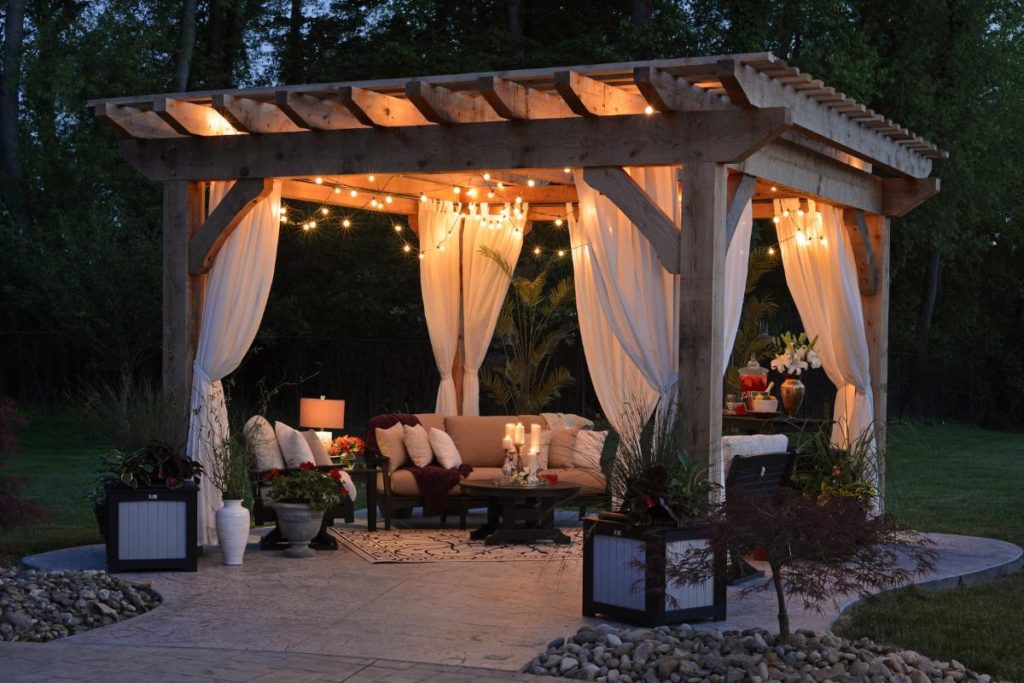

A real Black Friday patio furniture deal comes down to four checks: the date, the price history, the fine print, and a recheck during the Cyber Monday overlap. Run through them before you click buy, and you’ll spot the markdowns worth taking and skip the ones built on a reference price nobody ever paid. It takes about 20 minutes, and you need nothing more than a free browser extension and a budget you set ahead of time.
Black Friday lands on Friday, November 27, 2026, which gives you a short window to do your homework. Here’s why it matters. A discount only means something when it’s measured against a real price history, your own fixed budget and the store’s fine print. A “50% off” tag on a bistro set sounds thrilling until you learn the “original” price was only ever a placeholder. Retailers are expected to show that a former price was one they actually offered, so you’re entitled to look for proof.
That’s especially true if you’re furnishing a compact deck or balcony, where every piece has to earn its footprint. A slim bistro table, a folding chair set or a bench with hidden storage can transform a tight space into a proper outdoor room. The right deal makes it affordable. The wrong one just makes it cluttered. Let’s sort the two apart.
What You’ll Need Before You Start Shopping
Measure Your Space First (the Step Everyone Skips)
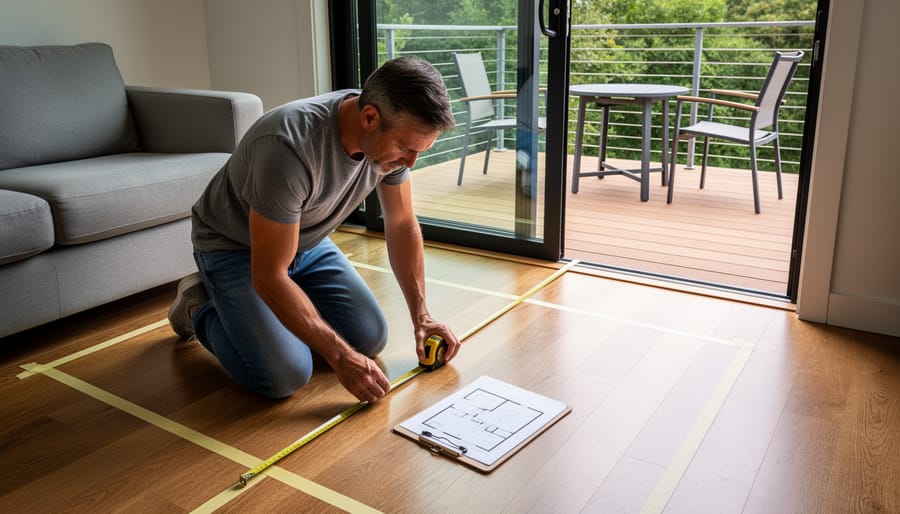
Before you chase a discount, grab a tape measure and spend ten minutes on your actual space. Start with usable floor area: measure wall to wall, then subtract anything that eats into it, like a railing base, a planter you won’t part with, or the spot where you’ll want to stand a grill or watering can.
Next, check the door swing. Open your balcony or patio door fully and measure how far it travels, because that arc needs to stay clear. Then note railing height and the clearance beneath it. A low railing changes which chairs feel safe, and a tall bar-height table might block your view entirely.
Here’s the cautionary tale. A friend once snagged a gorgeous bistro set at a steep markdown, and it arrived looking perfect right up until the door wouldn’t open past a few inches. She ended up squeezing sideways onto her own balcony for a month before returning it. Wasted effort, plus bulky-item return headaches.
Finally, measure where it all goes in winter: a closet, a storage bench, a corner of the hallway.
In a small space, a deal is only worth taking when the discount is measured against a real price and your real measurements. A great percentage off a piece that doesn’t fit is just an expensive obstacle.
Safety Warnings and Red Flags Before You Click Buy
A few red flags should make you pause before you click buy, and they’re easy to spot once you know what to look for. A “was” price you can’t trace to any real history is the big one. A genuine markdown is measured from a price the store actually offered, so real price history matters more than the size of the red slash through the old number.
Countdown timers and “only 3 left” banners are meant to rush you, not help you. Take a breath, check the history, and remember that a deal worth having will still make sense after a ten-minute pause.
Next, read the fine print before you commit. Look for exclusions, assembly fees, and what happens if the chair arrives scratched or the table simply doesn’t fit. Return windows on big items can be short or come with restocking fees, and delivery terms matter just as much when you’re shipping bulky items to a condo or a walk-up.
Balcony shoppers have a few extra checks. Confirm your building’s rules and any weight limits before you load up a railing planter or a heavy dining set. Keep pieces well clear of doors and exits, since furniture should never block the way out. It’s smart to measure against real constraints like these rather than chasing the biggest discount.
If any of these checks fails, the right move is simple: skip it and wait.

The Four-Step Check for a Real Markdown

Step 1: Lock In the Date and Sale Timing
Black Friday lands on Friday, November 27, 2026, so circle that date and treat it as your anchor. Next, find out when the specific sale you’re eyeing actually starts and ends. Look for a start and end date on the store’s own promo page, and jot both down in your notes. If a store doesn’t state an end date, take that as a reason to slow down.
Don’t rely on rumours about early launches or retailer schedules unless the store itself confirms them. You’ll also see “Black Friday in July” style events pop up well before November. They can be genuine, but they deserve the very same scrutiny, so run them through the steps below before you buy.
Step 2: Compare the Price Against Real History and Fine Print
A discount only means something when you measure it against three things: real price history, your own fixed budget, and the store’s fine print.
Start with history. Install a browser extension that tracks prices, then look at the 60-to-180-day chart for the exact piece you want. If today’s “sale” price sits right where the chart has hovered for months, you’re not looking at a deal. You’re looking at a regular price in a party hat.
Next, set your budget ceiling before you start browsing, and write it down. A ceiling keeps a flashy percentage off from nudging you past what you meant to spend.
Then read the fine print. Check what’s excluded from the sale, whether shipping costs extra, if assembly is included or something you’ll be doing yourself with an Allen key, and how returns work for bulky items. A low sticker price can quietly climb once those pieces are added.
If a deal clears all three, you’ve got something worth buying. If it stumbles on even one, keep scrolling.
Step 3: Ask Whether the ‘Was’ Price Was Ever Real
Here’s the question that matters most: was that “was” price ever real? A genuine markdown is measured from a price the store actually offered to shoppers. A fake one starts from a reference price nobody ever paid, then knocks it down to make the deal look dramatic.
If a store advertises a discount from its own former price, that price should have been real, meaning one it truly charged. So you’re looking for proof.
Here are a few practical tells. First, check the price history from Step 2. If the “was” price never shows up anywhere in the 60-to-180-day window, that’s a red flag. Second, notice a “sale” tag that seems permanent. If an item has looked discounted every time you’ve glanced at it, the sale price is probably just the normal price. Third, be wary of a huge percentage off a number that looks suspiciously high.
When in doubt, trust your own tracked history over the label.
Step 4: Recheck During the Cyber Monday Overlap
Black Friday is Friday, November 27, 2026, and the Cyber Monday overlap gives you one last chance to sanity-check your pick. Look at the piece you’ve shortlisted when sales first go live, then look again once Cyber Monday deals start appearing.
Here’s a simple rule to settle it. If stock is thin and the price already matches its lowest point in your 60-to-180-day price history, buy. A sold-out bistro set saves you nothing. If neither of those is true, waiting costs you very little, so let the deal prove itself.
Jot down the price and stock status each time you check, right in your notes app. Two quick data points beat guesswork, and they keep you from chasing a “bigger” sale that never arrives.
Which Pieces Are Worth Buying for a Small Deck or Balcony
Fold, Stack or Nest: Pieces That Disappear When You’re Done
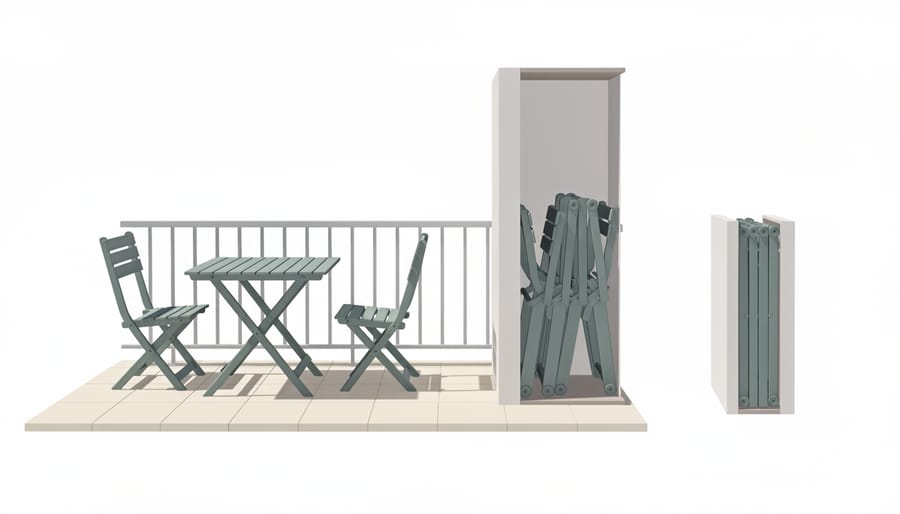
If your balcony or deck is tight, the best patio pieces are the ones that vanish when the party’s over. Folding bistro sets, stackable chairs and nesting tables all shrink down to almost nothing, which makes them a smart match for any small-space layout.
Before you get swept up in a Black Friday markdown, check the folded dimensions, not just the open ones. A table that looks compact in the photo might still be a hefty slab when collapsed. Compare that folded measurement against the spot where you’ll actually tuck it, whether that’s a closet, a storage bench or the corner of a garage.
Weight matters too. If you’ll be hauling chairs inside every fall, lighter frames are far easier to carry, especially up a flight of stairs. Test the locking hinges if you can, or read reviews for mentions of wobbly or stiff mechanisms.
Stacking chairs are brilliant for winter storage, since a set of four can lean together like one. Nesting tables slide under each other, and you can pull them apart for snacks and drinks when friends drop by.
Pick pieces that make storing them effortless, and you’ll be far more likely to protect them through the cold months.
Multi-Tasking Furniture That Pulls Double Duty
A storage bench is the quiet hero of a small balcony. Lift the lid and cushions, a watering can and the winter blanket all vanish, and you’ve got seating on top. Planter-seating combos work the same way, giving you greenery and a spot to perch in one footprint. A drop-leaf table folds down to a slim strip against the wall when you’re not eating, and a railing-mounted shelf holds your coffee and a small herb pot without touching the floor.
Picture a balcony I’d happily copy: a narrow bench along the wall with a stack of throw cushions, a drop-leaf bistro table dropped to half size, a slim shelf clipped to the railing, and a string of warm lights overhead. Everything has a job, and nothing sits idle. A friend of mine once bought a gorgeous set that looked great online but left no room to walk past it. The bench-and-shelf approach fixed that overnight.
When you spot these pieces on sale, check the dimensions first, then run them through the same price-history and fine-print checks as everything else.
Materials and Weather Considerations for Canadian Seasons
Canadian weather is tough on outdoor pieces, so it pays to know what holds up before a Black Friday price tempts you. Start with the frame. Powder-coated aluminum resists rust and stays light enough to move, while steel is sturdy but needs a finish that’s intact. Teak and other dense woods weather well, though they appreciate a little care.
Finishes matter just as much. Look for a sealed or coated surface that can shrug off snowmelt and summer sun without peeling or fading. If you want a deeper checklist for how to choose outdoor furniture that suits your home, that guide is a great companion read.
Cushions are where many small-space setups fall short. Fabrics made for outdoor use are built to handle sun and damp, and removable covers make cleaning easy. Quick-drying fill is a bonus after a rainy week.
Then there’s winter. Even sturdy furniture lasts longer when it isn’t left bare to freeze and thaw all season. A fitted cover is a smart, inexpensive add-on, and bringing cushions indoors keeps them fresh. On a small deck or balcony, pieces that fold or stack make off-season storage far easier, which is another reason a compact design earns its footprint.
Verify Your Deal and Plan Your Next Steps
Before you buy, run one last pass. Check that the sale price still sits at or near its real 60-to-180-day low, that your measurements fit the piece, and that you’ve read the fine print on exclusions, shipping, assembly, returns and delivery terms for bulky items.
After you buy, keep every receipt and order confirmation, inspect the boxes the moment they arrive, then assemble and test everything before the return window closes. Once the season ends, plan ahead for storage too, whether that means covers or a shrink wrap patio option for winter.
If the deal doesn’t hold up, skip it. Set a price alert and look again during the Cyber Monday overlap. Waiting costs very little when the price isn’t at a historic low.
Black Friday Patio Furniture FAQs
Most shoppers ask the same handful of questions before Black Friday arrives, so here are quick answers to keep handy while you hunt.
When is Black Friday 2026?
Black Friday lands on Friday, November 27, 2026. Note the date now and sketch your space before then so you’re ready to act.
How can I tell if a Black Friday discount is real?
Measure the sale against real price history (a browser extension can show 60 to 180 days), your fixed budget and the store’s fine print. A genuine markdown also comes from a former price the store actually offered, not a reference price nobody paid.
Should I wait for Cyber Monday?
Check availability when Black Friday begins and again during the Cyber Monday overlap to see whether waiting gives you any real advantage. If stock is thin and the price already looks like a historic low, buy; if neither is true, waiting costs little.
What’s the best patio furniture for a small balcony?
Choose pieces that earn their footprint: folding, stacking, nesting and multi-use items like storage benches or drop-leaf tables. Always check the folded dimensions against your measurements first.
If a question isn’t answered here, the four-step check above will usually settle it. When in doubt, trust your measurements and your price history over any flashy percentage.
Here’s the whole approach in a nutshell: verify the markdown, measure your space, and buy the piece that earns its footprint. A shiny percentage off means very little until you’ve checked it against real price history, your own fixed budget and the store’s fine print. And the best patio furniture for a small deck or balcony isn’t the biggest set on sale. It’s the folding, stacking or multi-tasking piece that fits your door swing and tucks away when you’re done.
Before Friday, November 27, grab a pencil and sketch your balcony or deck with the measurements marked on it. Then set a price alert on the two or three pieces you actually want, so the decision is made before the sales frenzy starts.
Next season, picture it: a cozy corner, a little string lighting, a cushion or two, and a cup of something warm in your hands. Small spaces have a way of feeling like your own private escape. Go make yours.