

The best poolside landscaping plants tolerate chlorine splash, minimal leaf drop, and won’t damage pool infrastructure with aggressive roots. Top choices include ornamental grasses like blue fescue, succulents such as agave, and tropical favorites like bird of paradise, each selected for durability in high-humidity, sun-drenched conditions while keeping maintenance simple.
Creating a beautiful poolside landscape isn’t just about aesthetics. You need plants that can handle the unique challenges of life next to water: constant splashing, reflective heat bouncing off the pool surface, and foot traffic on wet pavement. The wrong choices leave you fishing leaves out of skimmer baskets every morning or dealing with roots cracking your pool deck three years down the line.
The secret to successful pool landscaping lies in choosing low-maintenance varieties that complement your poolside decor without creating work. Think plants with compact root systems, minimal shedding habits, and enough resilience to bounce back from the occasional chlorinated splash. Ornamental grasses sway gracefully without dropping messy seed pods. Succulents add architectural interest while requiring almost zero upkeep. Tropical specimens bring that resort vibe without the headaches of constant cleanup.
In this guide, you’ll find 15 plant recommendations organized by type, each vetted for poolside performance. We’ll cover what makes each one pool-friendly, where to place them for maximum impact, and how to keep them thriving in that tricky microclimate around your pool. Whether you’re working with full sun exposure or creating privacy screening, these selections deliver style without the maintenance nightmares.
What Makes a Great Poolside Plant?
Choosing plants for your pool area is completely different from selecting them for your garden beds. The environment around your pool poses unique challenges that can quickly turn beautiful greenery into a maintenance nightmare if you pick the wrong varieties. Understanding what makes a plant pool-friendly saves you hours of cleanup, prevents damage to your pool infrastructure, and keeps your backyard looking resort-ready all season.
The ideal poolside plant needs to check several boxes. Root systems should stay compact and non-invasive since aggressive roots can crack pool decks, damage underground plumbing, or lift pavers out of place. You’ll want varieties that drop minimal leaves, flowers, or seed pods into the water because constant skimming gets old fast and adds to your pool maintenance routine.
Chlorine tolerance matters more than most people realize. Pool water splashes onto nearby plants constantly, and varieties sensitive to chlorinated water will show brown edges, stunted growth, or die off entirely. Similarly, plants that handle intense heat and reflected pool heat from surrounding concrete or stone will thrive while others crisp up by mid-summer.
Here’s what to prioritize when evaluating potential poolside plants:
- Low-maintenance growth habits that don’t require constant pruning or deadheading
- Non-invasive root systems that won’t damage pool structures or decking
- Minimal debris production to reduce pool cleaning frequency
- Chlorine tolerance to handle splashing and chemical exposure
- Heat and sun resistance for full-exposure poolside conditions
- Non-slippery foliage and berries that won’t create safety hazards when wet
- Visual appeal that enhances your pool aesthetic rather than looking scraggly
Aesthetic appeal ties everything together. The best poolside plants add lush texture, pops of color, or architectural interest without fighting against the pool’s clean lines. Think about how plants will look from multiple angles, including when you’re lounging poolside and when you’re viewing the area from inside your home. Plants that look good year-round in your climate zone deliver the most value.
15 Best Poolside Landscaping Plants
Ornamental Grasses
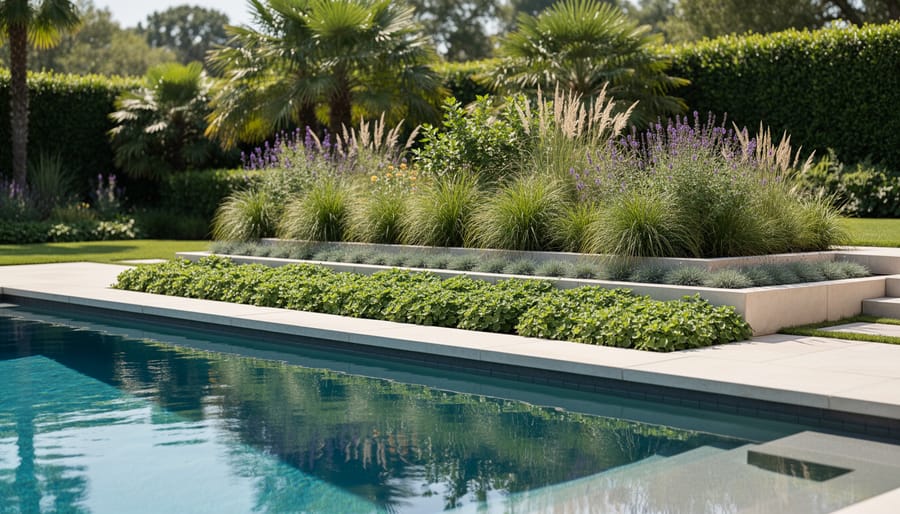
Ornamental grasses bring graceful motion and architectural interest to pool areas without the headache of constant cleanup. Their fine-textured foliage sways beautifully in the breeze, creating that resort-worthy movement you see at high-end pools, while their compact root systems won’t threaten your pool structure or plumbing.
Blue Fescue (Festuca glauca) is a compact, clumping grass that forms tidy blue-gray mounds about 12 inches tall. It loves full sun and actually thrives in the reflected heat from pool decking, making it ideal for those scorching spots between the pool and hardscape. The silvery-blue color provides stunning contrast against dark pool tiles or warm travertine, and it requires almost no maintenance once established, no need to remove dead foliage constantly.
Fountain Grass (Pennisetum setaceum) creates dramatic focal points with arching green blades and feathery plumes that emerge in summer. Growing 3-4 feet tall, it works beautifully as a mid-height layer behind seating areas. The burgundy variety ‘Rubrum’ adds deep color that looks sophisticated against pool blues. While it does produce seed heads, they’re minimal compared to messier flowering plants, and a quick trim in late winter keeps it tidy.
Pampas Grass (Cortaderia selloana) makes a bold statement for larger pool areas where you want privacy screening or dramatic backdrop planting. The towering plumes reach 8-10 feet and create year-round interest. Plant it at least 6-8 feet from the pool edge, its size demands space, and you don’t want those sharp blade edges near swimmers. Dwarf varieties like ‘Pumila’ offer similar drama at a more manageable 4-6 feet for smaller yards.
Pink Muhly Grass (Muhlenbergia capillaris) delivers seasonal magic with clouds of pink blooms in fall that photograph beautifully. This 3-foot mound stays neat and compact, making it perfect for lining walkways to the pool or softening container edges.
Tropical Foliage Plants
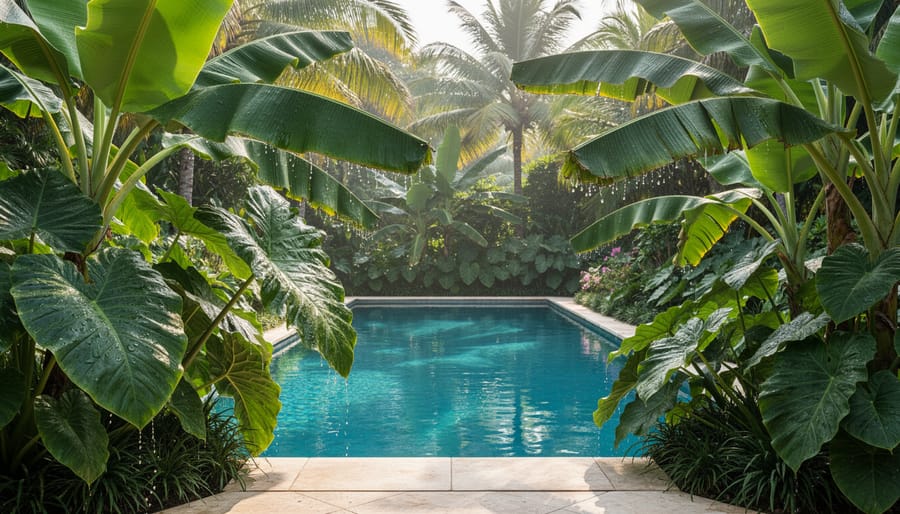
Tropical foliage plants deliver that resort-style wow factor poolside while actually thriving in the humid microclimate pools naturally create. These statement makers bring bold leaves and architectural presence that transform ordinary backyards into vacation-worthy spaces.
Bird of Paradise stands out as a poolside superstar with its paddle-shaped leaves and exotic orange-blue flowers. This plant handles splashing chlorinated water surprisingly well and reaches 5-6 feet tall, creating a dramatic backdrop without overwhelming the space. Position it where afternoon shade hits since intense reflected heat can scorch leaves. The thick, waxy foliage resists tearing in wind better than you’d expect for such large leaves.
Elephant Ear varieties make an immediate impact with their massive heart-shaped leaves that can span two feet across. Colocasia and Alocasia types both work poolside, though Colocasia tolerates wetter soil if you’re dealing with splash zones. These beauties love humidity but need consistent watering since those big leaves transpire heavily. Plant them in clusters of three or five for maximum drama, keeping them 3-4 feet from the pool edge to avoid root intrusion into decking.
Cordyline (also called Ti Plant) brings vibrant color with varieties in burgundy, pink, lime green, and variegated combinations. These upright growers reach 3-8 feet depending on variety and work perfectly as vertical accents between lounging areas. Their narrow leaves shed minimally and the woody stems handle poolside conditions without getting leggy. Red Sister and Pink Passion varieties particularly pop against blue pool water.
For best results, amend soil with compost to boost drainage and mulch heavily to maintain the consistent moisture these tropicals prefer.
Flowering Perennials
Flowering perennials bring vibrant color to your pool area without the constant replanting that annuals demand. The key is choosing varieties that hold onto their petals rather than scattering them across your deck and into the water.
Daylilies rank among the most forgiving poolside bloomers. These tough perennials produce trumpet-shaped flowers in shades from soft yellow to deep burgundy, with each bloom lasting just one day before cleanly dropping. They’re drought-tolerant once established, handle reflected heat beautifully, and their arching foliage adds graceful texture even when not flowering. Plant them in mass groupings 18 inches apart for maximum impact from late spring through summer.
Hibiscus delivers that resort-style tropical punch with dinner-plate-sized blooms in brilliant reds, pinks, oranges, and yellows. Both tropical and hardy varieties work poolside, though tropical types need winter protection in cooler zones. The flowers drop whole rather than shedding messy petals, making cleanup straightforward. Position them where they’ll get six hours of sun and regular water during blooming season for the most prolific display.
Lantana works overtime as a poolside performer, attracting butterflies while shrugging off heat, humidity, and occasional chlorine splash. Its clustered flowers shift through color combinations as they mature, creating a multicolored effect on a single plant. Trailing varieties cascade beautifully over retaining walls, while upright types fill space between taller specimens. Bonus: deer typically avoid them.
Coneflowers offer a more cottage-garden aesthetic if that suits your pool style. Their sturdy stems don’t flop in wind, the blooms last weeks, and spent flowers simply dry in place rather than creating debris. Purple, white, and coral varieties thrive in full sun with minimal fussing.
Evergreen Shrubs
Boxwood stands out as the ultimate poolside workhorse, maintaining its compact, manicured shape year-round with minimal fuss. Its dense foliage creates natural privacy screens without the sprawling mess of deciduous shrubs, and it tolerates both sun and partial shade around pool areas. Dwarf varieties like ‘Green Gem’ stay under three feet tall, perfect for lining pool edges without blocking sightlines, while taller cultivars work brilliantly for corner plantings or equipment concealment. The non-invasive root system won’t threaten pool structures, and boxwood sheds very few leaves, a massive plus when you’re trying to keep the pool clean.
Loropetalum brings year-round color with burgundy or chartreuse foliage that pops against blue pool water and neutral hardscaping. This adaptable evergreen handles heat remarkably well and requires only occasional pruning to maintain its naturally rounded form. The spring blooms add a bonus burst of fringe-like flowers without creating significant cleanup issues since they’re small and decompose quickly. Choose compact varieties like ‘Purple Pixie’ for poolside borders or standard forms for taller privacy hedges.
Pittosporum rounds out your evergreen options with glossy, waxy leaves that resist chlorine drift better than most shrubs. Its upright growth habit makes it ideal for creating vertical interest without eating up precious deck space, and the aromatic foliage naturally discourages pests. Plant it three to four feet from pool edges to allow air circulation while still achieving that lush, enclosed resort feeling.
Succulents and Agave
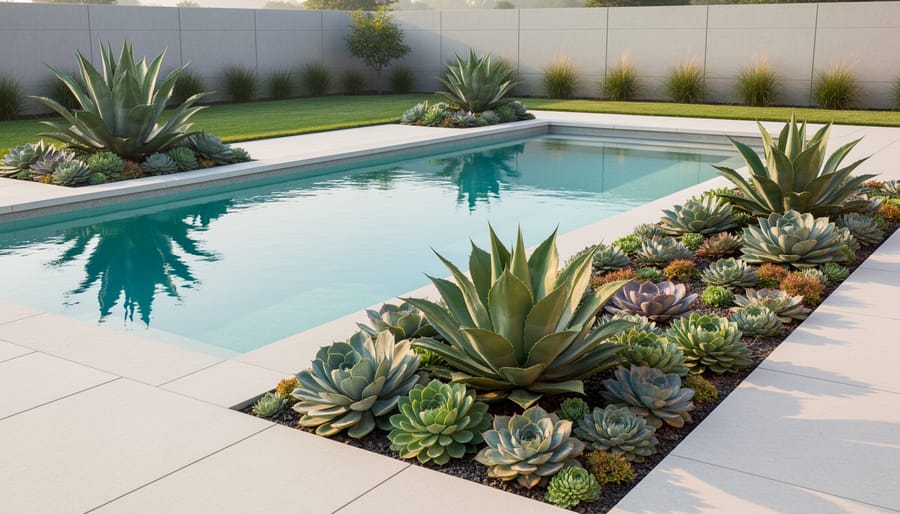
Succulents and agaves bring architectural drama to poolside areas while demanding almost nothing in return. These water-wise plants thrive in the reflected heat and sun that bounce off pool surfaces, making them ideal for modern designs and regions where water conservation matters.
Agave varieties deliver striking sculptural presence with their bold, spiky rosettes. Blue Glow Agave stays compact at 2-3 feet wide with stunning blue-green leaves edged in red, creating a focal point that never needs pruning. Century plants work well as statement pieces in larger spaces, though their size requires thoughtful placement away from high-traffic areas. The sharp leaf tips demand respect, so position them behind seating zones rather than along walkways.
Aloe vera and ornamental aloe species offer softer alternatives with similar drought tolerance. They handle splashed pool water without issue and actually prefer the warmth radiating from concrete decking. Torch Aloe produces vibrant orange blooms in winter, adding unexpected color when most poolside plants rest. These grow happily in containers, letting you rearrange your poolside setup as needed.
Sedum varieties work beautifully as textural fillers between pavers or in shallow planters. Dragon’s Blood Sedum spreads into a low carpet of burgundy foliage that intensifies in full sun, softening hard edges around pool coping. Angelina Sedum adds bright chartreuse color that pops against dark pool finishes.
All three plant types shed minimal debris, tolerate neglect during vacations, and establish quickly in well-draining soil, perfect for homeowners who want style without constant maintenance.
Palm Varieties
Palms are synonymous with poolside luxury, instantly transforming any backyard into a tropical retreat. These architectural plants bring height, drama, and that resort-style atmosphere homeowners crave. The key is selecting varieties with tidy growth habits that won’t overwhelm your space or shed messy fronds into the water.
Sago Palm (Cycas revoluta) tops the list for compact poolside plantings. Despite its name, it’s technically a cycad, not a true palm, which means it grows slowly and stays manageable. Its dark green, feathery fronds arch gracefully and rarely drop, making cleanup minimal. Plant it in containers flanking pool steps or group several along a deck edge for symmetrical elegance. It tolerates full sun and handles splashing chlorinated water remarkably well.
Mediterranean Fan Palm (Chamaerops humilis) works beautifully for smaller pools or tighter spaces. This multi-trunked palm reaches only 10-15 feet, and its fan-shaped leaves create interesting texture without the height concerns of larger palms. It’s drought-tolerant once established and thrives in hot, sunny poolside conditions. The silvery-blue varieties add a sophisticated color contrast against typical pool blues.
Areca Palm (Dypsis lutescens) delivers classic tropical fullness with its clustering stems and feathery fronds. It prefers partial shade, making it perfect for covered patio areas adjacent to the pool. While it needs consistent moisture, its non-invasive roots and contained growth habit prevent damage to pool structures. The golden-yellow stems add warm visual interest year-round.
Ground Covers
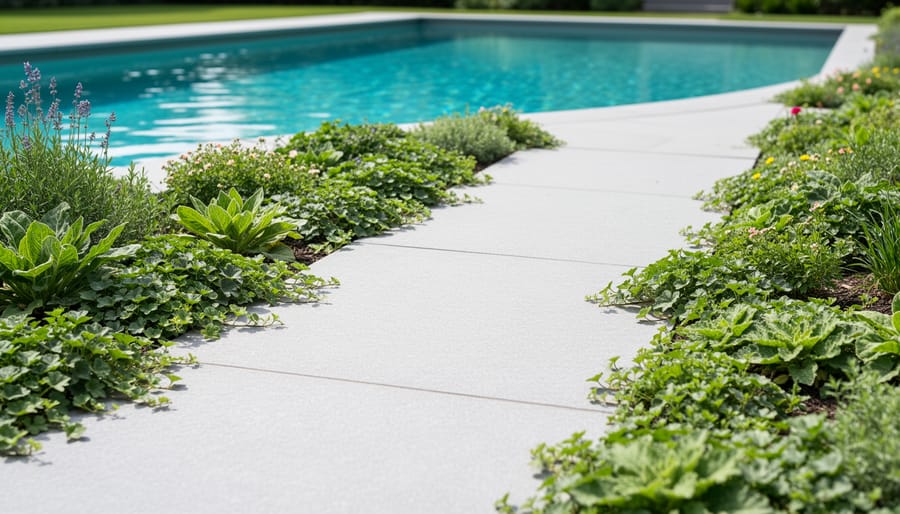
Ground covers work magic in those awkward spaces between pavers and pool edges where nothing else quite fits. These low-growing spreaders soften harsh hardscape lines while standing up to occasional foot traffic, a practical two-for-one solution.
Blue Star Creeper (*Isotoma fluviatilis*) forms a dense, carpet-like mat just 2-3 inches tall, studded with tiny blue flowers in spring and summer. It thrives in full sun to partial shade and tolerates light walking, making it perfect for filling gaps in stepping stone paths. Water regularly during establishment, then moderately once rooted. The fine texture creates a soft, almost moss-like appearance that contrasts beautifully with concrete coping.
Dymondia margaretae (Silver Carpet) handles full sun and drought better than most ground covers while maintaining its attractive gray-green foliage year-round. Growing only 1-2 inches high, it spreads slowly but surely, eventually forming a tight mat that resists weeds. Small yellow flowers appear in summer. This South African native tolerates moderate foot traffic and needs minimal water once established, ideal for water-conscious poolside designs in warmer climates.
Design Tips for Poolside Plant Placement
Position plants where they’ll thrive and enhance your pool experience without creating problems. Start by establishing three distinct zones: a hardscape perimeter (three to four feet from the pool edge) where containers work best, a mid-zone for low-growing shrubs and grasses, and a background layer for taller specimens like palms or ornamental grasses that create privacy and visual impact. This layered approach keeps roots away from pool structures while building depth and dimension.
Containers offer flexibility that in-ground planting can’t match. Move them seasonally to redirect traffic flow, swap out varieties that aren’t performing, or refresh your look without committing to permanent landscaping changes. Choose pots with drainage holes and use quality potting mix rather than garden soil, which compacts and drains poorly. Larger containers (18 inches or more) reduce watering frequency and provide better insulation for roots during temperature swings.
Balance sun exposure with practical access needs. Plant heat-lovers like agave and hibiscus on the sunniest side where they’ll flourish, while shade-tolerant options like elephant ear work well under pergolas or near covered seating areas. Leave generous pathways between planting beds and the pool deck for easy movement, cleaning equipment access, and room to set up poolside accessories like loungers and towel racks. Position taller plants where they won’t block afternoon sun during peak swimming hours, and avoid placing anything with sharp leaves or thorns along main traffic routes. Group plants with similar water needs together to simplify irrigation and prevent overwatering specimens that prefer drier conditions.
Quick Recap: Creating Your Perfect Poolside Garden
Creating your dream poolside garden doesn’t require filling every inch with greenery. Focus on the selection criteria that matter: non-invasive roots, minimal leaf drop, chlorine tolerance, and heat resistance. These fundamentals keep maintenance manageable while protecting your pool equipment and water quality.
Choose three to five plant varieties that suit your climate and design vision, then repeat them in groupings for visual impact. Mixing textures works better than cramming in dozens of different species. Pair wispy grasses with bold tropical foliage, or contrast spiky succulents against rounded shrubs for depth and interest.
Consider your pool’s style when finalizing plant choices. Modern geometric pools pair beautifully with clean-lined agaves and ornamental grasses, while freeform tropical designs call for lush palms and flowering perennials. Container plantings let you test options before committing to in-ground beds, and they’re easy to rearrange as your design eye sharpens. Start small, observe what thrives in your specific microclimate, then expand your poolside garden with confidence.
Frequently Asked Questions
What plants can tolerate chlorine splash?
Most of the ornamental grasses, succulents, and tropical foliage plants in our list handle occasional chlorine splash well. Agave, Bird of Paradise, and fountain grass are particularly resilient because their thick leaves or waxy coatings resist chemical damage better than delicate foliage.
How far should plants be from the pool edge?
Keep taller plants at least three to four feet from the pool edge to prevent leaves and debris from blowing into the water. Ground covers and low grasses can sit closer, but leave enough room for comfortable walking space around the pool perimeter.
What about plants that attract bees?
Hibiscus and lantana do attract pollinators, so plant them farther from high-traffic swim areas. If bees are a concern, stick with ornamental grasses, palms, and non-flowering foliage plants near seating and entry points.
Can I use flowering plants near saltwater pools?
Yes, many of these plants tolerate salt better than traditional chlorine levels. Daylilies, lantana, and most succulents thrive in saltwater pool environments, making them excellent choices whether you have a traditional setup or run a solar pool heater with salt chlorination.
Regular maintenance helps any poolside plant succeed. Rinse foliage occasionally with fresh water to remove chemical buildup, and mulch around plants to retain moisture during hot summer months. If you notice brown leaf tips or yellowing, it usually signals either too much chlorine exposure or inconsistent watering rather than a poor plant choice.
items
This compact ornamental grass forms neat blue-gray mounds that won’t shed messy leaves into your pool. It thrives in full sun and tolerates poolside heat beautifully while requiring minimal water once established.
Delicate, flowing blades create stunning movement without creating debris problems. This drought-tolerant grass handles reflected heat from pool decking and adds soft texture to modern pool designs.
Large tropical leaves and vibrant orange flowers deliver instant resort ambiance. The thick, waxy foliage resists chlorine splash and won’t drop excessive leaves, making cleanup simple.
Bold, dramatic foliage creates a lush tropical statement. These plants love the humidity around pools and their large leaves remain intact rather than shedding small debris into the water.
Spiky, architectural foliage in burgundy or green adds vertical interest. This hardy tropical tolerates salt, chlorine, and reflected heat while maintaining its striking appearance with minimal care.
Colorful blooms appear throughout summer while the grass-like foliage stays tidy. Spent flowers are easy to deadhead, and the plants handle poolside conditions without complaint.
Spectacular flowers in vivid colors create focal points around the pool. Tropical hibiscus varieties thrive in poolside heat and humidity, though you’ll want to sweep fallen blooms regularly.
Clusters of small, colorful flowers attract butterflies while tolerating extreme heat and sun exposure. This tough perennial bounces back from chlorine splash and requires little attention beyond occasional trimming.
Classic evergreen shrubs provide year-round structure and can be shaped into formal hedges or geometric forms. Their dense foliage creates privacy screens without dropping leaves into the pool.
Burgundy or green foliage with fringe-like pink or white flowers adds color and texture. These evergreen shrubs tolerate heat well and maintain their shape with minimal pruning.
Sculptural rosettes make bold statements in modern pool designs. This succulent thrives in reflected heat and requires almost no water once established, perfect for low-maintenance landscapes.
Fleshy green spikes add architectural interest while tolerating poolside conditions with ease. Bonus: the gel inside soothes sunburns, making it both decorative and functional.
Despite its name, this cycad offers palm-like fronds without the mess of true palms. The thick, leathery leaves resist wind and won’t shed constantly into the pool area.
Compact size makes this palm ideal for smaller pools or container planting. It handles full sun and reflected heat while maintaining a tidy appearance with minimal frond drop.
Tiny blue flowers cover this low-growing ground cover that softens pool deck edges. It tolerates light foot traffic and stays green without becoming invasive or creating cleanup headaches.


