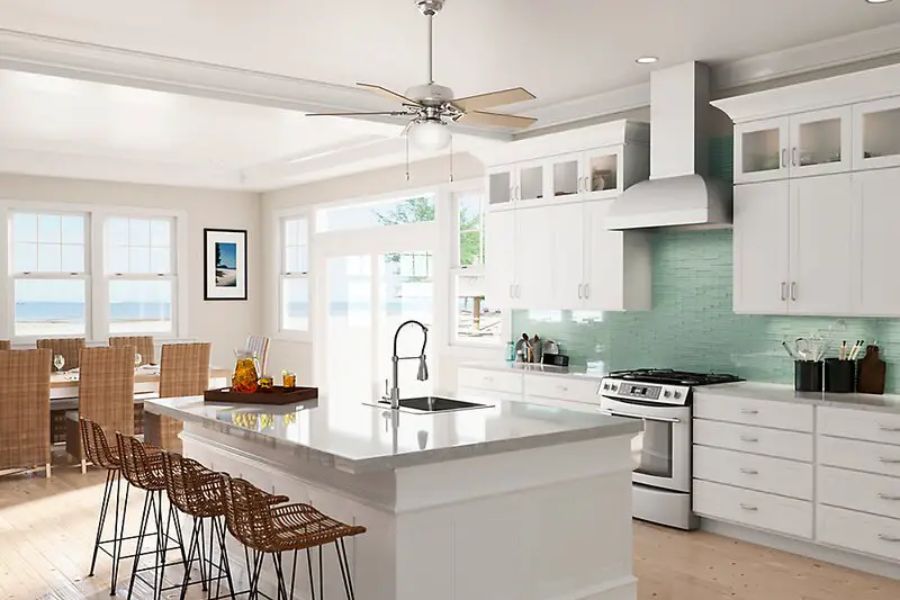

Choose cabinet colors that anchor your kitchen’s entire aesthetic by starting with your existing elements—flooring, countertops, and wall colors—then selecting shades that either complement or intentionally contrast these features. Your cabinets occupy more visual real estate than any other kitchen component, making this decision your most impactful design move.
Test color samples in your actual space before committing, viewing them at different times of day under natural and artificial lighting. What looks crisp and clean at noon might feel cold and sterile under evening kitchen lights. Purchase sample pots or large swatches and live with them for at least a week, observing how they interact with your daily routine and existing finishes.
Consider your kitchen’s size and natural light when selecting color intensity. Lighter neutrals like warm whites, soft grays, and gentle beiges expand smaller spaces and maximize brightness, while darker tones—navy, charcoal, or forest green—add drama and sophistication to larger kitchens with ample windows. Medium-toned options like sage, dusty blue, or warm taupe offer versatility across various kitchen sizes.
Embrace two-tone approaches to add depth without overwhelming your space. Pair darker lower cabinets with lighter uppers to ground the room while maintaining an airy feel, or reverse this formula for a contemporary twist. Transforming your kitchen cabinets through strategic color choices creates a foundation for your ideal cooking and gathering space, whether you gravitate toward timeless neutrals or bold statement hues that reflect your personality.
Why Cabinet Color Matters More Than You Think
Cabinet color isn’t just about aesthetics—it’s a powerful design decision that ripples through your entire kitchen experience. The hues you choose create the foundation for everything from your morning coffee routine to those lively dinner parties, making this choice more significant than many homeowners initially realize.
Let’s start with psychology. Color profoundly affects our mood and energy levels. Soft whites and warm grays foster calmness and clarity, perfect for starting your day on the right note. Meanwhile, deeper tones like navy or forest green can add sophistication and coziness, transforming your kitchen into an inviting gathering space. The emotional impact of your cabinet color choice influences how you feel in this central hub of your home every single day.
Space perception is another crucial factor. Light cabinet colors reflect natural light, making smaller kitchens feel more open and airy. Conversely, dark cabinets can create dramatic intimacy in larger spaces but might overwhelm compact kitchens. Understanding how color manipulates visual space helps you work with your room’s natural dimensions rather than against them.
From a practical standpoint, cabinet color significantly impacts resale value. While bold, trendy choices might express your personality beautifully, potential buyers often gravitate toward neutral, timeless options. This doesn’t mean you should avoid color entirely—it means balancing function and style thoughtfully. Consider whether you’re designing for the long haul or planning to sell within a few years.
The key is distinguishing between trendy and timeless. While millennial pink cabinets might look stunning today, classic navy, sage green, or warm neutrals maintain their appeal across decades. Your cabinet color sets the stage for countertops, backsplashes, and flooring choices, so selecting wisely creates cohesive design flow that feels intentional rather than haphazard.
The New Neutrals: Contemporary Takes on Classic Colors
Warm Whites and Creamy Tones
If you love the brightness of white but want to avoid that sterile, clinical vibe, warm whites and creamy tones are your perfect middle ground. Think off-white, ivory, vanilla, and buttery cream—these shades bring all the light-reflecting benefits of white while wrapping your kitchen in a cozy, inviting embrace.
These softer variations work beautifully because they add depth and character that pure white sometimes lacks. An off-white cabinet paired with warm wood flooring creates an organic, lived-in feel that still reads as fresh and contemporary. Ivory tones are particularly flattering in kitchens with limited natural light, as they glow warmly without appearing dull or dingy.
When pairing warm whites with countertops, consider light quartz with subtle veining or warm-toned marble to enhance that creamy aesthetic. For hardware, brushed brass and antique bronze fixtures complement these tones gorgeously, adding just enough contrast without harsh edges. Matte black hardware also works surprisingly well, offering a modern edge while the warm cabinet color keeps everything grounded and welcoming.
The beauty of this approach is its versatility—warm whites adapt to farmhouse, transitional, and modern styles equally well, making them a smart choice for homeowners who value both timeless appeal and contemporary sensibility.
Sophisticated Grays and Greiges
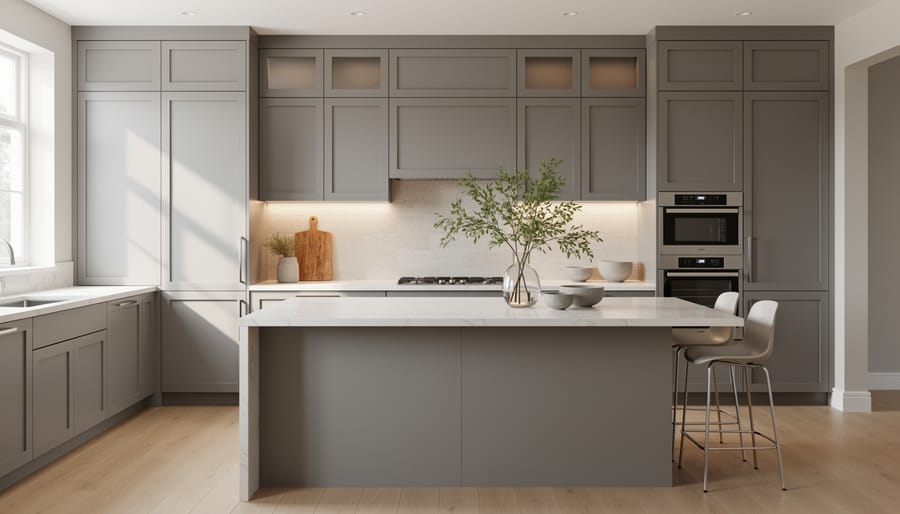
Gray and greige cabinets have become the sophisticated go-to for contemporary kitchens, offering versatility that pure white can’t quite match. Think of gray as the ultimate chameleon color, ranging from soft dove gray that whispers elegance to deep charcoal that makes a bold statement.
The real star here is greige, that beautiful gray-beige hybrid that brings warmth to modern spaces. It’s like having the best of both worlds, giving you contemporary style without feeling cold or sterile.
Understanding undertones is your secret weapon when choosing the perfect shade. Cool grays with blue undertones work beautifully in kitchens with abundant natural light, keeping spaces feeling fresh and airy. Warmer grays with brown or purple undertones shine in north-facing kitchens or rooms with limited natural light, adding much-needed coziness.
Here’s a practical tip: always test your gray samples in your actual kitchen space. View them in morning light, afternoon sun, and under your artificial lighting. You’ll be amazed how drastically the same gray can shift throughout the day. A shade that looks perfectly neutral at noon might suddenly appear purple-toned under evening pendant lights.
For foolproof success, consider pairing lighter grays on upper cabinets with deeper charcoal lowers for dimension that feels intentionally designed rather than accidentally mismatched.
The Rise of Warm Woods and Natural Finishes
After years of cool, sleek finishes dominating kitchen design, there’s a delightful shift happening—natural wood tones are making a stunning comeback in contemporary spaces. Think light oak with its gentle grain patterns, rich walnut that adds depth without heaviness, and those gorgeous blonde woods that seem to glow with warmth.
What makes this trend so exciting is how these natural finishes bridge the gap between modern minimalism and cozy livability. You get clean lines and streamlined design, but without that sterile feeling that sometimes comes with all-white or ultra-modern kitchens. A kitchen featuring light oak cabinets, for instance, creates an inviting atmosphere while maintaining that contemporary edge you’re after.
The beauty of warm wood tones is their incredible versatility. They pair beautifully with white countertops for a Scandinavian-inspired look, or you can go bold with black fixtures for dramatic contrast. Walnut cabinets bring sophistication that works equally well in urban lofts and suburban homes.
These natural finishes also have a practical advantage—they’re forgiving with everyday wear and minor imperfections tend to blend rather than stand out. Plus, wood tones create a timeless foundation that won’t feel dated in five years, making them a smart investment for your kitchen renovation.
Bold and Beautiful: Statement Colors for the Brave
Deep Blues and Navy
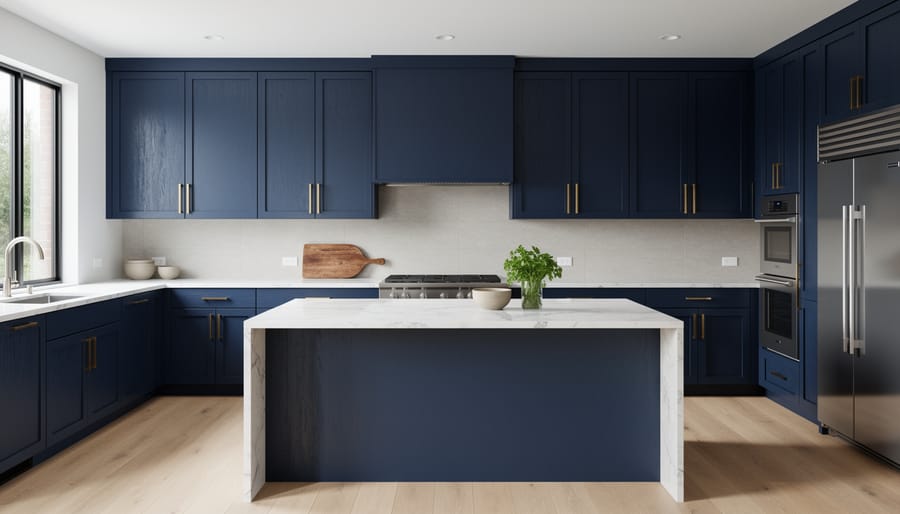
Deep blue and navy cabinets bring an undeniable sense of sophistication to contemporary kitchens, creating spaces that feel both dramatic and refined. These rich hues work beautifully as statement pieces, especially when you balance them thoughtfully with lighter elements throughout the room.
The key to making navy cabinets shine is contrast. Pair them with crisp white or light gray countertops to prevent the space from feeling too heavy. Consider installing white subway tiles or a light-toned backsplash that reflects natural light and keeps the room feeling open and airy. If you’re going bold with navy on your base cabinets, try painting upper cabinets in a softer cream or leaving them as open shelving to break up the depth.
Metallic accents are your secret weapon here. Brass or gold hardware adds warmth and elegance, while brushed nickel or chrome creates a sleeker, more modern vibe. Don’t forget about lighting—pendant lights with metallic finishes can tie the whole look together beautifully, making your deep blue cabinetry the star of the show.
Moody Greens and Sage
If you’re craving a kitchen that feels grounded and connected to nature, moody greens and sage tones are calling your name. Forest green and hunter green cabinets bring incredible depth and sophistication to contemporary kitchens, creating that cozy yet polished atmosphere that makes you want to linger over morning coffee. These darker greens work beautifully with natural wood accents, brass hardware, and light stone countertops.
For those wanting something softer, sage green offers all the organic elegance without the intensity. This muted, gray-tinged green feels fresh and calming—perfect for creating that spa-like kitchen vibe everyone’s after.
These green tones tap perfectly into the biophilic design movement, which focuses on bringing natural elements indoors to boost our wellbeing. Pair your green cabinets with plenty of plants, natural light, and organic materials like wood cutting boards and woven baskets. The result? A kitchen that doesn’t just look contemporary—it feels alive and welcoming, like your own personal retreat from the everyday hustle.
Dramatic Blacks and Charcoals
Black and charcoal cabinets are having a major moment, and for good reason. They bring instant sophistication and create the kind of visual impact that makes people stop and say “wow” when they walk into your kitchen. These darker tones work beautifully in contemporary designs, offering a sleek backdrop that makes stainless steel appliances pop and allows colorful accessories to truly shine.
Worried about making your space feel like a cave? You’re not alone, but there are simple strategies to keep things bright and inviting. First, balance is everything. Pair black cabinets with light-colored countertops in white quartz or marble to create stunning contrast. Consider using black only on lower cabinets while keeping uppers white or glass-fronted to maintain an open feel.
Lighting becomes your best friend with darker cabinets. Install under-cabinet LED strips to illuminate countertops and add recessed ceiling lights for overall brightness. Natural light is gold here, so keep window treatments minimal. A glossy finish on black cabinets reflects more light than matte, which can help the space feel less heavy. Don’t forget that charcoal offers a softer alternative if pure black feels too intense for your comfort level.
Two-Tone Magic: Mixing Colors Like a Pro
Ready to take your kitchen from ordinary to extraordinary? Two-tone cabinets are having a major moment, and for good reason. This design approach adds visual interest and depth while letting you play with color in a way that feels both bold and balanced.
The beauty of two-tone cabinetry lies in creating contrast without chaos. The golden rule? Choose colors that share an undertone or temperature. For example, pair warm gray uppers with rich walnut-stained lowers, or crisp white upper cabinets with deep navy bases. This creates harmony while still making a statement.
When deciding where to split your colors, think about natural division points. The most popular strategy places lighter shades on upper cabinets to keep the space feeling open and airy, while grounding the kitchen with darker tones below. This works especially well in kitchens with lower ceilings or limited natural light. Alternatively, you can reverse this formula for a dramatic, gallery-like effect that draws the eye upward.
Your kitchen island presents another exciting opportunity for color play. Consider it your accent piece. A forest green island against white perimeter cabinets creates an instant focal point, while a warm wood-toned island softens an all-white kitchen beautifully.
Here are some winning combinations to inspire you: white and sage green for a fresh, organic feel; charcoal gray and light oak for modern warmth; navy and brass-accented cream for timeless elegance; or black lower cabinets with crisp white uppers for striking contemporary contrast.
The key to avoiding a disjointed look? Limit yourself to two main cabinet colors and ensure they’re separated by clear architectural lines. Don’t randomly scatter colors throughout the space. Instead, use your kitchen’s natural structure—the countertop line, island edges, or ceiling height—as your guide. And remember, you can always test your color choices with large sample boards before committing to the full transformation.
Matching Your Cabinets to Your Contemporary Style
Minimalist Contemporary
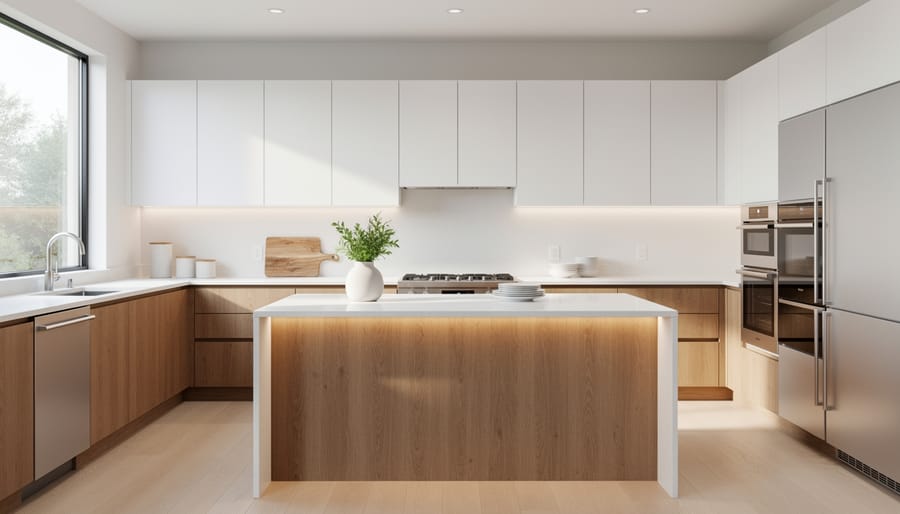
If you’re drawn to clean lines and clutter-free spaces, your cabinet color palette should echo that same uncluttered philosophy. Think crisp whites, soft light grays, and seamless natural wood tones that create visual breathing room. These shades work beautifully in luxury kitchen design because they provide a sophisticated backdrop without competing for attention.
Pure white cabinets remain a minimalist favorite, especially when paired with handleless designs and smooth finishes. Light gray offers slightly more warmth while maintaining that airy feel you’re after. Natural wood tones in blonde oak or pale ash bring organic texture without visual weight. The key is selecting colors that feel effortless and timeless, creating a space where simplicity becomes the ultimate sophistication.
Industrial Contemporary
Industrial contemporary kitchens celebrate the beauty of raw, unfinished elements, and your cabinet colors should honor that aesthetic. Think deep charcoals, weathered grays, and rich black finishes that echo the tones of exposed steel beams and concrete floors. These darker cabinet colors create stunning contrast against stainless steel appliances and metal hardware, making every industrial element pop.
Matte black cabinets are particularly striking in this style, offering a sophisticated backdrop for open shelving and visible ducting. If all-black feels too intense, consider deep slate gray or gunmetal tones that still maintain that edgy, warehouse-inspired vibe. For warmth, incorporate raw wood finishes on lower cabinets or kitchen islands—reclaimed wood tones or natural oak with visible grain patterns work beautifully alongside darker upper cabinets.
The key to nailing industrial contemporary is embracing imperfection and texture. Choose cabinet finishes that aren’t too polished or glossy, as the style celebrates authenticity. Pair your darker cabinets with concrete countertops, subway tiles, or exposed brick to complete the look, creating a space that feels both urban-cool and surprisingly inviting.
Scandinavian-Inspired Contemporary
If you’re dreaming of a kitchen that feels fresh, open, and effortlessly elegant, Scandinavian-inspired colors are your answer. This design approach embraces light and simplicity, making even modest kitchens feel spacious and welcoming.
Start with crisp whites as your foundation—they’re the hallmark of Nordic design and reflect natural light beautifully throughout the day. Pair white cabinets with pale wood accents like birch or ash for warmth without heaviness. These natural wood tones add character while maintaining that signature airy feel.
Soft pastels offer another lovely option for adding personality. Think gentle sage greens, powder blues, or blush pinks on lower cabinets while keeping uppers white. This creates visual interest without overwhelming your space.
The beauty of this palette is its versatility—it works equally well in small city apartments and sprawling suburban homes. Layer in simple hardware in brushed nickel or matte black, then complete the look with natural textiles and greenery. You’ll create a peaceful retreat that feels both contemporary and timelessly comfortable, perfect for busy mornings and relaxed family gatherings alike.
Practical Considerations Before You Commit
Before you fall head over heels for that gorgeous sage green or moody charcoal, let’s talk about the practical stuff that’ll make or break your color choice. Trust me, these considerations will save you from future regrets during your kitchen remodeling process.
First up is lighting, and it’s honestly the biggest game-changer. That navy blue that looked stunning in the showroom might turn nearly black in your north-facing kitchen with limited natural light. Always view color samples in your actual kitchen at different times of day, under both natural sunlight and your artificial lighting. The same color can look completely different at 8 AM versus 8 PM.
Your kitchen’s size and layout matter too. Darker cabinet colors can make a small kitchen feel cozy or cramped, depending on how you balance them. If you’re working with limited square footage, consider using darker colors on lower cabinets only, keeping uppers light and airy to maintain visual breathing room.
Let’s be real about maintenance. Light cabinets show every fingerprint and smudge, while dark ones reveal dust and water spots like nobody’s business. Medium-toned colors often hide daily wear best. Think about your household. Got kids or messy cooks? Choose accordingly.
Don’t forget about your existing elements. Your countertops, backsplash, and appliances aren’t going anywhere soon, so your cabinet color needs to play nicely with what’s staying. Take photos of these fixed elements when shopping for cabinet colors.
Finally, consider your commitment level. Bold colors make powerful statements but might feel dated faster. If you’re someone who craves change every few years, neutrals offer more flexibility for simple accessory updates.
Testing Your Color Before the Big Reveal
Before you commit to painting every cabinet in your kitchen, let’s talk about testing—because nobody wants a surprise they can’t live with! The good news is that trying before you buy is easier than you might think.
Start by ordering sample paint pots or cabinet door samples in your top color choices. Many cabinet manufacturers and paint companies offer small swatches or even full door samples you can bring home. This is money incredibly well spent. Paint these samples on large poster boards (at least 2 feet by 2 feet) rather than tiny paint chips—you need to see how the color fills space, not just a corner.
Here’s your testing game plan: tape those sample boards to your existing cabinets and live with them for at least three days. Observe how the colors look during bright morning light, the warm glow of afternoon sun, and under your kitchen’s artificial lighting at night. You’ll be amazed how dramatically colors shift throughout the day.
Take advantage of free digital tools too. Many paint brands offer visualization apps where you can upload a photo of your kitchen and virtually “try on” different cabinet colors. While not perfect, these tools give you a helpful preview.
If you’re still uncertain, consider scheduling a consultation with a color specialist or kitchen designer. Their trained eye can spot potential issues you might miss and suggest combinations you hadn’t considered. Sometimes that professional perspective is the confidence booster you need to make your final decision and move forward with your contemporary kitchen transformation.
Choosing the right cabinet color for your contemporary kitchen ultimately comes down to a beautiful balance between what’s trending and what truly speaks to you. While it’s exciting to explore the latest color movements and design innovations, your kitchen should feel like an authentic extension of your personal style and daily life. There’s no single “perfect” color—only the perfect color for your space, your habits, and your vision.
As you embark on your cabinet color journey, remember that trends provide inspiration, not rules. A color you genuinely love will never go out of style in your own home. Consider how your chosen palette makes you feel when you walk into the room each morning. Does it energize you? Calm you? Make you smile? These emotional connections matter just as much as design principles.
Your kitchen cabinets are one of the most significant modern kitchen upgrades you’ll make, so take your time with this decision. Trust your instincts, test samples in your actual lighting, and don’t be afraid to think creatively. Whether you choose serene neutrals, dramatic darks, or adventurous hues, you’re creating a space that tells your unique story while embracing the clean lines and thoughtful aesthetics of contemporary design.