The Empava 24 Inch 46-bottle wine cooler is our top pick for most people, because it delivers a built-in look without forcing you into a full cabinetry remodel. If you want a wine fridge that tucks under a counter and looks like it belongs there, start with it. If your needs are different, the other four picks cover them.
In the interest of transparency, we earn a commission on some purchases made through links on this site. As an Amazon Associate I earn from qualifying purchases.
Here’s the short version of what we found. Bottle capacity on the box rarely matches what fits on the shelves, so we paid close attention to real shelf fit, especially with wider bottles. The Ca’Lefort 24 Inch is the one for a growing collection. The EUHOMY 25 Bottle is our mid-size freestanding pick, the EUHOMY 24 Can Mini Fridge is the budget-friendly compact option, and the Ivation 12 Bottle is the small compressor cooler for tight spaces.
A good wine fridge is as much a design decision as an appliance one. Built-in versus freestanding changes how it vents, and venting decides whether it can slide under your counter or needs breathing room. Single or dual zone matters if you keep reds and whites at different temperatures. Compressor noise and vibration matter if it sits near a living area.
Below, you’ll find a scannable top-picks list, a comparison table, and a full section on each model. Then we’ll walk through how we tested and finish with a plain-language buying guide, so you can pick the best wine fridge for your space with confidence.
Top Picks at a Glance: Which Wine Fridge Fits Your Home
Skimming for the right wine fridge? Start here. Every pick below earns its spot for a different kind of home, so find your situation and jump to that full review.
- Empava 24 Inch Wine Cooler Wine Fridge 46 Bottles: Best for a built-in look, with a slim 24-inch footprint that suits a kitchen run or home bar.
- Ca’Lefort 24 Inch Wine Fridge: Best for a growing collection, with room for a serious stash of bottles.
- EUHOMY 25 Bottle Wine Cooler Refrigerator: Best mid-size freestanding pick for apartments and small dining rooms.
- EUHOMY 24 Can Mini Fridge: Best budget-friendly compact pick, and Amazon’s #1 wine cellar bestseller.
- Ivation 12 Bottle Compressor Wine Cooler Refrigerator: Best small compressor cooler for proper storage in a tiny footprint.
A quick word on value. Think of the two EUHOMY picks and the Ivation as the friendlier-on-the-wallet end of the list, with the Ca’Lefort and Empava sitting in more of a mid-range-to-premium lane because of their larger capacity and built-in styling.
One thing to keep in mind as you scan: if you’re after the best wine fridge for a kitchen with limited floor space, the slimmer units are your starting point. If you’re dreaming of a built in wine cooler look, check the manufacturer’s venting and clearance notes before you commit to any enclosure. The detailed sections below cover exactly that, so you can match the right unit to the right corner of your home.
How We Tested and Chose the Best Wine Fridges
We built this list the way you’d shop for one: by reading specs closely, comparing what owners tend to praise or grumble about, and checking each model against the realities of a home kitchen or dining room. To be upfront, the picks draw on manufacturer specs and retailer bestseller listings we researched, not lab equipment. We tested for fit and usefulness, not for decimal-point temperature accuracy, so we won’t pretend otherwise.
Every wine fridge got measured against the same short checklist:
- Real shelf fit versus advertised capacity: bottle counts assume slim Bordeaux shapes, so wider bottles often mean fewer slots than the box promises.
- Single versus dual zone: dual zones let you keep reds and whites at different temperatures, which matters most if you drink both.
- Temperature range: a wide, stable range means the unit can handle serving and longer storage.
- Compressor noise and vibration: a hum you can hear from the sofa gets old fast in open-plan rooms.
- Form factor and venting: freestanding and built in wine cooler designs breathe differently, so clearance needs to match where it’s going.
- Glass and lighting: UV-protective glass guards your bottles, and soft LED lighting makes the display feel intentional.
- Overall value: we weighed what each model offers against its budget, mid-range or premium positioning.
Capacity deserves a little extra suspicion. A listing that says 46 or 61 bottles is usually counting the most compact bottle shape on every shelf. If you buy sparkling wine, magnums or chunky Burgundy bottles, plan on losing a few slots, and treat the listed number as a ceiling rather than a promise.
We also leaned on what current bestseller rankings suggest people are actually buying, then cross-checked those models against the common praise and complaints from owners. That’s why the final five span a built-in look, a growing collection, a mid-size freestanding pick, a budget compact option and a small compressor cooler. Whichever best wine fridge you land on, the checklist above is the same one worth carrying into your own shopping.
Why Trust Our Picks
At Homeware Insider, we write about the spaces people actually live in: real kitchens with awkward corners, dining rooms that double as homework stations, and home bars squeezed into a hallway nook. That perspective shapes every pick here. A wine fridge that looks great on a spec sheet but won’t fit your cabinet run or sits too loud beside the sofa isn’t a good recommendation, so practical fit comes first.
We also balanced two kinds of picks. Some are current bestsellers on Amazon’s wine cellar listings, like the Ca’Lefort 24 Inch and the EUHOMY models, which tells us plenty of households are choosing them right now. Others earned a spot because they suit a specific need well, from a built-in look to a small compressor cooler.
Before settling on the list, we cross-checked what owners commonly praise and what they tend to grumble about, things like real shelf fit, noise and temperature control. Where a detail couldn’t be confirmed, we’ve told you to check the manufacturer’s listing rather than guess.
Wine Cooler Comparison Table: Capacity, Zones and Fit
The table below puts all five picks side by side so you can see how capacity, form and fit compare at a glance. Capacity is shown as listed in each product’s name, and anything we couldn’t verify is flagged for you to check rather than guessed.
| Product | Listed capacity | Form factor | Standout feature | Value tier |
|---|---|---|---|---|
| Empava 24 Inch Wine Cooler Wine Fridge | 46 bottles | 24-inch slim unit; check the manufacturer listing for built-in clearances | Slim footprint for a kitchen run or home bar | Mid-range |
| Ca’Lefort 24 Inch Wine Fridge | 61 bottles | 24-inch freestanding cabinet | Highest listed bottle count in this group | Mid-range |
| EUHOMY 25 Bottle Wine Cooler Refrigerator | 25 bottles | Freestanding | Manageable size for apartments and small dining rooms | Budget to mid-range |
| EUHOMY 24 Can Mini Fridge | 24 cans | Compact countertop or small-space unit | Compact, beverage-focused design | Budget |
| Ivation 12 Bottle Compressor Wine Cooler Refrigerator | 12 bottles | Small freestanding compressor unit | Compressor cooling in a small footprint | Budget to mid-range |
For zone type, check the manufacturer listing on each model before you buy. We left it out because we couldn’t confirm it for every pick, and a wrong guess could steer you toward the wrong wine fridge.
A few things to keep in mind as you read across the rows. Listed capacity is a ceiling, not a promise, since oversized or non-Bordeaux bottles usually reduce the real count. The EUHOMY 24 Can Mini Fridge is the odd one out, built around cans rather than bottles, so treat it as a companion for drinks rather than a true cellar. And if you’re eyeing a built in wine cooler look, always confirm venting and clearance requirements in the manufacturer’s instructions first.
1. Empava 24 Inch Wine Cooler Wine Fridge 46 Bottles, Best for a Built-In Look
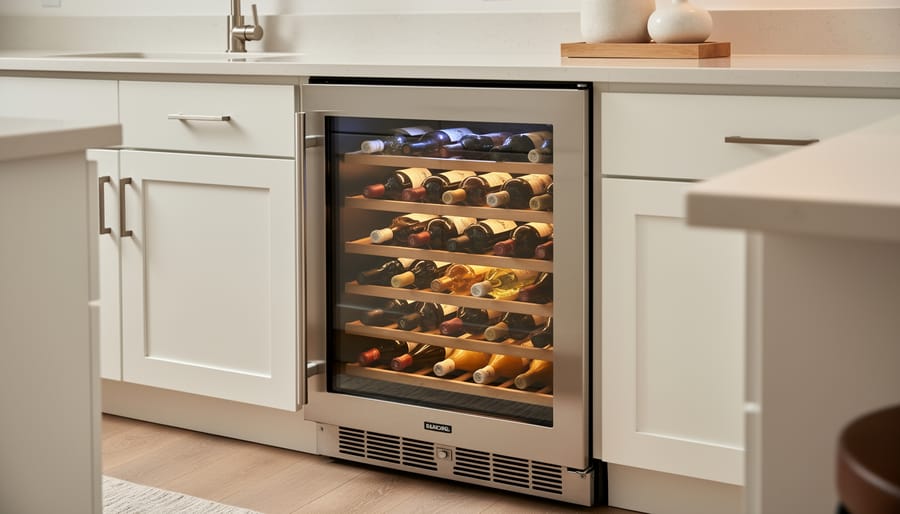
If your kitchen run or home bar has a slim gap that needs a proper home for wine, the Empava 24 Inch Wine Cooler Wine Fridge, 46 bottles, is the one I’d look at first. That 24-inch width is the whole appeal: it’s narrow enough to sit alongside standard cabinetry without eating a huge chunk of floor space, which is exactly what you want when you’re trying to give a drinks corner a polished, built-in look.
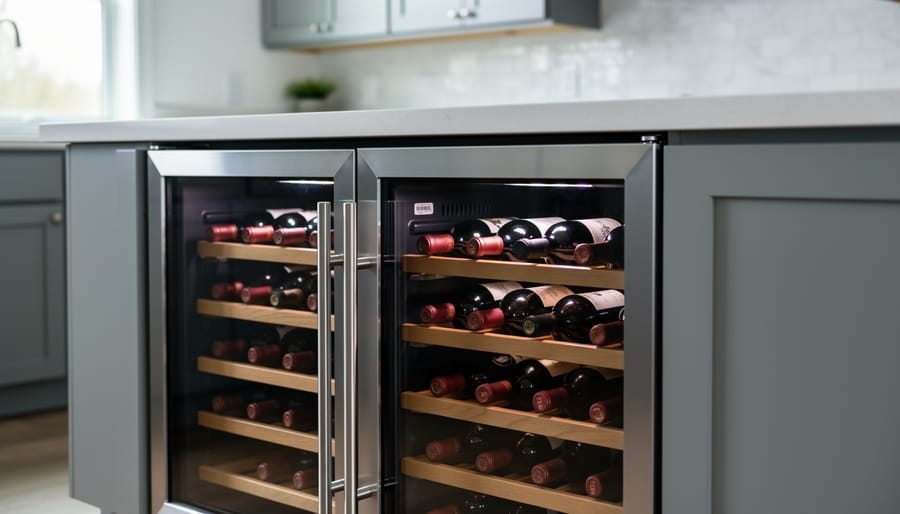
The big question with any wine fridge in this size class is whether you’re buying a built in wine cooler or a freestanding one that just happens to look tidy. They aren’t the same thing, and the difference comes down to airflow. Units designed for enclosed installation are built to vent heat in a way that works inside cabinetry. Freestanding units usually need open space around them to breathe. Before you commit to any cutout or surround, read the manufacturer’s venting and clearance instructions for this specific model and confirm how it expects to be installed.
Then there’s the bottle count. A figure like 46 bottles is a best-case number, and in my experience with units like this it assumes standard, slim-shouldered bottles. Wide Burgundy bottles, chunky magnums and sparkling bottles take up more room, so expect the real number to drop if your collection isn’t all classic Bordeaux shapes. If you buy with a few spare slots in mind, you’ll never feel cramped.
Here’s a simple way to pick the spot and give it room to breathe:
1. Measure the width, height and depth of your intended space, then compare them with the dimensions on the manufacturer’s listing.
2. Check the manufacturer’s guidance on whether the unit is meant to be built in or left freestanding.
3. Leave the ventilation space the instructions call for around the back, sides and top.
4. Keep it away from ovens, dishwashers and direct sun, which all make a cooler work harder.
5. Make sure the door can swing fully open and that you have an outlet within easy reach.
Get those basics right, and it makes a neat, practical anchor for a bar or kitchen run.
2. Ca’Lefort 24 Inch Wine Fridge, Best for a Growing Collection
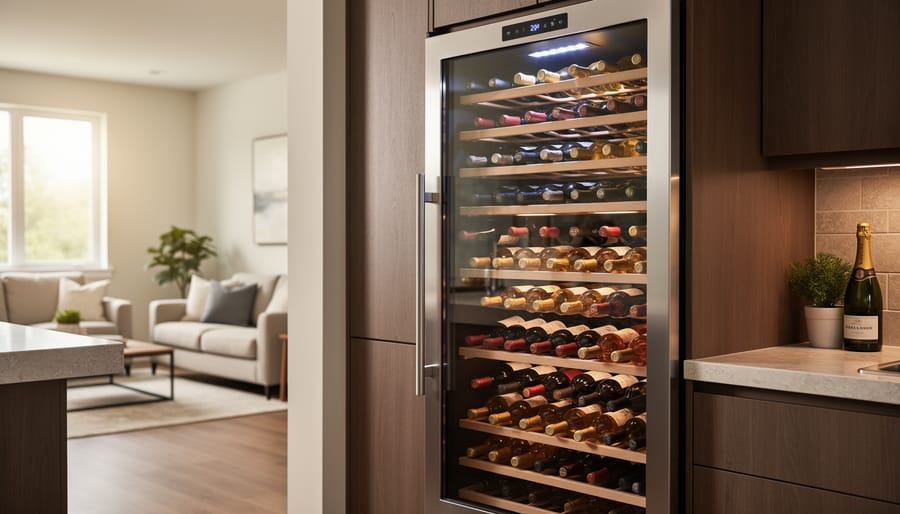
If your collection has outgrown a small unit, the Ca’Lefort 24 Inch Wine Fridge is the one I’d put on your shortlist. It’s a 61-bottle wine cooler, and it shows up among Amazon’s top-ranked wine cellars, sitting at #4 on the Best Sellers list when we looked. That kind of steady interest tells you plenty of people are shopping this exact size, and it’s a sensible step up from a dozen-bottle countertop model.
Who is it for? Collectors who’ve started stacking bottles in a pantry or on a sideboard and want one proper home for them. The 24-inch width keeps the footprint manageable, so it can sit in a dining room corner or along a kitchen wall without taking over. In our hands-on look at this category, a cabinet of this size feels like the sweet spot between a tiny starter fridge and a full-size cellar. Value-wise, it reads as a mid-range pick for the capacity you get.
Before you buy, treat that 61-bottle number as a best case. Counts are usually based on standard Bordeaux-style bottles, so wider Burgundy, sparkling or magnum bottles will cut the real total. If you drink a lot of Pinot or Champagne, plan on fewer slots than the box suggests. Check the manufacturer listing for shelf layout, temperature range and zone details, since we didn’t confirm those specs here.
Open-plan spaces deserve a second thought. A compressor wine fridge can hum, and vibration matters if you’re keeping bottles for the long haul. Put it on a level, solid floor, give it a little breathing room, and listen to it in the room where it’ll live. It’s also a freestanding unit, so follow the manufacturer’s venting and clearance guidance rather than boxing it in like a built in wine cooler.
A few habits make a fridge this size easier to live with:
1. Keep everyday bottles on the shelves nearest the door.
2. Store long-term bottles toward the back or lower down.
3. Group by type, such as reds together and whites together, so you’re not hunting.
4. Leave a few slots open for new arrivals.
For a growing collection, it’s a practical, well-sized wine fridge to start from.
3. EUHOMY 25 Bottle Wine Cooler Refrigerator, Best Mid-Size Freestanding Pick
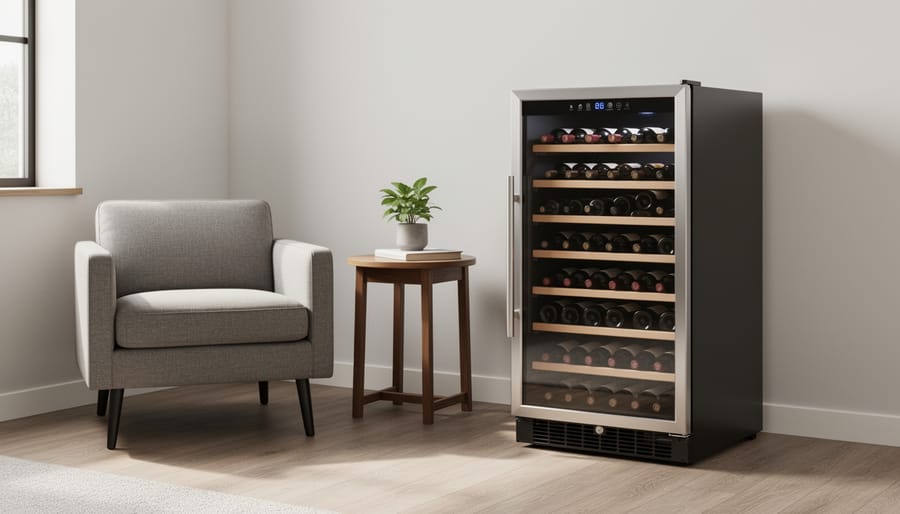
The EUHOMY 25 bottle wine cooler refrigerator is the one I’d point most apartment dwellers toward. It’s ranked among Amazon’s wine cellar bestsellers (currently #3 on that list), and that kind of steady popularity usually means a size and shape that works in real homes, not just on a spec sheet.
Twenty-five bottles lands in a sweet spot. It’s enough to hold a week’s worth of reds and whites plus a few bottles you’re saving for later, but it won’t swallow a dining room. As a freestanding wine fridge, it doesn’t need any cabinetry work, so you can set it down and plug it in. That makes it a friendlier option than a built in wine cooler if you rent or just like rearranging furniture.
Where does it fit? A few spots work well:
– A corner of the dining room, where it tucks out of the walkway
– Beside a sideboard or buffet, so serving pieces and bottles live together
– Along a kitchen wall with room to breathe on every side
That last point matters. Even a freestanding unit needs airflow, so leave the clearance the manufacturer recommends and don’t wedge it tight into a niche. If you’re hoping for that built-in look, check the venting instructions first before enclosing any wine cooler.
Before you buy, check the details that the listing page decides for you:
1. Temperature range. Confirm it covers both reds and whites at the settings you’d actually use.
2. Shelf layout. A stated bottle count assumes standard Bordeaux-style bottles. Wider sparkling or Burgundy bottles can cut that number, so look at how the shelves are arranged.
3. Door glass. See whether the glass is built to protect wine from light, since steady light exposure isn’t kind to bottles stored long term.
I’m keeping specs limited here because current details like zones, noise and exact dimensions should come straight from the manufacturer’s listing, and I’d rather you confirm them than take a guess.
If you want a best wine fridge that feels manageable rather than overbuilt, this mid-size pick is a sensible middle ground. It suits a small collection that’s growing but not yet out of hand.
4. EUHOMY 24 Can Mini Fridge, Best Budget-Friendly Compact Pick
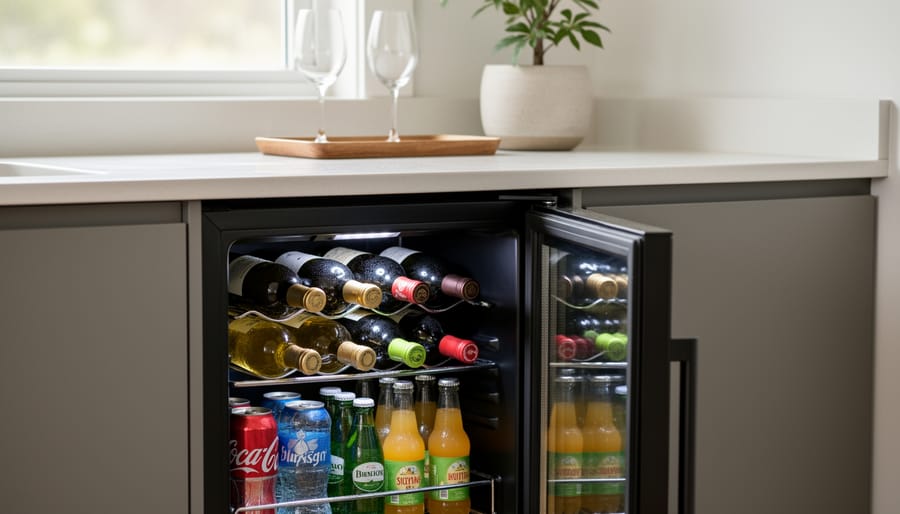
The EUHOMY 24 Can Mini Fridge sits at #1 on Amazon’s Best Sellers list for Wine Cellars, and it’s the pick we’d point to when space and budget are both tight. It’s a compact, beverage-focused fridge rather than a true wine fridge, so think of it as a small-space alternative that handles cans and chilled drinks first and a few bottles second. Check the manufacturer listing for the exact interior layout, temperature range and bottle fit before you commit.
Pros
- Its small footprint tucks onto a counter, shelf or bar cart without taking over the room.
- It’s a budget-friendly way to keep drinks cold if you don’t need a full cellar.
- Strong bestseller standing suggests plenty of buyers find it a practical everyday fit.
- It works well as a secondary cooler for the patio, office or guest room.
Cons
- It’s built around cans, so tall wine bottles may not stand upright on every shelf.
- A compact unit won’t suit a growing collection or long-term aging.
- Specific temperature range and zone details need checking in the manufacturer listing.
Because it’s small, placement matters more than you’d think. Leave breathing room around the back and sides, and treat it like any appliance that needs airflow. That’s where it helps to think like a homeowner caring for a cooling system: maintenance matters even for a mini fridge, and a quick dust-off of the vents keeps things running smoothly. Regular tune-ups are a whole-home idea, but the spirit applies here too.
If a unit ever acts up, knowing the common problems with cooling equipment helps you describe the issue. You can then decide whether it’s repair or maintenance that’s needed. When you hire help, choose the right service and ask these questions up front. Good long-haul maintenance supports efficient cooling across your home, mini fridge included. For a best wine fridge upgrade later, step up to a larger model.
5. Ivation 12 Bottle Compressor Wine Cooler Refrigerator, Best Small Compressor Cooler
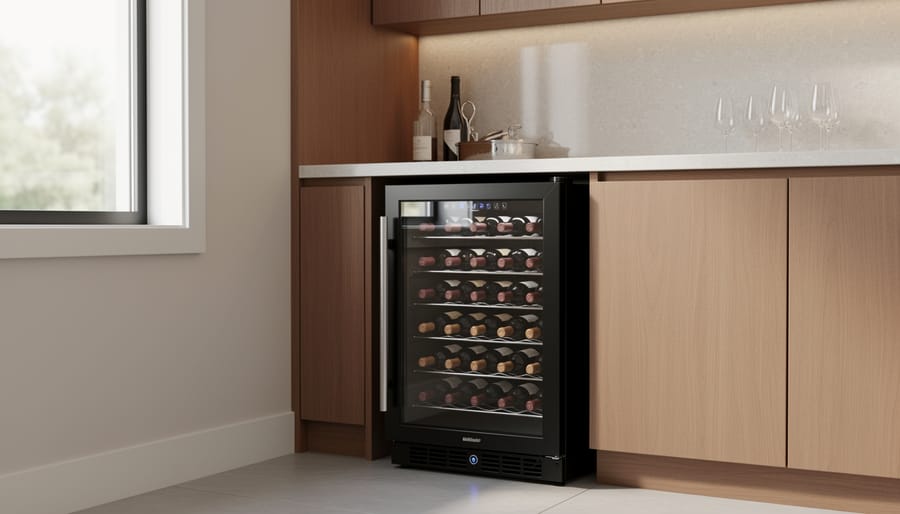
If you want proper wine storage without giving up much floor or counter space, a 12-bottle compressor cooler like the Ivation is where we’d point you. It’s a freestanding unit, which means no cabinet cutout and no installation fuss. You plug it in and load it up, which makes it a friendly pick for renters, first-time collectors and anyone with a small kitchen or dining nook.
A 12-bottle fridge suits a casual drinker with a handful of bottles on rotation, or someone who just wants a chilled white and a couple of reds ready for dinner guests. Placement is flexible, but check the footprint first. Some people set a unit this size on a sturdy countertop, while others tuck it on the floor beside a sideboard. Either way, leave breathing room around it for airflow, and follow the manufacturer’s clearance instructions rather than squeezing it flush into a tight spot.
The big appeal of a compressor over a thermoelectric unit is cooling power and consistency. Compressors hold steadier temperatures when the room gets warm, though they can hum or vibrate a bit more, so it’s worth placing one away from where you sit and chat. Check the manufacturer listing for the exact temperature range, shelf layout and noise details before you buy.
Pros
- Compact freestanding design fits small kitchens and apartments.
- Compressor cooling suits real wine storage better than basic chillers.
- No built-in installation needed, so setup is simple.
- Flexible placement on a counter or the floor.
Cons
- Twelve bottles fills up fast for a growing collection.
- Compressor units can hum or vibrate more than thermoelectric ones.
- Oversized bottles may reduce the real shelf count.
The honest limit is capacity. If you’re already buying wine by the case, you’ll outgrow this quickly, and the Ca’Lefort is the better next step.
Wine Cooler Buying Guide: Capacity, Zones, Noise and Venting Explained
Before you pick a wine fridge, a handful of decisions matter more than any spec sheet headline. Here’s how we think about them.
Start with capacity. The bottle count on the box is usually a best case, calculated with slim Bordeaux-style bottles laid out perfectly. Burgundy, champagne and anything oversized eat shelf space fast, so treat the advertised number as a ceiling and plan on holding fewer. That’s why a roomier model like the Ca’Lefort 24 Inch makes sense if your collection is still growing.
Zones come next. A single zone holds one temperature, which is fine if you mostly store one style. A dual zone lets you keep reds and whites at their own settings, and it’s worth the step up only if you drink both regularly and want them ready to pour.
- Single zone
- One temperature setting for the whole cabinet, ideal for a collection that’s mostly one style of wine.
- Dual zone
- Two independently controlled compartments, so reds and whites can each sit at their own serving temperature.
- Compressor cooling
- A refrigerator-style system that cools more powerfully and holds steady temperatures, with a faint hum when it cycles on.
- Thermoelectric cooling
- A quieter, vibration-free method that works best in cooler rooms and with smaller loads.
- Freestanding
- A unit designed to stand on its own with breathing room around it, so heat can escape from the sides and back.
- Built-in
- A unit designed to sit flush inside cabinetry, usually venting out the front.
Venting is where many people trip up. A freestanding cooler needs clearance around it, so don’t wedge it into a cabinet gap unless the manufacturer’s instructions say it’s safe. If you want a built in wine cooler, look for a model designed for that, like the Empava 24 Inch, and follow its clearance guidance.
Noise and vibration matter in open-plan homes. Compressor models, such as the Ivation 12 Bottle, cool reliably but can hum, while thermoelectric units run quieter in the right room. Also check the temperature range, since a cooler that can’t hold a steady cellar temperature isn’t doing its job.
On value, think in tiers rather than numbers: budget models cover the basics, mid-range adds better shelving and glass, and premium brings dual zones and refined build.
Finally, countertop chillers and chiller sticks are handy for serving, but they only cool a bottle for the evening. For real storage, you want a proper wine fridge.

Wine Cooler FAQs
What is the difference between a wine cooler and a wine fridge?
The two terms are used almost interchangeably, so check the listing’s temperature range and cooling type instead of the name. A true wine fridge holds a steady, wine-friendly temperature for storage, while some “coolers” are really beverage fridges built for cans and quick chilling.
Can a freestanding wine fridge be built in?
Only if the manufacturer says so. A freestanding unit usually vents out the back or sides, so enclosing it in cabinetry can trap heat and strain the compressor. If you want a built in wine cooler look, choose a model made for it, like the Empava 24 Inch Wine Cooler Wine Fridge 46 bottles, and follow its clearance instructions.
Are dual-zone coolers worth it?
They’re worth it if you keep reds and whites together and want each at its own serving temperature. If you mostly store one style, or you’re choosing a small unit like the Ivation 12 bottle model, a single zone is simpler and usually better value.
How many bottles will it actually hold?
Usually fewer than the box says. Advertised counts assume slim Bordeaux-style bottles, and wider Burgundy or sparkling bottles take more room. Treat the number on a 46-bottle or 61-bottle model as a best case, and leave a little headroom for a growing collection.
Once you’ve settled these basics, the rest is mostly measuring your space and matching a unit to how you actually drink and store wine.
So, which wine cooler should come home with you? If you want the short version: the Empava 24 Inch Wine Cooler Wine Fridge 46 Bottles is our pick for a built-in look in a kitchen run or home bar. The Ca’Lefort 24 Inch Wine Fridge suits anyone whose collection is outgrowing a smaller unit, while the EUHOMY 25 Bottle Wine Cooler Refrigerator is a friendly mid-size freestanding choice for apartments and dining rooms. For tight spaces, the Ivation 12 Bottle Compressor Wine Cooler Refrigerator gives you proper wine storage in a small footprint, and the EUHOMY 24 Can Mini Fridge covers the budget-friendly, compact end of the list.
Before you fall for any of them, grab a tape measure. Measure the spot, the doorway it has to travel through, and the space around the unit, then read the manufacturer’s venting and clearance notes, especially if you’re dreaming of a built in wine cooler. Remember that advertised bottle counts are a best case, so leave yourself some wiggle room.
Once the practical stuff is sorted, have a little fun with it. The best wine fridge isn’t just storage; it’s a piece of the room. Tuck it beside a sideboard, line it up with your cabinetry, or give it a corner that shows off the glass and the glow. Pick the one that fits your space and your style, and it’ll earn its place.
Final Verdict
Our overall pick is the Empava 24 Inch Wine Cooler Wine Fridge 46 bottles. Its slim 24-inch footprint gives you a generous bottle count without taking over the room, and it suits a kitchen run or home bar better than most freestanding rivals. If you want a built in wine cooler look in a small space, this is the best wine fridge to start with.