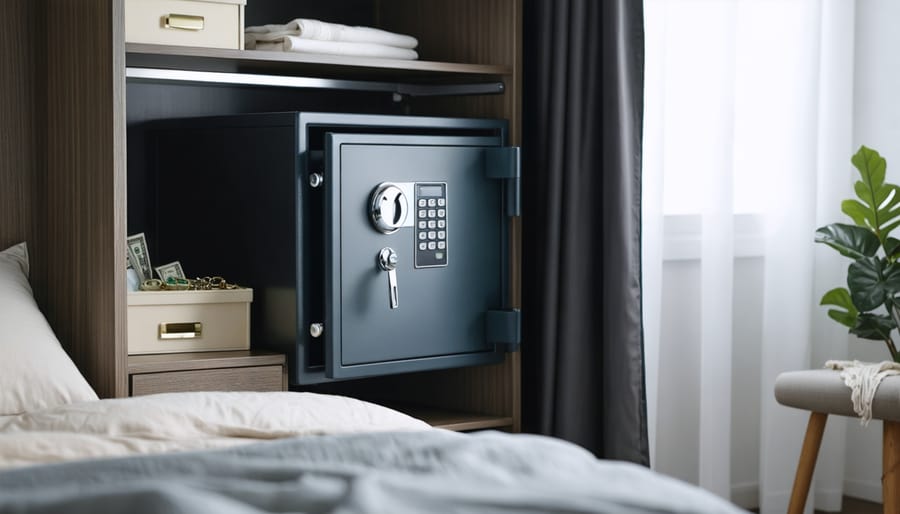
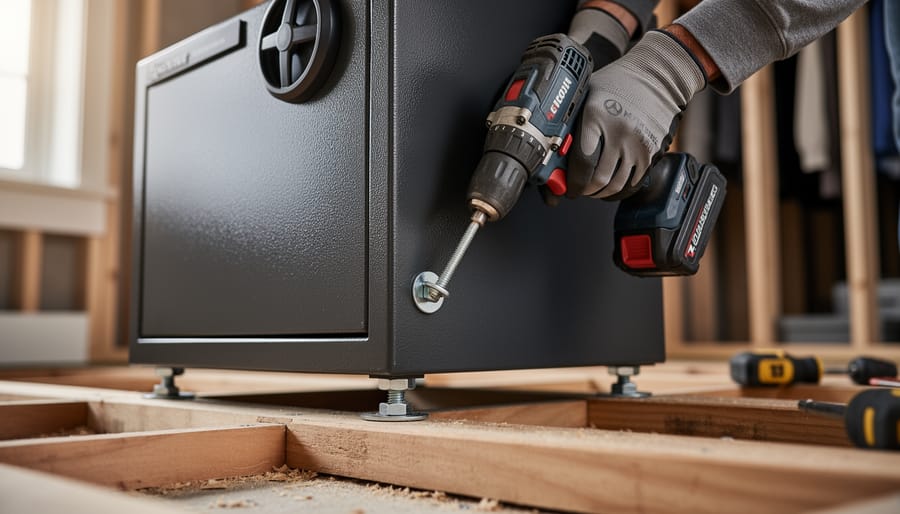
Anchor your safe to floor joists or wall studs using heavy-duty lag bolts—never place it on carpet or trust the manufacturer’s included hardware alone. The difference between a properly secured safe and a decorative metal box comes down to installation: thieves need just minutes to carry away an unanchored safe, but a correctly bolted unit becomes nearly impossible to remove without power tools and significant time.
Most homeowners underestimate how vulnerable their valuables are after choosing the right safe. You’ve invested in protection, but without proper installation, you’re leaving the door wide open—sometimes literally. A 200-pound safe might seem immovable until you watch security footage of two people walking out with it in under three minutes.
The good news? Installing a home safe is absolutely manageable as a weekend DIY project. You don’t need specialized skills or expensive equipment—just the right approach and about two hours of focused work. Whether you’re securing family heirlooms, important documents, or everyday valuables, proper installation transforms your safe from a portable target into a genuine security feature.
This guide walks you through every step of the installation process, from selecting the ideal location to drilling those final anchor bolts. We’ll cover the tools you actually need (spoiler: it’s less than you think), common mistakes that compromise security, and those crucial moments when calling a professional makes more sense than going it alone. By the end, you’ll have the confidence to tackle this essential home security upgrade with the same satisfaction as any successful home improvement project.
The Real Risk: Why Unanchored Safes Are Easy Targets
Here’s a sobering reality check: that 500-pound safe sitting in your closet? A determined thief can walk out with it in under two minutes. I learned this from my neighbor Tom, who invested in what he thought was an impenetrable fortress for his family heirlooms. He figured the sheer weight would deter anyone from even attempting to move it. Unfortunately, two burglars proved him wrong using nothing more than a furniture dolly and some determination. They wheeled his unanchored safe right out the back door while he was at work.
This scenario plays out more often than you’d think, and it highlights the biggest misconception about home safes: weight alone isn’t security. Even safes weighing several hundred pounds become surprisingly manageable when thieves use simple leverage techniques, rolling dollies, or just work in pairs. Once they’ve got your safe off your property, they have all the time in the world to crack it open using power tools in a secure location.
The vulnerability isn’t just theoretical. Burglars specifically target unanchored safes because they represent a jackpot: all your valuables conveniently packaged in one portable container. Think about it from their perspective. Why spend time rummaging through drawers and closets when they can grab everything at once?
What makes this particularly frustrating is how preventable it is. Properly anchoring your safe to the floor or wall transforms it from a portable treasure chest into an immovable obstacle that would require significant time, noise, and effort to remove. That’s exactly what burglars want to avoid. They’re looking for quick, quiet opportunities, and an anchored safe immediately puts your home in the “too much trouble” category.
The good news? You don’t need professional installation skills to anchor most safes properly. With the right approach and basic tools, you can eliminate this vulnerability in an afternoon.

Choosing the Perfect Spot: Location Matters More Than You Think
Best Locations for Different Safe Types
Choosing the right spot for your safe is just as important as picking the safe itself! The perfect location depends on your safe type, and each style has sweet spots that maximize both security and convenience.
Floor safes are the champions of concealment. These clever units install directly into your concrete foundation, making them nearly impossible for thieves to remove. Your best bet? Tuck one into a closet floor beneath storage boxes or inside a pantry under removable shelving. The concrete slab in your garage or basement works beautifully too. Just remember, you’ll want at least 6 inches of concrete depth for proper installation, and keep it away from potential flooding areas.
Wall safes offer that classic hidden-treasure appeal. Think beyond the obvious bedroom location—consider installing one behind a removable picture frame in your home office or inside a closet behind hanging clothes. The space between wall studs (typically 14.5 inches) determines your safe’s width, so measure carefully. Avoid exterior walls where insulation might complicate installation, and skip areas near plumbing or electrical lines.
Freestanding safes provide flexibility but need strategic placement. A corner of your primary bedroom closet works wonderfully, offering quick access while staying out of sight. Your home office or a dedicated storage room are solid alternatives. The key? Choose a spot where you can anchor the safe to both the floor and wall for maximum security. When shopping for quality home safes, consider your available space and installation preferences to find your perfect match.
Places to Absolutely Avoid
Even the sturdiest safe won’t protect your valuables if it’s installed in the wrong spot. Let’s talk about places that might seem convenient but actually make a thief’s job easier.
Your garage tops the list of problematic locations. It offers privacy for thieves to work undisturbed, and the concrete floors, while great for anchoring, won’t help if someone simply loads your entire safe into their vehicle. Similarly, skip that easily accessible coat closet near your front door. You want thieves spending minimal time in your home, not having your safe conveniently located along their exit route.
Windows create another vulnerability you’ll want to avoid. Any safe visible from outside basically advertises what you’re protecting. This includes basement windows that passersby can peek through and ground-level bedroom windows facing the street.
Unfinished basements with exterior access doors combine the worst features: privacy for intruders and easy loading access. Instead, choose interior rooms on upper floors where noise and effort work in your favor.
Master bedroom closets get mixed reviews. While they’re convenient for you, experienced thieves check there first. If you do choose this location, make absolutely certain the safe is properly anchored and consider additional concealment strategies to keep it out of immediate view.
Essential Tools and Materials You’ll Need
Getting your safe properly secured starts with having the right tools on hand. Don’t worry—you won’t need a professional contractor’s arsenal, just some essential equipment that many DIYers already have in their garage.
First up is your drill. You’ll need a hammer drill if you’re anchoring into concrete, whether that’s a basement floor or foundation wall. Regular drills simply won’t cut through concrete effectively. If you’re working with wood flooring or securing to wall studs, a standard power drill will work fine. Look for models with at least 18 volts for adequate power without breaking your budget.
The anchors themselves are crucial. Concrete anchors, specifically wedge anchors or sleeve anchors rated for your safe’s weight, create that unshakeable bond with your floor. These typically range from half-inch to five-eighths inch diameter. For wood installations, lag bolts work best—they’re essentially heavy-duty screws designed to handle serious weight. Always check your safe manufacturer’s recommendations, as they’ll specify the exact size and type needed.
You’ll also need masonry bits that match your anchor diameter. These carbide-tipped bits withstand the punishment of drilling through concrete. A vacuum attachment for your drill helps manage the concrete dust, keeping your workspace cleaner and making it easier to see what you’re doing.
Safety equipment matters too. Safety glasses protect against flying debris, while work gloves give you better grip and prevent blisters during the installation process. A dust mask is essential when drilling concrete—trust me, concrete dust gets everywhere.
Finally, grab a level, pencil for marking, and a wrench or socket set for tightening everything down. Many hardware stores offer tool rental programs if you don’t want to purchase a hammer drill outright, making this project accessible even on a modest budget.

Step-by-Step Safe Anchoring: Making It Bulletproof
Preparing Your Surface (Concrete, Wood, or Both)
Before you pick up that drill, let’s talk about what’s underneath your feet. Your floor type dramatically affects how you’ll anchor your safe, so a quick assessment now saves headaches later.
For concrete floors, you’re in luck – this is the gold standard for safe installation. Tap the surface with a hammer to confirm it’s solid concrete, not just a thin layer over wood. You’ll need a hammer drill with masonry bits, but the concrete provides exceptional holding power that thieves can’t easily defeat.
Wood floors require a different approach. You’ll need to locate the floor joists using a stud finder, as anchoring into the subfloor alone won’t provide adequate security. If you’re working with hardwood you’d hate to damage, consider positioning your safe in a closet or less visible area where bolt holes won’t be an eyesore.
Got both materials? Some homes have concrete slabs in basements but wood floors upstairs. Choose concrete whenever possible for maximum security.
Here’s a pro tip: Before drilling anything, check underneath if you can access the area below. You want to avoid hitting electrical wiring, plumbing, or radiant heating systems. A non-contact voltage detector is an inexpensive tool that adds peace of mind and prevents costly mistakes.
Marking and Drilling Your Anchor Points
Getting your anchor points spot-on makes all the difference between a safe that’s truly secure and one that’s just sitting pretty. Start by positioning your safe exactly where you want it, keeping in mind you’ll need comfortable access to the door while ensuring it’s tucked away from curious eyes.
Once you’ve found the sweet spot, use a pencil to mark through the pre-drilled anchor holes in the safe’s base. If your safe doesn’t have these, consult the manufacturer’s template. Here’s a pro tip: use painter’s tape on your floor first, then mark on the tape. This prevents accidental scratches and makes your marks easier to see on dark surfaces.
Before drilling, double-check your measurements and confirm you’re not about to hit any floor joists, pipes, or electrical lines. A stud finder with deep-scan capability is your best friend here. When you’re ready to drill, start with a smaller pilot hole to ensure accuracy, then graduate to the size recommended for your anchor bolts. Keep your drill perpendicular to the floor and work slowly. For concrete floors, use a masonry bit and expect a bit more resistance. Clean out debris from each hole with a small brush or compressed air before inserting anchors. This ensures they’ll grip properly and hold your safe firmly in place for years to come.
Securing the Anchors and Final Installation
Now comes the moment of truth: making your safe truly immovable. Think of anchor bolts as the invisible superheroes of your security setup. Without them properly installed, even the heaviest safe becomes a shopping cart for determined thieves.
Start by inserting your anchor bolts through the pre-drilled holes in your safe’s base. For concrete floors, wedge anchors or sleeve anchors work wonderfully. If you’re anchoring to wood, lag bolts with washers are your best friends. Thread each bolt through the safe and into your prepared holes, but don’t tighten them just yet.
Here’s where your torque wrench becomes essential. Most safe manufacturers recommend torque specifications between 20-30 foot-pounds for concrete anchors, though always check your manual first. The principles behind properly securing gun safes apply to all safe installations. Tighten bolts in a diagonal pattern, just like changing a tire, ensuring even pressure distribution.
Once everything’s torqued to specification, it’s testing time. Grab a friend and try rocking the safe from different angles. It shouldn’t budge even slightly. Try lifting from one corner. If there’s any movement, re-check your bolt tension and hole depth.
For the ultimate peace of mind test, try to slide something thin like a credit card under any corner. You shouldn’t find gaps. A properly anchored safe becomes part of your home’s structure, and that immovability is exactly what transforms your installation from good to genuinely secure.
Beyond Bolts: Additional Security Measures That Actually Work
Anchoring your safe is crucial, but it’s just the beginning of a truly secure setup. Let’s explore some clever ways to enhance your safe’s protection without turning your home into Fort Knox.
First up: strategic concealment. You don’t need to advertise where you keep your valuables. Consider installing your safe in unexpected locations like a closet floor beneath clothing storage, inside a pantry behind removable shelving, or even built into a basement wall with a hinged picture frame covering. One homeowner I know mounted their wall safe behind a large mirror in their bedroom, creating both functionality and style. The key is maintaining easy access for yourself while keeping it out of sight from casual observers or potential intruders.
Alarm integration takes your security to the next level. Many modern safe access systems can connect directly to your home security network, sending instant alerts if tampering is detected. Even basic door sensors positioned near your safe’s location can provide early warning of unauthorized access attempts.
For DIY enthusiasts, creating a custom enclosure adds both camouflage and structural reinforcement. Build a false cabinet front, install decorative paneling, or incorporate your safe into existing furniture. Just ensure any disguise doesn’t interfere with ventilation for electronic safes or compromise your ability to quickly access contents during emergencies.
Environmental monitoring matters too. Position your safe away from windows where thieves might spot it, avoid damp basements that could damage contents, and consider adding a small dehumidifier inside for extra protection. These simple additions complement your solid installation work, creating multiple layers of security that work together seamlessly.
Common Mistakes That Compromise Your Safe’s Security
Even the sturdiest safe becomes vulnerable when installation mistakes undermine its security. Let’s look at the most common errors homeowners make and how to fix them before a thief takes advantage.
The biggest mistake? Skipping the anchoring step entirely. Surprisingly, many people think a heavy safe can’t be stolen. Unfortunately, thieves bring simple tools like hand trucks and dollies, making even 300-pound safes portable. If your safe isn’t anchored, it’s essentially a steal-and-crack-later opportunity. The solution is straightforward: retrofit anchor bolts through the mounting holes into concrete flooring or wall studs. This transforms your safe from portable to permanent.
Using inadequate anchors ranks second in security compromises. Those plastic wall anchors from your junk drawer won’t cut it here. You need concrete wedge anchors for floor mounting or lag bolts that bite deep into wall studs. Thin drywall anchors pull right out under stress, defeating the entire purpose. Check your current installation by giving the safe a firm shake. If it wobbles or shifts, upgrade to proper hardware rated for your safe’s weight.
Drilling into weak spots creates another vulnerability. Placing anchors near edges of concrete or between studs leaves insufficient material to hold under force. Always position your safe so anchors penetrate at least three inches into solid concrete or center on substantial wall studs.
Over-tightening bolts might seem impossible, but it actually cracks concrete and strips threads, weakening your anchor points. Tighten until snug, then add just a quarter turn more for optimal holding power without damage.
When to Call a Professional (And When You Don’t Need To)
Here’s the honest truth: most homeowners can absolutely handle installing a basic to mid-size safe themselves. If you’re securing a wall safe or a smaller floor safe (under 500 pounds) into standard concrete or wood floors with readily available tools, you’ve got this! The process is straightforward, and following our step-by-step guide will get you there.
However, some situations genuinely call for professional help, and recognizing them isn’t admitting defeat—it’s being smart. Extremely heavy safes over 500 pounds pose serious injury risks and may require specialized moving equipment. Complex flooring situations like radiant heating systems, tensioned cables in post-tension concrete, or multi-layer commercial-grade floors need expert assessment to avoid costly damage. Living in a rental property? You’ll likely need professional installation to satisfy both your landlord and insurance requirements, plus they can ensure proper removal when you move out.
Consider calling the pros if you lack essential tools like a hammer drill or concrete anchoring equipment—renting or buying everything might cost more than installation itself. Also, if you’re installing in awkward locations like staircases, tight corners, or second floors, professionals have the manpower and know-how to navigate these challenges safely.
The bottom line? Assess your specific situation honestly. There’s zero shame in hiring help when it makes sense, and tremendous satisfaction in completing installations within your capability range.
You’ve taken an important step toward protecting what matters most to you. By properly anchoring your home safe, you’re not just securing valuables—you’re creating genuine peace of mind knowing that your important documents, family heirlooms, and cherished items are truly protected from both opportunistic thieves and unexpected emergencies.
Take a moment today to assess your current situation. Is your safe properly bolted down, or is it sitting vulnerable in a closet corner? If you’ve been putting off this project, remember that installation typically takes just an afternoon and requires only basic tools you probably already own. The security benefits far outweigh the modest time investment.
Whether you tackled this as a weekend DIY project or partnered with a professional installer, you’ve made a smart home improvement decision that delivers lasting value. A properly anchored safe transforms from a portable box into a true security fixture that works exactly as intended.
Your home is your sanctuary, and protecting it doesn’t always require expensive security systems or complicated renovations. Sometimes the most effective improvements are straightforward projects like this one—practical, achievable, and genuinely impactful. Now you can rest easier knowing your most precious possessions have the protection they deserve.