

Take a deep breath right now and notice the air around you. That slightly stale smell, the lingering cooking odors from last night, or perhaps a faint mustiness you’ve grown accustomed to—these aren’t just minor annoyances. They’re signals that your home isn’t breathing properly.
Every day, your family inhales approximately 3,000 gallons of air indoors, yet most homes trap pollutants, allergens, and excess moisture with no efficient way to cycle them out. Modern homes, built tightly for energy efficiency, have inadvertently created sealed environments where volatile organic compounds from furniture, hidden mold spores, and everyday contaminants accumulate. The result? Poor sleep, increased allergies, and that perpetual feeling of stuffiness that no amount of window-opening seems to fix.
A home air ventilation system changes this equation entirely. Unlike simply cracking a window—which wastes energy and invites outdoor pollutants inside—these systems strategically exchange stale indoor air with fresh outdoor air while maintaining your home’s temperature. Whether you’re battling persistent condensation on windows, concerned about asthma triggers, or simply want your living spaces to feel genuinely fresh, understanding how modern ventilation works empowers you to transform your home’s atmosphere.
This guide walks you through everything from recognizing whether you actually need a system to choosing between different technologies and understanding realistic installation costs. Let’s explore how proper ventilation can revolutionize your home’s comfort and your family’s wellbeing.
What’s Actually Happening Inside Your Home Right Now
Here’s something that might surprise you: that fresh, clean feeling you get when you walk into your home? It might be deceiving. Modern homes are marvels of energy-efficient improvements, with better insulation and tighter seals than ever before. But there’s a hidden trade-off to all that efficiency. Your home has essentially become a sealed container, trapping air inside like a jar with the lid screwed on tight.
Think about what’s floating around in that sealed environment right now. Every time you cook dinner, tiny particles and gases linger long after you’ve finished eating. That new sofa in your living room? It’s quietly releasing volatile organic compounds, or VOCs, into the air. The same goes for your fresh paint job, cleaning products, and even that scented candle you love. These invisible chemicals accumulate because they have nowhere to escape.
Then there’s moisture. Every shower, every load of laundry, even your family’s breathing adds humidity to your indoor air. Without proper air exchange, that moisture settles into corners, behind furniture, and inside walls, creating perfect conditions for mold and mildew to take hold.
Don’t forget about the usual suspects: dust mites thriving in your carpets and bedding, pet dander circulating from room to room, and pollen hitchhiking its way inside on your clothes and shoes. In a well-sealed home, these allergens just keep recirculating through the same stale air, day after day.
The reality is that your home’s air can actually be two to five times more polluted than outdoor air. It’s not about panic, though. It’s about awareness. Understanding what’s happening inside your walls is the first step toward breathing easier and creating a genuinely healthy home environment for you and your family.

How Home Ventilation Systems Work (The Simple Version)
Think of your home as a living, breathing space—because in many ways, it should be. A home ventilation system is simply your house’s way of taking a deep breath: pushing out the old, tired air and welcoming in fresh, clean air from outside.
Here’s the basic idea: Every home naturally traps air inside—along with everything floating in it. Cooking odors, pet dander, excess moisture from showers, even the carbon dioxide you exhale while binge-watching your favorite show. Without somewhere to go, this stale air just sits there, getting stuffier by the hour. Meanwhile, fresh oxygen-rich air stays locked outside where you can’t enjoy it.
A mechanical ventilation system solves this problem by creating an intentional air exchange. The system uses fans to exhale stale indoor air through exhaust vents while simultaneously inhaling fresh outdoor air through intake vents. It’s like opening your windows, but smarter and more controlled—no bugs, no weather concerns, and no random gusts messing up your carefully arranged décor.
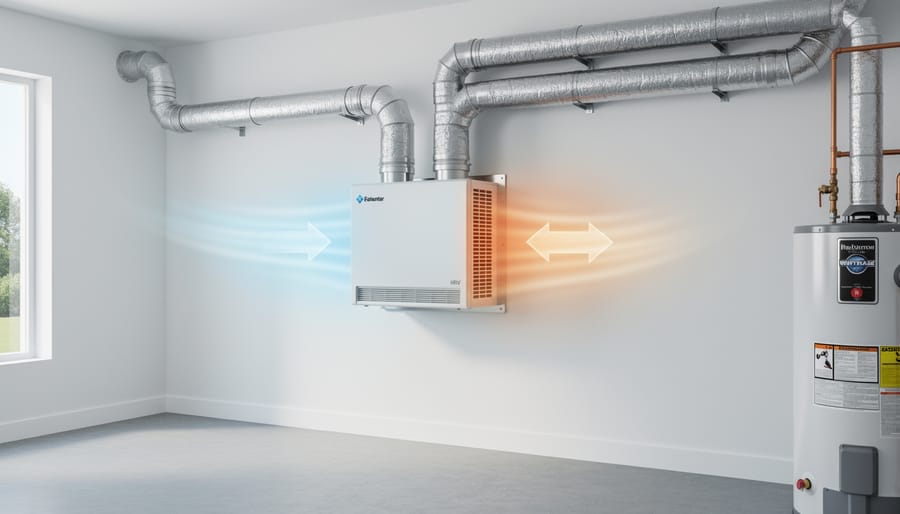
The clever part? Many modern systems include heat recovery features. As warm stale air exits your home in winter, it passes by incoming fresh air in a special exchanger, transferring some of its warmth before leaving. This means you’re not blasting your heating bill by constantly bringing in frigid air. In summer, the process works in reverse, keeping cool air from escaping.
The result is continuous, balanced airflow that maintains comfortable temperatures while ensuring you’re always breathing the good stuff. No complicated physics required—just smart air management working quietly in the background.
The Four Types of Ventilation Systems You Should Know About
Exhaust-Only Systems: The Budget-Friendly Starter
Think of exhaust-only ventilation as your home’s most straightforward breathing solution. It’s the system you probably already have without realizing it! Those hardworking bathroom and kitchen fans? They’re the backbone of exhaust ventilation, pulling stale air, moisture, and cooking odors out of your home while fresh air sneaks in through small gaps around windows, doors, and other openings.
Here’s how it works: When you flip on that bathroom fan after a steamy shower, it creates negative pressure inside your home, essentially sucking out humid air. Fresh outdoor air naturally fills the void through those tiny cracks and gaps in your home’s envelope. Imagine your kitchen exhaust fan working overtime during taco night while your bathroom fan tackles shower steam simultaneously – they’re tag-teaming to keep your indoor air from going stale.
The beauty of exhaust-only systems lies in their simplicity and affordability. Installation typically runs between $200 to $500 if you’re upgrading existing fans, making this the most budget-friendly entry point for intentional ventilation. They shine in smaller homes under 2,000 square feet and mild climates where extreme outdoor temperatures won’t dramatically affect your comfort.
The catch? These systems work best when your home isn’t too airtight, and they don’t filter incoming air or control where it enters. In larger homes or harsh climates, you’ll want something more sophisticated.
Supply-Only Systems: For Humid Climate Challenges
If you live in a humid climate where moisture loves to settle in and make itself at home, a supply-only ventilation system might be your new best friend. Here’s how it works: these systems actively push fresh outdoor air into your home through vents, typically near your furnace or in your main living areas. This creates positive pressure inside, which naturally forces stale, humid air out through cracks, exhaust fans, and other openings.
Think of it like gently inflating a balloon. The constant inflow of fresh air prevents moisture-laden outdoor air from sneaking back in through those little gaps in your walls and foundation. This is especially valuable in hot, sticky regions where humidity can otherwise seep into every corner, bringing mold and mustiness along for the ride.
One standout benefit? Supply systems let you filter incoming air before it enters your home. That means fewer allergens, less dust, and cleaner air for your family to breathe. You’re essentially creating a protective bubble of filtered freshness.
Consider a supply-only system if you battle condensation on windows during summer, notice musty odors in closets, or live where outdoor humidity regularly tops 60 percent. It’s a straightforward solution that works with your home’s natural airflow patterns while giving you control over what comes inside.
Balanced Ventilation: The Goldilocks Option
Think of balanced ventilation as the “just right” solution in your home’s air quality story. These systems work like a perfectly choreographed dance, bringing in fresh outdoor air while simultaneously removing stale indoor air in equal amounts. It’s mechanical ventilation at its finest, maintaining consistent pressure throughout your home.
Here’s why contractors often recommend this middle-ground approach: balanced systems prevent the push-pull drama that can happen with exhaust-only or supply-only setups. You won’t get those annoying backdrafts or pressure imbalances that make doors slam unexpectedly. Instead, you’ll enjoy steady, controlled airflow that keeps every room comfortable.
The real magic happens with energy recovery ventilators (ERVs) or heat recovery ventilators (HRVs), which are types of balanced systems. These clever units transfer heat between incoming and outgoing air streams, meaning you’re not throwing your heating or cooling dollars straight out the window. In winter, outgoing warm air preheats the cold air coming in. Summer works in reverse.
While balanced systems typically cost more upfront than simpler options, many homeowners find the comfort benefits worth every penny. You’ll notice fewer drafts, more consistent temperatures between rooms, and better humidity control. It’s the kind of upgrade that quietly improves your daily life without demanding constant attention.
Heat Recovery Ventilators (HRV) and Energy Recovery Ventilators (ERV): Premium Performance
If you’re serious about indoor air quality and live in a region with harsh winters or sweltering summers, HRVs and ERVs represent the gold standard in home ventilation. These intelligent systems do something remarkable: they recover energy from the air being exhausted from your home and transfer it to the fresh air coming in.
Here’s the difference between them. An HRV recovers heat, making it perfect for cold climates where you’re constantly battling winter heating costs. As stale indoor air exits, the HRV captures its warmth and preheats the incoming fresh air, so your furnace doesn’t work overtime. An ERV goes one step further by also transferring moisture, which is invaluable in humid climates or extremely dry winters where you want to maintain comfortable humidity levels.
The upfront investment is substantial, typically ranging from $1,500 to $3,000 installed, compared to simpler exhaust systems. However, the long-term savings can be impressive. Homeowners often see 20-30% reductions in heating and cooling costs, meaning these systems can pay for themselves within 5-10 years while dramatically improving air quality.
Think of it as an investment in both comfort and efficiency. You’re getting fresh air without throwing your hard-earned energy dollars out the window, quite literally. For homes in extreme climates, this premium performance makes practical financial sense.
Signs Your Home Is Begging for Better Ventilation
Your home has a way of sending distress signals when it’s struggling to breathe properly, and learning to recognize these signs can save you from bigger headaches down the road. Think of poor ventilation like a silent houseguest that overstays its welcome, leaving behind unwanted gifts you’d rather not deal with.
Start your inspection in the bathroom and kitchen windows. If you’re constantly wiping away condensation or noticing water droplets forming on glass surfaces during normal activities like cooking or showering, that’s moisture with nowhere to go. This trapped humidity creates the perfect breeding ground for problems.
Speaking of problems, trust your nose. Walk into your home after being away for a few hours. Does it smell musty, stale, or just off? Fresh air should greet you at the door, not that distinct “closed-up house” odor that makes you immediately crack a window.
Pay attention to how you feel indoors versus outdoors. If your allergies mysteriously worsen when you’re home, or family members experience more frequent headaches and respiratory irritation inside, poor air quality could be the culprit. Your body is remarkably good at detecting when something’s amiss with the air you’re breathing.
Take a closer look at corners, window frames, and bathroom ceilings for those telltale dark spots or discoloration that signal mold growth. Even small patches indicate serious ventilation deficiencies that need addressing.
Finally, notice if rooms feel perpetually stuffy despite running your air conditioning, or if dust seems to accumulate faster than you can clean it. These aren’t just minor annoyances; they’re your home’s way of saying it needs help moving air properly. Addressing ventilation issues now means reducing energy costs later while creating a healthier living environment for everyone under your roof.
What to Consider Before Installing a Ventilation System
Your Climate and Home Size Matter More Than You Think
Here’s the thing about ventilation systems: one size definitely doesn’t fit all. Your humid Florida sunroom faces completely different challenges than a drafty Minnesota bedroom, and your system needs to reflect that reality.
Climate plays a starring role in your decision. Live somewhere with extreme temperatures? You’ll want a system with heat or energy recovery features to avoid sending your heated or cooled air straight outside. In mild coastal areas, simpler systems might do the trick perfectly.
Home size matters too, but it’s not just about square footage. A 1,500-square-foot home with five people needs more ventilation punch than a 2,500-square-foot space housing just two. Think about your actual living patterns. Got a finished basement you use daily? Factor that in. Bonus room that’s rarely occupied? It changes the equation.
As a general guideline, ventilation experts recommend calculating based on both square footage and occupancy. A three-bedroom, 2,000-square-foot home typically needs different airflow capacity than a studio apartment. Your contractor can help run the numbers, but understanding these variables helps you ask the right questions and avoid oversized systems that waste energy or undersized ones that underperform.
Understanding the Real Costs (Installation and Operating)
Let’s talk numbers, because understanding what you’re investing in helps make smart decisions for your home. Installation costs vary quite a bit depending on the system type. Exhaust-only fans are your budget-friendly option at $300-$1,500 for a whole-house setup, while heat recovery ventilators (HRVs) or energy recovery ventilators (ERVs) typically run $2,000-$6,000 installed. Think of it as choosing between a reliable sedan and a feature-packed SUV, both get you where you need to go.
Operating costs are surprisingly manageable. Most whole-house systems use about as much electricity as a couple of light bulbs, costing $5-$15 monthly. Filter replacements run $50-$150 annually, depending on your system. That’s less than many families spend on coffee each month.
Here’s where it gets interesting. Yes, you’re spending money upfront, but you’re investing in tangible returns. Reduced allergy symptoms, fewer sick days, and better sleep quality have real value. Plus, efficient ventilation paired with proper insulation delivers genuine energy savings by reducing heating and cooling waste. When you prevent moisture damage that could cost thousands to repair, that initial investment starts looking pretty smart.
DIY vs. Professional Installation: What You Need to Know
Let’s be real: some ventilation projects are perfect weekend warriors, while others definitely need the pros. Understanding which is which can save you headaches and keep your home safe.
Simple exhaust fan replacements? Absolutely DIY-friendly if you’re comfortable with basic electrical work and have an existing vent opening. Think bathroom fans or range hoods where the ductwork is already in place. These projects typically involve mounting the unit, connecting wires (turn off the breaker first!), and securing the vent cover. With a few tools and a solid tutorial, you can knock this out in an afternoon.
However, whole-house ventilation systems are a different beast entirely. Installing ERVs, HRVs, or balanced ventilation requires expertise in ductwork design, proper airflow calculations, and integration with existing HVAC systems. Professionals understand how to size equipment correctly, ensure adequate air exchange rates, and navigate complex building codes.
Here’s the safety reality: improper ventilation installation can lead to backdrafting dangerous gases, moisture problems, or inadequate air exchange. Building codes exist for good reason, and professional installers carry insurance and understand local requirements.
Bottom line? Tackle the straightforward upgrades yourself, but invest in professional installation for comprehensive systems. Your lungs and your home’s structural integrity will thank you. Plus, many professional installations come with warranties that DIY projects simply can’t match.
Simple Ways to Maximize Your Ventilation System’s Performance
Getting the most from your ventilation system doesn’t require a degree in HVAC engineering or a complicated maintenance schedule. Think of it like tending a garden—consistent small efforts yield the best results, and these simple practices will keep your air fresh without overwhelming your to-do list.
Start with the easiest win: changing your filters regularly. Mark your calendar every three months as a reminder, or set a phone alert. Clogged filters force your system to work harder, reducing efficiency and potentially leading to lower utility bills when you stay on top of replacements. Pro tip: buy filters in bulk during sales so you’ll always have one ready when change day arrives.
Next, do a monthly walk-through of your home checking that vents and registers aren’t blocked by furniture, curtains, or that pile of winter coats. I discovered my guest room was stuffy simply because a storage bin had been pushed against the return vent—five seconds to move it made all the difference.
Make exhaust fans your cooking and showering companions. Run your kitchen fan while preparing meals and for ten minutes afterward to capture steam, smoke, and odors before they spread. Similarly, bathroom fans should run during showers and for at least fifteen minutes after to prevent moisture buildup that can lead to mold.
Strategic window opening complements your ventilation system beautifully. On mild days, create cross-breezes by opening windows on opposite sides of your home. This natural ventilation gives your mechanical system a break while refreshing indoor air completely.
Finally, keep a simple hygrometer handy to monitor humidity levels. Ideal indoor humidity hovers between 30-50 percent. If readings consistently fall outside this range, your ventilation system might need adjustment or professional attention. This small investment provides valuable insight into your home’s air quality without guesswork.

Investing in better home ventilation isn’t just about installing a fancy system—it’s about creating a healthier, more comfortable sanctuary for you and your family. Every breath you take indoors matters, and when you prioritize air quality, you’re making a powerful choice that pays dividends in energy savings, improved health, and daily comfort. Think of it as one of those home improvements that works silently in the background, protecting your investment while making your space genuinely more livable.
The beauty of upgrading your ventilation is that you don’t have to tackle everything at once. Start simple. Grab an inexpensive indoor air quality monitor to see what you’re actually dealing with—you might be surprised at what the numbers reveal. From there, choose one actionable step that fits your budget and skill level. Maybe it’s swapping out that noisy bathroom fan for a quieter, more efficient model this weekend. Perhaps it’s scheduling a consultation with an HVAC professional to explore whole-house options that boost home energy efficiency while clearing out stale air.
Remember, your home should work for you, not against you. Taking control of your indoor environment isn’t complicated—it just requires that first intentional step. Whether you’re a seasoned DIYer or prefer calling in the experts, better air quality is absolutely within reach. You’ve got this.