Calculate your attic’s square footage by measuring the length and width of your attic floor, then multiply these numbers together. Divide this total by 150 to determine the minimum net free ventilation area (NFVA) your attic needs in square inches—this is the famous 1/150 rule that building codes require for balanced attic airflow.
This straightforward formula exists for one powerful reason: proper attic ventilation prevents moisture buildup that rots your roof deck, stops ice dams from destroying your gutters in winter, and keeps your cooling costs from skyrocketing in summer. Yet most homeowners have no idea if their attic meets this standard or how to check.
The 1/150 calculation is surprisingly simple once you understand what those numbers mean. For every 150 square feet of attic space, you need at least 1 square foot of ventilation split evenly between intake vents at your soffits and exhaust vents near your roof peak. A 1,500-square-foot attic requires 10 square feet (1,440 square inches) of total ventilation—720 square inches of intake and 720 square inches of exhaust.
This guide walks you through measuring your attic, calculating your exact ventilation requirements, understanding the difference between gross vent area and net free area, selecting the right combination of ridge vents, soffit vents, or gable vents, and spotting the warning signs that your attic is gasping for air. You’ll discover that achieving proper ventilation isn’t about expensive renovations—it’s about understanding the math and making smart choices.
What Is the 1/150 Attic Ventilation Rule?
If you’ve ever wondered whether your attic has enough breathing room, the 1/150 rule is your answer. Think of it as the golden standard for attic ventilation, and it’s actually much simpler than it sounds.
Here’s the basic concept: for every 150 square feet of attic floor space, you need at least 1 square foot of ventilation. That’s it. So if your attic measures 1,500 square feet, you’ll need a minimum of 10 square feet of total ventilation openings. This ventilation should ideally be split evenly between intake vents (typically in your soffits) and exhaust vents (usually at or near the roof peak).
This rule comes straight from building codes that have been refined over decades. The International Residential Code and most local building authorities use this ratio as their baseline ventilation requirement. It’s not just some arbitrary number—engineers and building scientists developed it based on real-world performance and research into moisture control, temperature regulation, and roof longevity.
But why does this matter for your home? Proper attic ventilation is like giving your house a functioning respiratory system. Without adequate airflow, heat builds up in summer, turning your attic into an oven and making your air conditioner work overtime. In winter, warm moist air from your living spaces can get trapped in the attic, leading to condensation, mold growth, and even ice dams on your roof.
The 1/150 rule helps prevent these problems by ensuring continuous air movement. Fresh air enters through the lower vents, flows upward through the attic space, and exits through the upper vents, carrying away excess heat and moisture. Meeting this standard protects your roof, controls energy costs, and maintains a healthier home environment overall.

How to Calculate Your Attic’s Ventilation Needs
Measuring Your Attic Floor Space
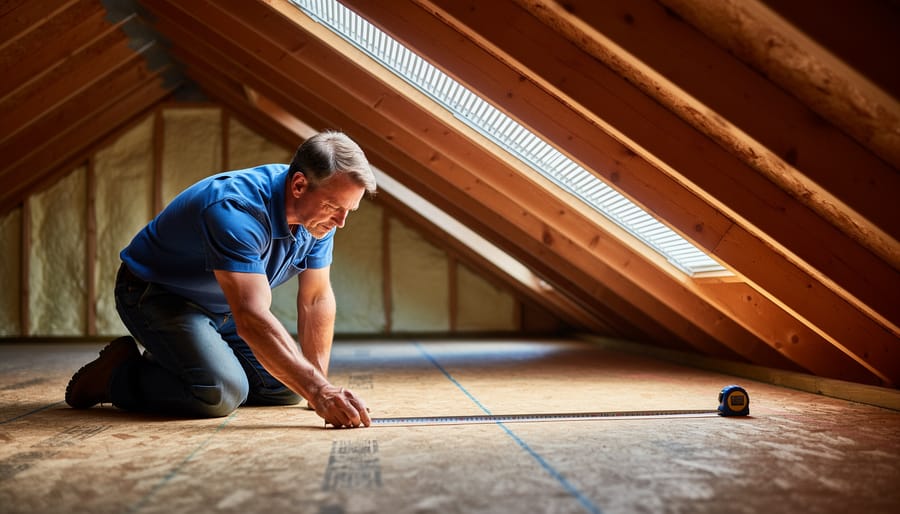
Grab your tape measure and let’s tackle this first crucial step! To use the 1/150 rule, you need to know your attic’s total square footage. Start by measuring the length and width of your attic floor in feet. For a simple rectangular attic, multiply length times width to get your square footage.
Here’s where it gets interesting: many attics aren’t perfect rectangles. If yours has an L-shape or multiple sections, break it down into smaller rectangles, calculate each area separately, then add them together. Think of it like piecing together a puzzle.
For attics with unusual angles or dormers, measure the main rectangular sections and skip the small nooks that are typically too cramped for proper airflow anyway. You’re after the usable floor space where insulation sits.
Important tip: measure the actual floor area, not the ceiling of the room below. If you have a cathedral ceiling or vault, measure at the point where the roof meets the floor joists.
Don’t stress about being perfectly precise to the inch. Rounding to the nearest foot works fine for this calculation. Once you have your total square footage written down, you’re ready to plug it into the 1/150 formula and discover exactly how much ventilation your attic needs.
Doing the Math: A Real-World Example
Let’s walk through a real example to see how this 1/150 formula works in action. Imagine your home has an attic floor measuring 30 feet by 40 feet. Grab your calculator, and let’s crunch these numbers together!
First, we calculate the total attic floor area: 30 feet multiplied by 40 feet equals 1,200 square feet. Now here comes the fun part: divide that number by 150. So 1,200 divided by 150 gives us 8 square feet of total ventilation needed.
But wait, there’s one more step! Remember, we want to split this ventilation between intake and exhaust for the best airflow. That means 4 square feet should be intake vents (typically soffit vents along your eaves) and 4 square feet should be exhaust vents (like ridge vents or roof vents near the peak).
To put this in perspective, if you’re installing standard rectangular soffit vents that measure 4 inches by 16 inches each, you’d need about nine vents to reach 4 square feet of intake. For exhaust, a continuous ridge vent or several roof vents would handle the other 4 square feet.
See how manageable that becomes when you break it down? This calculation gives you a clear target to work toward, whether you’re evaluating your existing ventilation or planning improvements. No guesswork required—just straightforward math that ensures your attic can breathe properly and protect your home for years to come.
Splitting Intake and Exhaust Ventilation
Here’s the secret to attic ventilation that really works: balance is everything. Think of your attic like a breathing system—air needs to flow in and out smoothly, not get stuck halfway. That’s where the 50/50 split comes into play.
The golden rule is simple: half of your total ventilation should be intake (usually at the soffits, those vents under your roof’s eaves), and the other half should be exhaust (typically at the ridge or gable). This balanced approach creates a natural air current that pulls fresh air in low and pushes hot, moist air out high. When this balance gets thrown off, you’re basically asking for trouble—think trapped moisture, ice dams in winter, and a roasting hot attic in summer.
Let’s make this practical. Remember that 1,200 square foot attic we calculated earlier? We determined it needs 8 square feet of net free area. Here’s how to split it:
Total ventilation needed: 8 square feet
Intake ventilation (soffits): 4 square feet
Exhaust ventilation (ridge/gable): 4 square feet
Now, convert those to square inches for easier shopping (multiply by 144):
Intake: 4 × 144 = 576 square inches
Exhaust: 4 × 144 = 576 square inches
When you’re browsing ventilation products at the hardware store, you’ll notice each vent lists its net free area. This accounts for screens, louvers, and other obstructions that reduce airflow. A vent might measure 8″ × 16″ (128 square inches), but only provide 60 square inches of actual ventilation.
Here’s a real-world example: If you’re installing continuous soffit vents that provide 9 square inches per linear foot, you’d need about 64 linear feet of soffit venting (576 ÷ 9 = 64). For the exhaust side, a ridge vent offering 18 square inches per linear foot would require 32 linear feet.
The takeaway? Don’t just focus on getting enough total ventilation—make sure you’re splitting it evenly between intake and exhaust for maximum effectiveness.
Common Ventilation Options and Their Coverage
Ridge Vents and Roof Vents
Ridge vents are one of the most effective solutions for exhaust ventilation because they run along the entire peak of your roof, creating a continuous airflow pathway. When calculating ventilation coverage, ridge vents typically provide about 18 square inches of net free area per linear foot. So if you have 30 feet of ridge line, that’s 540 square inches of exhaust ventilation working for you! Pretty impressive, right?
Static roof vents, those dome-shaped or box-style fixtures you see dotting rooftops, are another popular option. Each vent usually offers between 50 to 90 square inches of net free area, depending on the model. Here’s the catch though: you’ll need to check the manufacturer’s specifications because not all vents are created equal. The net free area accounts for screens and louvers that reduce the actual opening size.
When mixing vent types, remember to add up all your net free areas to see your total exhaust capacity. For example, combining 20 feet of ridge vent (360 square inches) with four static vents at 60 square inches each (240 square inches) gives you 600 square inches total. This mix-and-match approach lets you customize ventilation to your roof’s unique layout while hitting that crucial 1/150 ratio.
Soffit and Gable Vents
Let’s explore two popular ventilation options that work beautifully to keep air flowing through your attic: soffit and gable vents.
Soffit vents are those inconspicuous strips tucked under the overhang of your roof. They’re the unsung heroes of attic ventilation, quietly pulling fresh air into your attic space from below. These vents typically come in continuous strips or individual perforated panels. A standard continuous soffit vent provides about 9 square inches of net free area per linear foot, though this varies by manufacturer. Picture them as your attic’s intake system, working hand-in-hand with exhaust vents at the roof’s peak to create that essential airflow cycle.
Gable vents, on the other hand, are the triangular or rectangular vents you see at the ends of your home, nestled in those distinctive peaked walls. They’re both functional and charming, adding character to your home’s exterior while providing cross-ventilation. Common sizes range from 12×12 inches to 24×30 inches. A typical 14×24-inch gable vent offers approximately 60 to 120 square inches of net free area, depending on whether it has louvers or screening that reduces airflow.
When calculating your ventilation needs using the 1/150 rule, remember that not all advertised vent sizes equal actual airflow capacity. Manufacturers list the net free area separately from the overall dimensions, and that’s the number you’ll use in your calculations. Always check the product specifications to ensure you’re getting accurate measurements for your ventilation requirements.

When You Might Need More (or Less) Ventilation
Here’s the thing about the 1/150 rule—it’s not actually set in stone for every situation. Think of it as your starting point, but your attic might have different needs based on a few key factors.
If you’ve installed a proper vapor barrier on the warm side of your attic floor (covering at least 50-55% of the ceiling area), you might qualify for the 1/300 rule instead. This means you’d only need half the ventilation area. So for that 1,200 square foot attic we calculated earlier, you’d need just 4 square feet instead of 8. Pretty significant difference, right? However, you’ll want to check your local building codes since requirements vary by region.
Climate plays a huge role too. If you live somewhere with brutal winters or scorching summers, your attic works overtime dealing with temperature extremes. Hot, humid climates often need more ventilation to prevent moisture buildup, while cold climates require careful balance to avoid ice dams. Areas with heavy snowfall might need special considerations for intake vents positioned to avoid blockage.
Your roof design matters as well. Complex rooflines with multiple valleys, dormers, or hip sections can create airflow dead zones that need creative solutions. Cathedral ceilings and finished attics follow entirely different rules since they lack traditional attic space.
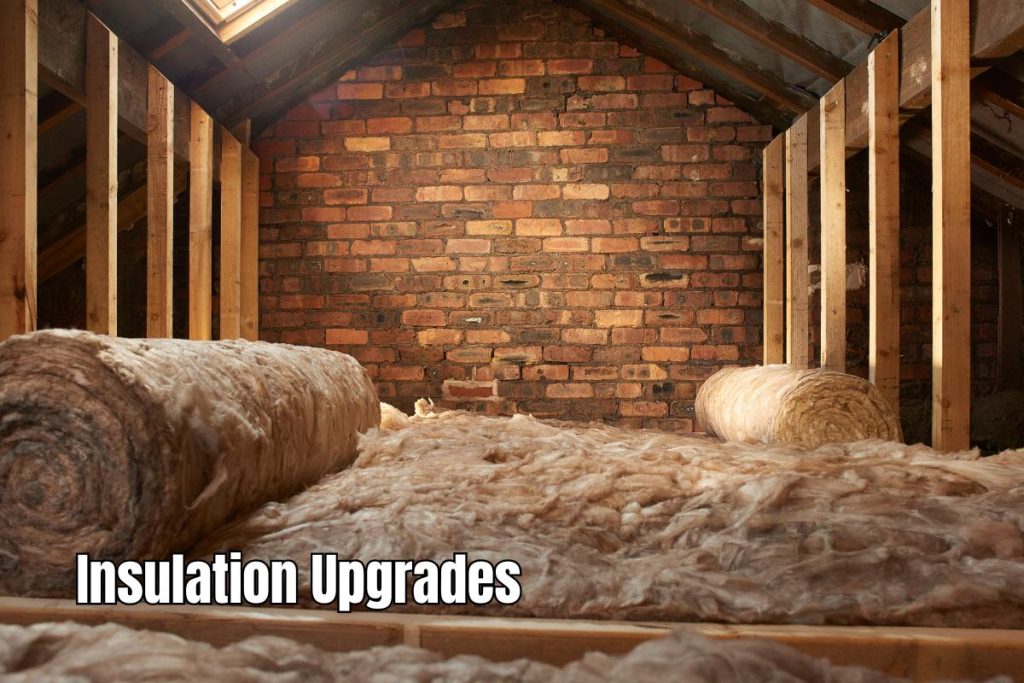
If you’ve recently completed insulation upgrades, you definitely want to reassess your ventilation needs. Better insulation means less heat loss, but it also changes moisture dynamics.
When dealing with unusual roof configurations, persistent moisture issues, or if you’re just uncertain about your calculations, seeking a professional assessment can save you headaches down the road. Sometimes the investment in expert advice prevents costly repairs later.
Signs Your Attic Ventilation Isn’t Working
Even if your calculations suggest you’re meeting the 1/150 ratio, your attic might be telling a different story. Think of these warning signs as your home’s way of waving a red flag, asking for help. Learning to spot them early can save you thousands in repairs down the road.
Start by checking your ceiling for dark stains or discoloration, especially in corners and around light fixtures. These spots often indicate moisture buildup from poor ventilation. If you’ve noticed mold growth in your attic space, that’s a definite cry for better airflow. Mold doesn’t just damage your home’s structure; it can seriously impact your family’s health too.
During winter, take a walk around your house after a snowfall. Do you see ice dams forming along your roof’s edge? These icy ridges happen when trapped heat melts snow unevenly, and they’re a classic sign of ventilation troubles. Similarly, if you spot icicles hanging from your gutters, your attic heat is escaping where it shouldn’t.
In summer, your attic shouldn’t feel like a sauna. If temperatures soar well above 120 degrees, or if your second-floor rooms become unbearably hot despite running the AC, poor ventilation is likely the culprit. This is where understanding how attic fans work can complement your passive ventilation system.
Finally, check your exterior paint. Peeling or blistering paint on soffits and overhangs often signals excessive moisture escaping through inadequate vents. Catching these signs early means you can take action before minor issues become major headaches.

See? That wasn’t so complicated! The 1/150 rule is honestly one of the most straightforward home calculations you’ll ever tackle. You just measured your attic floor, divided by 150, and now you know exactly how much ventilation you need. No complex formulas, no advanced math—just simple division that anyone can handle.
Now that you understand how easy it is, why not grab a tape measure this weekend and check your own attic? You might discover you’re already properly ventilated, which is great news! Or you might find an opportunity to make a real improvement that’ll pay dividends for years to come.
Proper attic ventilation isn’t just about checking a box on some building code checklist. It’s about protecting your biggest investment—your home. Adequate airflow keeps your roof lasting longer, your energy bills lower, and your indoor air quality healthier. Plus, when you’re budgeting for home improvement projects, addressing ventilation now prevents expensive repairs down the road.
Think of it as giving your home room to breathe. You’ve got the knowledge, you’ve got the formula, and you’ve definitely got this. Your attic—and your wallet—will thank you for taking action today.