
Mobile home plumbing operates differently than traditional house systems, and ignoring those differences can lead to frustrating leaks, frozen pipes, and costly water damage. Check your supply lines regularly for the flexible plastic pipes common in mobile homes – they’re more prone to cracking than copper alternatives and often hide behind thin wall panels where small leaks go unnoticed until significant damage occurs. Inspect your underbelly access points monthly during winter months, as exposed pipes in the crawl space freeze faster than those in stick-built homes with better insulation. Learn to spot the warning signs of drum trap failures, those outdated drainage fixtures still found in older mobile homes that cause slow drains and sewage backups when their seals deteriorate.
Understanding your mobile home’s unique plumbing layout empowers you to catch problems early and tackle straightforward repairs yourself. Most issues stem from three core vulnerabilities: inadequate insulation around supply lines, compression fittings that loosen over time from road vibration during initial transport, and improper slope in drain lines that weren’t correctly installed. By recognizing these patterns and knowing which fixes require professional help versus simple DIY solutions, you’ll protect your investment and maintain comfortable, worry-free living in your mobile home.
What Makes Mobile Home Plumbing Different
If you’ve ever peeked underneath a mobile home, you’ve probably noticed that the plumbing looks quite different from what you’d find in a traditional stick-built house. Understanding these differences isn’t just interesting trivia—it’s essential knowledge that can help you spot problems early and maintain your home more effectively.
The most significant difference lies in how mobile homes are built to travel. Since these homes were originally constructed to be transported, their plumbing systems use flexible connections rather than rigid ones. Think of it like the difference between a garden hose and a copper pipe. While flexibility is great for movement, it also means these connections can shift, loosen, or wear out over time, especially in older mobile homes that have settled into their foundations.
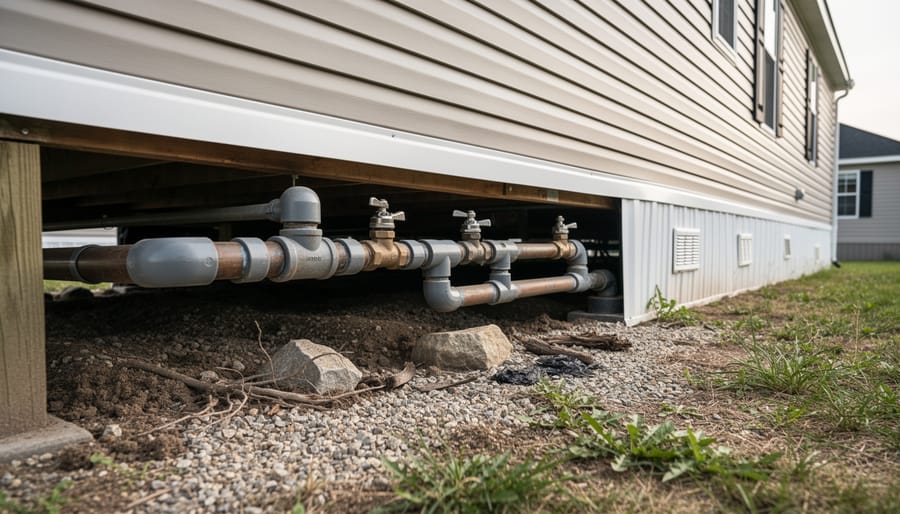
Another major distinction is that most of your plumbing runs underneath the home rather than being tucked safely within walls. This exposed positioning makes pipes vulnerable to temperature extremes, pests, and physical damage. During winter, those exposed pipes face freezing temperatures directly, while summer heat can cause plastic components to become brittle and crack.
Speaking of plastic, mobile homes typically use plastic piping materials like PVC, CPVC, and polybutylene rather than copper or galvanized steel. These materials are lighter and more cost-effective, which made sense for manufactured housing, but they have shorter lifespans and different failure patterns than traditional materials. Polybutylene pipes, common in mobile homes built between the 1970s and 1990s, are particularly notorious for developing pinhole leaks as they age.
The combination of flexible connections, exposed positioning, and plastic materials creates a perfect storm of potential vulnerabilities that mobile homeowners need to monitor regularly. The good news? Once you understand these unique characteristics, you’re better equipped to prevent problems before they become costly disasters.
The Most Common Mobile Home Plumbing Problems
Frozen and Burst Pipes
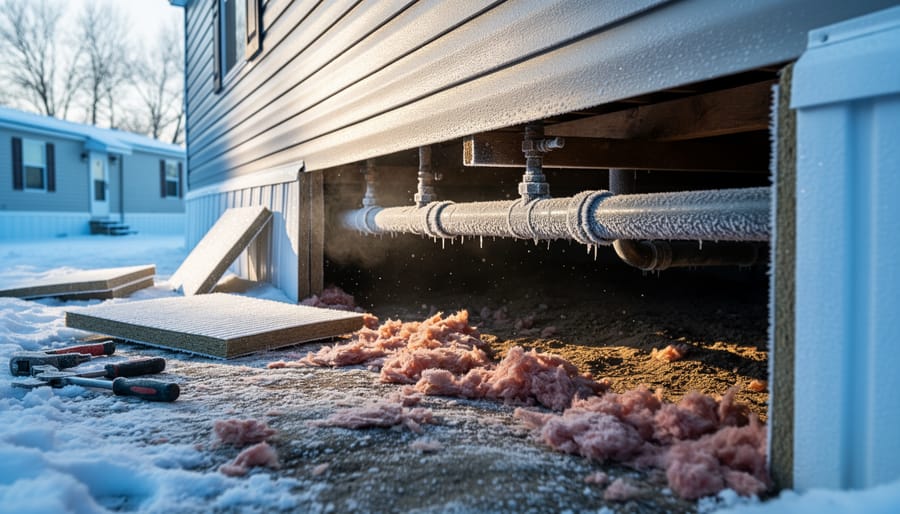
Mobile homes face unique challenges when winter temperatures drop, mainly because of their exposed underbelly design. Unlike traditional homes built on solid foundations, mobile homes sit elevated with plumbing lines running underneath, often with minimal insulation protecting them from harsh cold. This makes them especially vulnerable to freezing pipes, even in moderately cold weather.
Watch for these telltale signs: reduced water pressure, strange gurgling sounds when you turn on faucets, or worst case scenario, no water flow at all. You might also notice frost forming on exposed pipes in your crawl space or skirting area. If you spot any of these red flags, act quickly.
If you discover frozen pipes, turn off your main water valve immediately to prevent burst pipes when they thaw. Open cabinet doors under sinks to let warm air circulate around pipes. Use a hair dryer or heating pad on the frozen section, working from the faucet backward toward the blockage. Never use open flames or high-heat devices that could damage pipes or create fire hazards.
Prevention is your best friend here. Before winter arrives, wrap exposed pipes with foam insulation sleeves, seal gaps in your skirting, and consider adding heat tape to particularly vulnerable areas. On extremely cold nights, let faucets drip slightly to keep water moving. Remember, prompt water mitigation saves you from costly repairs down the road.
Leaking Supply Lines and Connections
Mobile homes face unique challenges when it comes to plumbing connections, and those flexible supply lines under your sinks can become troublesome friends over time. Unlike traditional homes built on solid foundations, mobile homes experience subtle shifts and movements that gradually work against your plumbing connections.
Those convenient flexible supply lines connecting your faucets to shut-off valves might seem sturdy at first, but they’re constantly flexing and moving as your home settles. Over months and years, the compression fittings that hold everything together can loosen, leading to annoying drips or sudden leaks that surprise you during your morning routine.
Here’s what’s really happening: every time you walk across your floor or when temperature changes cause your home to expand and contract slightly, those connections experience tiny amounts of stress. The rubber washers inside compression fittings gradually compress and harden, losing their ability to create watertight seals.
You’ll want to check under sinks and behind toilets regularly for signs of moisture or mineral deposits, which indicate slow leaks. A simple hand-tightening of connections can often solve minor issues before they become bigger problems. However, if you notice corrosion or cracked fittings, it’s time to replace those components entirely. Keep a wrench handy and make quarterly inspections part of your home maintenance routine to catch these issues early.
Drainage Issues and Slow Drains
You’ve probably noticed that your mobile home’s drains seem to move slower than molasses in January, right? Unlike traditional homes with their gravity-friendly steep slopes, mobile home plumbing faces some unique challenges that can turn minor slowdowns into major headaches.
One of the biggest culprits is something called belly sag. Picture this: over time, the drain lines under your mobile home can develop low spots or dips, kind of like a hammock effect. These saggy sections trap water and debris, creating perfect conditions for clogs. It’s especially common in older mobile homes where the ground has settled unevenly or support piers have shifted.
Improper venting is another sneaky troublemaker. Vents help air flow through your plumbing system, allowing water to drain smoothly. When vents are blocked, undersized, or installed incorrectly during manufacturing, you’ll hear that telltale gurgling sound and watch water creep down drains painfully slowly.
The shallow-slope pipes found in many mobile homes compound these issues. Because there’s limited space beneath the floor, drain lines often run at gentler angles than building codes require for traditional homes. This means gunk accumulates faster, and small problems quickly snowball.
The good news? Regular maintenance and knowing what to watch for can keep your drains flowing freely and prevent costly repairs down the road.
Water Heater Complications
Water heaters in mobile homes face unique challenges that can leave you scratching your head when problems arise. The tight quarters typical of mobile home utility spaces create the first hurdle—there’s simply less room to work with compared to traditional homes. These compact areas make routine maintenance trickier and replacement projects downright challenging. You might find yourself contending with awkward angles and limited clearance that transform simple tasks into elaborate puzzles.
Ventilation becomes critical in these confined spaces. Mobile home water heaters require proper airflow to operate safely, but the snug compartments they occupy can restrict circulation. Poor ventilation doesn’t just affect performance—it poses serious safety risks. Always check that vents remain unobstructed and that fresh air can circulate freely around your unit.
When common water heater problems strike, replacement becomes particularly daunting. Mobile homes often feature specific access points that weren’t designed with easy equipment swaps in mind. You might encounter doorways too narrow for standard units or discover your water heater sits in a closet with minimal maneuvering space. Some models require removal through exterior access panels, adding weather considerations to your project timeline. Before purchasing a replacement unit, carefully measure your existing space and access routes—choosing a mobile-home-specific model often saves considerable headache and ensures proper fit.
Warning Signs You Shouldn’t Ignore
Your mobile home deserves the same attentive care as any traditional house, and catching plumbing problems early can save you from costly repairs down the road. Think of these warning signs as your home’s way of sending up a flare before things spiral into emergency territory.
Water stains are like little breadcrumbs leading you to trouble. Check your ceilings, walls, and especially underneath cabinets for yellowish-brown discoloration or bubbling paint. These spots often appear near fixtures and along pipe routes, signaling leaks that might be happening out of sight. Don’t dismiss even small stains—they rarely stay small for long.
That musty, earthy smell you’ve been noticing? It’s not just unpleasant; it’s a red flag. Persistent musty odors, especially in bathrooms, kitchens, or near your water heater, typically mean moisture is accumulating somewhere it shouldn’t. This can lead to mold growth and structural damage in your mobile home’s framework.
Pay attention to your water pressure too. If your morning shower suddenly feels more like a trickle, or if pressure fluctuates wildly between faucets, you might have developing blockages or pipe deterioration. Mobile home plumbing can be particularly sensitive to pressure changes because of the compact piping systems.
Listen for gurgling, banging, or hissing sounds coming from pipes, drains, or toilets. These aren’t normal background noises—they’re symptoms of air in the lines, drainage problems, or developing leaks. Learning to detect hidden plumbing issues through these auditory clues can prevent major headaches.
Finally, take regular walks around your mobile home’s exterior. Inspect the underbelly and skirting for sagging sections, moisture damage, or visible water pooling underneath. These exterior signs often reveal interior problems before they become visible inside your living space.
DIY Fixes That Actually Work
Insulating Exposed Pipes for Winter
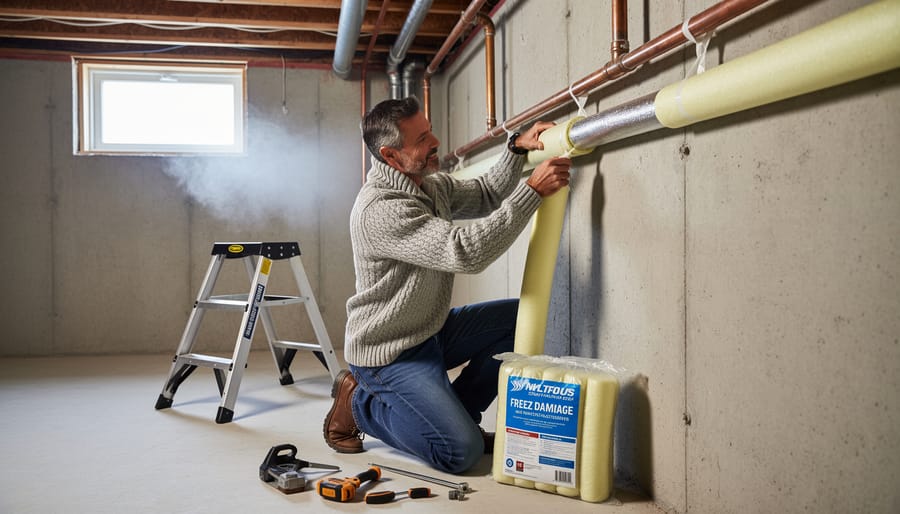
Protecting your mobile home’s pipes from freezing doesn’t require a professional crew—just a weekend afternoon and the right supplies. Start by identifying your most vulnerable spots: pipes running along exterior walls, inside cabinets against outside walls, and any exposed plumbing under your home.
Begin with foam pipe insulation, which you’ll find at any hardware store. Simply measure your pipes, cut the foam tubes to length, and slip them over the pipes—they’re pre-slit for easy installation. Secure any gaps with duct tape or zip ties. For pipes in extremely cold areas, layer heat tape underneath the foam insulation. This self-regulating tape activates when temperatures drop and provides gentle warmth to prevent freezing.
Don’t overlook your mobile home’s skirting—it’s your first line of defense. Inspect for gaps or damage and seal any openings where cold air sneaks through. Consider adding foam board insulation behind the skirting for extra protection.
Inside cabinet areas, keep doors slightly open during cold snaps to allow warm air circulation. Adding a small thermometer under your home helps you monitor temperature drops before pipes freeze, giving you time to take action.
Tightening and Replacing Compression Fittings
Spotting a loose compression fitting is easier than you might think. Look for small puddles forming beneath pipes, water stains on nearby surfaces, or that telltale drip-drip sound that keeps you awake at night. Gently feel around connections under sinks and near your water heater—if anything feels damp, you’ve found your culprit.
Before rushing to replace anything, try tightening first. Grab an adjustable wrench and turn the compression nut clockwise about a quarter turn. Don’t go overboard—these fittings are surprisingly delicate, and overtightening can crack them. Turn on the water and watch for leaks. If the dripping stops, congratulations! You’ve just completed a five-minute plumbing repair.
When tightening doesn’t solve the problem, replacement becomes necessary. Signs include visible corrosion, cracks in the fitting itself, or persistent leaking despite your best tightening efforts. You’ll need an adjustable wrench, replacement compression fittings from your local hardware store, and plumber’s tape.
Here’s a quick tip from my own experience: take a photo of the fitting before disassembly. Trust me, it’s much easier to remember how everything fits together when you have a reference picture on your phone. This straightforward repair typically takes less than thirty minutes and saves you a service call.
Improving Drainage with Simple Adjustments
Sometimes the best solutions are the simplest ones. Before you start ripping out pipes or calling in the professionals, a few minor adjustments can work wonders for your mobile home’s drainage woes.
Start by checking those roof vents. Believe it or not, blocked plumbing vents are drainage saboteurs. Leaves, debris, or even bird nests can clog these vents, preventing proper air flow and causing that annoying slow drain or gurgling sound. Grab a ladder, inspect the vent opening, and clear away any blockages. It’s a quick fix that can make an immediate difference.
Next, consider adding enzymatic drain cleaners to your monthly routine. Unlike harsh chemical cleaners that can damage mobile home pipes, enzymatic products use natural bacteria to break down organic buildup. They’re gentle, safe for your plumbing system, and actually work with your pipes rather than against them. Pour them down drains overnight once a month for consistent results.
Finally, adjust those P-traps if you notice persistent slow drainage. Sometimes they’re installed at slightly off angles. A minor repositioning can improve water flow dramatically. Just place a bucket underneath, loosen the connections, make your adjustment, and tighten everything back up. These small tweaks keep water moving smoothly without the renovation headache.
When to Call a Professional
While tackling plumbing projects yourself is rewarding, some situations call for professional expertise. Think of it as knowing when to ask for directions on a road trip—there’s no shame in getting expert help when the stakes are high.
Major leaks are your first red flag. If water is gushing rather than dripping, or you’ve discovered a leak beneath your mobile home that’s creating puddles or soaking the ground, don’t wait. Water damage spreads quickly in mobile homes, affecting flooring, subflooring, and even structural supports. What starts as a manageable problem can become a costly renovation project within hours.
Sewer line issues definitely require professional attention. If multiple drains are backing up simultaneously, you’re noticing sewage odors outside your home, or there’s standing water near your sewer connection, these point to main line problems that need specialized equipment and expertise to diagnose and repair properly.
Water heater replacement is another job best left to the pros. Mobile home water heaters have specific venting requirements and safety considerations. Professional installation ensures everything meets code and operates safely—well worth the investment when you consider the risks.
Finally, if accessing the problem requires removing belly wrap, cutting into floors, or dismantling cabinetry, call in reinforcements. Finding the right plumber who understands mobile home systems will save you time, money, and potential headaches. Sometimes the most cost-effective DIY decision is knowing when not to DIY.
Preventive Maintenance That Saves Thousands
Here’s the thing about mobile home plumbing: a little attention throughout the year can save you from those heart-stopping moments when water starts pooling where it shouldn’t. Let’s talk about creating a maintenance routine that actually works.
Start with seasonal underbelly inspections, especially during spring and fall. Grab a flashlight and peek underneath your home, looking for sagging insulation, moisture stains, or visible pipe damage. If you spot anything concerning, don’t brush it off—these are plumbing problems you shouldn’t ignore. Even small issues can snowball into expensive repairs when left unattended.
Winterization deserves special attention in mobile homes since pipes are more exposed to freezing temperatures. Before cold weather hits, insulate exposed pipes with foam sleeves, disconnect outdoor hoses, and consider leaving cabinet doors open during freezing nights to let warm air circulate around pipes. Some folks even add heat tape to vulnerable sections—it’s a small investment that prevents burst pipes and thousands in water damage.
Check your connection points quarterly. Mobile homes naturally shift and settle, which can loosen fittings over time. Give visible connections a gentle inspection, looking for drips or corrosion. Tighten anything that seems loose, but don’t go overboard—you’re securing, not forcing.
Build simple daily habits too. Run water regularly in all fixtures to prevent trap seals from drying out. Avoid chemical drain cleaners that can corrode older pipes. Use drain screens to catch hair and debris before they create blockages.
This proactive approach transforms you from someone reacting to emergencies into someone preventing them altogether. Your wallet will definitely thank you.
Here’s the empowering truth: mobile home plumbing challenges are absolutely manageable when you approach them with knowledge and confidence. You’ve now got a solid understanding of what makes your mobile home’s plumbing unique, the common issues to watch for, and practical solutions you can tackle yourself. That’s a real win for your homeownership journey.
Think of plumbing maintenance like tending a garden—consistent attention prevents bigger problems from taking root. Schedule those seasonal check-ups, keep an eye on water pressure changes, and don’t ignore small leaks that whisper for attention before they start shouting. The beauty of being proactive is that you’re in control, saving both money and stress down the road.
Remember, every experienced DIYer started exactly where you are now. Some fixes you’ll handle confidently with basic tools and a weekend afternoon. Others might need a professional’s expertise, and that’s perfectly okay. Knowing the difference is part of being a savvy homeowner. Your mobile home deserves the same care and attention as any traditional house, and you’re now equipped to give it just that. Stay curious, stay proactive, and celebrate each maintenance milestone along the way.


