
Start with a cordless drill/driver as your foundation tool—it drives screws faster than any hand tool, drills pilot holes for hanging shelves, and assembles furniture in minutes rather than hours. Add a circular saw next to make straight cuts through lumber, plywood, and even old decking boards, turning material from the hardware store into custom-length pieces for built-ins, garden beds, or room dividers. Invest in a random orbital sander third to transform rough surfaces into smooth, paint-ready finishes, whether you’re refinishing a thrift store dresser or prepping trim work. Round out your starter collection with a jigsaw for cutting curves and notches, perfect for creating custom backsplashes, cutting sink openings in countertops, or trimming door jambs for new flooring.
These four tools handle roughly 80% of common home projects, from basic repairs to ambitious renovations. Building your collection strategically means focusing on versatility over specialty tools. You’ll complete weekend projects with confidence, save money on contractor calls, and gain the satisfaction of transforming your space with your own hands. The right power tools don’t just make projects possible—they make them genuinely enjoyable.
Why Investing in Quality Power Tools Matters
I’ll never forget watching my neighbor spend an entire weekend trying to build a simple deck with a hand saw and manual screwdriver. By Sunday evening, his arms were exhausted, his cuts were uneven, and he’d barely finished half the framing. The following month, he invested in a circular saw and cordless drill, and completed his second project in just one afternoon with professional-looking results. That’s the difference quality power tools make.
When you’re starting out with building a basic toolbox, it’s tempting to grab the cheapest options or skip power tools altogether. But here’s the reality: the right equipment transforms frustrating tasks into enjoyable projects. What might take hours with hand tools becomes manageable in minutes, leaving you with energy to focus on the creative aspects of your project rather than just surviving the physical labor.
The cost-effectiveness argument practically makes itself. Yes, quality power tools require an upfront investment, but they last for decades with proper care. Compare that to repeatedly replacing cheap tools that burn out or break, and you’ll actually save money over time. Plus, when your cuts are precise and your finishes are smooth, you avoid costly mistakes that require expensive fixes.
Safety is another crucial factor people often overlook. Modern power tools come with safety features like blade guards, automatic shutoffs, and ergonomic designs that reduce fatigue and prevent accidents. Struggling with inadequate tools often leads to dangerous workarounds and shortcuts.
Perhaps most importantly, quality results directly impact your home’s value. Professional-looking installations, whether you’re adding custom shelving or upgrading trim work, create lasting impressions that appraisers and potential buyers notice. Your projects become assets rather than amateur attempts that need future correction.

The Drill/Driver: Your Most-Reached-For Tool
If you’re standing in the tool aisle wondering where to start, let me save you some time: grab a cordless drill/driver first. This workhorse will quickly become your most-reached-for tool, handling everything from hanging picture frames to building a backyard deck. It’s the Swiss Army knife of power tools, and honestly, I can’t remember the last DIY project I completed without one.
Here’s what you need to know about making the right choice. A drill-only model simply makes holes, while a drill/driver combo gives you the superpower of both drilling and driving screws. Unless you’re only planning to drill holes (spoiler: you’re not), spend the extra few dollars on the combo. You’ll thank yourself the first time you assemble IKEA furniture or install cabinet hardware without manually twisting dozens of different types of screws.
The voltage question trips up many first-time buyers. Think of it this way: 12V models are lightweight champions perfect for hanging curtains, installing shelves, and general household tasks. They’re less fatiguing during extended use and ideal if you’re working in tight spaces. The 18V and 20V options bring more muscle for demanding projects like building decks or drilling through studs, but they’re heavier and bulkier.
For most homeowners, an 18V or 20V drill/driver hits the sweet spot. You’ll have enough power for ambitious weekend projects without feeling like you’re lugging around a cement block. Look for models with adjustable clutch settings, which prevent you from overdriving screws and stripping heads.
Real-world uses? Picture yourself installing curtain rods without your arm cramping, assembling furniture in minutes instead of hours, mounting your new TV, building floating shelves, or finally tackling that fence repair. Your drill/driver handles it all, making you wonder how you ever managed with just a screwdriver.
The Circular Saw: Making Straight Cuts a Breeze
If you’re only going to invest in one power saw for your DIY toolkit, make it a circular saw. This versatile workhorse transforms cutting projects that would take forever with a handsaw into quick, precise tasks. I’ll never forget watching my neighbor struggle with a handsaw to cut boards for his deck railing. After twenty minutes of sweaty effort and wandering cut lines, he borrowed my circular saw and finished the remaining cuts in under five minutes with perfectly straight edges.
A circular saw excels at breaking down full sheets of plywood, cutting lumber to length, and making straight cuts through dimensional boards. Whether you’re building custom shelving, constructing a garden planter box, or trimming deck boards, this tool delivers professional-looking results without the bulk and expense of larger stationary saws.
When choosing the right circular saw, you’ll encounter the corded versus cordless debate. Corded models offer unlimited runtime and consistent power, perfect for extended projects like framing or deck building. Cordless versions provide freedom to work anywhere without dragging extension cords, ideal for outdoor projects or working in spaces without nearby outlets. For most homeowners, a quality cordless model with a spare battery offers the best balance of convenience and performance.
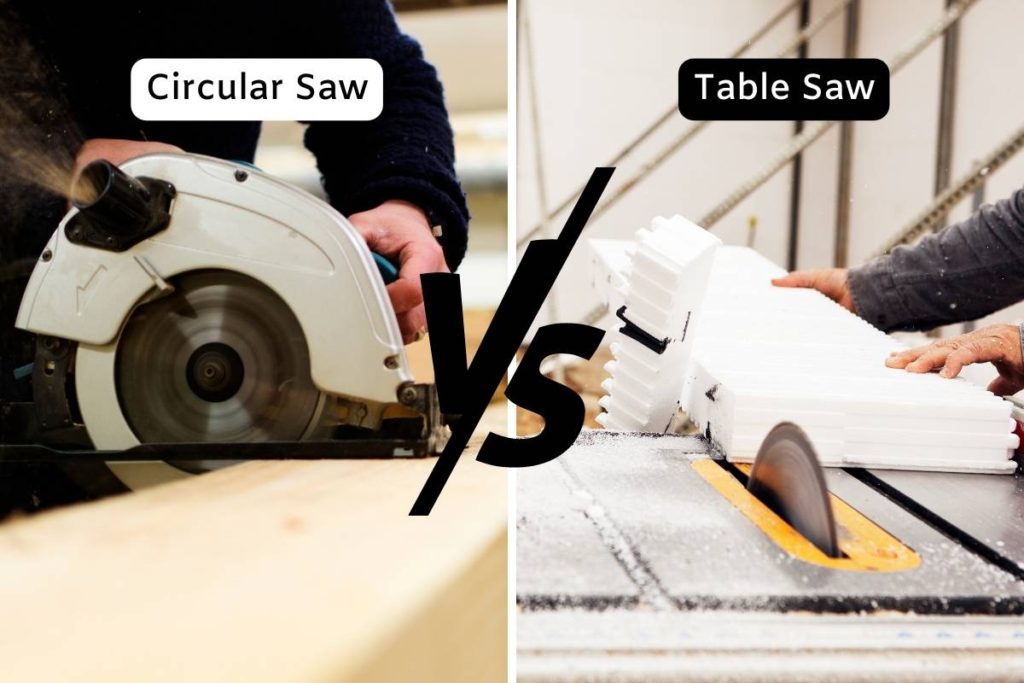
Blade selection matters more than many beginners realize. A standard 24-tooth blade handles framing lumber beautifully, while a 60-tooth blade creates smoother cuts in plywood and finished boards. Understanding the circular saw versus table saw comparison helps clarify why this portable option suits most home projects.
Safety tip: Always secure your material firmly before cutting, keep both hands on the saw, and let the blade reach full speed before engaging your workpiece. Wear safety glasses without exception—sawdust finds eyes with remarkable accuracy.

The Random Orbital Sander: From Rough to Smooth in Minutes
If you’ve ever spent hours hunching over furniture with sandpaper, your arms aching and progress moving at a snail’s pace, a random orbital sander will feel like pure magic. This tool transforms tedious sanding jobs into quick, satisfying tasks that deliver professional-looking results.
Think of the random orbital sander as your secret weapon for any project involving wood surfaces. Whether you’re breathing new life into a vintage dresser, prepping deck boards for staining, or smoothing down rough lumber for a DIY bookshelf, this tool handles it all. The circular pad spins while simultaneously moving in tiny orbits, which prevents those dreaded swirl marks that traditional disc sanders can leave behind. The result? A perfectly smooth surface that’s ready for finishing.
For larger projects like refinishing a dining table or sanding down kitchen cabinets, hand sanding would take days of exhausting work. A random orbital sander cuts that time down to minutes, and your finish will actually look better because the tool provides consistent pressure and movement across the entire surface.
Understanding grit progression makes all the difference in your results. Start with 80-grit sandpaper for stripping old finish or smoothing very rough wood, move to 120-grit for general smoothing, and finish with 220-grit for that buttery-smooth surface that feels amazing under your fingers. Each step removes the scratches from the previous grit, creating a flawless foundation for paint or stain.
Here’s a game-changer: always connect your sander to a shop vacuum or use the built-in dust collection bag. Sanding creates an incredible amount of fine dust that settles everywhere and isn’t great for your lungs. Good dust collection keeps your workspace cleaner and helps you actually see what you’re working on, making the entire process more enjoyable and efficient.
The Impact Driver: When Your Drill Just Won’t Cut It
You’ve probably stood in the hardware store aisle wondering if you really need both a drill and an impact driver. Here’s the honest truth: while they look similar, these tools are designed for completely different jobs, and understanding the difference will save you from a lot of frustration.
Your regular drill is perfect for creating holes and driving smaller screws into softer materials. But when you’re tackling heavy-duty fastening projects, that drill will struggle, stall, or worse, strip your screws. That’s where an impact driver becomes your best friend.
Impact drivers deliver rotational force in quick, powerful bursts, making them absolute champions for driving long screws, lag bolts, and heavy-duty fasteners without breaking a sweat. If you’ve ever tried building a deck with a regular drill, you know the arm-aching struggle of forcing three-inch screws into pressure-treated lumber. An impact driver powers through this same task effortlessly, and the impact driver benefits become immediately obvious the first time you use one.
These tools truly shine in projects like deck construction, assembling outdoor furniture, installing cabinet hardware, or any situation involving thick materials and substantial fasteners. The pulsing action also prevents cam-out, that annoying moment when your bit slips out of the screw head and damages everything.
Do you need both tools? If you’re serious about DIY projects, yes. Think of your drill as the precision tool for drilling and lighter tasks, while your impact driver handles the heavy lifting. Together, they create an unbeatable combination that tackles virtually any fastening challenge you’ll encounter around your home.
The Jigsaw: Your Curve-Cutting Champion
If your drill and circular saw are the power tool equivalents of drawing straight lines, then the jigsaw is your chance to get artistic. This versatile tool excels at cutting curves, circles, and those intricate shapes that transform ordinary projects into something special. Whether you’re notching out a space for pipes, cutting a sink hole in a new countertop, or creating decorative wooden garden stakes, the jigsaw handles what other saws simply can’t.
What makes the jigsaw so appealing for beginners is its manageable size and intuitive control. Unlike bulkier saws, you can guide it with one hand while steadying your material with the other. The blade moves up and down rapidly while you direct the tool along your desired path, making it feel almost like drawing with a pencil, just with a bit more vibration.
The secret to jigsaw success lies in choosing the right blade for your material. Wood-cutting blades have larger, more aggressive teeth, while metal-cutting blades feature fine teeth that nibble through slowly but precisely. Specialty blades exist for plastic, laminate, and even ceramic tile. Swapping blades takes seconds and dramatically expands what you can accomplish.
For smooth, accurate cuts, let the tool do the work rather than forcing it forward. Start with the base plate firmly against your material, and follow your pencil line at a comfortable pace. Practice on scrap pieces first to get a feel for the speed that produces clean edges without splintering. You’ll quickly discover that cutting out that custom shelf bracket or creating an arched doorway trim isn’t nearly as intimidating as it seemed. The jigsaw turns “I wish I could” into “look what I made.”
The Multi-Tool (Oscillating Tool): The Problem-Solver You Didn’t Know You Needed
If there’s one tool that consistently surprises DIYers with its versatility, it’s the oscillating multi-tool. Think of it as the Swiss Army knife of power tools, quietly solving problems that would otherwise require multiple specialized gadgets or uncomfortable contortions.
This compact wonder vibrates side-to-side at incredibly high speeds, allowing different attachments to tackle an impressive range of tasks. Need to trim a door jamb for new flooring? The flush-cutting blade slices through wood right against the floor without damaging anything. That old grout in your bathroom looking tired? Swap on a grout removal blade and rejuvenate those tile lines. Stuck-on paint, adhesive residue, or that mystery gunk in hard-to-reach corners? The scraping attachments handle it beautifully.
Here’s where this tool really shines: those moments when you’re mid-project and encounter an obstacle you didn’t anticipate. When installing baseboards, you might discover a nail head sitting proud that your saw can’t accommodate. The multi-tool cuts around it effortlessly. Removing old caulk from tight spaces becomes manageable rather than maddening.
The attachment ecosystem keeps expanding too. Sanding pads in various grits reach into corners where orbital sanders fear to tread. Specialized blades cut metal, plastic, drywall, and more. Many brands now offer universal mounting systems, giving you access to hundreds of attachment options.
For around a hundred dollars, you’ll have a problem-solver that handles detail work, demolition tasks, and those tricky situations where precision matters more than power. It’s the tool you’ll reach for more often than you’d ever expect.
Building Your Collection: Where to Start
Starting your power tool journey doesn’t mean emptying your wallet all at once. Think of it as building a friendship – you start with the essentials and grow from there based on your unique needs.
If you’re mainly tackling furniture assembly and basic home maintenance, begin with a cordless drill-driver and a circular saw. These two workhorses will handle 80% of common household projects. Planning a bathroom refresh or kitchen upgrade? Add an orbital sander and oscillating multi-tool to smooth surfaces and make precision cuts around fixtures.
For outdoor enthusiasts building decks or garden structures, prioritize that circular saw and consider adding a miter saw down the road for cleaner angled cuts. The beauty of starting small is discovering what you actually reach for most often.
Now, here’s where strategy really matters: battery platforms. This is your future-proofing decision. When you choose your first cordless tool, you’re essentially joining a family. That same battery will power future additions, saving you serious money. Major brands like DeWalt, Milwaukee, and Ryobi offer extensive tool lineups sharing the same battery system.
Combo kits can be budget-friendly starting points, typically offering two or three tools with batteries and a charger at a lower price than buying individually. However, don’t get swayed by quantity over quality. A kit with tools you won’t use isn’t a bargain.
Consider buying refurbished tools from reputable retailers – they often come with warranties and significant savings. Watch for holiday sales when major retailers discount popular models by 30-40%. And remember, you don’t need the professional-grade version of everything. Homeowner-grade tools from quality brands handle occasional use beautifully while keeping your budget intact.
Start with what matches your immediate projects, choose your battery platform wisely, and build gradually as your skills and ambitions grow.

Building your power tool collection doesn’t have to be overwhelming or happen overnight. Start with the basics—a drill/driver and circular saw will open up countless possibilities—then expand as your skills and projects grow. Remember, every expert DIYer started exactly where you are now, with that first tool and a bit of healthy nervousness. What makes the difference isn’t having every gadget available, but understanding how to use what you have effectively. These essential power tools transform daunting projects into satisfying weekend accomplishments, turning your vision for your home into reality. The confidence you’ll gain with each successful project is just as valuable as the money you’ll save. So grab that drill, embrace the learning curve, and discover how incredibly rewarding it feels to look at something in your home and think, “I built that.”