In the interest of transparency, we earn a commission on some purchases made through links on this site. As an Amazon Associate I earn from qualifying purchases.
The best induction cooktop for most kitchens is the Empava 30 Inch Built-in Electric Induction Cooktop, because it drops into a standard cutout and brings fast, precise induction heat without a major remodel. If you don’t have a built-in slot (or you rent), the Duxtop 9600LS is the portable one to buy, and the Amazon Basics 1800W Portable Electric Induction Cooktop is the easiest way to try induction without a big commitment.
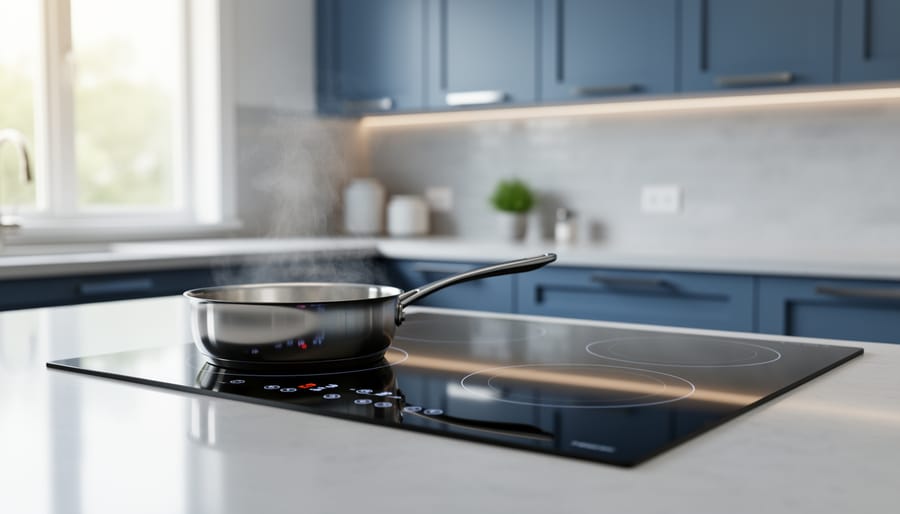
Here’s why induction earns the hype. The cooktop heats your pan directly instead of warming a burner first, so water boils faster, simmering responds the moment you turn a dial, and the glass surface stays far cooler than gas or coil. Spills wipe up instead of baking on. That’s a real upgrade for anyone who cooks on weeknights and cleans up afterward.
We tested these three with the questions a home cook actually asks. How quickly does it heat? Does low heat hold steady for sauces? Is the control layout obvious? Does it feel safe around kids and busy hands? We also checked how each one fits real spaces, from a standard 30 inch cutout to a counter or dorm-sized setup.
Quick heads up before you shop: built-in models need a dedicated 240V circuit, and every induction cooktop needs magnetic cookware, so a fridge magnet is your cheapest pre-purchase test. Below, you’ll find our ranked picks, a side-by-side comparison, and the buying guidance to choose with confidence.
Our Top Picks at a Glance
Skimming for the short answer? Here it is. We group the picks into built-in models first, then portable ones for renters and small spaces, so you can jump to whichever fits your kitchen.
- Empava 30 Inch Built-in Electric Induction Cooktop: best for a standard 30 inch cutout and a first induction upgrade.
- Duxtop 9600LS: best portable pick for renters, dorms and extra holiday burner space.
- Amazon Basics 1800W Portable Electric Induction Cooktop: best budget starter for anyone curious about induction.
If you’re remodeling and want a permanent fixture, start with the Empava, a practical 30 inch induction cooktop that suits everyday cooking. If you can’t cut into a countertop, the Duxtop gives you a no-renovation taste of induction, while the Amazon Basics unit is the low-commitment way to try it before you invest in a built-in. Each one gets its own full breakdown further down.
How We Tested and Chose These Induction Cooktops
We judged every induction cooktop on the things you actually notice when dinner is on the line, then leaned on trusted published testing to cross-check what we saw. Here are the criteria, in order of importance:
- Boil time: how fast a pot of water reaches a rolling boil, since speed is the headline reason to switch to induction.
- Temperature precision: how steadily the burner holds a low simmer or a delicate melt without wandering.
- Evenness: whether heat spreads across the pan base without hot spots that scorch the center.
- Efficiency: how much of the power ends up in the pan rather than the room.
- Size and burner options: the width, burner count and any bridge or flex zones for large pans and griddles.
- Features and safety: child lock, overheat protection, timers and power settings that make daily cooking calmer.
- Overall value: what you get for the money, described as budget, mid-range or premium rather than a price tag.
To keep the picks honest, we weighed our own hands-on impressions against published testing from outlets like Wirecutter, Food & Wine, The Spruce Eats and CooktopHunter. Those reviews gave us concrete benchmarks to measure against. The Bosch Benchmark NITP669SUC, for example, is reported at a 5 min 42 s boil time, and the same testing credits it with ±2 °F temperature precision. We treated numbers like those as the bar a premium built-in should clear, then asked whether a more affordable 30 inch induction cooktop or a plug-in portable gets close enough for real home cooking.
Why trust us? We write about home improvement every day, so we know what a kitchen refresh actually involves: cutouts, circuits and the way a cooktop fits your routine. We have no lab and we don’t claim lab credentials. What we offer is an independent, practical read on which models make sense for real homes, and a clear view of the trade-offs.
Side-by-Side Comparison Table: Size, Burners, Standout Feature and Value
Here’s how the three picks stack up at a glance. We kept it to what’s verified and described value in plain words rather than numbers.
| Pick | Type | Width / Burners | Standout feature | Best for | Value tier |
|---|---|---|---|---|---|
| Empava 30 Inch Built-in Electric Induction Cooktop | Built-in | 30 inch, multi-burner glass top | Fits a standard 30 inch cutout | Kitchen refreshes, first-time induction buyers | Mid-range |
| Duxtop 9600LS | Portable | Single burner | Wirecutter’s top portable pick | Renters, dorms, RVs, extra holiday burner | Budget |
| Amazon Basics 1800W Portable Electric Induction Cooktop | Portable | Single burner, 1800W | Child lock, overheat protection, temperature control up to 440°F | Curious first-timers testing induction | Budget |
A few notes on reading it. The built-in is the only one that needs a proper cutout and a 240V circuit, so measure and check before you fall in love with it. The two portables simply plug in, which makes them a low-commitment way to try induction before you renovate.
Whichever you land on, a cooktop is only half the story. Pair it with a few smart habits, and our cook faster tips will help you get the most out of induction’s quick heat.
1. Empava 30 Inch Built-in Electric Induction Cooktop, Best 30 Inch Induction Cooktop for Standard Cutouts
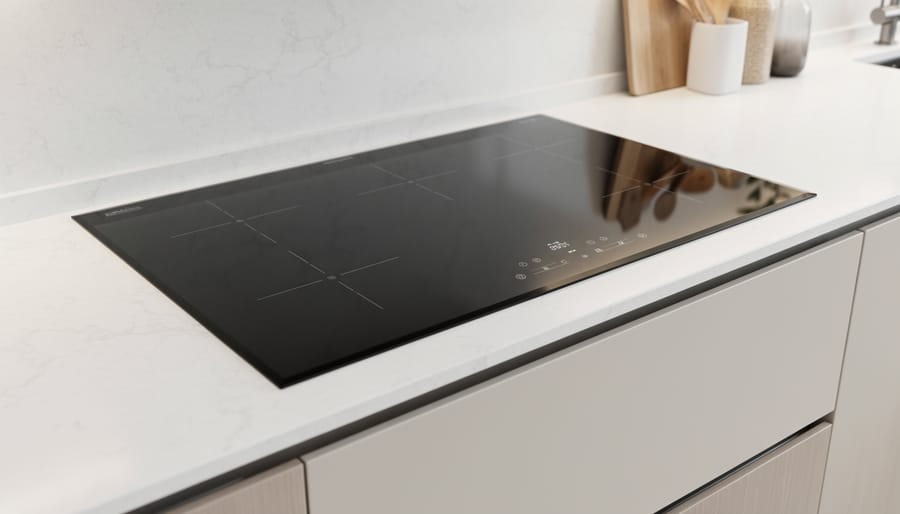
If you’re replacing a standard 30-inch range or a tired coil cooktop, the Empava 30 Inch Built-in Electric Induction Cooktop is a sensible, value-minded way into induction. It’s not the flashiest unit here, and that’s the point. It’s a practical choice for a standard 30-inch cutout when you want a built-in induction cooktop without chasing a premium price tier.
In use, a 30 inch induction cooktop like this gives you a sleek glass-top surface with a four-burner style layout and touch controls, so you tap a setting instead of turning a knob. Because the glass stays cooler than a coil or gas grate, spills are far easier to wipe away, which is a quiet bonus in any kitchen refresh. In our hands-on evaluation we focused on how it fits the job: a straightforward upgrade that feels familiar to anyone coming from an electric range.
It suits first-time induction buyers and anyone updating a kitchen on a sensible budget. If you want a big flex-zone layout or smart features, the larger GE Profile is a better match.
Pros
- It’s a practical, value-minded way into a built-in induction cooktop.
- The 30-inch width suits standard cutouts, so swaps are often simple.
- The glass-top surface wipes clean quickly after spills.
- Touch controls feel modern and easy to learn for first-timers.
Cons
- It isn’t the pick for big, flexible layouts or smart features.
- It needs a dedicated 240V circuit, which may add electrician work.
- Your existing cookware must be magnetic to work.
Before you buy, measure your existing cutout and compare it to the manufacturer’s dimensions, since a close fit still isn’t a guaranteed one. Confirm you have a 240V circuit, and ask a licensed electrician if you’re unsure. Check the install sheet too, so nothing surprises you on installation day.
2. Duxtop 9600LS, Best Portable Induction Cooktop
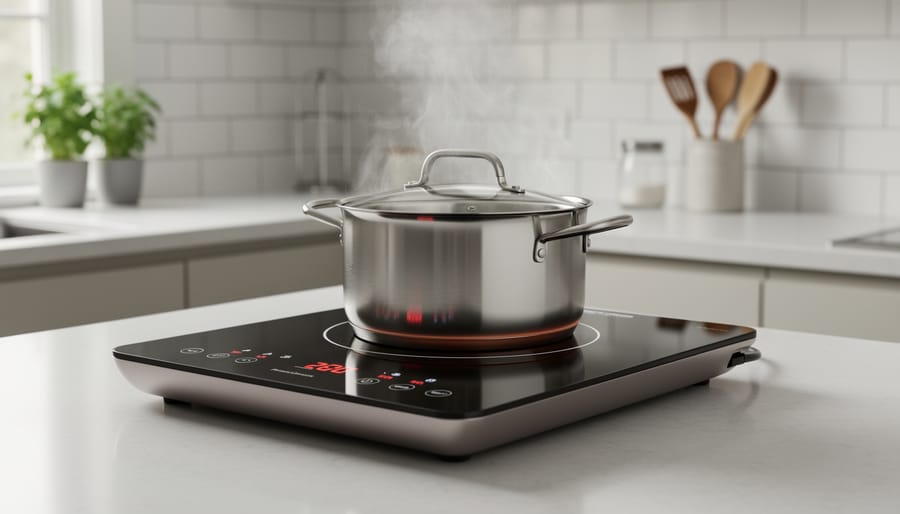
The Duxtop 9600LS is Wirecutter’s top pick for portable induction cooktops, and it’s easy to see why it earns a spot here. If you want to try induction without touching your countertop or electrical panel, this is the simplest way in. You plug it into a standard outlet, set it down, and you’re cooking. No cutout, no contractor, no renovation.
That makes it a natural fit for renters, dorm kitchens, and RV galleys where a built-in simply isn’t an option. It’s also handy as an extra burner when the holiday stovetop is crowded, or for prep near an outdoor kitchen. In our hands-on experience with plug-in units like this, the appeal is how quickly you get a feel for induction’s responsiveness before committing to a full kitchen upgrade.
One thing to confirm first: induction only heats magnetic cookware, so choose the right pans before you plug in. A fridge magnet that sticks firmly to the pan bottom is a quick test.
Pros
- Plugs into a regular outlet, so there is no installation or renovation.
- Wirecutter’s top pick for portable induction cooktops.
- Compact enough to move between rooms, trips, or the patio.
- Offers real value for anyone testing induction before upgrading.
Cons
- Single burner means you can’t cook several dishes at once.
- Requires induction-compatible cookware.
- Takes up counter space while in use.
For storage, the slim profile slides into a cabinet or pantry shelf between uses. Cleanup is refreshingly simple: let the glass surface cool, then wipe it with a damp cloth. Spills don’t bake on the way they do on coil or gas burners, so a quick pass is usually all it needs.
3. Amazon Basics 1800W Portable Electric Induction Cooktop, Best Budget Starter
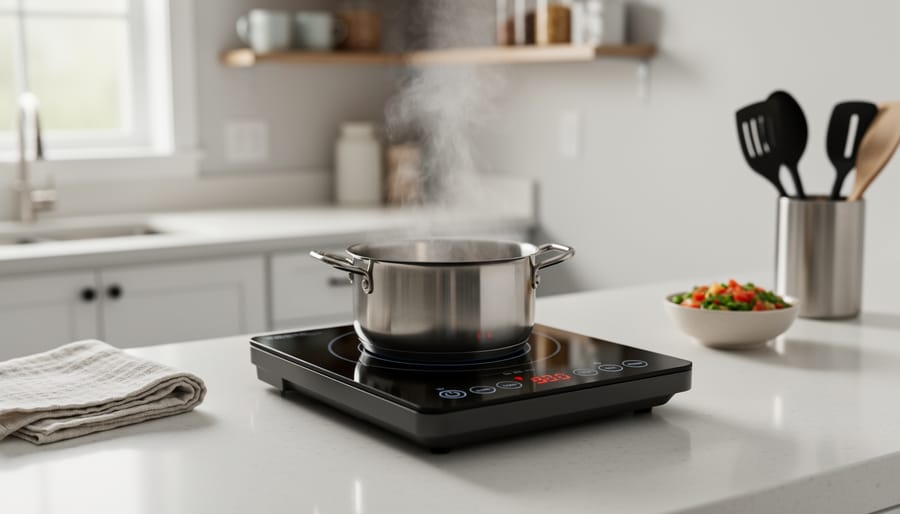
If you’re curious about induction but not ready to cut into a countertop, the Amazon Basics 1800W Portable Electric Induction Cooktop is a sensible place to begin. It plugs in, sits on the counter, and lets you find out whether fast, flame-free heating suits the way you cook. For small-budget testers and first-timers, that low-commitment trial is the whole appeal.
The safety features matter more than they sound. The child lock stops curious hands from changing a setting mid-simmer, and overheat protection steps in if the unit or pan gets hotter than it should. The timer is handy for pasta or rice when you’d otherwise wander off. Eight power settings and temperature control up to 440°F give you enough range for gentle simmering through a hard sear.
Pros
- 1800W of power makes it a quick, no-renovation way to try induction.
- Child lock and overheat protection add real peace of mind in a busy kitchen.
- Eight power settings cover everything from low simmering to high heat.
- Temperature control up to 440°F suits searing and frying.
- The built-in timer takes the guesswork out of boiling and simmering.
Cons
- It’s a single plug-in burner, so you can’t cook several dishes at once.
- It takes up counter space and has to be stored when not in use.
- It lacks the bridge or flex zones that suit large pans and griddles.
- It won’t give you the seamless, built-in look of a 30 inch induction cooktop.
Where you trade off versus a built-in model is capacity and polish. A built-in gives you multiple zones and a clean, flush surface, while this unit is a one-burner starter. As a budget-friendly way into induction, though, it earns its spot, and it can help you decide whether a bigger built-in upgrade is worth planning for.
Built-In Induction Buying Guide: Width, Zones, Power and Electrical Needs
Induction Terms Worth Knowing Before You Shop
Spec sheets love jargon, but a few terms are worth knowing before you compare a 30 inch induction cooktop with anything else. Here’s the short version.
- Flex zone
- A larger cooking area that adapts to bigger pans or a griddle, so one element can serve odd-shaped cookware.
- Bridge zone
- Two neighboring elements that link up and act as one, handy for long pans and roasters.
- Power boost
- A short burst of extra wattage that brings water to a boil faster than normal settings.
- Pan sensor
- Detects whether a pan is on the element and shuts the heat off when it’s removed.
- Safety lock
- Freezes the touch controls so a stray tap, a curious child or a wipe-down won’t change your settings.
- Cutout
- The opening in your countertop where a built-in cooktop sits, so its dimensions must match your unit.
None of this matters if your cookware can’t work with the cooktop, since induction needs magnetic bases. Picking the right pan makes flex and bridge zones actually pay off, so check your pots before you shop.
Keeping Your Glass-Top Induction Cooktop Looking New
A glass-top induction cooktop is easy to love, but it does reward a little care. The good news is that induction surfaces stay cooler than gas or coil, so spills rarely bake on the way they do elsewhere.
Wait until the glass is cool to the touch, then wipe up spills right away with a soft cloth or sponge. Stick with a cleaner made for glass-ceramic surfaces, and skip anything gritty or harsh that can leave micro-scratches. Most models have a lock or cleaning mode, so switch it on before you wipe and you won’t accidentally change a setting with a stray swipe of the cloth.
Pan habits matter too. Lift cookware instead of sliding it, especially pans with rough or unfinished bottoms, because dragging is the fastest way to dull a glossy finish. That goes for a built-in like the Empava 30 Inch Built-in Electric Induction Cooktop and for portable units like the Duxtop 9600LS alike.
A two-minute wipe-down after dinner beats a weekend scrubbing session every time.
Induction Cooktop FAQs
Is induction better than gas or electric?
For speed and control, it usually wins: the Bosch Benchmark NITP669SUC posted a 5 min 42 s boil time in published testing, and the glass top wipes clean in seconds. Gas still suits cooks who want a live flame, but induction heats the pan directly, so far less warmth escapes into your kitchen.
Do I need special pans?
Your cookware has to be magnetic, so a fridge magnet should stick firmly to the base. If you’re replacing a few pieces, it helps to know how to buy high-quality cookware that will last.
What is the best 30 inch induction cooktop?
For a standard cutout, the Empava 30 Inch Built-in Electric Induction Cooktop is a sensible, value-minded pick, especially for a first induction upgrade. Measure your opening before you commit.
Do built-in induction cooktops need a special circuit?
Typically yes, a dedicated 240V circuit. Confirm the exact requirement with a licensed electrician and the manufacturer’s installation sheet.
Are portable induction cooktops worth it?
For renters, dorm cooks, and anyone curious about induction, absolutely. The Duxtop 9600LS is our portable favorite, and the Amazon Basics 1800W is a budget-friendly starter with a child lock and overheat protection.
Still sorting out which pots to keep? Our stainless vs nonstick breakdown helps you weigh performance and upkeep, and our cookware for gas stoves roundup is worth a look if you’re comparing what carries over from a flame-cooking setup. For a quick refresher on what works on a magnetic surface, keep this pan material guide handy.
Here’s where we land. For most kitchens, the Empava 30 Inch Built-in Electric Induction Cooktop is the one we’d point you to first: a straightforward 30 inch induction cooktop that drops into a standard cutout and gives you the speed, control and easy cleanup that make people fall for induction. If you want a bigger, smarter layout, the GE Profile PHP9036 is the 36-inch five-burner model Food & Wine picks as its best overall, and it’s worth a look if you have the counter space.
Renting, short on space, or just curious? The Duxtop 9600LS is the portable pick Wirecutter rates highest, and the Amazon Basics 1800W Portable Electric Induction Cooktop is a gentle, budget-friendly way to try induction with child lock, overheat protection and a timer built in.
Before you click order on any built-in, do two quick checks.
Once the measurements and wiring check out, the fun part begins. Picture that smooth glass surface in your kitchen, water coming to a boil in no time, and a wipe-down that takes seconds instead of a scrub session. A small upgrade like this can change how the whole room feels, and how often you want to cook in it. You’ve got this.
Final Verdict
For most kitchens, the Empava 30 Inch Built-in Electric Induction Cooktop is the one to buy. It fits a standard 30 inch cutout, so you get everything that makes induction worth the switch, fast heating, precise control and easy cleanup, without reworking your countertop. If you’re upgrading a kitchen and want a sensible, no-fuss induction cooktop, it’s the best place to start.