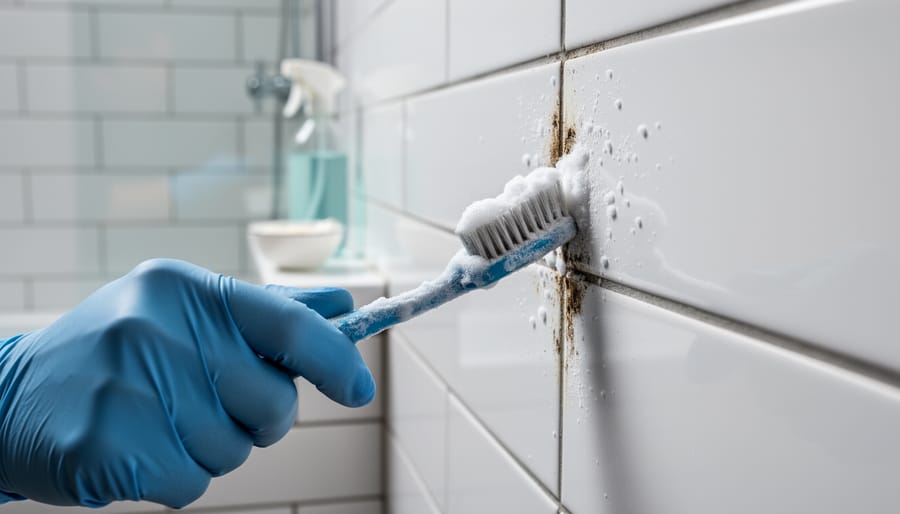
Mix baking soda with hydrogen peroxide into a paste and scrub it directly onto discolored grout lines using an old toothbrush in circular motions. Let the mixture sit for 10 minutes before rinsing to break down embedded dirt and mildew that regular cleaning misses.
Spray undiluted white vinegar on grout after cleaning to dissolve soap scum and mineral deposits, but avoid using it on natural stone tiles where the acidity can cause damage. For weekly maintenance, this simple approach keeps grout looking fresh without harsh chemicals.
Attack stubborn black mold with oxygen bleach powder dissolved in warm water, applying it generously and allowing 30 minutes of contact time before scrubbing. This method penetrates porous grout surfaces where mold spores hide, unlike surface-level cleaners that only mask the problem temporarily.
Steam clean grout lines for a chemical-free deep cleaning that kills bacteria and loosens grime through high-temperature moisture alone. Follow with immediate grout sealing once surfaces dry completely to create a protective barrier that repels water, preventing future staining and making your next cleaning session significantly easier.
The difference between dingy, discolored grout and pristine tile lines often comes down to using the right technique at the right time, and understanding that grout requires different care than the tiles surrounding it.
What Makes Bathroom Grout So Hard to Keep Clean
If you’ve ever wondered why your bathroom grout seems to attract grime like a magnet, you’re definitely not alone. The truth is, grout has a secret weakness: it’s incredibly porous. Think of it like a sponge made of cement. Those tiny holes and spaces throughout the material create the perfect hideout for all the things you don’t want in your bathroom.
Every time you shower, moisture seeps deep into those pores. Add soap residue, body oils, shampoo splatter, and mineral deposits from hard water, and you’ve got a recipe for discoloration. But the real troublemaker? Mildew and mold spores absolutely love the damp, humid environment your bathroom provides. They settle into grout’s porous surface and make themselves right at home.
Bathroom grout faces particularly brutal conditions compared to grout in other areas of your home. The constant cycle of wet and dry, combined with fluctuating temperatures and poor ventilation, creates an ideal breeding ground for bacteria and fungi. Meanwhile, every product you use, from body wash to hairspray, leaves behind a filmy residue that layers over time.
What starts as slightly dingy grout gradually transforms into dark, stubborn stains that seem impossible to budge. The longer these contaminants sit embedded in the pores, the harder they become to remove. This is exactly why regular cleaning matters so much, and why understanding what you’re up against is the first step toward winning the battle for cleaner grout.

Gather Your Grout-Cleaning Arsenal

Essential Tools You’ll Need
Before diving into your grout-cleaning mission, let’s gather your arsenal of supplies. You’ll need a dedicated grout brush with stiff bristles that can really work into those narrow lines, plus an old toothbrush for tight corners and detailed work around fixtures. Stock up on spray bottles for your cleaning solutions, making application a breeze. Microfiber cloths are your best friend for wiping away grime and buffing surfaces to a beautiful finish without scratching. Don’t forget protective gear like rubber gloves to shield your hands from cleaning solutions, and consider safety glasses if you’re working with stronger cleaners or scrubbing overhead. Having everything within arm’s reach before you start will make the entire process smoother and more efficient, transforming what could be a frustrating chore into a satisfying home improvement project.
Choosing Your Cleaning Solution
You’ve got several fantastic options when it comes to tackling grimy grout, and the best choice depends on your grout’s condition and what you already have at home.
For light to moderate grime, a baking soda paste is your budget-friendly hero. Mix three parts baking soda with one part water to create a spreadable paste that’s gentle yet effective. It’s non-toxic, safe for most grout types, and perfect if you have kids or pets around. The downside? It requires some elbow grease and won’t tackle severe mold issues.
Hydrogen peroxide works wonders on stubborn stains and mildew. You can use it straight from the bottle or combine it with baking soda for extra cleaning power. It’s naturally antibacterial and brightens grout beautifully, though it may take multiple applications for heavily stained areas.
Vinegar solutions are popular, but here’s a heads-up: avoid using vinegar on unsealed grout or natural stone tiles, as the acidity can cause damage over time. It’s great for soap scum on sealed surfaces, though.
Commercial grout cleaners deliver powerful results quickly, especially on deeply embedded dirt. They’re convenient but often contain harsh chemicals, require proper ventilation, and come with a higher price tag. Choose oxygen-bleach formulas for a gentler approach.
The Step-by-Step Deep Clean Method
Prep Your Bathroom for Battle
Before you dive into battle with grimy grout, let’s set yourself up for success. First things first: crack open that bathroom window or flip on the exhaust fan. You’ll want good airflow, especially if you’re using any cleaning solutions with a bit of punch. Trust me, your lungs will thank you.
Now, give your tile surfaces a quick once-over with an all-purpose cleaner and wipe them down. This initial sweep removes surface dirt and soap scum, so you’re not just pushing gunk around when you tackle the grout lines. Think of it as clearing the battlefield before the real action begins.
Next, protect your surroundings. If you’ve got metal fixtures nearby, consider covering them with painter’s tape or plastic wrap. Some grout cleaners can be harsh on finishes, and prevention beats polishing later. Also, grab some old towels to catch drips along baseboards or cabinet edges. A little prep work now saves cleanup headaches later.
Apply Your Cleaning Solution the Right Way
The secret to getting your grout sparkling clean isn’t just what you use, but how you use it. Start by applying your chosen cleaning solution generously along the grout lines using a spray bottle or squeeze bottle for precision. You want complete coverage without flooding the entire floor.
Here’s where many people go wrong: they scrub immediately. Resist that urge! Give your cleaner time to work its magic. Most solutions need 5-15 minutes of dwell time to break down dirt and mildew. Think of it like letting dish soap soak on a crusty pan. For heavily soiled grout, you might extend this to 20 minutes, but don’t let commercial cleaners dry completely on the surface.
While waiting, avoid the temptation to apply more cleaner thinking it’ll work faster. Over-saturating can actually make rinsing more difficult and leave residue that attracts more dirt. Also, don’t mix different cleaning products, especially bleach with other chemicals, as this can create dangerous fumes and damage your grout.
When the dwell time is up, work in small sections rather than tackling the entire bathroom at once. This prevents your cleaner from drying out before you can scrub and ensures consistent results throughout.
The Scrubbing Technique That Actually Works
Here’s the truth about scrubbing grout: it’s not about working harder, it’s about working smarter. The key is using a circular motion rather than scrubbing back and forth in straight lines. Think of it like buffing a car – those gentle, overlapping circles help lift dirt from the porous surface without damaging the grout itself.
Start by dividing your bathroom floor or wall into manageable three-foot sections. Apply your cleaning solution generously to one section and let it sit for 5-10 minutes to break down the grime. When it’s time to scrub, use a stiff-bristled grout brush held at a 45-degree angle, applying firm but not aggressive pressure. You want to feel like you’re working the bristles into the grout lines without grinding them down.
For those stubborn stains that laugh in the face of your first attempt, don’t give up. Reapply your solution and let it dwell longer – sometimes 15-20 minutes does the trick. Create a paste with baking soda and your cleaning solution for extra gritty power on particularly resistant areas. Apply it directly to the stain, let it sit, then scrub with renewed determination.
Work systematically from one corner of the room to the other, rinsing each section thoroughly with clean water before moving on. This prevents your cleaning solution from drying and leaving residue behind. If you notice the solution evaporating before you finish scrubbing, simply spray more on – keeping the grout wet is essential for effective cleaning.

Rinse and Reveal Your Results
Now comes the satisfying part where you’ll see all your hard work pay off! Start by thoroughly rinsing the grout lines with clean, warm water. A damp sponge works beautifully here, but you’ll want to rinse it frequently in a bucket of fresh water to avoid spreading dirty residue back onto your freshly cleaned grout. Think of it like washing your car—you wouldn’t use the same soapy water for the final rinse, right?
Make several passes over the entire area, changing your water at least once or twice during the process. You might notice a slight haze on your tiles as everything dries, which is completely normal. Simply wipe it away with a clean, dry microfiber cloth for that showroom sparkle.
Here’s the game-changer that many people skip: proper drying. Grab a clean towel and thoroughly dry the grout lines and surrounding tiles. This step is crucial because lingering moisture is like sending out party invitations to mildew and mold. Open a window or run your bathroom fan for at least 30 minutes after cleaning to keep air circulating. This final attention to detail will help your grout stay cleaner longer and prevent those pesky dark spots from returning too quickly.
Tackling Specific Grout Problems
Removing Mold and Mildew Stains
When you spot black or pink discoloration in your grout lines, you’re dealing with mold and mildew that need special attention. Don’t worry though – tackling these uninvited guests is totally manageable with the right approach.
First things first: safety matters. Before you begin, open windows and turn on your bathroom fan to ensure proper ventilation. Consider wearing gloves and a mask, especially if you’re sensitive to cleaning products or the mold coverage is extensive.
For mold and mildew, you’ll want something stronger than your everyday cleaner. A solution of one part bleach to ten parts water works wonders on white grout. Apply it directly to the affected areas using a spray bottle, let it sit for ten minutes, then scrub with a stiff brush. The bleach not only removes the stains but also kills mold spores at the source.
If you have colored grout or prefer a gentler option, hydrogen peroxide is your friend. It’s naturally antimicrobial and won’t damage colored grout like bleach can. Apply it undiluted, wait fifteen minutes, and scrub away.
For stubborn pink mold (which is actually bacteria), try a paste made from baking soda and hydrogen peroxide. This combination provides gentle abrasion plus disinfecting power without harsh fumes.
Remember, prevention is easier than removal – always dry surfaces after showering to discourage future growth.
Dealing with Severely Discolored or Damaged Grout
Sometimes, despite your best cleaning efforts, grout reaches a point where scrubbing just won’t cut it anymore. If your grout has permanently stained, cracked, or crumbled, it’s time to explore other options.
Grout pens are a quick fix for mildly discolored grout lines. These handy markers work like white-out for your floors and walls, covering surface stains with bright white pigment. They’re perfect for touch-ups and small areas, though you’ll need patience for larger spaces.
For more extensive discoloration, grout paint offers a lasting solution. This specialized coating seals and colors your grout lines, giving them a uniform appearance. It’s more durable than pens and can handle foot traffic beautifully. Think of it as giving your grout a fresh coat of protection.
When grout is seriously damaged with cracks, missing chunks, or persistent mold that keeps returning, regrouting becomes necessary. This involves removing old grout and applying fresh material. While it’s more labor-intensive, it’s often easier than you’d think and can completely transform your bathroom’s appearance.
If you’re considering these bigger changes, you might also explore choosing bathroom tiles or stone rejuvenation techniques as part of a broader bathroom remodel.
Keep Your Grout Clean with Minimal Effort
Weekly Habits That Prevent Buildup
The best defense against grout grime is preventing it in the first place. After each shower, take thirty seconds to squeegee your tiles and grout lines. This simple habit removes water droplets before minerals and soap residue can settle in, dramatically reducing buildup over time. Think of it as a mini workout that saves you from marathon scrubbing sessions later.
Ventilation is your bathroom’s best friend. Run your exhaust fan during showers and for at least twenty minutes afterward, or crack a window to let moisture escape. Damp environments are breeding grounds for mildew, so keeping air circulating helps your grout stay cleaner longer.
Once weekly, give grout lines a quick wipe-down with a microfiber cloth dampened with diluted all-purpose cleaner or a vinegar-water solution. This takes just a few minutes but tackles fresh residue before it hardens into stubborn stains. Consider it your grout’s weekly spa treatment, keeping those lines looking fresh without major effort.
The Case for Sealing Your Grout
Once you’ve put in all that hard work to get your grout gleaming, protect your investment with a quality grout sealer. Think of it as an invisible shield that prevents moisture, dirt, and mildew from penetrating those porous grout lines. The benefits are game-changing: easier daily cleaning, longer-lasting brightness, and fewer deep-cleaning sessions in your future.
Apply sealer to newly installed grout after it’s fully cured, typically 48-72 hours post-installation. For existing grout, seal it immediately after a thorough cleaning while it’s completely dry. Most sealers need 24 hours to cure properly, so plan accordingly.
The application process is straightforward. Use a small foam brush or applicator bottle to apply sealer directly to grout lines, wiping away excess from tile surfaces before it dries. Reapply annually in high-traffic showers or every two to three years in guest bathrooms. This simple maintenance step dramatically reduces scrubbing time and keeps your bathroom looking fresh with minimal effort.
You’ve made it this far, and now you know the truth: clean grout isn’t some impossible dream reserved for newly renovated homes. It’s absolutely achievable with the right approach, tools, and a bit of elbow grease. Whether you tackled those stubborn stains with baking soda paste or invested in a steam cleaner, you’ve taken control of one of the bathroom’s most notoriously tricky spots.
Here’s the real game-changer though: maintaining your grout is infinitely easier than deep cleaning it. A quick weekly wipe-down takes minutes compared to the hours you might spend scrubbing years of buildup. Think of it as preventative care for your bathroom, keeping that sparkling clean bathroom looking its best without the major time investment.
So go ahead and tackle that grout project you’ve been putting off. Armed with these techniques and the knowledge that regular maintenance will keep things manageable, you’re ready to transform your bathroom floor and walls. Your future self will thank you every time you step into a fresh, bright bathroom with grout lines that actually look intentional.