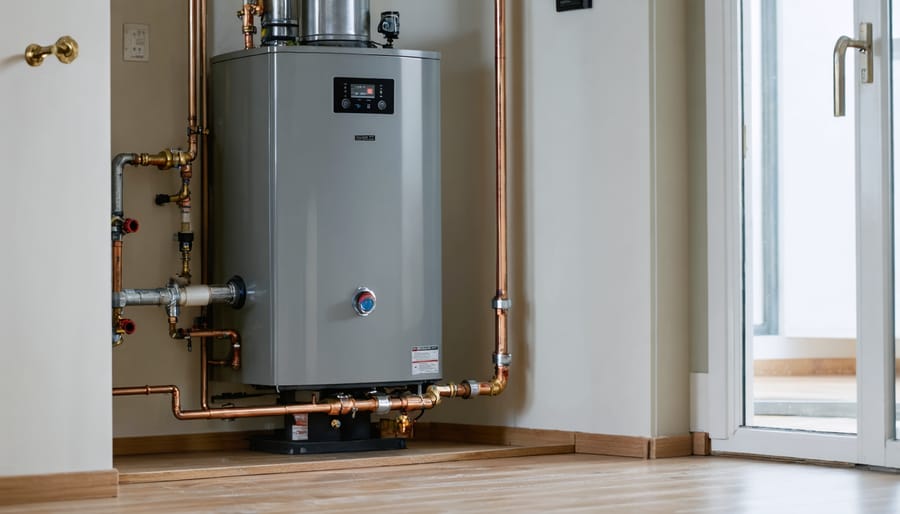

Check your thermostat settings first—ensure it’s set to “heat” mode and the temperature is at least 5 degrees above room temperature. Many Weil-McLain boiler issues stem from simple thermostat miscommunication rather than actual boiler malfunctions.
Listen for unusual sounds coming from your system. Banging or kettling noises typically indicate sediment buildup or air trapped in the lines, while gurgling suggests water flow problems. These audio clues point you toward specific solutions and help you communicate effectively with professionals if needed.
Inspect your boiler’s pressure gauge, which should read between 12-15 PSI when cold and 18-25 PSI when operating. Low pressure is one of the most common culprits behind heating failures, and you can often resolve it by adding water through the fill valve—a straightforward fix that takes just minutes.
Examine the pilot light or ignition system. A yellow or flickering flame instead of a steady blue one signals combustion problems requiring immediate attention. No flame at all might mean a tripped reset button, faulty thermocouple, or gas supply issue.
Reset your boiler using the emergency shutdown switch—turn it off, wait 30 seconds, then restore power. This simple reboot clears many electronic glitches and sensor errors that prevent normal operation.
Understanding when you’re facing a genuine DIY opportunity versus a situation requiring professional expertise protects both your safety and your investment. While some troubleshooting steps empower you to restore comfort quickly, others demand specialized knowledge and tools that only certified technicians possess.
Understanding Your Weil-McLain Boiler System
Before you can effectively troubleshoot your heating system, it helps to understand what you’re working with. Think of your Weil-McLain boiler as the heart of your home’s warmth, quietly working to keep everyone comfortable during those chilly months. These systems have been around for over 80 years, earning their reputation for reliability, but like any hardworking appliance, they occasionally need a little attention.
Weil-McLain offers several boiler types, and knowing which one you have makes troubleshooting much easier. The most common residential models include the Ultra series (gas-fired boilers known for their efficiency), the EG series (oil-fired options), and the CGa series (compact cast iron boilers perfect for smaller spaces). You might also have a combination boiler that provides both heat and hot water, or a traditional system that works alongside a separate water heater.
Here’s the good news: you don’t need to be a certified technician to understand the basics or tackle simple issues. Your boiler works by heating water and circulating it through radiators or baseboards throughout your home. The water returns to the boiler, gets reheated, and the cycle continues. Simple, right?
Take a moment to locate your model number, which you’ll typically find on a metal plate attached to the boiler itself. This information becomes your troubleshooting companion. Different models have unique quirks and components, so knowing exactly what you’re dealing with helps you find accurate solutions quickly.
Understanding your specific system also helps you communicate better with professionals when needed. You’ll sound confident explaining that your Ultra 105 is making strange noises or your CGa boiler isn’t maintaining pressure. This knowledge empowers you to handle minor hiccups yourself while recognizing when it’s time to call in the experts. Consider it your first step toward becoming your home’s heating hero.

The Most Common Weil-McLain Boiler Problems (And What They Mean)
When Your Boiler Won’t Start or Ignite
There’s nothing quite like waking up to a cold house and discovering your Weil-McLain boiler simply won’t fire up. Before you panic and imagine dollar signs dancing in your head, let’s walk through some straightforward checks that often reveal simple solutions.
Start with the basics that surprisingly slip past us in those chilly morning moments. Check your thermostat first. Is it set to heat mode? Is the temperature setting actually higher than your current room temperature? Sometimes someone in the household accidentally bumps it, or the batteries need replacing. Give your thermostat a gentle tap and look for any error messages on the display.
Next, verify your power supply. Look at your electrical panel for any tripped breakers. Your boiler needs electricity even if it runs on gas, so flip that breaker off and back on if needed. Also check for a simple wall switch near the boiler that might have been accidentally turned off during cleaning or storage activities.
Now let’s talk about your pilot light, which is essentially the heart of your ignition system. If you have an older model with a standing pilot, peek through the viewing window. No flame visible? You’ll need to relight it following the instructions on your boiler’s access panel. Modern electronic ignition systems skip the pilot light entirely but can still experience ignition failures.
Gas supply issues deserve attention too. Make sure your gas valve is fully open and that you’re current on gas bill payments. Listen near the boiler when it tries to start. If you hear clicking but no ignition, or smell gas, stop immediately and call a professional. Gas problems aren’t DIY territory, and that’s perfectly okay.
Strange Noises Coming From Your Boiler
If your Weil-McLain boiler is making sounds that remind you of a haunted house soundtrack, you’re not alone. These noises are actually your boiler’s way of telling you something needs attention, and understanding them can save you from bigger headaches down the road.
Banging or clanking sounds, often called “kettling,” happen when mineral deposits build up on the heat exchanger, causing water to boil and steam to form bubbles that collapse loudly. Think of it like a kettle left on the stove too long. This issue needs professional attention since it can damage your boiler over time. A technician will need to flush and clean the system to remove those stubborn deposits.
Gurgling noises usually point to air trapped in your system or low water pressure. The good news? This is often a simple fix you can tackle yourself. Try bleeding your radiators to release trapped air, or check if your pressure gauge shows levels below the recommended range. Adding water to bring it back to normal might solve the problem immediately.
Humming sounds are typically less concerning and often come from the circulator pump working normally. However, if the humming becomes louder or changes pitch, it could signal a pump issue that warrants a closer look.
Whistling noises suggest a valve might be partially closed or there’s a restriction somewhere in the system. Check your valves to ensure they’re fully open before calling for help.
Water Leaks and Pressure Problems
Pressure problems can feel a bit mysterious at first, but your boiler’s pressure gauge is actually one of the most helpful tools for understanding what’s happening. Let’s demystify those numbers and get your system back on track.
First things first: normal boiler pressure typically sits between 12 and 15 PSI when cold, rising to around 18-25 PSI when hot. If your gauge reads below 12 PSI, you’re dealing with low pressure, which usually means your system needs water added through the fill valve. This is surprisingly common and often happens after bleeding radiators or during seasonal transitions. Simply locate your fill valve, slowly open it while watching the gauge, and close it once you reach the proper range.
On the flip side, high pressure above 30 PSI demands immediate attention. This often points to a faulty expansion tank that’s waterlogged or has lost its air charge. The expansion tank’s job is absorbing extra volume as water heats and expands, so when it stops working, pressure climbs dangerously high.
Visible leaks around fittings, valves, or the boiler body need quick action. Small drips from connection points might just need tightening, but puddles beneath your boiler suggest something more serious.
If your pressure relief valve keeps dripping or releasing water, don’t ignore it. This safety device opens when pressure gets too high, protecting your system from damage. Occasional discharge during heating cycles might be normal, but continuous leaking usually means the valve needs replacing or your expansion tank has failed. Either way, address it promptly to prevent water damage and ensure your boiler operates safely.
Uneven Heating or No Heat at All
There’s nothing quite as frustrating as walking into a bedroom that feels like the Arctic while your living room is toasty warm. This classic heating imbalance usually points to a few common culprits that you can often tackle yourself.
Start by checking whether air has gotten trapped in your radiators or baseboard units. Air pockets prevent hot water from circulating properly, leaving some rooms chilly. Locate the small bleeder valve on each radiator in the cold rooms – it looks like a tiny metal nipple with a slot for a screwdriver or a square knob. Place a cup underneath, then slowly open the valve. You’ll hear hissing as air escapes, followed by water. When water starts dripping steadily, close the valve. This simple five-minute fix often works wonders.
If bleeding the radiators doesn’t help, your zone valves might be the problem. These devices control which areas of your home receive heat, and they can stick in the closed position. You’ll typically find them near the boiler where pipes branch off to different zones. Look for a manual lever on the side – try moving it to see if it’s stuck. You should feel slight resistance if it’s working properly.
Don’t overlook your circulator pump either. Place your hand on it when the heat is calling – you should feel a slight vibration and warmth. If it’s silent and cool, the pump may have failed and needs replacement.
Finally, check that thermostats in problem areas are set correctly and working. Sometimes the solution is surprisingly simple, like replacing dead batteries or adjusting temperature settings that someone changed without you knowing.
Quick Fixes You Can Try Before Calling a Pro
Resetting Your Boiler the Right Way
Before you rush to reset your boiler multiple times, let’s talk about what that little red button actually does. Think of it as a circuit breaker for your heating system. It trips when something’s wrong, protecting your boiler from potential damage. Simply pushing it without understanding why it tripped is like ignoring your check engine light.
Here’s how to reset properly: First, wait at least 30 minutes after your boiler shuts down. This cooling period is important. Locate the reset button, usually red and found near the burner or on the primary control. Press it once and hold for just a second or two. You should hear a click. Now, step back and listen. Your boiler should fire up within a minute.
Here’s the golden rule: if you need to reset more than once in a day, stop. Repeated resets mean there’s an underlying issue that needs attention. Maybe it’s a dirty flame sensor, low water pressure, or a faulty thermocouple. Whatever the cause, continuing to reset can actually cause more harm than good. That reset button is telling you a story, so it’s worth listening to what it’s trying to say before calling in a professional.
Checking and Adjusting Water Pressure
Your boiler’s pressure gauge is like the fuel gauge in your car—it tells you when things are running low. You’ll find it on the front of your Weil-McLain boiler, typically displaying numbers from 0 to 30 PSI. For most residential systems, the sweet spot is between 12 and 15 PSI when the system is cold. Think of it as the Goldilocks zone—not too high, not too low, just right for efficient heating.
If your gauge reads below 12 PSI, it’s time to add water. Low pressure means your system can’t circulate hot water effectively, leaving you with cold rooms and a frustrated family. Here’s the good news: adding water is straightforward. Locate the water feed valve (usually a small lever near the pressure gauge) and slowly open it while watching the gauge climb. Once you hit that 12-15 PSI range, close the valve immediately.
A quick heads-up: if you’re constantly adding water every few days, you likely have a leak somewhere in your system. That’s your cue to call a professional, as chasing leaks through walls and floors isn’t a weekend DIY project. Regular pressure checks—say, once a month during heating season—keep your boiler humming along smoothly.
Bleeding Radiators and Releasing Air
If your radiators are making gurgling sounds or only heating partially, trapped air is likely the culprit. The good news? Bleeding radiators is one of the easiest DIY fixes you can tackle, and you’ll feel like a heating hero once those cold spots disappear.
Start by turning off your boiler and letting the system cool for about 30 minutes. Safety first! You’ll need a radiator key (available at any hardware store for a few dollars) and a small container or towel to catch drips.
Begin with the radiator on the lowest floor of your home that’s furthest from the boiler. Why? Air naturally rises, so starting at the bottom and working your way up makes the process more efficient. Insert the key into the bleed valve at the top corner of the radiator and turn counterclockwise just a quarter turn. You’ll hear a hissing sound as air escapes.
Keep the valve open until water starts flowing steadily without sputtering, then close it immediately by turning clockwise. That steady stream means you’ve released all the trapped air. Move systematically through each floor, finishing with the highest radiators.
After bleeding all radiators, check your boiler’s pressure gauge. If it’s dropped below the recommended range (typically 12-15 PSI), you’ll need to add water back into the system using the filling loop.

Reading Your Boiler’s Warning Signs
Your Weil-McLain boiler is actually trying to talk to you. Those blinking lights and beeping sounds? Think of them as your heating system’s way of waving a flag and saying “Hey, I need a little help here!” Let’s decode what your boiler is telling you so you can respond like the capable homeowner you are.
Most Weil-McLain boilers feature a diagnostic LED light system that flashes in specific patterns. Grab your smartphone and count the blinks—seriously, it’s like boiler morse code! A single flash typically means everything’s running smoothly. Two flashes often indicate an ignition issue, while three flashes usually point to a pressure or water flow problem. Four or more flashes? Your boiler might be overheating or dealing with a safety lockout.
Here’s where your owner’s manual becomes your best friend. Inside, you’ll find a chart that matches flash patterns to specific issues. Can’t find your manual? Most Weil-McLain models have their diagnostic codes printed right on a label inside the access panel. It’s like having a cheat sheet built into your boiler!
Modern Weil-McLain control panels display actual error codes on digital screens—much easier than counting blinks in dim basement lighting. Common codes like “E01” might indicate ignition failure, while “E03” often relates to high-temperature limits being exceeded. Write down the exact code before you start troubleshooting. This information is gold whether you’re fixing it yourself or calling a professional.
Don’t ignore warning signs even if your boiler seems to be working. Intermittent flashing, unusual clicking sounds from the control panel, or codes that come and go are all worth investigating. Your boiler is equipped with multiple safety sensors designed to protect your home and family, so when something triggers an alert, it deserves attention.
Keep a small notebook near your boiler to track when warnings appear, what the house temperature was, and any patterns you notice. This detective work makes troubleshooting much easier and gives professionals valuable information if you need to call for backup.
When to Call a Professional (And What to Tell Them)
Let’s be honest—some boiler problems are beyond the DIY comfort zone, and that’s perfectly okay. Knowing when to call in the pros saves you time, money, and potential safety hazards.
You should definitely reach out to a professional if you smell gas, notice water pooling around the boiler base, hear loud banging or whistling sounds that won’t resolve with simple bleeding, or if your pilot light repeatedly goes out. Additionally, any issues involving the gas valve, heat exchanger, or internal electrical components require trained expertise. These aren’t situations for YouTube tutorials—they’re serious matters that need someone with proper certifications and tools.
When choosing a qualified technician, look for someone licensed and experienced specifically with Weil-McLain systems. They’ll understand the nuances of your particular model and have access to genuine parts if replacements are needed.
Before making that service call, gather some key information to help your technician diagnose the problem faster. Note your boiler’s model number (usually found on a plate attached to the unit), describe the symptoms you’re experiencing in detail, mention when the problem started, and list any troubleshooting steps you’ve already attempted. If you have a maintenance history, keep it handy too.
Having this information ready means your technician can bring the right parts and tools on the first visit, potentially saving you a follow-up service call fee. There are important questions to ask your technician about warranties, service guarantees, and repair options.
Remember, calling a professional isn’t admitting defeat—it’s making a smart decision to protect your home’s heating system and your family’s safety.

Preventing Future Boiler Problems
The best way to avoid middle-of-the-night boiler emergencies is to treat your Weil-McLain system like the hardworking hero it is. A little preventive care goes a long way toward keeping your home cozy and your heating bills manageable.
Start with monthly visual inspections, especially during heating season. Walk over to your boiler and look for water pooling around the base, rust spots, or unusual corrosion. Check that the pressure gauge reads within the manufacturer’s recommended range, typically between 12 and 15 psi for residential systems. These quick five-minute checks can catch small issues before they snowball into expensive repairs.
Your boiler’s air vents deserve regular attention too. Those small devices release trapped air from your heating system, and when they get clogged with dust or mineral deposits, your radiators won’t heat evenly. Gently wipe them down quarterly and listen for that satisfying hissing sound when they’re working properly.
Before winter arrives in earnest, bleed your radiators to remove air pockets that reduce heating efficiency. You’ll notice rooms warming faster and more uniformly. This simple task takes just minutes per radiator but makes a remarkable difference in comfort and energy consumption.
Schedule annual professional maintenance every fall. Think of it as a wellness checkup for your heating system. A qualified technician will clean the heat exchanger, inspect the burner assembly, test safety controls, and catch wear-and-tear issues you might miss. This investment typically costs a fraction of emergency repair calls.
Keep the area around your boiler clear of storage boxes, cleaning supplies, and holiday decorations. Your system needs proper airflow to operate safely and efficiently. Consider this space a no-clutter zone year-round.
Finally, commit to optimizing boiler performance through simple habits like maintaining consistent thermostat settings rather than dramatic temperature swings. Your boiler works more efficiently maintaining steady warmth than constantly playing catch-up.
These proactive steps transform boiler ownership from reactive crisis management into confident, comfortable living throughout the coldest months.
You’ve now got a solid toolkit of troubleshooting knowledge to tackle those frustrating moments when your Weil-McLain boiler acts up. From addressing pilot light issues to understanding why your radiators aren’t heating evenly, you’re equipped to handle many common problems that would have previously left you scrambling for help. Remember, though, that knowing when to call a professional is just as important as knowing when to roll up your sleeves and fix it yourself.
The best troubleshooting strategy is actually prevention. Make regular maintenance part of your home care routine. Schedule annual inspections, keep an eye on pressure gauges, and don’t ignore those small quirks that could signal bigger problems down the road. Your boiler works tirelessly behind the scenes to keep your family comfortable, and a little attention goes a long way in preventing breakdowns.
If you’re dealing with repeated issues despite your best efforts, it might be time to consider replacing your boiler with a more efficient model. Taking care of your heating system means taking care of your home’s comfort and your peace of mind.