

Multifamily real estate financing opens doors you might not realize are already within reach. That duplex down the street? The triplex with the charming courtyard? These properties aren’t just for wealthy investors with complicated portfolios. If you’re a homeowner who’s successfully navigated a traditional mortgage, you already understand the foundational concepts that make multifamily financing accessible.
The game-changing difference lies in how lenders evaluate these properties. Unlike your primary residence where approval hinges almost entirely on your personal income, multifamily properties get assessed on their income-generating potential. This means the rent from your future tenants actually helps you qualify for the loan. It’s a shift in perspective that transforms how you think about property investment.
Whether you’re considering converting your existing home into a duplex, purchasing a small apartment building as your next move, or simply exploring what’s possible beyond single-family ownership, understanding your financing options removes the mystery from the process. Conventional loans, FHA financing, portfolio lenders, and even house-hacking strategies each offer distinct advantages depending on your situation, down payment capacity, and long-term goals.
The path from homeowner to multifamily property owner isn’t as steep as you might imagine. With practical knowledge about how these financing mechanisms work, you can evaluate opportunities with confidence and make informed decisions that align with your financial reality and home improvement vision.
What Makes Multifamily Real Estate Different
If you’ve ever considered turning your home into an income-generating property or purchasing a building with multiple rental units, you’ve entered the world of multifamily real estate. But here’s something that might surprise you: not all multifamily properties are treated equally in the eyes of lenders.
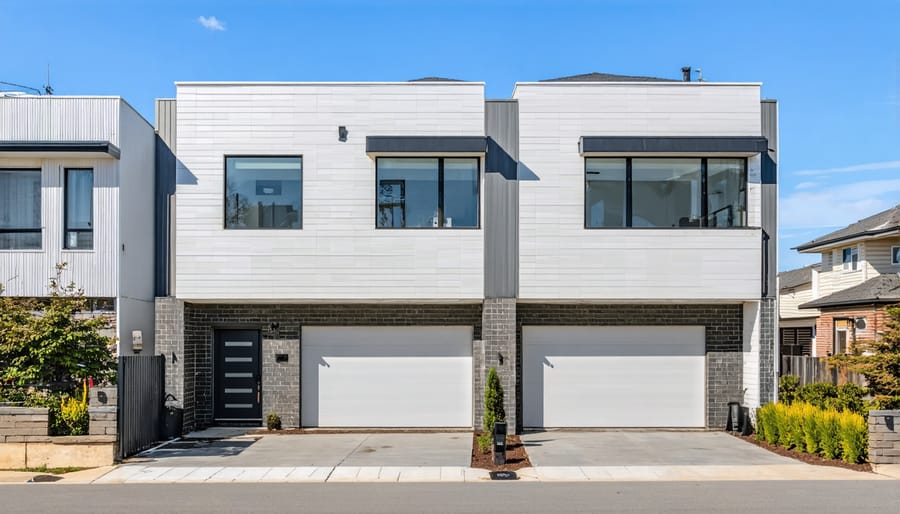
The key distinction comes down to unit count. Properties with 2-4 units, like duplexes, triplexes, and fourplexes, fall into one category. Think of that charming Victorian home you’ve seen converted into side-by-side apartments, or the duplex where you could live in one unit while renting out the other. These smaller multifamily properties are typically financed through residential loans, similar to what you’d use for a single-family home. If you’re planning to live in one of the units, you can often qualify for conventional financing with as little as 3-5% down.
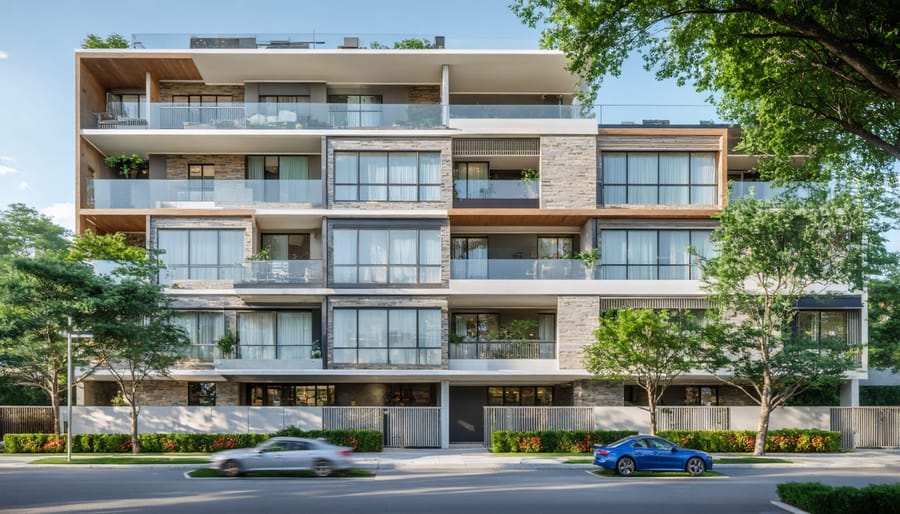
Once you cross into 5+ unit territory, apartment buildings and larger complexes, you’re dealing with commercial real estate. Lenders view these differently because they’re seen as true business ventures rather than residential investments. The financing becomes more complex, often requiring larger down payments and different qualification criteria based on the property’s income potential rather than just your personal finances.
Why does this matter for you? Understanding this distinction helps you strategize your investment journey. Maybe you’re considering adding an accessory dwelling unit to your property, essentially creating a duplex situation. Or perhaps you’re eyeing that triplex down the street where you could live affordably while building rental income. Knowing how lenders categorize these properties helps you plan your financing approach from the start, making your multifamily dreams much more achievable.
The Surprising Benefits of Multifamily Financing
How Rental Income Changes Your Borrowing Power
Here’s the great news: rental income can actually boost your borrowing power significantly when pursuing multifamily properties. Lenders typically count 75% of your projected rental income toward qualifying, which helps offset the higher mortgage payment. Think of it as the property helping you afford itself.
Here’s how it works in practice. Let’s say you’re eyeing a duplex with a $2,500 monthly mortgage payment, and one unit will generate $1,200 in rent. Lenders will apply $900 (75% of $1,200) toward your income calculation, meaning you only need to qualify for the remaining $1,600 instead of the full payment. This approach to income-generating property financing opens doors that might otherwise seem closed.
Keep in mind that some lenders require signed leases or rental history from the property, while others accept market rent analysis from an appraiser. Owner-occupied multifamily properties typically receive the most favorable consideration since you’re living there while generating income. It’s a practical pathway that transforms your debt-to-income ratio from a roadblock into a stepping stone toward real estate investment.
Lower Risk in the Eyes of Lenders
Here’s something that might surprise you: lenders often view multifamily properties as safer investments than single-family homes. Why? It all comes down to income stability. When you own a duplex, triplex, or fourplex, you’re not putting all your eggs in one basket. If one tenant moves out, you’ve still got rental income flowing in from the other units to cover your mortgage payment.
Think of it like having a backup plan built right into your property. This diversified income stream makes lenders feel more confident about your ability to repay the loan, even during vacancy periods or economic downturns. Banks love predictability, and multiple income sources provide exactly that.
This reduced risk often translates into real benefits for you as a borrower. You might qualify for more competitive interest rates, lower down payment requirements in some cases, or more flexible loan terms. Some lenders even allow you to count a portion of your projected rental income when calculating your debt-to-income ratio, which can help you qualify for a larger loan amount. It’s one of those win-win scenarios where the property’s structure actually works in your favor from day one.
Traditional Financing Options for Small Multifamily Properties
Conventional Loans: The Most Flexible Path
If you’re eyeing that duplex or fourplex as your next investment move, conventional loans might be your sweet spot. These traditional mortgages work beautifully for properties with 2-4 units, giving you flexibility that’s hard to beat. The best part? If you’re planning to live in one of the units yourself (called owner-occupancy), you could secure financing with as little as 5% down, though 15-25% is more typical for pure investment properties.
Here’s why conventional loans shine: they offer competitive interest rates, straightforward terms, and you’re not limited by strict property condition requirements like some government-backed programs. You’ll need decent credit (typically 620 or higher) and proof of steady income, but if your financial ducks are in a row, this path opens up quickly.
This option makes the most sense when you’re buying a property in good condition that doesn’t need major renovations upfront. Think of it as the reliable, no-surprises route. Your lender will evaluate both your personal income and the property’s potential rental income, which can actually help you qualify for more than you might with a single-family home loan. It’s an encouraging way to step into the multifamily world while building equity and generating rental income simultaneously.
FHA Loans: Your Low Down Payment Option
If you’re dreaming of becoming a multifamily property owner but worried about saving a massive down payment, FHA loans might be your golden ticket. Here’s the exciting part: you can purchase a 2-4 unit property with as little as 3.5% down, making property ownership surprisingly accessible even if you’re just starting your investment journey.
The catch? You’ll need to live in one of the units as your primary residence for at least one year. Think of it as getting paid to be a landlord while you learn the ropes. Your tenants in the other units help cover your mortgage payment, essentially subsidizing your own housing costs while you build equity and property management experience.
FHA loans are particularly forgiving with credit requirements too, accepting scores as low as 580 for that 3.5% down payment option. The property must meet FHA safety and livability standards, but these inspections actually protect you as a buyer-owner. Plus, you can roll renovation costs into an FHA 203(k) loan if your new multifamily property needs some updating. It’s a practical stepping stone that transforms you from homeowner to investor without requiring deep pockets or years of real estate experience.
VA Loans for Eligible Buyers
If you’ve served in the military, VA loans offer an incredible advantage when purchasing multifamily properties. These government-backed loans allow eligible veterans, active-duty service members, and qualifying spouses to finance properties with up to four units without any down payment—yes, zero percent down. Imagine transforming your home improvement journey into a real investment opportunity while securing housing for yourself and generating rental income from the other units.
The beauty of VA loans extends beyond the no-down-payment feature. You’ll also avoid private mortgage insurance, which can save hundreds monthly, and typically enjoy competitive interest rates. To qualify, you’ll need to occupy one of the units as your primary residence, making this perfect if you’re considering a house-hacking strategy. The property must meet VA appraisal standards, but many duplexes, triplexes, and fourplexes easily qualify. It’s a powerful way to step into real estate investing while honoring your service with benefits designed specifically for you.
Commercial Financing for Larger Multifamily Buildings
How Commercial Loans Work Differently
Here’s the exciting news: when you step into multifamily financing, you’re playing by different rules than traditional home loans, and these differences can actually work in your favor. Think of it as graduating from shopping for your personal wardrobe to outfitting an entire boutique.
The biggest shift? Lenders focus primarily on the property’s income-generating potential rather than your personal paycheck. They’ll examine rent rolls, occupancy rates, and something called the debt service coverage ratio, which essentially shows whether the rental income can comfortably cover your mortgage payments plus expenses. This means your property becomes your best advocate, speaking for itself through its performance numbers.
Commercial loans typically require larger down payments, usually 20-30%, compared to conventional mortgages. However, they offer unique advantages like longer amortization periods and the ability to refinance strategically. You might explore 1031 exchange benefits down the road, which can supercharge your investment strategy.
Terms generally range from five to ten years with 20-30 year amortization schedules, creating what’s called a balloon payment at the end. While this might sound intimidating, it’s standard practice and gives you flexibility to refinance as your portfolio grows. The underwriting process digs deeper too, examining your experience managing properties and the neighborhood’s market dynamics. Think of it as lenders becoming your business partners, invested in ensuring your investment property thrives.
Portfolio Lenders and Community Banks
If you’re exploring multifamily property investments and finding traditional bank loans a bit rigid for your unique situation, portfolio lenders and community banks might be your perfect match. Think of them as the friendly neighborhood alternative to big-box banking.
Portfolio lenders keep loans in-house rather than selling them to investors, which means they can bend the rules a bit. Got a quirky property with tons of character but doesn’t fit the conventional mold? They’ll actually listen. Community banks operate similarly, prioritizing relationships over robotic underwriting formulas. They’re especially great if you’re converting a single-family home into a duplex or adding an accessory dwelling unit.
The real advantage here is flexibility. These lenders consider your complete financial picture, not just your credit score. They often approve projects that larger institutions would reject, and they typically make decisions faster because everything stays local. You’ll work with actual people who understand your market and investment vision.
While interest rates might run slightly higher than conventional loans, the personalized service and creative alternative financing options often make the difference between landing your dream property or watching it slip away. Consider starting conversations with local banks in your area—building those relationships now pays dividends later.
Creative Financing Strategies for Homeowners Considering Multifamily

House Hacking: Live in One Unit, Rent the Others
House hacking has become the secret weapon for first-time multifamily buyers who want to break into real estate investing without breaking the bank. The concept is beautifully simple: you purchase a duplex, triplex, or fourplex, live in one unit, and rent out the others. Your tenants essentially help cover your mortgage while you build equity and learn the landlord ropes.
Picture this: Sarah bought a duplex in Portland for $450,000 using an FHA loan requiring just 3.5% down. She lives in one unit while renting the other for $1,800 monthly. That rental income covers nearly 60% of her total mortgage payment, making homeownership dramatically more affordable than renting solo.
The beauty of house hacking lies in its dual benefits. You’re building wealth through appreciation and mortgage paydown while gaining hands-on property management experience. Plus, owner-occupied financing typically offers better interest rates and lower down payment requirements than traditional investment properties.
Start by identifying properties in neighborhoods with strong rental demand. Calculate potential rental income conservatively, factor in maintenance reserves, and learn strategies to maximize rental occupancy. Your first multifamily property becomes both your home and your investment classroom, setting the foundation for future real estate success.
203(k) Rehab Loans for Fixer-Upper Multifamily Properties
Imagine finding that perfect duplex or triplex with amazing bones but outdated kitchens and bathrooms that make you want to run the other direction. Here’s the exciting part: you don’t need two separate loans to make your fixer-upper vision come true. The FHA 203(k) rehab loan bundles your purchase price and renovation costs into one convenient package.
This financing option is particularly brilliant for multifamily properties with up to four units, where you’ll live in one unit while renting out the others. Instead of scrambling to find cash for repairs after closing, the 203(k) loan gives you access to renovation funds right from the start. Think of it as your all-in-one ticket to transforming a tired property into a rental income powerhouse.
There are two flavors to choose from. The Standard 203(k) covers major renovations like structural repairs, room additions, or complete kitchen overhauls, with a minimum of $5,000 in improvements required. The Limited 203(k) (previously called Streamline) handles smaller projects under $35,000, perfect for cosmetic updates like new flooring, fresh paint, or appliance upgrades.
The beauty here is the low down payment requirement, often just 3.5 percent of the total project cost. You’ll work with an FHA-approved lender who’ll help navigate the process, including contractor bids and draw schedules. While there’s some paperwork involved, the ability to create immediate value through strategic renovations makes this loan a game-changer for aspiring multifamily investors ready to roll up their sleeves.
What You Need to Qualify: The Real Requirements
Let’s get real about what lenders actually look for when you’re pursuing multifamily financing. The good news? You have more options than you might think, and the requirements vary significantly depending on your chosen path.
For conventional multifamily loans on properties with 2-4 units, expect credit score minimums around 620-640, though 680 or higher opens better rates. Down payments typically range from 15-25%, which is higher than single-family homes but reflects the income-generating potential. You’ll need cash reserves covering 6-12 months of mortgage payments, demonstrating you can weather vacancies or repairs.
FHA loans offer a friendlier entry point if you’ll owner-occupy one unit. Credit scores as low as 580 might qualify with 10% down, or just 3.5% down if your score reaches 580 or above. This makes multifamily investing surprisingly accessible for first-timers willing to live on-site while building their portfolio.
Commercial multifamily financing (5+ units) shifts focus from personal credit to the property’s performance. Lenders want debt service coverage ratios showing rental income exceeds mortgage payments by 1.25 times or more. Your credit score still matters, but property cash flow takes center stage.
Documentation requirements include tax returns (typically two years), W-2s or profit-and-loss statements, bank statements, and rental income verification. For portfolio loans through smaller banks, relationships matter as much as paperwork, so don’t overlook local lenders who understand your market.
The path forward depends on your starting point. Owner-occupancy creates the easiest entry, while experienced investors can leverage commercial options. Review these mortgage approval tips to strengthen your application regardless of which route you choose. Your multifamily journey starts with understanding these benchmarks, then working strategically toward meeting them.
You’ve now got a solid understanding of how multifamily real estate financing works, and hopefully you’re feeling inspired about the possibilities ahead. Whether you’re dreaming of transforming your single-family home into a duplex, adding an accessory dwelling unit in your backyard, or purchasing your first small apartment building, multifamily properties represent a unique intersection of home improvement creativity and smart financial strategy.
Remember, you don’t need to start with a 20-unit complex to enter the multifamily world. Adding an ADU above your garage or converting that unused basement into a rental apartment can be your perfect first step. These smaller projects let you test the waters, learn what being a landlord really means, and start building passive income without overwhelming yourself financially or emotionally.
The financing landscape might seem complex at first glance, but by now you understand the basics: conventional loans for smaller properties, government-backed options when you qualify, and specialized commercial financing as you scale up. Each path has its own advantages depending on your situation, budget, and long-term goals.
Take time to evaluate your current property and financial position. Consult with lenders who specialize in multifamily financing, connect with local contractors who’ve worked on conversion projects, and don’t be afraid to start small. Every successful multifamily investor began somewhere, and your journey can start right in your own home. The combination of creative home improvement and investment potential makes multifamily real estate an exciting opportunity worth exploring.


