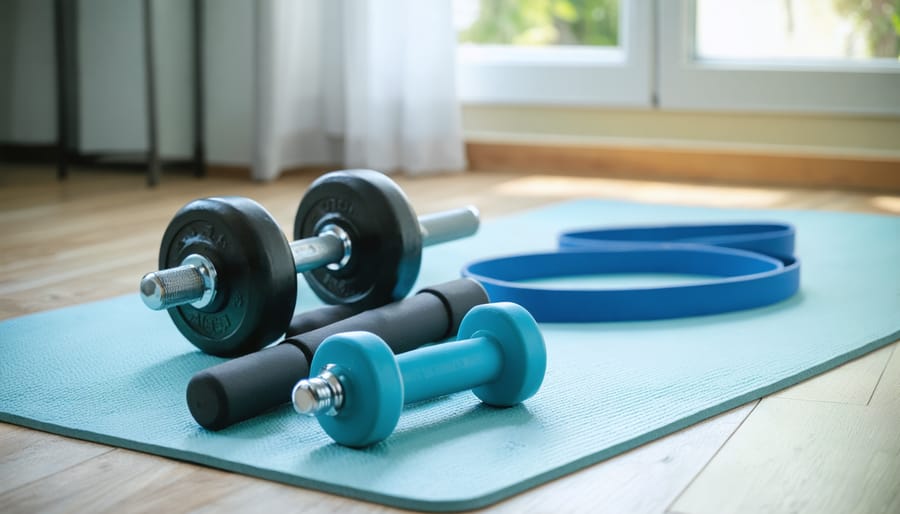
Transform cluttered workout spaces into organized fitness havens by mounting wall-track systems that hold resistance bands, jump ropes, and yoga mats vertically, freeing up 60% more floor space instantly. Invest in multi-tier dumbbell racks with integrated plate storage underneath, keeping weights accessible while eliminating the trip hazards that plague most home gyms. Repurpose furniture pieces like vintage ladder shelves or industrial pipe frameworks as eye-catching storage displays that turn kettlebells and medicine balls into design features rather than eyesores.
The key to maintaining motivation after building a home gym lies in creating visual order. Install pegboard walls with custom hooks to outline equipment silhouettes, making it effortless to return items to their designated spots after every session. Add rolling storage carts beneath benches or in corners for smaller accessories like foam rollers and resistance loops, keeping them hidden yet instantly retrievable.
Consider your room’s architecture when planning storage solutions. Dead space behind doors accommodates over-the-door organizers perfect for towels and resistance bands, while ceiling-mounted pulley systems can hoist bikes or rowing machines overhead when not in use. Even the smallest spaces become functional when every vertical inch works strategically. Your equipment deserves better than gathering dust in piles, and with thoughtful storage choices, you’ll spend less time hunting for gear and more time actually using it.
Why Smart Storage Is Your Most Important Home Gym Upgrade
Before you invest in another piece of equipment, consider this: the smartest upgrade for your home or boutique gym might not be a new machine at all. It’s storage, and it matters more than you think.
Picture this familiar scene: You’re motivated to work out after a long day, but first you need to move the yoga mat off the bench, relocate those dumbbells blocking the doorway, and untangle the resistance bands from wherever they ended up last time. Twenty minutes later, your enthusiasm has evaporated. Sound familiar? You’re not alone. Poor storage doesn’t just create physical obstacles—it creates mental ones that quietly sabotage your fitness goals.
The psychology is straightforward. When your workout space feels chaotic, your brain registers it as work before you’ve even started exercising. Studies show that visual clutter increases cortisol levels and reduces focus. In contrast, an organized space signals that working out will be smooth and enjoyable, making you significantly more likely to actually do it.
Then there’s the safety factor. We’ve all done the midnight stumble over a kettlebell or stubbed a toe on a stray weight plate. Beyond minor injuries, scattered equipment poses real risks during workouts. Ever tried doing burpees while mentally tracking which dumbbells to avoid? It’s distracting at best, dangerous at worst.
Smart storage transforms your space from obstacle course to invitation. When upgrading your home gym, think of storage as the foundation that makes everything else work better. Your equipment stays in better condition, your floor space multiplies, and most importantly, you eliminate that friction between wanting to exercise and actually starting.
The best part? You don’t need expensive solutions. Even simple changes—hooks for resistance bands, a designated spot for yoga mats, or a basic rack for dumbbells—can dramatically shift how you experience your workout space. When everything has a home, your gym becomes a place you want to be, not a project you keep postponing.
Assess Your Space Before You Buy Anything
The Equipment Inventory Method
Before you can tackle your home gym storage challenge, you need to know exactly what you’re working with. Start by gathering every piece of equipment in one area—yes, even those resistance bands hiding under the couch! This visual inventory gives you the full picture of your storage needs.
Next, create three categories: daily essentials (items you use multiple times per week), occasional gear (used weekly or bi-weekly), and specialty items (monthly or less). This simple system helps determine what deserves prime real estate in your space. Your yoga mat and dumbbells? Front and center. That foam roller you use once a month? It can live elsewhere.
Now assess each item’s size and weight. Group small accessories like jump ropes and resistance bands together, medium items like kettlebells and medicine balls in another category, and larger equipment like benches or weight racks separately. This categorization makes it easier to visualize storage solutions—wall-mounted options for frequent small items, shelving for medium gear, and dedicated floor space for bulkier pieces. Taking photos during this process helps you remember your inventory when shopping for storage solutions or planning DIY projects.
Finding Hidden Storage Opportunities
Your home gym likely has more storage potential than you realize—you just need to know where to look! Start by taking a fresh look at those awkward corners that often become dead zones. Corner shelving units or a simple triangular rack can transform these spaces into perfect spots for storing yoga mats, resistance bands, or foam rollers.
Don’t forget to look up! Ceiling-mounted storage racks are game-changers for bulky items like paddleboards, bikes, or seasonal equipment you don’t use daily. They free up precious floor space while keeping items accessible. Similarly, the area behind your door is prime real estate going to waste. Over-the-door organizers with hooks or pockets can hold jump ropes, towels, or smaller accessories.
Vertical wall space is your best friend in a compact home gym. Instead of thinking horizontally, go vertical with pegboards, wall-mounted slat systems, or ladder-style racks. These solutions maximize every inch from floor to ceiling. Even that narrow space between equipment or along a hallway can accommodate slim rolling carts for dumbbells or water bottles.
Walk through your workout area with fresh eyes, measuring those forgotten nooks and crannies. You’ll be amazed at how much storage potential you’ve been overlooking!

Wall-Mounted Solutions That Clear Your Floor Space
Pegboard Systems for Ultimate Flexibility
Pegboard walls are game-changers for home gym organization, offering endless customization possibilities that actually look fantastic. The beauty of pegboard is its adaptability—you can rearrange hooks and accessories as your fitness routine evolves, making it perfect for storing resistance bands, jump ropes, yoga mats, and those smaller items that always seem to go missing.
Installation is straightforward. Mount your pegboard about an inch away from the wall using spacers or furring strips, allowing room for hooks to fit through the holes. Choose a high-traffic wall where you’ll see and access your gear easily. Paint your pegboard in an accent color that complements your space—think deep charcoal, energizing teal, or warm terracotta—to transform it from purely functional to genuinely stylish.
For organization, use S-hooks for resistance bands and jump ropes, creating visual clusters by grouping similar items together. Install horizontal dowels or specialized pegboard shelves to roll and display yoga mats like artwork. Small baskets attached to the pegboard work wonderfully for holding hand grips, workout gloves, and other accessories.
Design tip: Leave some negative space on your board. An overstuffed pegboard looks chaotic, while thoughtfully arranged equipment with breathing room creates an inspiring, boutique-gym aesthetic that makes you actually want to work out.
Weight Plate Racks and Barbell Holders
Keeping your weight plates and barbells organized transforms your workout space from chaotic to coach-worthy. Wall-mounted storage is your best friend here, lifting heavy equipment off the floor and creating that satisfying visual order that makes you actually want to work out.
For weight plate storage, you’ve got choices. Commercial pegboard systems typically run $100-300 and offer powder-coated durability that’ll last decades. They mount directly to studs and can handle hundreds of pounds when installed correctly. If you’re handy, a DIY approach using heavy-duty steel pipes secured to a backing board costs around $40-60 and delivers similar results. The key is ensuring your mounting points hit at least two wall studs and using lag bolts rated for the total weight capacity.
Barbell holders follow the same principle. Horizontal wall racks keep bars accessible while freeing up precious floor space. Look for designs with protective padding to prevent knurling damage. Pro tip: install these about chest height so you’re not constantly bending down.
Safety consideration: Always mount storage systems into studs, not just drywall. Use a stud finder, mark your drilling points carefully, and don’t skimp on quality hardware. Your ceiling and toes will thank you. Consider adding weight capacity labels to remind everyone about load limits as your collection grows.
Fold-Down and Retractable Options
When space is at a premium, folding and retractable equipment becomes your secret weapon. Wall-mounted fold-down benches transform from sturdy workout stations to flat wall panels in seconds, reclaiming your floor space instantly. These clever designs typically hold 300+ pounds when deployed but sit just a few inches from the wall when stored.
Consider Murphy-style squat racks that fold up completely, or resistance band systems with retractable anchor points that tuck away invisibly. Many brands now offer fold-flat treadmills and rowing machines that slide under beds or into closets. The beauty here is flexibility—your living room stays a living room until workout time calls.
For a DIY approach, install hinged shelving that folds down to hold weights during use, then disappears afterward. Pair these with collapsible yoga mats and adjustable dumbbells that consolidate multiple weights into compact units. This approach works brilliantly in guest rooms, home offices, or any multi-purpose space where visibility matters as much as functionality.
Smart Floor Storage That Works With Your Workout Flow
Dumbbell Racks and Kettlebell Storage
Finding the perfect rack starts with knowing your collection. Count your dumbbells and kettlebells, then choose a rack with 20-30% extra capacity for future additions. For most home gyms, a three-tier horizontal rack handles 5-10 pairs of dumbbells beautifully, while A-frame designs create compact footprints ideal for corner placement.
Strategic placement makes all the difference. Position your rack within arm’s reach of your workout zone, ideally against a wall where it won’t interrupt movement patterns. If you’re working with a multi-purpose room, consider a mobile rack on casters that tucks away when guests arrive.
Vertical storage solutions are game-changers for tight spaces. Wall-mounted kettlebell storage pegs installed at varying heights maximize unused wall space while keeping your floor clear. Tower-style racks occupy just two square feet yet hold an impressive amount of equipment. For the ultimate space-saver, try a corner rack design that capitalizes on typically wasted angles in your room.
Match your rack style to your dumbbells. Hex dumbbells sit securely on flat shelves, while round heads need cradle-style holders. Rubber-coated saddles protect both your weights and floors from scratches, extending the life of your investment while maintaining that polished look you’re proud to show off.

Rolling Carts and Mobile Storage
Rolling carts and mobile storage units are game-changers for compact home gyms, giving you the flexibility to reconfigure your space on the fly. Think of them as your workout room’s best friend—they roll in when you need them and disappear when you don’t.
Utility carts with multiple tiers work beautifully for storing smaller items like resistance bands, jump ropes, and foam rollers. You can wheel them right next to your workout zone, then tuck them into a closet or corner afterward. Kitchen-style rolling islands also double perfectly as mobile gym storage, offering both shelving and a flat top surface for water bottles or your phone.
For heavier equipment, consider sturdy platform carts with locking wheels. These handle kettlebells and medicine balls with ease, and those locking mechanisms ensure everything stays put during intense sessions. Some fitness enthusiasts even mount vertical bar holders on rolling platforms, creating a custom dumbbell station that moves wherever needed.
The beauty of mobile storage is its adaptability. Your morning yoga session requires different tools than your evening strength training, and rolling units let you switch setups in seconds without cluttering your entire space.
Under-Equipment Storage Hacks
That dead space under your treadmill or weight bench is prime real estate for storage! Slide flat plastic bins underneath to corral resistance bands, yoga mats, or jump ropes. For adjustable benches, consider wheeled crates that roll out easily when you need access. Measure your equipment’s clearance first, then choose containers accordingly. Pro tip: attach adhesive hooks to the underside of your bench to hang towels or foam rollers. If your equipment sits higher off the ground, stackable drawers work beautifully for storing smaller accessories like gloves, wraps, and workout journals. This hidden storage keeps essentials nearby without cluttering your visible space, making your gym feel more organized and inviting.
Organizing Small Equipment and Accessories

Basket and Bin Systems That Actually Look Good
Gone are the days when storage bins meant ugly plastic eyesores. Today’s basket and bin systems can actually elevate your home gym’s aesthetic while keeping resistance bands, yoga blocks, and hand weights beautifully contained.
Start with woven seagrass or rattan baskets for a natural, spa-like vibe that works especially well if your gym doubles as a yoga or meditation space. These breathe better than plastic, preventing that musty smell workout gear sometimes develops. For a more industrial look, wire mesh bins or galvanized metal containers add character while letting you see contents at a glance.
The real game-changer? Adding simple labels. Whether you use a label maker, chalkboard tags, or handwritten tags tied with twine, labeling transforms random containers into an organized system. Group similar items together: one basket for stretching accessories, another for small weights, and a third for workout tech like heart rate monitors and headphones.
Pro tip: Choose bins with handles for easy transport. You’ll actually use them when they’re convenient to grab and relocate during different workout routines.
Mat Storage Solutions
Yoga mats and foam rollers have a habit of taking over corners and creating that perpetual pile-by-the-door situation we’ve all experienced. The good news? A few smart storage tweaks can transform these bulky essentials into organized, accessible equipment.
Vertical storage wins the space-saving game every time. Wall-mounted mat racks work beautifully in tight spaces, keeping mats rolled and ready to grab. You can install simple wooden dowels or PVC pipes horizontally between two brackets, creating custom slots for each mat. For renters or those avoiding wall damage, over-the-door organizers with individual pockets handle multiple mats without requiring installation.
Horizontal storage shines when you have underutilized areas. Slide rolled mats beneath benches, store them in decorative baskets that double as decor, or tuck them into narrow gaps between equipment. A rolling cart with mesh sides keeps everything visible while allowing you to wheel your collection wherever you need it.
Foam rollers deserve their own consideration since they’re oddly shaped. Store them standing upright in umbrella stands or large decorative crocks near your workout zone. For a creative DIY approach, mount tension curtain rods inside closets or between wall studs to create suspended storage that keeps rollers off the floor while maintaining easy access.
DIY Storage Projects for Budget-Conscious Upgraders
Build Your Own Weight Plate Tree
Ready to build something functional and save some serious cash? A DIY weight plate tree is one of those satisfying weekend projects that’ll make you wonder why you didn’t tackle it sooner.
For a sturdy wooden version, you’ll need a 2×12 base piece (about 24 inches square), a 4×4 post (48 inches tall), and 12-inch sections of 3/4-inch wooden dowels or metal pipes for the plate holders. Grab wood glue, wood screws, sandpaper, and your preferred finish. Start by cutting a centered hole in your base to fit the 4×4 snugly. Secure it with construction adhesive and corner brackets underneath for rock-solid stability. Drill holes through the post at evenly spaced intervals, angling them slightly upward to prevent plates from sliding off. Insert your dowels or pipes, securing them with additional screws from behind.
Prefer something lighter and budget-friendly? PVC pipe works beautifully. Use a wide PVC base filled with concrete or sand for stability, insert a vertical 2-inch PVC center post, and add 3/4-inch PVC arms as plate holders.
Sand everything smooth, apply a protective finish, and you’ve created a custom storage solution for under fifty dollars. It’s practical, personalized, and proof that clever organization doesn’t require fancy equipment.
Repurposed Storage Ideas
Before you rush out to buy new storage solutions, take a walk around your home and look at what you already have with fresh eyes. That old shoe rack gathering dust in your closet? It’s perfect for organizing resistance bands, jump ropes, and smaller accessories. Simply mount it on your gym wall or tuck it in a corner, and suddenly you’ve got tiered storage that keeps everything visible and accessible.
Bookshelves are another game-changer for gym storage. Those sturdy shelves that once held novels can easily accommodate yoga blocks, foam rollers, and even neatly stacked weights. Try labeling each shelf by equipment type or workout category to create a system that makes grabbing what you need effortless. If your bookshelf has adjustable shelves, customize the spacing to fit taller items like kettlebells or boxing gloves.
Don’t overlook garage organizers either. Wall-mounted pegboards designed for tools work brilliantly for hanging resistance bands, exercise mats, or even lighter dumbbells. Those plastic storage bins you use for holiday decorations? Repurpose them for sorting resistance bands by tension level or keeping all your stretching equipment in one place. The beauty of repurposing is that you’re solving your storage challenge while being resourceful and budget-conscious.
Making Your Storage System Work Long-Term
You’ve done the hard work of setting up your home gym storage—now let’s talk about keeping it that way. The secret to long-term success isn’t perfection; it’s developing simple habits that make organization feel effortless.
Start with the golden rule: everything returns to its designated spot after each workout. Sounds simple, right? Make this easier by placing your most-used items in the most convenient locations. If you’re constantly leaving dumbbells on the floor, your rack might be in the wrong spot. Adjust your system to work with your natural movements, not against them.
Schedule a quick five-minute reset at the end of each week. Wipe down equipment, reorganize any stray items, and check for wear on storage pieces. This mini-audit prevents small messes from becoming overwhelming projects. Think of it as preventive maintenance for your space and your motivation.
As your fitness journey evolves, so will your equipment collection. Maybe you’ve outgrown those light resistance bands or added a new barbell to your routine. Plan a seasonal review—quarterly works great—to reassess what you’re actually using. Donate or sell equipment gathering dust, and reconfigure your storage to accommodate new additions. Your system should grow with you, not constrain you.
Label everything, especially if you share the space with family members. Clear labels eliminate the “where does this go?” guessing game and help everyone maintain the system. Use a label maker for a polished look, or grab some painter’s tape and a marker for a budget-friendly option.
Finally, remember that perfect organization isn’t the goal—functional organization is. If something isn’t working after a few weeks, change it. Your home gym should inspire you to work out, not stress you out about tidiness. Keep it practical, keep it simple, and keep moving forward.
Creating an organized, functional home gym isn’t just about having the right equipment—it’s about ensuring you can actually access and use it without frustration. Proper storage solutions transform a cluttered corner into an inviting space that motivates you to show up for your workouts day after day. When your resistance bands aren’t tangled, your weights have designated spots, and your yoga mat isn’t buried under a pile of forgotten fitness gear, you’ve eliminated one of the biggest barriers to consistent exercise: the hassle factor.
The beauty of upgrading your home gym storage is that you don’t need to tackle everything at once. Start with your biggest pain point. Maybe it’s those dumbbells scattered across the floor or the foam roller that never seems to have a home. Choose one storage solution that addresses your most pressing challenge, implement it, and notice how much easier it becomes to maintain your workout routine. Once you experience that small win, you’ll naturally want to build on that momentum.
Remember, every storage upgrade you make is an investment in yourself and your fitness journey. You’re not just organizing equipment—you’re creating an environment that supports your health goals and makes it easier to prioritize your wellbeing. Your home gym should inspire you, not intimidate you. With thoughtful storage in place, there’s nothing standing between you and the workout that’s waiting for you.