
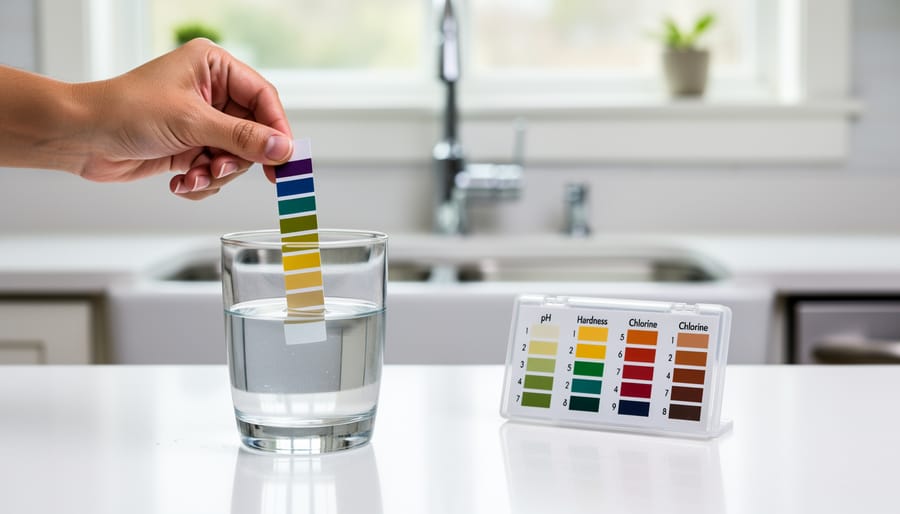
Test your tap water with pH strips first—dip one into a glass of water for instant results showing whether your supply runs acidic or alkaline, which affects everything from pipe corrosion to soap effectiveness. Purchase a basic TDS meter next to measure total dissolved solids in parts per million, revealing the concentration of minerals, salts, and metals lurking in what looks like clear water. Invest in bacteria test kits if you rely on well water or notice unusual tastes, as these simple vials detect harmful coliform bacteria within 48 hours without requiring lab fees.
Understanding what flows through your faucets empowers you to protect your family’s health and your home’s plumbing system. The equipment available ranges from simple color-changing strips costing a few dollars to sophisticated digital meters, but you don’t need laboratory-grade tools to get meaningful results. Most homeowners find success with a modest collection of testing devices that target specific concerns like hardness, chlorine levels, or lead contamination.
The key is matching your equipment to your actual needs rather than buying everything available. City water users typically focus on different parameters than those with private wells. Older homes demand lead testing, while agricultural areas require nitrate monitoring. This guide breaks down testing equipment by complexity and purpose, showing you exactly which tools deserve space under your sink and which scenarios call for professional laboratory analysis instead of DIY methods.
Why Every Homeowner Should Care About Water Testing Equipment
Your home’s water might look crystal clear as it flows from the tap, but appearances can be deceiving. Testing your water isn’t about being paranoid—it’s about being proactive with one of the most essential resources your family uses every day.
If you have well water, testing becomes even more critical. Unlike municipal water systems that receive regular monitoring, your well water is entirely your responsibility. Seasonal changes, nearby construction, or agricultural runoff can all impact your water quality without any visible warning signs. Understanding why water sampling matters helps you stay ahead of potential problems before they affect your family’s health.
Hard water issues are another compelling reason to test. That stubborn white buildup around faucets, dingy laundry, and dry skin after showering? All signs of hard water that testing can confirm. Once you know what you’re dealing with, you can choose the right solution—whether that’s a water softener or a simple filter pitcher.
Perhaps most importantly, testing equipment helps you detect invisible threats. Lead from old pipes, bacteria from contamination events, or elevated nitrate levels don’t announce themselves with bad taste or smell. These contaminants quietly accumulate, potentially causing serious health issues over time, especially for children and pregnant women.
Think of water testing equipment as an investment in peace of mind. For less than the cost of a single plumber visit, you can gain valuable insights into what’s actually flowing through your home. You wouldn’t ignore a strange noise from your furnace or a crack in your foundation—your water deserves the same attention and care.
Test Strips and Kits: Your First Line of Defense
What These Simple Tools Can Tell You
Those colorful little strips pack quite a bit of information into one quick dip. Most basic test strips measure pH levels, which tell you whether your water is acidic or alkaline – something that matters more than you might think. Water that’s too acidic can corrode pipes and fixtures, while overly alkaline water leaves those stubborn white deposits on your faucets and showerheads.
Many strips also check for water hardness by measuring calcium and magnesium levels. If you’ve noticed soap that won’t lather properly or a filmy residue on dishes, hard water is likely the culprit. Chlorine is another common reading, particularly important if you’re concerned about taste or smell in your drinking water.
Some comprehensive strips go further, testing for nitrates and nitrites (common in well water near agricultural areas), iron (which causes those orange stains), and even bacteria indicators. Think of these readings as a wellness checkup for your home’s plumbing system. A single test can reveal why your morning coffee tastes off, why your whites aren’t staying white in the laundry, or whether that new water softener is actually doing its job. Understanding these numbers empowers you to make targeted improvements rather than guessing at solutions.
When Basic Kits Aren’t Enough
Let’s be real: sometimes those trusty basic test strips just won’t cut it. If you’re dealing with well water in an area with industrial activity nearby, or if your initial tests show concerning results, it’s time to level up your approach. Those simple kits typically can’t detect pesticides, heavy metals beyond the basics, or subtle bacterial contaminations that might be affecting your family’s health.
Think about calling in the professionals if you notice recurring health issues, unexplained staining that doesn’t match common culprits, or if you’re on a private well and haven’t had comprehensive testing in over a year. A certified lab can analyze dozens of contaminants that home kits simply miss.
Pregnant women, families with infants, or anyone with compromised immune systems should absolutely invest in professional testing rather than relying solely on DIY methods. Similarly, if you’re buying a new home with well water, spend the money on thorough lab analysis before signing those papers. Basic kits are fantastic for routine monitoring and peace of mind, but they’re the starting point, not the complete solution. When something feels off with your water, trust your instincts and seek expert analysis.
Digital Meters That Give You Instant Answers
The Three Digital Tools Worth Having
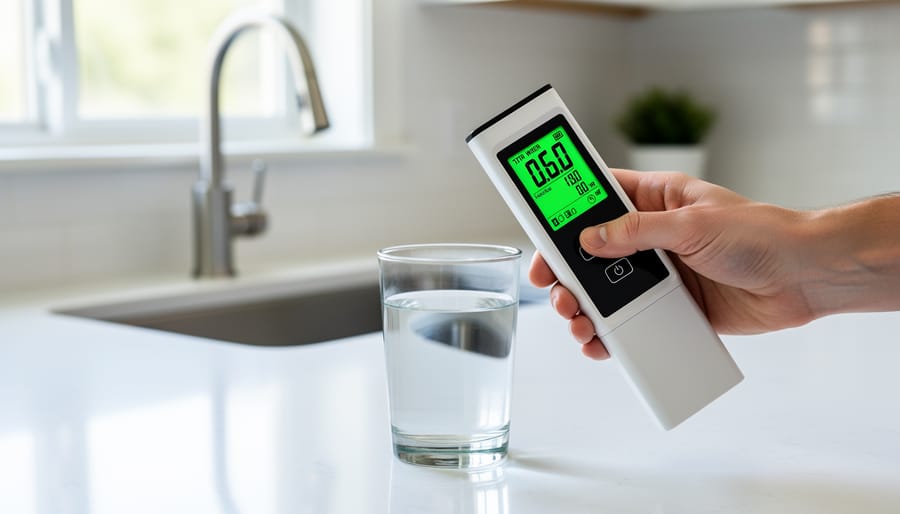
Let’s talk about the three digital tools that’ll make you feel like a water quality detective in your own home. These are the workhorses of water testing, and honestly, they’re pretty fun to use once you get the hang of them.
First up is the pH meter, your new best friend for understanding whether your water is acidic or alkaline. Think of it as a thermometer, but instead of temperature, it measures the chemical balance of your water on a scale from 0 to 14. Why should you care? Well, if you’ve noticed your drinking water tastes a bit off, or your houseplants aren’t thriving despite your best efforts, pH could be the culprit. Ideal drinking water sits comfortably between 6.5 and 8.5. These digital meters give you instant readings, and you can find reliable options starting around thirty dollars.
Next is the TDS or conductivity meter, which measures total dissolved solids in your water. Basically, it tells you how much “stuff” is floating around in there, from minerals to contaminants. High TDS readings might explain why your coffee maker keeps scaling up or why your tap water leaves spots on glasses. It’s especially useful if you’re considering a filtration system and want to measure its effectiveness before and after installation.
Finally, don’t overlook a simple digital thermometer. Water temperature affects everything from how well your coffee brews to bacterial growth potential in your plumbing. Hot water heaters should maintain temperatures around 120 degrees Fahrenheit for safety and efficiency.
Together, these three tools give you comprehensive insight into your home’s water quality without breaking the bank or requiring a chemistry degree.
Keeping Your Meters Accurate
Think of your water testing meters like you would a good kitchen scale—they’re only helpful when they’re accurate! The good news is that keeping them in tip-top shape doesn’t require a science degree.
Calibration is your best friend here. Most digital meters need calibrating before each use or at least weekly if you’re testing regularly. It’s surprisingly simple: just dip your probe into the calibration solution that came with your meter, adjust the reading to match the solution’s known value, and you’re ready to go. Keep those calibration solutions handy and replace them every few months, as they can lose accuracy over time.
Storage matters more than you’d think. After each use, rinse your probes with distilled water and store them according to the manufacturer’s instructions. pH probes typically need to stay moist in storage solution, while TDS meters prefer being dry. It’s like caring for good kitchen knives—a little attention goes a long way.
Watch for warning signs that it’s time for a new probe: readings that drift constantly, won’t calibrate properly, or show wildly inconsistent results. Most probes last 1-2 years with proper care, though heavy use might shorten that timeline. Consider it a small investment in your home’s water quality peace of mind.
Lab-Quality Testing Without Leaving Home
When basic test strips aren’t giving you the detailed answers you need, it might be time to step up to professional-grade equipment that brings lab-quality results right to your kitchen counter. Think of these tools as the power drills of water testing—more investment upfront, but invaluable when you need precision and reliability.
Colorimeters and photometers are the stars of this category. These digital devices measure specific contaminants with impressive accuracy by analyzing how light interacts with treated water samples. Instead of squinting at color charts wondering if that’s “kinda orange” or “definitely orange,” you’ll get exact numerical readings. They’re particularly brilliant for tracking lead levels, nitrates, or chlorine in areas where these contaminants are ongoing concerns.
Comprehensive testing panels take things even further, combining multiple tests into one streamlined kit. These often include chemical reagents and detailed instructions for testing everything from heavy metals to pesticides. While they require a bit more time and attention than dipping a strip, they’re still far simpler than sending samples to a lab and waiting days for results.
So when does this investment make sense? If you’re dealing with a known contamination issue and need to monitor treatment effectiveness, these tools pay for themselves quickly. They’re also smart choices for families with vulnerable members like infants or elderly relatives, where water quality directly impacts health. However, if you’re just doing annual checkups on city water that’s historically been fine, this might be overkill.
The sweet spot is usually finding one reliable device that targets your specific concern rather than buying everything available. Most homeowners find that investing in quality testing for one or two priority contaminants delivers better peace of mind than scattered basic testing across the board.
Bacteria and Pathogen Detection Tools
When it comes to protecting your family’s health, bacteria detection is absolutely essential, especially for well water users who don’t have municipal treatment safeguards. While invisible to the naked eye, harmful microorganisms like E. coli and coliform bacteria can cause serious illness, making proper testing a crucial part of home water safety.
At-home bacteria test kits offer a convenient starting point for routine monitoring. These typically come in simple formats: you collect a water sample, add it to a prepared vial or test strip, and wait 24-48 hours for color changes that indicate bacterial presence. Popular brands like WaterSafe provide affordable options ranging from $15-$40, perfect for quarterly checks. However, these kits generally only tell you if bacteria exist, not what type or concentration.
For comprehensive analysis, professional lab testing remains the gold standard. You’ll collect samples in sterile bottles provided by certified laboratories, then mail them for detailed examination. Lab testing identifies specific bacteria types, counts colony-forming units, and often screens for other concerning microorganisms. While more expensive at $50-$150 per test, this approach gives you actionable data for treatment decisions.
Think of at-home kits as your early warning system for routine monitoring, while lab testing serves as your definitive diagnostic tool when issues arise or before major home improvements involving your water supply.
Smart Water Monitoring Systems
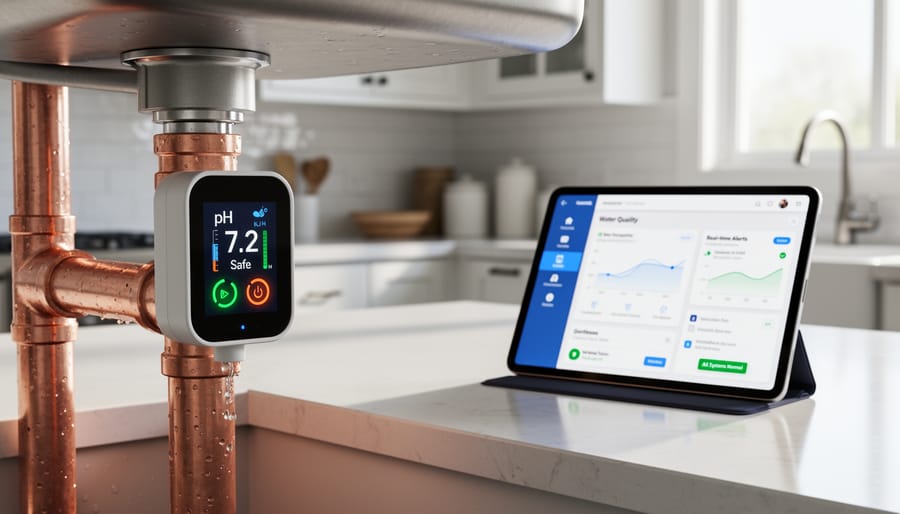
If you’re the kind of homeowner who loves having control at your fingertips (and let’s be honest, who doesn’t appreciate a good smart home feature?), continuous water monitoring systems might be your new best friend. These clever devices connect directly to your home’s plumbing and keep tabs on your water quality 24/7, sending alerts straight to your smartphone when something’s off.
Think of them as your home’s personal water quality guardian. While you’re at work or away on vacation, these systems are testing parameters like pH, chlorine levels, hardness, and even temperature. If anything goes sideways—like a sudden spike in contaminants or unusual mineral content—you’ll get an instant notification. It’s pretty reassuring, especially if you have young children, elderly family members, or anyone with compromised immune systems in your household.
Many of these smart monitors integrate beautifully with existing smart home ecosystems like Alexa or Google Home. You can ask your voice assistant about your current water quality or check historical trends through an app. Some systems even connect with whole-house water filtration units, automatically adjusting treatment levels based on real-time data.
Now, let’s talk investment. Quality smart monitoring systems typically range from $200 to $600, plus potential installation costs if you’re not comfortable doing basic plumbing work yourself. That’s definitely more than a basic test kit, but consider the peace of mind factor.
Who benefits most? Homeowners with well water, those living in areas with known water quality issues, or anyone managing specific health concerns will find these systems invaluable. They’re also fantastic for rental property owners who want to stay proactive about tenant safety. The data tracking alone can save you money by identifying problems before they become expensive emergencies.
Making Sense of Your Test Results
Getting your test results is just the beginning—the real magic happens when you understand what those numbers mean for your home. Think of it like checking your car’s dashboard: certain readings signal smooth sailing, while others tell you it’s time to take action.
Most test kits include reference charts showing safe ranges for common parameters. For pH, you’re looking for sweet spot between 6.5 and 8.5. Chlorine levels should hover around 1-3 ppm for treated water, while hardness varies by region but typically falls between 60-120 ppm for moderately soft water. If your readings fall outside these ranges, don’t panic—but do investigate further.
Here’s a game-changing habit: keep a water quality journal. Jot down your test results with dates in a simple notebook or spreadsheet. This creates a baseline for your home and helps you spot trends over time. Maybe your pH drops every spring when runoff increases, or your chlorine levels fluctuate after heavy rains. These patterns become your home’s unique water story.
When should you worry? Sudden dramatic changes deserve attention. A pH that swings from 7 to 9 overnight, or chlorine that disappears completely, warrants immediate investigation. Consistently concerning readings mean it’s time to contact your water utility or consider ensuring clean water through filtration systems.
Remember, testing regularly beats testing perfectly. Monthly checks give you enough data to make informed decisions without becoming overwhelming.
Building Your Personal Testing Toolkit
Your testing toolkit should match your home’s specific water situation and your family’s needs. Let’s build the right collection for you without breaking the bank.
If you have city water, start simple. A basic test strip kit for chlorine, pH, and hardness typically runs under $20 and gives you a solid baseline. These strips help you decide whether investing in water filter systems makes sense for your household. City water is already regulated, so you’re mainly checking for changes after it travels through your home’s pipes.
Well water owners need a more robust approach. Consider this your essential toolkit: bacteria tests (around $15-30 per test), nitrate test strips ($20), and a TDS meter ($15-25). Run bacteria tests at least annually, or after heavy rain that might affect your well. The investment pays off in peace of mind and early problem detection.
Living in an older home? Add lead testing to your list, especially if you have young children. Single-use lead tests cost about $10-15 each. Those vintage pipes might look charming, but knowing what’s flowing through them is crucial.
For families with health concerns like compromised immune systems or pregnant members, upgrade to laboratory testing annually. Yes, it costs $100-300, but professional analysis catches contaminants that home tests might miss.
Budget-conscious tip: Start with basic strips to identify problem areas, then invest in targeted tests for specific concerns. You don’t need every gadget on day one. Build your toolkit gradually as you learn your water’s personality. Keep a simple notebook tracking your test results and dates, creating your own water quality timeline that helps spot trends before they become problems.
Here’s the truth: water quality testing doesn’t have to feel like earning a chemistry degree. Think of it as just another skill in your home improvement toolkit, right alongside reading a tape measure or finding a wall stud. The equipment we’ve explored ranges from simple test strips you can grab at the hardware store to more sophisticated meters that give you precise readings. The beauty of this journey is that you don’t need everything at once.
Start where you are. Maybe that’s a basic TDS meter and some pH strips. Test your water, learn what the numbers mean for your specific situation, and go from there. As you become more comfortable, you can add tools that address your particular concerns, whether that’s lead, bacteria, or hardness levels. Each test you run builds your understanding of what’s flowing through your pipes and into your family’s glasses.
The right equipment puts you in control. You’re no longer guessing about water quality or relying solely on municipal reports that might not reflect what’s happening at your specific tap. You’re making informed decisions about filters, treatment systems, and when to call in professionals. That knowledge protects both your family’s health and your home’s plumbing investments. So grab that first testing kit and get started. Your future self will thank you.