

Touch the nearest wall in your room right now. Is it smooth? Rough? Does it have ridges, bumps, or grooves? That simple interaction reveals something powerful: texture isn’t just something artists worry about in paintings—it’s everywhere in your home, quietly shaping how every space feels and functions.
Understanding the four main types of texture gives you a secret weapon for transforming rooms from flat and forgettable to dynamic and inviting. Whether you’re planning a complete makeover or just want to add more visual interest to a tired corner, knowing how actual texture, simulated texture, abstract texture, and invented texture work together unlocks endless creative possibilities. These aren’t stuffy art school concepts—they’re practical tools that help you make smarter decisions about everything from choosing throw pillows to selecting wall treatments.
The magic happens when you layer different textures strategically throughout a room. A velvet sofa against exposed brick creates instant drama. Smooth marble countertops balanced with rough-hewn wooden shelves adds depth and character. Once you grasp how these four texture types function, you’ll start seeing your space differently and spotting opportunities you’ve been missing.
This guide breaks down each texture category in plain language, showing you exactly how to identify them in your home and use them to create rooms that feel thoughtfully designed rather than accidentally assembled. You’ll discover why some combinations feel harmonious while others fall flat, and learn the texture and tone techniques professionals use to make spaces feel complete. Ready to move beyond paint colors and furniture placement? Let’s explore how texture transforms ordinary rooms into spaces you’ll actually want to spend time in.
Why Texture Matters More Than Color in Interior Design
When you think about decorating a room, paint color is probably the first thing that comes to mind. We’ve all spent hours debating between shades of gray or scrolling through endless blue swatches. But here’s something that might surprise you: texture is actually the secret ingredient that makes a space feel truly complete and inviting.
Think about it this way. You could paint two rooms the exact same shade of creamy white, but one feels cozy and lived-in while the other feels cold and unwelcoming. What’s the difference? Texture. It’s the nubby throw blanket draped over your sofa, the smooth marble countertop catching the light, the rough brick accent wall adding character, and the soft velvet cushions inviting you to sink in.
The reason texture packs such a powerful punch is because of how texture affects light and shadow in your space. A flat, matte wall absorbs light completely differently than a glossy one. Rough surfaces create tiny shadows and highlights that add visual interest, while smooth surfaces reflect light to brighten a room. This interplay creates depth and dimension that color alone simply can’t achieve.
Texture also works hand-in-hand with tone to establish the mood you’re after. A room filled with sleek, polished surfaces reads as modern and sophisticated. Layer in some chunky knit throws, natural wood grain, and woven baskets, and suddenly the same space feels warm and approachable. The tonal values stay similar, but the textural variety completely transforms the atmosphere.
For DIY enthusiasts, this is actually great news. Adding texture is often more budget-friendly and forgiving than repainting everything. A few strategic textural additions like a jute rug, linen curtains, or textured wallpaper can breathe new life into a space without requiring you to commit to a completely different color scheme. It’s about creating a sensory experience that makes people want to touch, look closer, and most importantly, stay awhile.
Visual Texture: The Art of Creating Depth Without Touch
Pattern Play: Where to Use Visual Texture
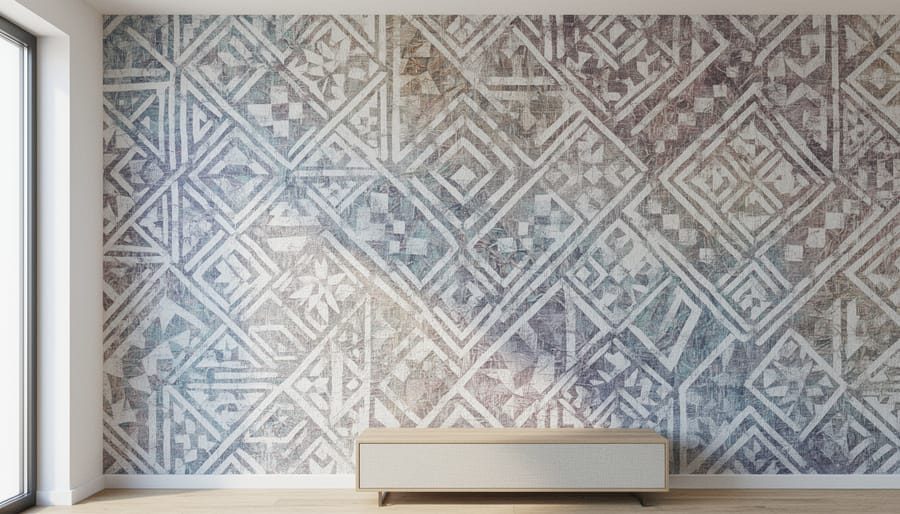
Visual texture through patterns opens up endless possibilities for transforming your spaces without a single construction project. Let’s explore where this design magic works best.
Your living room is prime territory for pattern play. Consider botanical wallpaper on a single accent wall behind your sofa to create an instant focal point. The visual depth from leafy prints or geometric designs adds personality without overwhelming the space. For a more subtle approach, layer printed throw pillows featuring different scales of the same pattern family. Mix a large-scale floral with smaller coordinating prints to create visual interest that feels cohesive rather than chaotic.
Bedrooms benefit from softer, more rhythmic patterns that promote relaxation. Grasscloth-textured wallpaper or subtle damask prints create sophisticated visual texture without stimulating the senses too much before sleep. Try limiting bold patterns to one statement element, like curtains with a delicate stripe or dot pattern, while keeping bedding in complementary solids. This approach maintains visual calm while preventing the dreaded “flat” feeling that all-solid spaces can sometimes have.
Accent walls are your creative playground. Here’s where you can be bold with dramatic patterns. Metallic geometric wallpapers catch light beautifully in dining rooms, while wood-grain printed panels add warmth to home offices without the expense of actual wood installation. Kitchen backsplashes printed with Moroccan tile patterns deliver the look of intricate tilework at a fraction of the cost and installation time.
Remember, visual texture through pattern should enhance your space’s story, not compete with it. Start with one statement piece and build around it for the most cohesive results.
Balancing Visual Texture With Your Color Scheme
Finding the sweet spot between visual texture and your color palette is like orchestrating a beautiful symphony—each element should complement rather than compete with the others. When you’re working with patterned wallpapers, textured fabrics, or decorative finishes, the key is creating harmony through thoughtful balance.
Start by considering the intensity of both your textures and colors together. If you’ve chosen a bold, saturated color scheme, pair it with subtle visual textures like fine linen weaves or gentle watercolor patterns. Conversely, if you’re working with neutral tones, you can afford to go bolder with your textural patterns—think dramatic geometric wallpapers or intricate damask upholstery.
Scale matters tremendously when mixing multiple visual textures in one space. The golden rule? Vary your pattern sizes to create visual interest without chaos. Combine a large-scale floral print with medium-sized stripes and small geometric accents. This variation gives your eye places to rest while maintaining engagement throughout the room.
Think about tonal contrast as your secret weapon for avoiding design mistakes. Even when using multiple textures, keeping them within a similar tonal range creates cohesion. For example, pair a textured cream throw pillow with subtly patterned beige curtains and a tone-on-tone wallpaper—all different textures, but harmonious in their color relationships.
A practical approach is the 60-30-10 rule: let your dominant texture cover 60 percent of the space, a secondary texture 30 percent, and save that bold, eye-catching textural element for just 10 percent. This creates balance while preventing visual overwhelm that can make rooms feel cluttered or chaotic.
Actual Texture: The Tactile Dimension That Changes Everything
Layering Tactile Elements in Your Space
Creating a richly textured space is like composing a symphony – each element plays its part in the overall experience. The secret to success lies in thoughtful layering that engages your sense of touch at every turn.
Start with your foundation pieces. A plush velvet sofa paired with a chunky knit throw creates an immediate invitation to sink in and relax. Layer in smooth leather accent chairs to add visual interest and tactile variety. The contrast between these materials keeps the eye moving and the fingers curious.
Your floor deserves equal attention. Consider placing a jute or sisal rug under your coffee table for natural, rough texture, then add a sheepskin beside your reading chair for cloud-like softness. This high-low combination feels sophisticated without being stuffy.
Pillows are your playground for experimentation. Mix linen, faux fur, and woven cotton covers in varying sizes. A good rule of thumb: combine at least three different textures within your pillow arrangement. One designer friend swears by the “smooth, nubby, fluffy” formula, and it works every time.
Don’t forget your walls. Grasscloth wallpaper, wood paneling, or even a macramé wall hanging introduces vertical texture that transforms flat surfaces into touchable art. Pair these with matte paint finishes rather than glossy ones for a more cohesive, layered effect.
The magic happens when rough meets smooth, soft meets structured. Your space should feel like an exploration where every surface offers something different to discover. Trust your instincts and let your hands guide your choices.
Natural vs. Synthetic: Choosing the Right Materials
When you’re bringing texture into your home, one of the first decisions you’ll face is whether to go natural or synthetic. Both options have their place in creating beautiful, functional spaces, and understanding their differences will help you make choices that fit your lifestyle and design vision.
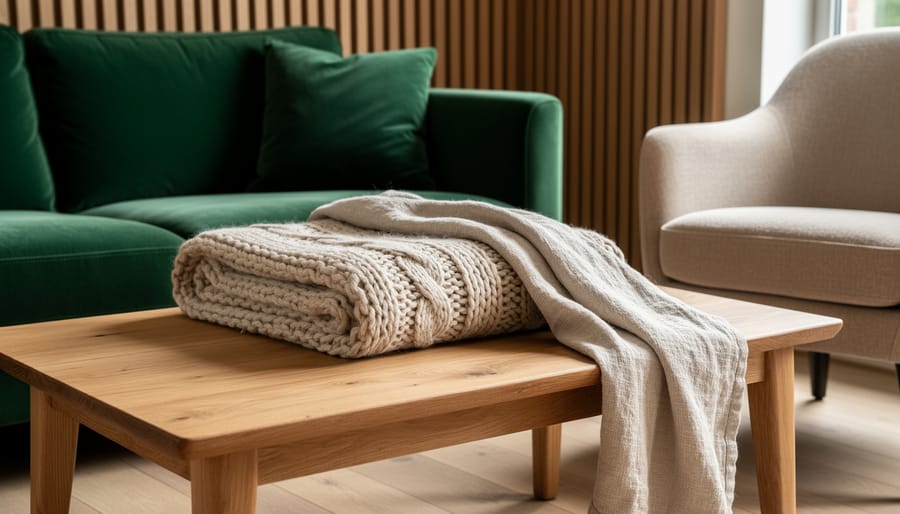
Natural materials like wood, linen, stone, and wool bring an authentic, timeless quality to any room. They age gracefully, often developing character over time rather than simply wearing out. A chunky wool throw draped over your sofa adds warmth that feels genuine, while reclaimed wood shelving tells a story. These materials connect us to the natural world and create spaces that feel grounded and organic. However, they typically require more care—wool needs gentle washing, natural fibers may fade in direct sunlight, and wood requires occasional conditioning.
Synthetic options like faux fur, engineered stone, or performance fabrics offer incredible durability and easy maintenance. They’re particularly smart choices for high-traffic areas or homes with kids and pets. Today’s synthetic materials are remarkably convincing, mimicking everything from marble to mohair. They resist stains, clean easily, and often come at friendlier price points. The trade-off? They may lack the depth and variation that makes natural materials so captivating.
The sweet spot? Mix them strategically. When selecting tactile materials for your space, consider placing durable synthetics in busy zones while reserving natural textures for areas where you can appreciate their beauty and provide proper care. A performance fabric sofa paired with genuine leather accent pillows gives you both practicality and luxury, creating layers that work as hard as they look good.
Implied Texture: Creating Movement Through Light and Shadow
Lighting Tricks That Amplify Texture
Lighting is your secret weapon for making texture pop in any room! The way light hits different surfaces can completely transform how texture looks and feels, turning a subtle detail into a stunning focal point.
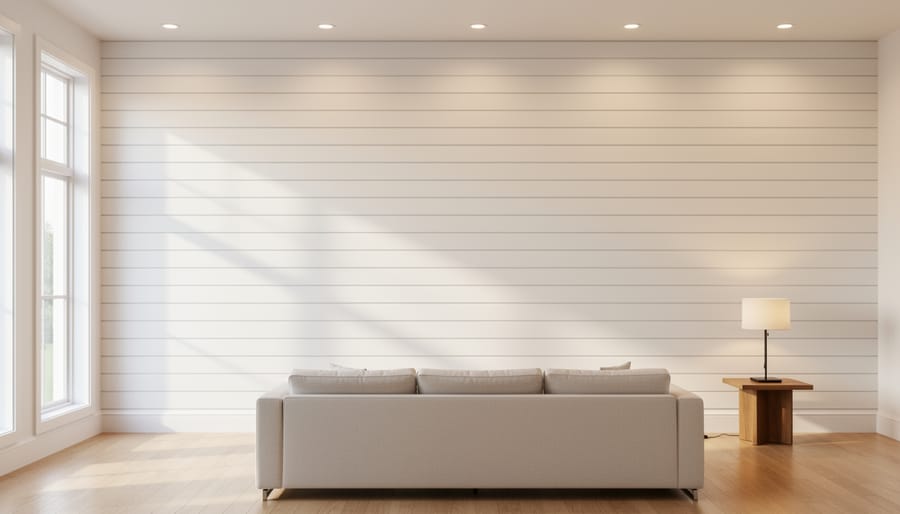
Think of ambient lighting as your foundation. These overhead lights provide general illumination, but they can wash out texture if used alone. That’s where the magic of accent lighting comes in. Picture track lighting skimming across a brick wall or a table lamp positioned to create dramatic shadows on textured wallpaper. This angled light creates depth and dimension that flat overhead lighting simply can’t achieve.
For maximum impact, place accent lights at a 30 to 45-degree angle to your textured surfaces. This side lighting emphasizes every ridge, groove, and raised element beautifully. Want to highlight that gorgeous exposed wood beam or textured art piece? Position a small spotlight or picture light to graze across its surface.
When selecting bulbs, consider color temperature too. Warm white bulbs (2700-3000K) add cozy richness to natural textures like wood and woven fabrics, while cooler bulbs (3500-4100K) can make metallic and glossy textures shine.
Don’t forget task lighting near textured elements you want people to appreciate up close, like a reading nook with chunky knit pillows or a workspace with textured desktop accessories. Adjustable fixtures give you the flexibility to experiment until you find that perfect angle that makes your textures truly sing.
Architectural Features That Add Dimension
Architectural elements are your secret weapon for creating visual texture without lifting a paintbrush. Think of shiplap, beadboard, or wainscoting as artwork that covers your walls—they add dimension through the interplay of light and shadow across their grooves and planks.
Coffered ceilings are the showstoppers here, transforming that often-forgotten fifth wall into a geometric masterpiece. While traditional coffered ceilings require carpentry skills, you can achieve a similar effect using lightweight decorative beams or even strategically placed trim work. The recessed panels create pockets of shadow that give your ceiling depth and architectural interest.
For renters or budget-conscious homeowners, peel-and-stick shiplap panels or beadboard wallpaper offer commitment-free alternatives. These DIY-friendly options install in an afternoon and peel away cleanly when it’s time to move. Crown molding and picture frame molding are other approachable projects—just a miter saw and some patience can transform flat walls into gallery-worthy surfaces.
Don’t overlook textured ceiling tiles either. Modern versions come in styles ranging from pressed tin patterns to sleek geometric designs, perfect for adding character to basements or rental apartments. The key is choosing elements that complement your existing style while adding that crucial layer of visual interest that makes a space feel finished and thoughtfully designed.
Decorative Texture: The Finishing Touches That Bring It All Together
Small Changes With Big Textural Impact
You don’t need to overhaul your entire space to make texture work magic in your home. Sometimes the smallest additions create the most dramatic shifts in how a room feels and functions.
Start with throw blankets and cushions, your secret weapons for instant textural transformation. A chunky knit throw draped over your sofa introduces tactile warmth that invites you to curl up, while velvet cushions add a touch of luxury without the hefty price tag. Mix and match different materials like linen, faux fur, or woven cotton to create visual interest that changes with the seasons. When summer arrives, swap those cozy knits for breathable linen. Come fall, bring back the plush textures.
Decorative accessories offer another budget-friendly avenue for textural play. A ceramic vase with a crackle glaze finish catches light differently than smooth glass, adding dimension to your console table. Picture frames in natural wood or hammered metal introduce subtle texture to your gallery wall. Even something as simple as swapping smooth plastic storage baskets for woven seagrass versions adds organic texture that feels both practical and intentional.
The beauty of these smaller changes lies in their flexibility. You can experiment freely, rotating pieces between rooms or updating them seasonally without commitment or significant expense. Think of accessories as your textural testing ground, where you discover what resonates with your style before investing in larger pieces.
The Rule of Three for Textural Balance
Think of texture like seasoning a dish—you need variety, but not so much that it overwhelms the senses. The Rule of Three offers a simple framework: combine smooth, rough, and medium textures in each room to create balance without chaos.
Start by choosing one dominant texture that sets the mood. Maybe it’s a smooth leather sofa as your anchor piece, or a rough-hewn wooden coffee table that draws the eye. This becomes your starting point.
Next, add a contrasting texture to create visual interest. If your dominant piece is smooth, introduce something with noticeable texture—perhaps a chunky knit throw or woven basket. The contrast makes both elements stand out more beautifully than they would alone.
Finally, bridge the gap with a medium texture that harmonizes the two extremes. This could be linen curtains, a cotton area rug, or matte-finish ceramics. This middle-ground texture prevents the room from feeling too stark or too busy.
Here’s a real-world example: pair a sleek glass dining table (smooth) with rough jute placemats and medium-textured upholstered chairs. The combination feels intentional and layered, not haphazard. When you’re arranging your space, step back occasionally and ask yourself: can I see all three texture types? If something feels off, you likely need to adjust the balance.
Now that you’ve explored the four texture types—actual, visual, tactile, and implied—you’re equipped with a powerful toolkit to transform any space from ordinary to extraordinary. Think of texture as your secret ingredient that adds depth, personality, and sophistication to your rooms. The beauty lies in how these textures work together, creating layers that engage multiple senses and tell a richer story about your home.
Don’t feel overwhelmed by the possibilities. Instead, start small and build your confidence gradually. Choose one room that could use a refresh—maybe your living room or bedroom—and pick just one texture type to introduce. Perhaps you’ll add a chunky knit throw for actual texture, or hang a botanical print that creates visual interest through pattern. As you become comfortable with one approach, you’ll naturally begin seeing opportunities to layer different textures together.
Remember, understanding texture elevates your interior design instincts beyond simply matching colors or arranging furniture. It gives you the ability to create rooms that feel considered, inviting, and genuinely special. The difference between a basic space and a sophisticated one often comes down to these thoughtful textural choices.
So grab that velvet pillow you’ve been eyeing, commission that textured art piece, or try your hand at creating dimensional wall art yourself. Your journey toward more textured, dynamic spaces starts with a single intentional choice. Trust your instincts, experiment freely, and watch as your rooms come alive with newfound dimension and character.


